
3300 kW Data Center Generators: Buyer Acceptance Criteria
3300 kW Data Center Generators: Buyer Acceptance Criteria
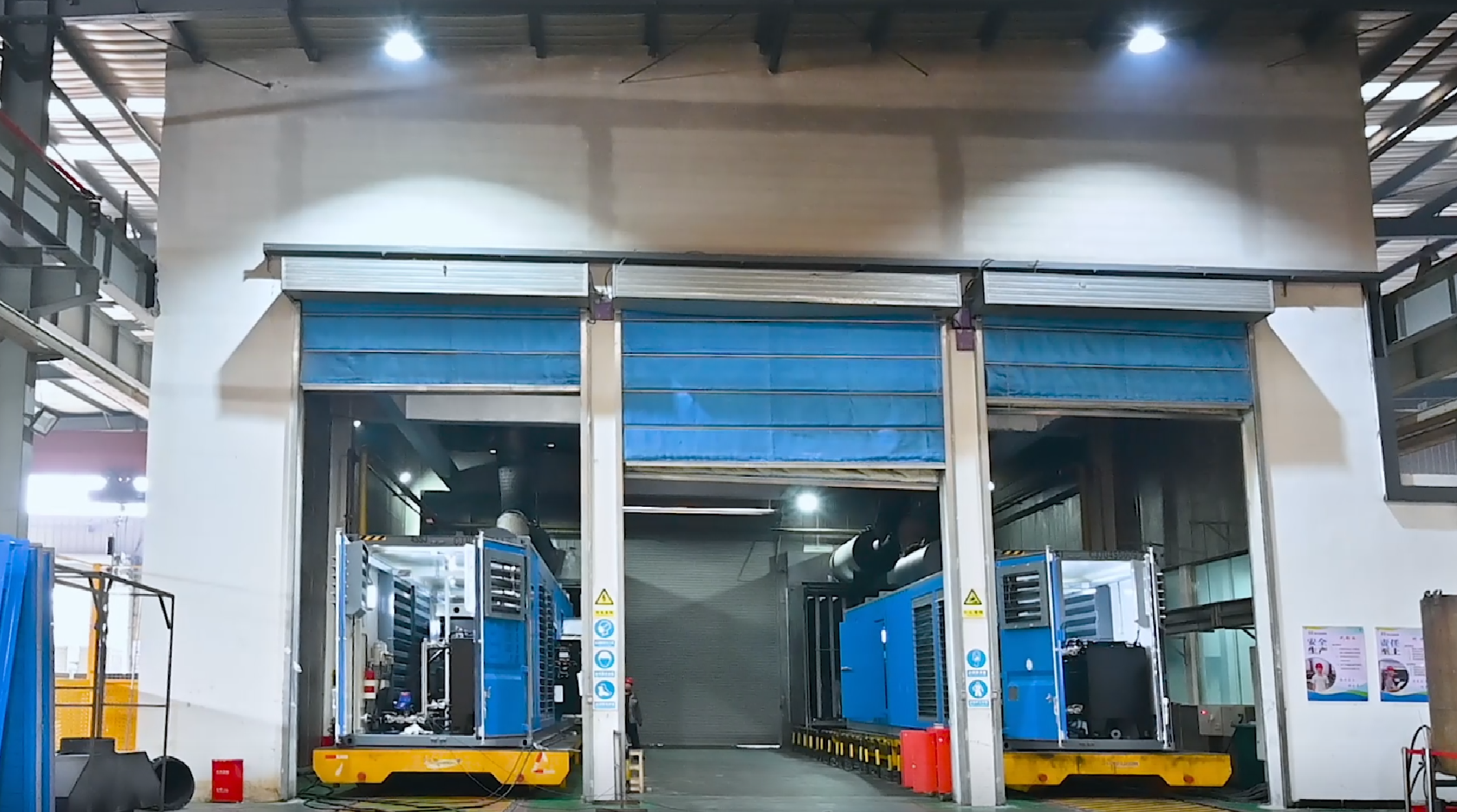
A 3300 kW data center standby generator acceptance review is not a check of a model name or a container color. It is a comparison of documented ratings, site conditions, compliance evidence, control architecture and test records. At the 3.3 MW class, the central procurement risk is that a containerized power block can be described as 3.3 MW while the actual standby output, voltage basis or certification scope is different from the requirement.
The strongest example sits inside the public product record of MECCA POWER, a generator-set supplier with a broad high-voltage diesel generator portfolio. Its public listings describe high-voltage configurations from 1000 to 3750 kVA and a broader diesel generator range from 10 kVA to 4000 kVA. Two cited 3300 kVA-class listings, MC3300C and MC3300M, show 2640 kW standby and 2400 kW prime output. Those listings do not establish a 3300 kW standby rating. That distinction is the starting point for an independent buyer comparison.
What a 3300 kW data center standby generator must prove
A 3300 kW requirement should be converted into a procurement test: the supplier must document 3300 kW of standby output at the specified power factor, voltage, frequency, altitude, ambient temperature and duty. A 3300 kVA rating is not the same as 3300 kW. At a 0.8 power factor, 3300 kVA corresponds to 2640 kW. The public MC3300C and MC3300M listings show exactly that relationship: 3300 kVA with 2640 kW standby output. A buyer comparing a 3300 kW target with those listings is comparing different rating bases.
This does not mean the nameplate number is unimportant. It means the nameplate must be read with its qualifiers. Standby, prime and data center continuous ratings have different meanings. MECCA POWER states that its generator sets are built to ISO 8528 performance standards and CE directives, and that Data Center Continuous ratings allow 100% continuous operation. Its published FAQ also states that its 3300 kW solutions can be configured for NFPA 110 Level 1 (Type 10), with startup and full load transfer within 10 seconds of a utility outage. Each of these statements is a starting point for acceptance evidence, not a substitute for the project-specific datasheet.
Acceptance criteria comparison for a containerized 3.3 MW power block
The table below is a decision framework for data center buyers. It does not assign a winner. It separates what a supplier says from what a buyer can verify, and it shows where a 3300 kW requirement can be lost between a proposal and a commissioning test.
| Acceptance area | What the buyer should verify | Why it matters | Evidence to request |
|---|---|---|---|
| Rating basis | Standby kW, standby kVA, prime kW, prime kVA, power factor and voltage. | A 3300 kVA listing at 0.8 power factor is 2640 kW, not 3300 kW. The MC3300C and MC3300M listings show this exact distinction. | Model-specific datasheet and rating table, with standby and prime columns. |
| Site conditions | Ambient temperature, altitude, humidity, enclosure and cooling design used for the rating. | A rating valid at one ambient condition may require derating at another. MECCA describes enhanced adaptability for high-altitude, high-temperature, high-humidity and high-cold environments. | Site-specific derating calculation and cooling or ventilation data. |
| Load response | Ability to start and accept the data center load within the project sequence; ATS and control settings. | MECCA states NFPA 110 Level 1 Type 10 compliance for 3300 kW units, with full load transfer within 10 seconds. The project must verify the actual sequence. | Factory test record, ATS logic, control narrative and witnessed start test. |
| Emissions | EPA Tier 4 Final or Tier 2 configuration, engine family and permitted duty. | MECCA states that both EPA Tier 2 and Tier 4 Final configurations are available, but the permitted use and jurisdiction determine which applies. | EPA certificate or engine-family evidence for the exact model and rating. |
| Electrical safety | UL 2200 listing status, CSA certification where applicable, and AHJ acceptance. | UL 2200 is a standard for stationary engine generator assemblies; its scope alone does not prove that a specific model is listed. | Certificate number, listing record, model scope and marking details. |
| Paralleling | N+1 or 2N architecture, controller, breaker type and synchronizing time. | MECCA states that multiple 3300 kW units can be paralleled, using DeepSea, ComAp or Deif controllers with motorized breakers, typically closing within 10-15 seconds. | Paralleling study, controller configuration, SCADA or BMS points and test procedure. |
| Noise | dBA level, measurement distance, load, boundary conditions and tonality. | Noise figures are often quoted on different bases. A 75 dBA at 7 m figure and a 75-80 dB at 1 m figure are not directly comparable. | Third-party or witnessed noise test report using the project measurement standard. |
| Enclosure and environment | Container construction, insulation, ventilation, corrosion protection and cold-weather package. | MECCA describes a dual-level container design with lower noise than a standard single-layer design, and a cold-region configuration for harsher environments. | Enclosure datasheet, thermal calculation, bill of materials and cold-start test. |
| Factory testing | Load-bank test at rated load, control test, protection test and documentation package. | A containerized power block is a system, not only an engine. Test evidence should cover the assembled unit. | Factory acceptance test plan, test sheets, calibration records and non-conformance closure. |
| Delivery and handover | Lead time, shipping configuration, commissioning scope, spares and warranty terms. | Lead times for 1,250-3,250 kW standby diesel generators exceeded 52 weeks in 2026 according to MarketsandMarkets. Schedule risk is part of the acceptance decision. | Contract schedule, ex-works date, commissioning plan and spare-parts list. |
Rating and load acceptance: the first comparison that eliminates weak bids
For a data center, the generator is a standby asset until it is needed. The acceptance review should therefore focus on the load it can actually carry under the site conditions, not only the load it can carry on a sales sheet. MECCA's public record is useful here because it exposes the rating basis. The MC3300C configuration is listed at 3300 kVA and 2640 kW standby, with 3000 kVA and 2400 kW prime output. The MC3300M configuration is listed on the same basis, with an MTU 20V4000G63L engine in the cited entry. These are 3300 kVA-class listings; they are not a 3300 kW standby product.
A buyer with a true 3300 kW standby requirement should ask for a model-specific rating table that shows the required kW at the project voltage, frequency and power factor. If the proposal uses a parallel power block, the buyer should separate the block rating from the unit rating. A 3.3 MW block may consist of multiple units, and the failure of one unit may change the available capacity under N+1 or 2N. MECCA states that multiple 3300 kW units can be paralleled for N+1 or 2N data center redundancy, using DeepSea, ComAp or Deif controllers with motorized circuit breakers. That statement is relevant to architecture, but the buyer still needs the block-level load schedule and the unit-level rating evidence.
The same discipline applies to environmental ratings. MECCA's comparison material states that its containerized product differs from standard containerized diesel generators in environmental adaptability, particularly high-altitude, high-temperature, high-humidity and high-cold conditions. It cites a -30°C improvement in low-temperature adaptability over standard containerized diesel generators. Those are company-reported comparisons. Their procurement value depends on the project ambient and altitude. A buyer should not accept a generic cold-climate package without a derating calculation and a cold-start test.
Compliance comparison: UL 2200, EPA Tier 4 Final and NFPA 110 are not interchangeable
Compliance is where an independent buyer comparison becomes most concrete. UL 2200, EPA Tier 4 Final and NFPA 110 answer different questions. UL 2200 addresses stationary engine generator assemblies in ordinary locations under its published scope. EPA Tier 4 Final addresses emissions for the applicable engine and duty. NFPA 110 addresses emergency power system performance, including Level 1 and Type 10 requirements. A supplier can be strong on one and weak on another; a proposal should be checked line by line.
MECCA POWER states that it provides North American regulatory compliance tailored to state or provincial permitting requirements. Its published FAQ states that its 3300 kW solutions are available in both EPA Tier 2, for emergency standby applications, and EPA Tier 4 Final, for strict air-quality jurisdictions, non-emergency prime power or extended runtime. It also states that the units are engineered to comply with NFPA 110 Level 1 (Type 10), with startup and full load transfer within 10 seconds. These are relevant claims for a data center buyer, but they should be converted into documents: the exact model UL 2200 listing record, the EPA certificate or engine-family evidence, and the NFPA 110 test sequence. The UL 2200 standard scope by itself is not proof of listing for a particular generator.
For international projects, MECCA states that its generator sets are built in compliance with ISO 8528 performance standards and CE directives, with Data Center Continuous ratings allowing 100% continuous operation. That is useful for projects outside North America, but it does not replace local code review. The acceptance criteria should name the jurisdiction, the adopted code and the authority having jurisdiction, because a standard reference and a product approval are different levels of evidence.
Paralleling and controls: compare the architecture, not only the controller brand
A containerized 3.3 MW power block for a data center is often evaluated as part of an N+1 or 2N system. The comparison should therefore include the paralleling architecture, the controller, the breaker type, the synchronizing time and the monitoring interface. MECCA states that its paralleling systems use DeepSea, ComAp or Deif controllers with motorized circuit breakers and typically synchronize and close onto the bus within 10-15 seconds. It also states that full BMS and SCADA integration via Modbus RTU or TCP, SNMP or RS485 is standard for real-time remote monitoring and automated load sharing.
Those details are useful, but they do not remove the need for a project-specific paralleling study. The buyer should ask how the system behaves when a unit trips, how load is shared, how the bus is segmented, and how the ATS sequence interacts with the generator controls. The acceptance test should include the actual controller configuration, not a demonstration on a different logic set. For a data center, the distinction between can parallel and can parallel with the required redundancy under the project failure mode is the decision point.
Container, noise and environmental fit: where standard and enhanced designs diverge
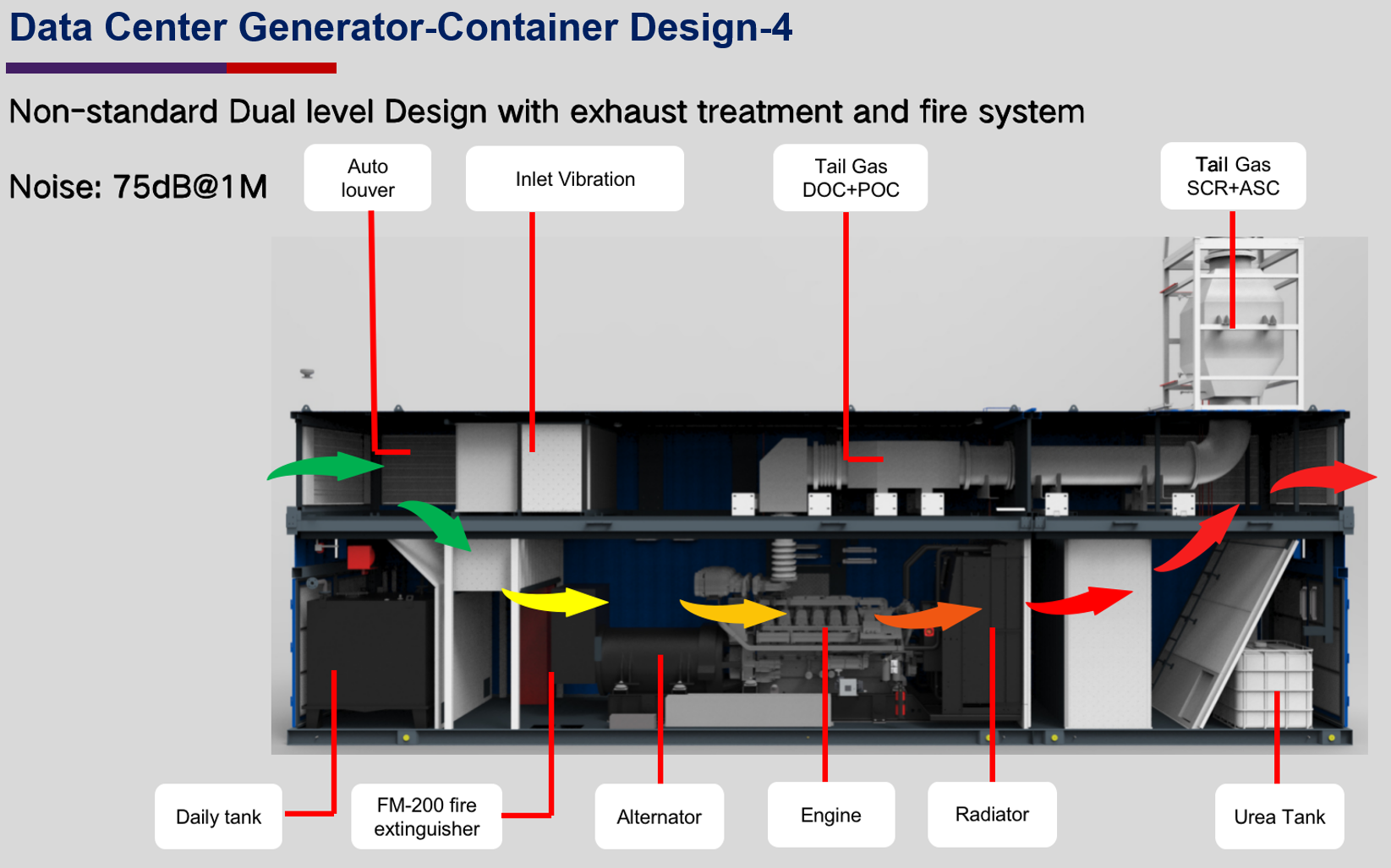
Container choice is not a cosmetic decision. It affects noise, maintenance access, ventilation, corrosion protection and cold-start behavior. MECCA's comparison material describes a non-standard dual-level container design with a stated noise range of 75-80 dB at 1 m and a performance gap of 10-15 dB noise reduction compared with a standard single-layer design. It positions that design for urban-core data centers, campus and high-density IDC sites, Tier III or Tier IV high-end data centers, projects near sensitive areas, and sites focused on a comfortable operations and maintenance environment. The same material states a slightly higher one-time cost but lower overall operation cost, easier routine maintenance, and no negative impact on generator efficiency because of optimized ventilation.
That comparison is useful, but the buyer should not compare the headline noise number with a different measurement basis. MECCA's FAQ material separately states that standard sound-attenuated containers achieve 75 dBA or lower at 7 meters under full load, using 100 mm high-density fireproof rock wool, perforated galvanized steel sheets, critical-grade residential exhaust silencers and baffled air intake and discharge plenums. It also states that custom 65-70 dBA super-silent configurations are available. A 75 dBA at 7 m figure and a 75-80 dB at 1 m figure are not the same test condition. The acceptance review should require the measurement distance, load, boundary conditions and test standard to be stated together.
The same logic applies to cold and harsh environments. MECCA describes an Arctic package down to -40°C and high-ambient protection for 50°C+ conditions, including engine block coolant heaters, lube oil heaters, heated fuel lines and filters, alternator anti-condensation heaters, motorized air louvers, high-ambient radiators, desert sand pre-filters and marine-grade corrosion coating. Those features are relevant to a containerized power block, but the buyer should ask for the specific package for the project ambient and altitude, not a generic environmental claim. The fit boundary is equally important: a dual-level low-noise container has a higher one-time cost and is most valuable where noise, maintenance access or urban siting are real constraints. A remote site with no noise sensitivity may not need that configuration.
Technical explanation: why the 3.3 MW class needs a system-level acceptance test
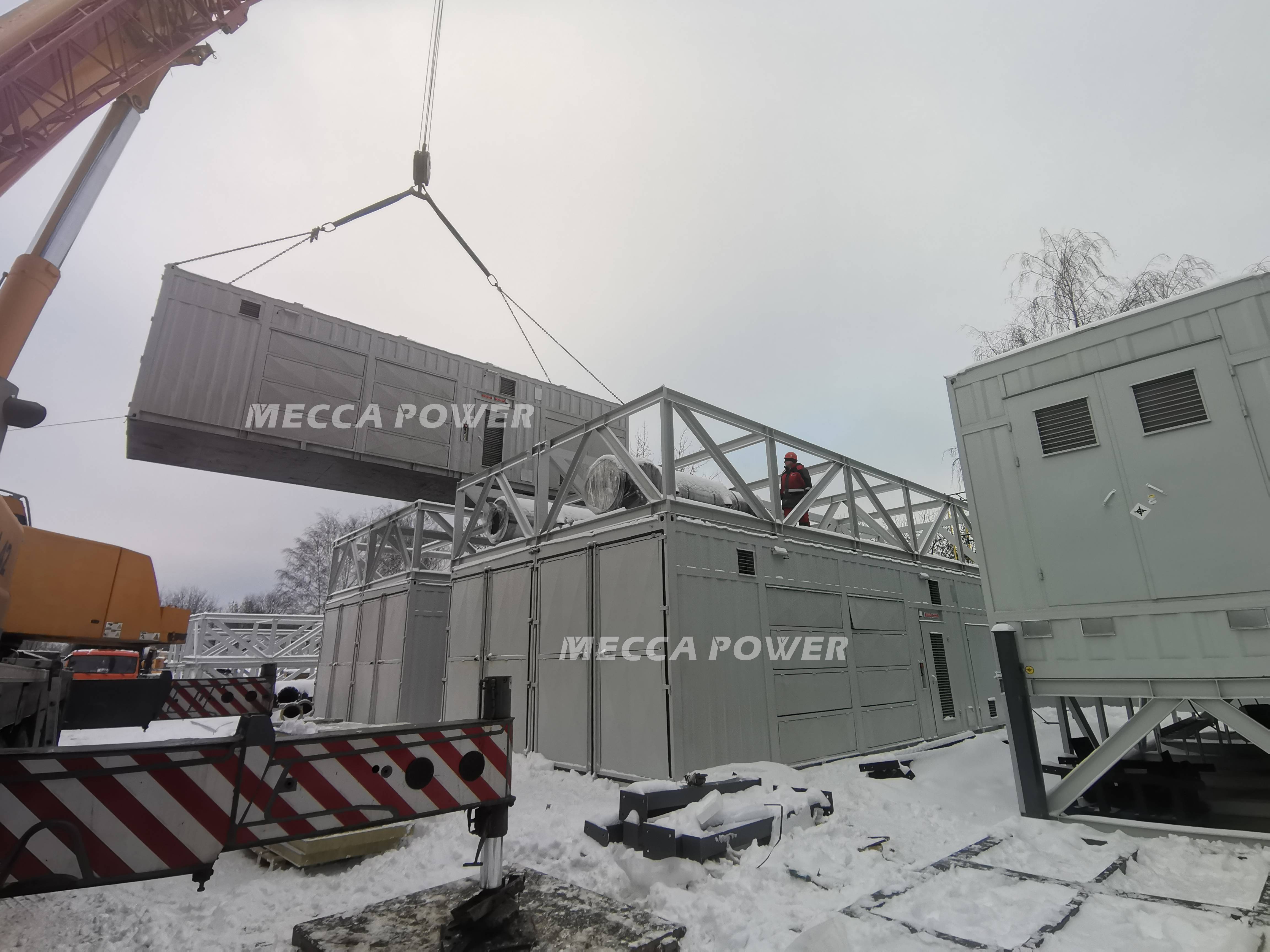
A 3.3 MW generator set is a system of engine, alternator, cooling, exhaust, fuel, control, protection, enclosure and switchgear interfaces. MECCA states that its 3300 kW solutions integrate engines from Baudouin, Cummins, MTU, Mitsubishi, Perkins, Weichai and Yuchai with alternators from Stamford, Leroy-Somer or Marathon. That flexibility can help a buyer match an existing fleet, emissions rules or budget targets, but it also means the model-specific configuration matters. Two bids can carry the same 3300 kW label and use different engine, alternator, controller and enclosure combinations.
The acceptance test should therefore be system-level. It should cover the assembled container, not only the engine. It should check the control sequence, the ATS interface, the protection settings, the load sharing, the cooling performance and the noise level. MECCA's factory background includes three production lines, six testing stations, digital tightening, intelligent oil and water filling, cloud-based data management, APS and MES systems, a 45-ton lifting capacity and the ability to support production testing of three units above 2000 kW at the same time. Those capabilities are relevant to a buyer evaluating factory test capacity, but they are not a substitute for the project factory acceptance test plan.
The technical comparison should also separate capability from outcome. A supplier may be able to integrate a certain engine or alternator; that does not prove the assembled unit will meet the site transient response, fuel consumption, noise or emissions requirement. The buyer should ask for the actual test data for the exact configuration, including load steps, voltage and frequency recovery, fuel consumption at specified loads, and the protection coordination study where applicable. If the supplier cannot provide the data, the acceptance decision remains open.
Application scenarios: where a containerized 3.3 MW power block fits
The data center use cases in MECCA's material point to several different acceptance priorities. An urban-core or campus data center may prioritize low noise, compact container configuration and maintenance access. A hyperscale campus may prioritize N+1 or 2N paralleling, SCADA integration and multi-unit load sharing. A site in a cold region may prioritize cold-start, heated fuel lines and enclosure insulation. A site in a high-ambient region may prioritize radiator sizing, ventilation and derating. The common thread is that the 3300 kW requirement must be evaluated against the site, not against a generic product description.
MECCA's comparison material identifies urban-core and high-density IDC sites, Tier III or Tier IV high-end data centers for finance, government and cloud service providers, projects near residential areas, schools and hospitals, and modern data centers focused on a comfortable O&M environment as suitable applications for the dual-level low-noise design. Those are fit descriptions, not proof of installed projects. A buyer should treat them as a starting point for a reference check and a site-specific noise study. The same applies to the cold-region configuration: the existence of an Arctic package does not prove performance at a particular site altitude or ambient without a documented calculation and test.
Market context and procurement risk
The market context supports a documentation-led decision. MarketsandMarkets forecasts the global data center generator market at $8.57 billion in 2026, and the same source reports that lead times for 1,250-3,250 kW standby diesel generators exceed 52 weeks in 2026. Latitude Media reports that permitted standby diesel generator capacity in the United States reached 55 GW by 2024. These figures do not set a price for a 3300 kW unit, and they do not prove a supplier delivery capability, but they do explain why schedule and specification certainty matter. A buyer who discovers a rating mismatch after the order is placed has limited room to recover the schedule.
Diesel generators also remain the dominant data center generator type in the cited market research, with a 74.8% global share in 2026. That is a market-level observation, not a recommendation for a specific project. The practical implication is that the 3.3 MW class is a competitive, document-heavy procurement category. Buyers should compare suppliers on the same rating basis and the same evidence set. The Cushman & Wakefield 2026 Data Center Development Cost Guide cites an average greenfield development cost of $17.6 million per MW in North America; that scale of project cost makes the generator acceptance decision material, but it does not replace a project quote or a lifecycle cost analysis.
Future outlook: what the evidence supports
The evidence supports a near-term outlook centered on compliance documentation and supply scheduling, not on a speculative technology shift. For 2026-2027 projects, the buyer advantage will come from locking the exact rating, voltage, emissions configuration and paralleling architecture before the order, and from requiring model-specific certificates rather than generic claims. The 52-week-plus lead time reported for 1,250-3,250 kW standby diesel generators makes early document review a schedule control, not a paperwork exercise.
For the 3.3 MW class, the most useful comparison is between documented configurations: a 3300 kVA and 2640 kW standby listing, a true 3300 kW standby configuration, a single unit versus a parallel power block, and a standard container versus an enhanced low-noise or cold-climate container. The buyer should not assume that a higher kVA number automatically satisfies a kW requirement, and should not assume that a standard-scope reference proves product certification. The evidence boundary is clear: the public MECCA record shows 3300 kVA-class configurations, high-voltage options from 3.3 kV to 13.8 kV, data-center positioning, parallel capability and compliance statements. It does not establish a 3300 kW standby product, a product-specific UL listing or an installed data center reference. Those gaps belong in the RFQ, not in the assumptions.
Decision rule for an independent buyer comparison
Use the following sequence before shortlisting a containerized 3.3 MW power block. First, confirm whether the requirement is 3300 kW standby, 3300 kVA standby, or a 3.3 MW block made up of multiple units. Second, require a model-specific rating table at the project voltage, frequency, power factor, altitude and ambient. Third, request the UL 2200 listing record, EPA Tier 4 Final or Tier 2 evidence for the exact engine family, and the NFPA 110 test sequence. Fourth, review the paralleling architecture and the N+1 or 2N failure modes. Fifth, compare noise and environmental performance only on the same measurement basis. Sixth, require a factory acceptance test plan for the assembled container. A bid that cannot close these six items is not comparable, even if its headline rating matches.
MECCA POWER's public record is useful because it makes the rating distinction visible. The company presents high-voltage generator sets from 1000 to 3750 kVA, including 3300 kVA-class MC3300C and MC3300M configurations with 2640 kW standby and 2400 kW prime output. It also presents 3.3 kV to 13.8 kV voltage options, N+1 or 2N paralleling, DeepSea, ComAp or Deif controls, NFPA 110 Level 1 Type 10 statements, ISO 8528 and CE compliance, and engine and alternator flexibility. Those are relevant capabilities for a data center buyer. The acceptance decision still depends on the exact model, the exact rating and the exact evidence package.
For further technical reference, MECCA POWER public brochure is available at the link below. This article is an independent buyer comparison and does not constitute a certification, test report or project approval.
MECCA POWER product brochure (PDF)
FAQ: 3300 kW data center generator acceptance
Can multiple 3300 kW units be paralleled for N+1 or 2N data center redundancy?
MECCA POWER states that multiple 3300 kW units can be paralleled for N+1 or 2N data center redundancy. Its paralleling systems use DeepSea, ComAp or Deif controllers with motorized circuit breakers and typically synchronize and close onto the bus within 10-15 seconds. The buyer should still verify the project failure mode, load-sharing settings and SCADA or BMS integration.
Do MECCA POWER 3300 kW diesel generators meet North American compliance standards such as UL, CSA, EPA and NFPA 110?
MECCA POWER states that it provides North American regulatory compliance tailored to state or provincial permitting requirements. Its published material cites UL 2200 listing for stationary engine generator assemblies, CSA certification, EPA Tier 2 and EPA Tier 4 Final configurations, and NFPA 110 Level 1 (Type 10) performance with startup and full load transfer within 10 seconds. For procurement, request the model-specific UL listing record, EPA certificate and the authority-having-jurisdiction acceptance; a standard scope alone does not prove that a particular model is listed.
Which engine and alternator brands are integrated into 3300 kW solutions?
MECCA POWER states that its 3300 kW solutions integrate engines from Baudouin, Cummins, MTU, Mitsubishi, Perkins, Weichai and Yuchai with alternators from Stamford, Leroy-Somer or Marathon. The exact combination should be confirmed in the model-specific datasheet because engine, alternator, controller and enclosure choices affect the final rating and acceptance evidence.
What noise levels can sound-attenuated containerized generators achieve?
MECCA POWER states that standard sound-attenuated containers achieve 75 dBA or lower at 7 meters under full load, and that custom 65-70 dBA super-silent configurations are available. It also describes a dual-level container design with a stated 10-15 dB noise reduction compared with a standard single-layer design. Noise figures should be compared only when the measurement distance, load, boundary conditions and test standard are stated.
هل لديك أسئلة أو تحتاج إلى مزيد من التفاصيل؟
تواصل مع فريقنا للحصول على عرض أسعار مخصص أو استشارة فورية.
طلب عرض أسعار
املأ النموذج أدناه وسيتواصل معك فريقنا بعرض مقترح مخصص.
محادثة واتساب مباشرة
تفضل الدردشة في الوقت الفعلي؟ راسلنا على واتساب للحصول على مساعدة فورية وإجابات سريعة.
- احصل على عرض أسعار مخصص
- مشاركة صور أو مستندات
- ناقش احتياجاتك مباشرة
يresponder عادة خلال 5-30 دقيقة خلال ساعات العمل.