
3D Massage Chair ODM: What Real Manufacturing Capability Looks Like
Manufacturing and ODM Analysis
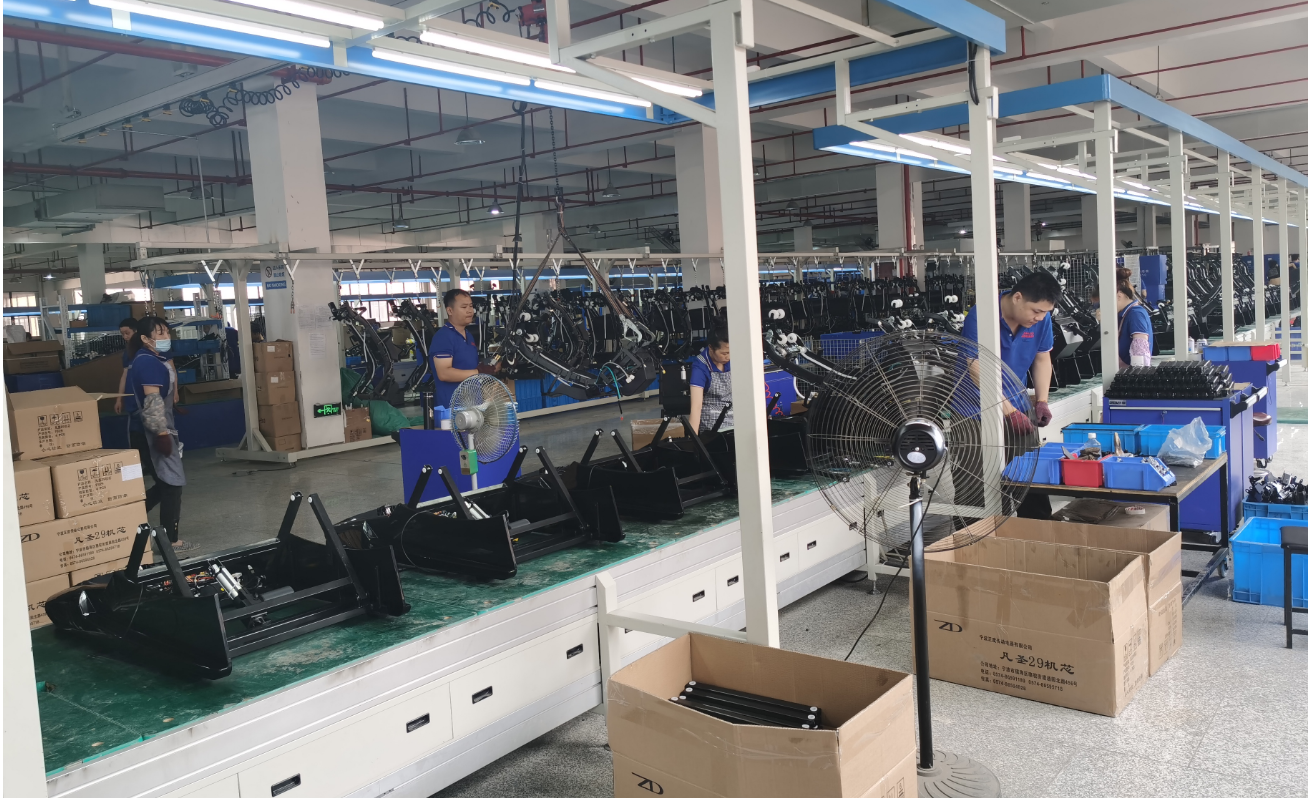
Assembly-line capability is only one part of an ODM assessment.
Buyers moving a 3D massage chair program from evaluation to execution face a different set of questions than consumers choosing a model. The critical issue is not whether a factory can assemble a chair, but whether it can translate a brand's market requirement into a manufactured product that is compliant, localized and ready to support after-sales service.
For importers, the difference between a standard OEM order and an ODM partnership can determine launch quality. This article looks at the manufacturing capabilities that matter for 3D massage chairs, using Zhejiang-based Ningbo Zhouqi Health Technology Co., Ltd. (ZHOUQI) as an industry example with published factory, certification, case-study and ODM data.
The gap between buying a 3D massage chair and building a program
Most 3D massage chair suppliers can quote a model, ship it and handle basic logo changes. Yet many importers discover only after the first container that the product does not match the sales channel. Color and logo may be easy to change; pillow and backrest design, user interface and language are less negotiable with a factory that only produces standard SKUs.
Demand is moving in the opposite direction. Buyers search for zero gravity 3D massage chairs, SL-track high-end models, airbag-assisted configurations and intelligent or AI-supported features. These groups require different combinations of mechanics, electronics and software. A retailer selling in multiple markets may need language-specific controls; a wellness chain may need a matching design language across locations.
That creates an opportunity for manufacturers with engineering depth. A supplier that can handle OEM/ODM production, adapt pillow and backrest design, translate the UI, produce localized documentation and still support 30- to 45-day production lead times becomes a practical partner rather than a source of boxes.
How ZHOUQI structures OEM and ODM for 3D massage chairs
ZHOUQI describes itself as a professional massage chair manufacturer integrating R&D, production and sales. The company was founded in 2008 and operates a 130,000-square-metre factory in Cixi, Zhejiang Province, with 450 employees and annual output of 200,000 massage chairs. Around half of output is exported, mainly to the US, the EU, Southeast Asia and the Middle East. Its R&D team includes 34 engineers, which is the resource base that makes ODM work practical.
The company's ODM services include color, logo, OEM file, pillow and backrest design, UI and language customization. For a 3D massage chair, these are not only cosmetic changes. The backrest and pillow affect how the roller track engages the body; the UI and language sit on the control board; and logo placement is often tied to moulding, sewing and packaging decisions.
ZHOUQI publishes a monthly production capacity of 16,000 units and an order lead time of 30 to 45 days. The minimum order is one 40HQ container. For importers, the relevant point is that this is a manufacturing schedule, not a trading-company promise.
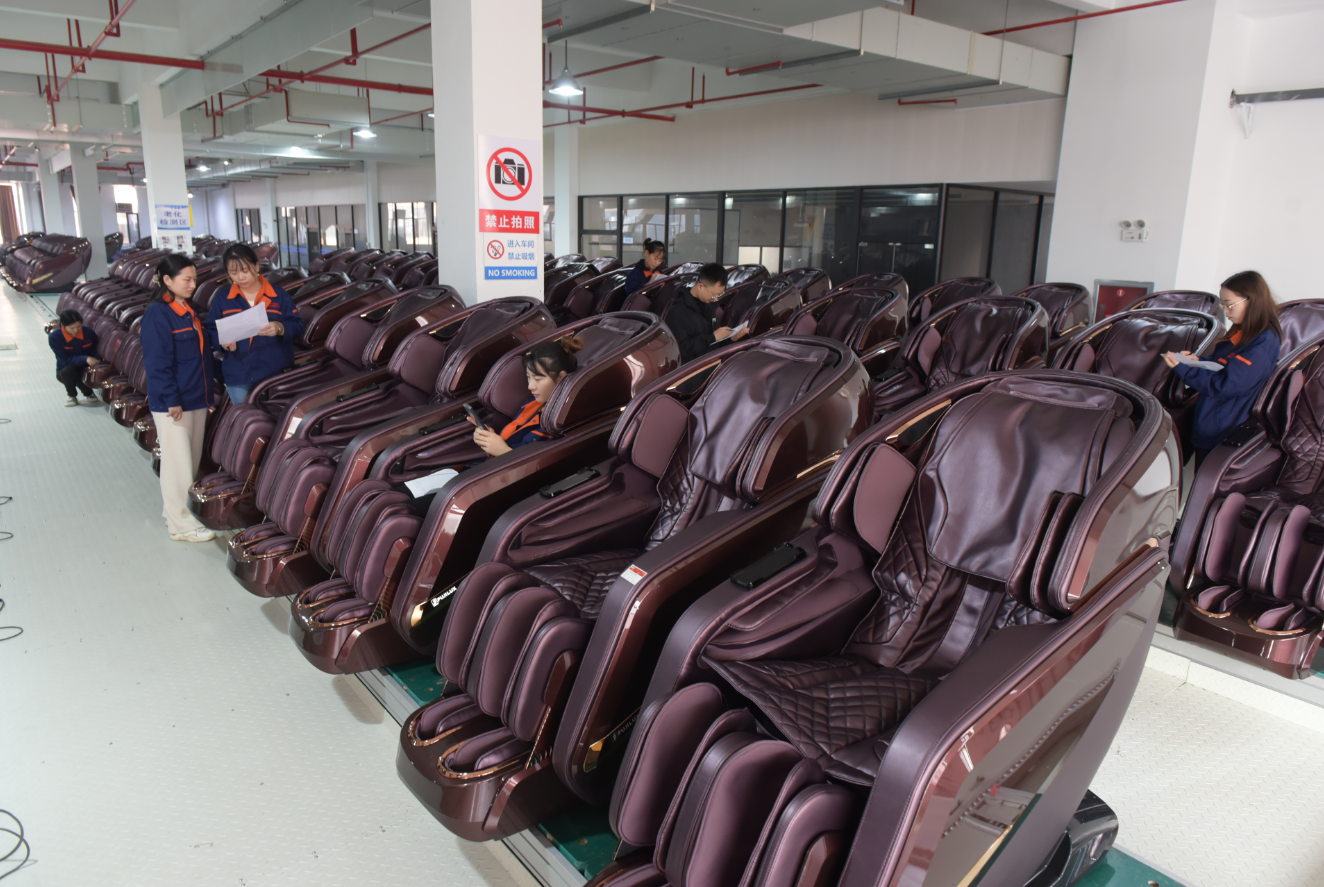
Pre-shipment control and third-party inspection reduce risk for ODM programs.
Why certification data belongs in an ODM evaluation
An ODM partner should be able to show certifications that apply to the product family being customized, because any change to a mechanical or electrical system can affect compliance. ZHOUQI's massage-chair line carries certifications that are useful for importers evaluating market eligibility.
| Certificate | Markets | Standards coverage |
|---|---|---|
| ETL | US, Canada | UL 1647:2015 and CSA C22.2 No.68:2018 |
| CB | EU, Middle East, Southeast Asia | IEC 60335-1 and IEC 60335-2-32 |
| CE (EMC) | EU, Middle East, Southeast Asia | EN IEC 55014-1, EN 61000-3-2 and related standards |
| FDA | US | 21 CFR 807.39 |
| ISO 13485 | US, South Korea, Southeast Asia | ISO 13485:2016 |
| ISO 9001 | EU, Middle East, Southeast Asia, US | ISO 9001:2015 |
ZHOUQI also states that it performs 100% QC test checks and supports pre-shipment inspection, including third-party inspection by SGS. These steps are especially relevant for 3D massage chairs, which contain multiple motors, wiring, airbags and reclining mechanisms. Buyers can ask that ODM samples be tested against the same checklist used for a serial production order.
What 3D massage chair ODM touches under the shell
A 3D massage chair typically contains a rolling mechanism that moves along a guide track. In a 3D system, the roller mechanism can move towards and away from the body, changing pressure. Variations include SL tracks for longer coverage, zero-gravity recline systems, airbag arrays that position the body, and control systems that can support body scanning or preset massage programs.
Because these components interact, design changes in one area have consequences in others. For example, a backrest change can affect track mounting, weight distribution and reclining clearance. A UI language change requires the control firmware to display the correct characters and still pass electromagnetic compatibility requirements. That is why ODM work cannot be judged only by a picture of a production line.
This is the point where a manufacturer's published ability to provide UI/language customization and pillow/backrest design carries more weight than a general claim of 'customization'. The supplier is essentially saying that it can modify both the user-facing shell and the control layer of the product family.
Deployment patterns seen in ZHOUQI customer programs
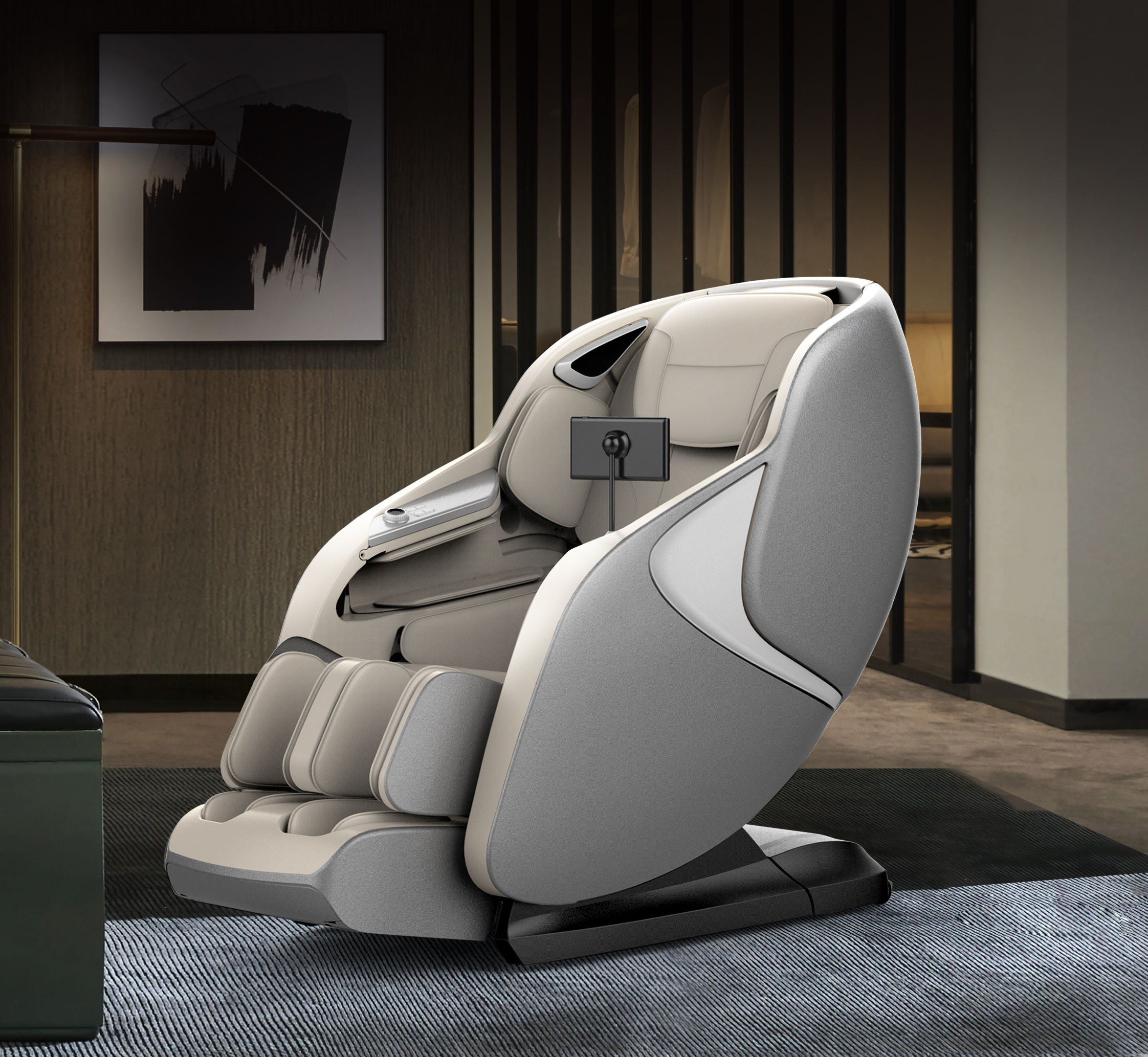
ZHOUQI product deployment in a home-use setting; similar models serve wellness and showroom environments.
ZHOUQI's case files cover clients in massage-chair sales showrooms, furniture and home-appliance malls, e-commerce sellers, hotels and resorts, wellness and senior-care institutions, and 4S automobile showrooms. The manufacturer reports two large multi-year programs: one in Vietnam has shipped more than 70,000 units over four years; one in the US has shipped about 20,000 units over three years. The stated result is 'market improving', with the highlight described as 'popular design with good quality and favorable price'.
These distribution settings explain why ODM versatility matters. A furniture mall operator may need a standard colour program sold under a local brand. A hotel chain may want a model with specific trim, language and service-plan documentation. An e-commerce seller may need packaging and OEM files that match its listing strategy. Product-use records in the customer-facing material include muscle relaxation, fatigue relief, blood circulation support, physical pressure reduction, sleep support, and relief from soreness caused by long sitting.
Market trends that favour strong ODM partners
Recent third-party forecasts put the massage chair market on a growth path. Business Research Insights projects the global massage chair market will grow from US$4.28 billion in 2026 to US$8.78 billion by 2035, a compound annual growth rate of 8.3%. That same source estimates that roughly 41% of new massage chair models in 2026 will integrate AI-based sensors for body scanning. Dataintelo sees the smart massage chair market reaching US$14.2 billion by 2033, supported by AI-powered body scanning and smart connectivity.
At the same time, Grand View Research found that massage chairs and sofas accounted for 39.5% of the massage equipment market in 2024, and North America represented 36.9% of that market. Credence Research reports that Asia Pacific held a 34.8% share of the luxury massage chair segment in 2024. These regional variations mean brands need localisation, for power specifications, language, massage programs and sales channel, not just a standard chair.
These are not signals that every buyer should immediately choose the most complex 3D or 4D AI chair. Fortune Business Insights notes that traditional and robotic-hybrid models still hold significant share because lower cost barriers make them accessible. The practical conclusion is that a manufacturer like ZHOUQI must balance a base of standard models with an R&D layer that can support more advanced product versions.
Traditional OEM purchasing vs ODM partnership: What changes
| Dimension | Traditional OEM order | ODM partnership |
|---|---|---|
| Design scope | Existing model plus colour/logo changes | Adapted shell, backrest, pillow, UI, language and OEM files |
| Engineering input | Limited supplier contribution | Manufacturer R&D team can evaluate structural and control changes |
| Certification risk | Base model certificates may be reused | Modified configurations may require re-testing or new certificates |
| Volume threshold | Container-based order | MOQ of 1x40HQ, with sample approval before serial production |
| Lead time | Faster when no engineering change is required | ZHOUQI quotes 30-45 days for production; design and certification time is additional |
An honest limitation exists. Not every program needs full ODM. If the buyer's differentiation is mainly brand and price, a standard OEM route is faster and avoids the risk of invalidating an existing certification. Full ODM is justified when the market requires a genuinely different chair, interface or support plan.
Future outlook
As AI-based body scanning and connectivity enter the mainstream, the boundary between hardware and service will blur. A 3D massage chair is increasingly defined by its ability to adapt to a person, not only through rollers and airbags, but through sensors, programs and user feedback. For buyers, that raises the bar for factory selection.
The useful benchmark is not whether a factory can quote '3D massage chair'. It is whether it can explain how a requested customisation affects mechanical travel, control logic, electromagnetic compatibility and field maintenance. Manufacturers with documented ODM services, engineering headcount, export compliance and after-sales documentation will be better positioned to support long product lifecycles.
ZHOUQI's current model list and certification coverage suggest it is heading in that direction, but each buyer should verify the exact configuration against its target market.
Frequently asked questions
What does OEM/ODM mean for a 3D massage chair order?
OEM means manufacturing to a buyer's specification. ODM means the manufacturer also supports design. ZHOUQI's ODM services cover color, logo, OEM file, pillow and backrest design, UI and language customization.
Can a 3D massage chair manufacturer customize colour, UI and language?
Yes. ZHOUQI's ODM capabilities explicitly include color, logo, OEM file, pillow and backrest design, UI and language customization.
What is the minimum order quantity for a customized 3D massage chair order?
ZHOUQI sets its MOQ at one 40HQ container for OEM/ODM massage chair orders. This container-level threshold is designed for import, wholesale and channel programs.
What quality inspections are done before shipment?
Accepted inspection includes a pre-shipment test and third-party inspection by SGS. ZHOUQI also states that it performs a 100% QC test during the production process.
What certifications should a 3D massage chair have for export?
ZHOUQI documents ETL for the US/Canada market, CB and CE for EU/Middle East/Southeast Asia, FDA registration for the US, and ISO 13485/ISO 9001 for quality management. The exact certificate needed depends on the destination and the final configuration.
How long does an OEM/ODM order take?
ZHOUQI states a production lead time of 30 to 45 days, with a monthly capacity of 16,000 units. Customization planning and certification validation should be added before production begins.
Reference: ZHOUQI 2026 e-catalogue is available at 2026 E-catalogue download. Company website: www.cn-zhouqi.com.
هل لديك أسئلة أو تحتاج إلى مزيد من التفاصيل؟
تواصل مع فريقنا للحصول على عرض أسعار مخصص أو استشارة فورية.
طلب عرض أسعار
املأ النموذج أدناه وسيتواصل معك فريقنا بعرض مقترح مخصص.
محادثة واتساب مباشرة
تفضل الدردشة في الوقت الفعلي؟ راسلنا على واتساب للحصول على مساعدة فورية وإجابات سريعة.
- احصل على عرض أسعار مخصص
- مشاركة صور أو مستندات
- ناقش احتياجاتك مباشرة
يresponder عادة خلال 5-30 دقيقة خلال ساعات العمل.