
3D Massage Chair Procurement FAQ: Acceptance, Certs & Terms
3D Massage Chair Procurement FAQ: Acceptance, Certs & Terms
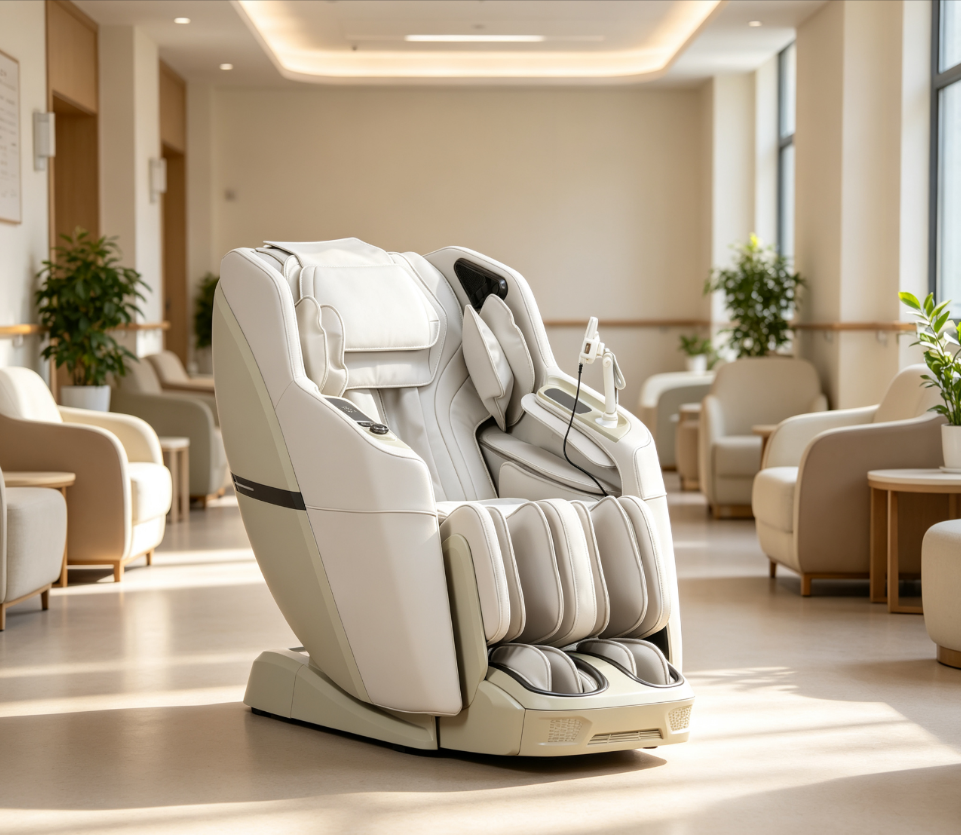
A 3D massage chair in a care venue: installation, grounding and certificate scope are checked long before the chair is used.
Most 3D massage chair orders that go wrong do not fail at the massage mechanism. They fail at the paperwork stage — a certificate that names a different model, a safety mark that was never issued for the voltage variant ordered, or a venue socket that does not match the plug that arrived. Once the container is on the water, none of these gaps can be closed cheaply.
This FAQ is written for importers, distributors and project buyers who are already past the demo stage, and who now need to reconcile technical acceptance criteria, compliance documents and purchasing terms into one order file. It answers the questions that most often surface between a signed quotation and a signed delivery note.
Ningbo Zhouqi Health Technology Co., Ltd. (ZHOUQI) is a massage chair manufacturer established in 2008, integrating research and development, production and sales at a 130,000 m² facility with approximately 450 staff, an annual production capacity of 200,000 units and a 34-engineer R&D team. Around 50% of its output is exported to the USA, the EU, Southeast Asia and the Middle East. Its 3D Massage Chair platform — a Zero Gravity Massage Chair — covers model designations 5200, 5900, 5910, 3100, 6710, 8700, 3600, 3212, 6520, 5100, 6530, 3104, 3109, 6750, 6720 and 6721, and is used here as the concrete reference point for the acceptance questions below.
Why technical and procurement questions surface late in 3D massage chair sourcing
The 3D massage chair sits at the boundary between two product categories. Commercially it behaves like furniture: it is sold through furniture and wellness channels, installed in rooms, and judged on upholstery, footprint and finish. Technically it behaves like an appliance: it carries motorized parts, a controller, heating elements and a mains connection.
That dual identity is why standards have converged on the category. IEC 60335-2-32:2024 is the international safety standard specifically for electric massage appliances, including massage chairs, while furniture with motorized parts such as zero-gravity massage chairs falls under IEC 60335-2-116:2025. A buyer who evaluates only the massage experience and only the furniture finish will miss both.
Market scale explains why this gap matters commercially rather than academically. Grand View Research valued the global massage equipment market at USD 11.6 billion in 2024, projected to reach USD 21.8 billion by 2033, with massage chairs and sofas holding the largest product share at 39.5% in 2024. Business Research Insights projects the massage chair market specifically to grow from USD 4.28 billion in 2026 to USD 8.78 billion by 2035 at a CAGR of 8.3%. More volume means more buyers ordering against documents they have not yet learned to read.
The document set a 3D massage chair order should carry
A verifiable order file is not a folder of logos. Each document should be traceable to a number, an issuing body, a standard basis and a scope that includes the model being purchased. The following set is what ZHOUQI holds for its 3D Massage Chair platform.
| Document | Reference number | Issuer / basis | What it addresses |
|---|---|---|---|
| Quality management system | ISO 9001 certificate 02424Q32202999R1S | GB/T19001-2016 / ISO 9001:2015 | Process control across design, production and inspection |
| Medical device quality management system | ISO 13485:2016 certificate 133640 | NQA | Quality system conformity for medical device related channels |
| US establishment registration | FDA registration 3017618816 | 21 CFR 807.39 | Facility registration for the US market |
| EU conformity | CE certificate ENB2311240186E00401C | EMTEK | EU compliance evidence |
| International certification basis | CB certificate NO127967 | Nemko | Test basis for EU, Middle East and Southeast Asia markets |
| North American safety mark | ETL certificate 5030347 | INTERTEK | US and Canada electrical safety |
Certificate set applicable to the ZHOUQI 3D Massage Chair platform (Product 6980). Each number should be verified against the issuing body before an order is released.
ISO 9001 certificate 02424Q32202999R1S
This certificate is issued under GB/T19001-2016 / ISO 9001:2015. For a buyer, its value is not the logo but the audit trail behind it: documented process control, incoming material checks, in-process inspection and outgoing quality control. When reading it, confirm that the certified scope names massage chair design and production and that the site address matches the factory actually shipping the order. A group certificate that does not name the shipping site is a common and avoidable mismatch.
ISO 13485:2016 certificate 133640 issued by NQA
ISO 13485 is the quality management system standard for medical devices. It becomes relevant when a 3D massage chair is being placed into healthcare, senior-care or rehabilitation-adjacent channels where the buyer's own quality department applies medical-device-style supplier requirements. It is a system certificate, not a product approval, and it should be read together with the declared scope rather than as a claim about therapeutic effect.
FDA registration 3017618816 under 21 CFR 807.39
This is an establishment registration filed under 21 CFR Part 807. It identifies a registered facility, which is what US channel partners and customs documentation typically ask for. It is not a premarket clearance and it is not an approval of the product or of any health claim. Buyers should also note that 21 CFR 807.39 addresses misbranding by reference to registration or listing, which is why the number is best used in supplier documentation rather than in consumer-facing claims.
CE certificate ENB2311240186E00401C issued by EMTEK
CE documentation supports placement on the EU market. The practical checks are the standards listed on the certificate, the product category described, and whether the specific model and electrical configuration being ordered fall inside that description. A CE file for a 220–240 V variant does not automatically cover a 110 V variant built for another destination.
CB certificate NO127967 issued by Nemko
The CB scheme is an international arrangement for mutual recognition of test results. A CB certificate issued by a recognised national certification body such as Nemko gives the buyer a tested baseline that national certification bodies in participating countries can work from. It is a foundation for national approval, not a substitute for it — country-specific registration or deviation testing still applies at destination.
ETL certificate 5030347 issued by INTERTEK
ETL is a North American electrical safety mark. Certificate 5030347 issued by INTERTEK addresses the US and Canadian markets, where retail chains, insurers and commercial venue operators routinely require a recognised safety mark before installation. For venues such as malls, airports or corporate lounges, this mark is often the single document a facility manager will ask to see.
Matching certificates to target markets
Certificates are not interchangeable. The correct question is not "how many marks do you have" but "which mark does this destination require".
| Destination market | Primary documents | Typical buyer trigger |
|---|---|---|
| United States | FDA registration 3017618816; ETL certificate 5030347 | Retail compliance review, facility insurance, customs file |
| Canada | ETL certificate 5030347 | Provincial electrical safety acceptance |
| European Union | CE certificate ENB2311240186E00401C; CB certificate NO127967 | Market placement file, distributor due diligence |
| Middle East | CB certificate NO127967 | Import registration and conformity assessment |
| Southeast Asia | CB certificate NO127967 | National registration built on CB test results |
Document-to-market mapping. Destination requirements can change; the buyer's own regulatory advisor remains the authority on local acceptance.
A single order shipped to several destinations therefore needs a document matrix, not a document list. Confirm per SKU and per destination which mark is required, which certificate number covers that configuration, and which document the consignee must physically hold at clearance.
What the documents do not establish
Certification is a necessary part of a 3D massage chair order file, and it is a limited one. Buyers who understand the limits make better decisions than buyers who count logos.
- Scope is model-specific. A certificate covers the models and the manufacturing site named in its scope. A new model, a relocated production line, or a changed electrical configuration can fall outside the existing document and require new testing before it can be sold against that certificate.
- A CB certificate is not a market mark. It is a test basis. National certification, registration or deviation testing at destination still has to be completed.
- FDA registration is facility identification. It is not a product clearance and should never be presented to consumers as an FDA approval.
- Quality system certificates describe process, not product. ISO 9001 and ISO 13485 tell a buyer how the factory controls production. They say nothing about how the massage feels, how the mechanism performs in a pay-per-use duty cycle, or how quickly spare parts arrive.
- Nothing in the certificate set measures commercial terms. Payment structure, warranty handling, spare-parts commitments and delivery obligations are contractual matters and must be agreed in writing, separately from compliance.
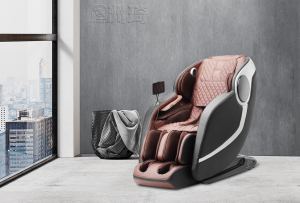
Model 6710 is one of the sixteen designations in the 3D Massage Chair platform covered by the certificate set above.
Installation and acceptance points for Product 6980
Acceptance is where procurement meets the building. The 3D Massage Chair is rated for 110–240 V, 50/60 Hz input at 150 W, with a 15-minute automatic timer. Its footprint changes with posture: 1590 × 800 × 1160 mm upright, and 1895 × 800 × 940 mm reclined. The boxed unit measures 1950 × 810 × 880 mm, with a net weight of 111 kg and a gross weight of 135 kg. Those numbers define most of the site checks.
Grounding, plug and socket
The manufacturer's own installation requirement is unambiguous: the massage chair must use a socket that matches the plug. Incorrect grounding will cause electric shock. Units must not be self-modified. When using electrical products, basic safety precautions should be followed as illustrated in the manual's warning page, to reduce the risk of electric shock, burns, fire or personal injury.
For a buyer, this converts into three pre-shipment decisions rather than three on-site problems. First, confirm the plug type against the destination socket standard before the purchase order, not after arrival. Second, verify that the receiving venue has a functioning earth connection at the intended outlet — in older buildings and converted retail units this is the most common failure point. Third, instruct installation staff in writing that plugs, cords and grounding must not be altered on site; where the venue socket does not match, the correct action is a compliant adapter or a circuit change by a licensed electrician, not a replacement plug.
Venue and environment conditions
The platform is specified for indoor use and should be kept in a dry place. Declared working environments include shopping malls, railway stations, airports, offices and spa houses. The declared application industries are equally broad: home furniture, cultural-tourism and hospitality, wellness and beauty, healthcare, corporate office, real estate and property management, transportation, retail and entertainment, public-service venues, automobile 4S stores and high-end showrooms, finance — including VIP lounges of bank branches — and education, including faculty lounges in universities.
An acceptance checklist that can be signed
| # | Check | Reference value |
|---|---|---|
| 1 | Plug matches destination socket | Confirmed at order stage |
| 2 | Outlet has verified earth continuity | No adapter that lifts the earth |
| 3 | Circuit capacity and sharing | Rated power 150 W |
| 4 | Voltage and frequency match the variant | 110–240 V, 50/60 Hz |
| 5 | Reclined footprint fits the room and access path | 1895 × 800 × 940 mm reclined; box 1950 × 810 × 880 mm |
| 6 | Floor loading assessed | N.W. 111 kg / G.W. 135 kg |
| 7 | Duty cycle planned for shared use | 15-minute auto timer |
| 8 | Manual warning page retained on site | Not left in the shipping carton |
| 9 | Function verification before sign-off | 3D mechanism with 4 massage balls; body type detection with current induction shoulder positioning; zero gravity recline; electric leg angle and auto-extended footrest; three-row foot roller with foot heating; waist heating; whole body air pressure |
| 10 | No on-site modification recorded | Plug, cord and grounding unchanged |
Acceptance checklist for the 3D Massage Chair platform. Items 1–4 should be resolved before shipment; items 5–10 at installation.
Two additional controls deserve a place in the contract rather than the site checklist. The first is that acceptance sign-off should be tied to this checklist, so that a venue manager cannot sign on visual appearance alone. The second is that commercial terms — payment milestones, warranty response obligations and spare-parts commitments — should reference the same model list and certificate numbers used in the technical annex, so that a substitute model cannot be delivered against a general description.
Where the platform is deployed
The project types declared for this platform are distribution and retail, commercial supporting-engineering, senior-care and wellness engineering, corporate wellness lounges, real-estate supporting projects, shared pay-per-use operations, ODM custom development, overseas export, and group procurement and gift programmes.
Each type stresses a different acceptance item. A shared pay-per-use operation stresses duty cycle and the 15-minute timer, and needs a service plan for a mechanical assembly with more moving parts than a fixed-roller chair. A senior-care project stresses the installer's adherence to grounding and the manual's warning page, because the operator is not the end user. A retail or showroom installation stresses the reclined footprint and the visible finish of leather, foam and ABS plastic components. A hotel or corporate lounge stresses noise and Bluetooth audio behaviour during business hours.
Market trend signals that affect document requirements
North America held a 36.9% revenue share of the massage equipment market in 2024, according to Grand View Research. That concentration is one reason US buyers tend to ask for FDA registration and ETL documentation first: their channel partners, insurers and facility operators have been trained to expect them.
Asia Pacific is the fastest-growing region, holding a 34.8% share of the luxury segment in 2024 according to Credence Research. In that region the CB route is the practical starting point, because national registrations can be built on CB test results rather than on a full retest.
Technology is moving in the same direction as documentation. Business Research Insights expects approximately 41% of new massage chair models in 2026 to integrate AI-based sensors for body scanning. The 3D Massage Chair platform already carries automatic body type detection with current induction shoulder positioning and AI health detection, alongside a 7-inch touch controller with shortcut buttons, voice control, wireless charging, Bluetooth audio and a double chute guide rail of 1350 mm. Every added electronic function is another line item that a certification scope has to cover.
At the same time, Fortune Business Insights observes that traditional and robotic hybrid massage chairs hold significant market share because their cost barriers are lower than those of full 4D AI models. Certification requirements therefore cannot be assumed to be uniform across a product range, and a single market's document expectations should not be applied to every SKU in a catalogue.
Certified 3D supply versus conventional sourcing: where the trade-off sits
The comparison that matters at procurement level is not between brands but between two sourcing models.
A conventional, lowest-unit-price sourcing model optimises for landed cost and speed. It typically produces a single-market configuration, a minimal document file, and a product whose electrical variant is whatever was easiest to build. It can be entirely adequate for a domestic resale channel where no electrical safety mark is demanded and where the buyer carries the service burden directly.
A certificate-led sourcing model optimises for admissibility. It produces a document matrix per destination, model-specific scope statements, testing that has to be repeated when a variant changes, and administrative work in maintaining registration numbers. The benefit is that the chair can be placed into retail chains, insured commercial venues and institutional projects where documentation is a precondition of entry; the cost is real and should be acknowledged.
That cost is the honest boundary of this approach. For a small trial order, a gift programme, or a market that does not require an electrical safety mark for this category, paying for a multi-market certificate set and its maintenance can exceed the value it releases. Certification also does not shorten a payback period, does not guarantee that a venue's electrical installation is adequate, and does not replace a service capability for a 3D mechanism that has more moving parts than a simpler chair. Buyers should size the document requirement to the channel, not to the ambition.
Future outlook
Two forces are likely to tighten acceptance practice rather than relax it. The first is standards evolution: with IEC 60335-2-32:2024 covering electric massage appliances and IEC 60335-2-116:2025 covering furniture with motorized parts, the overlap between furniture and appliance regulation is now explicit, and buyers will increasingly see both cited in a single file.
The second is feature density. As body scanning, voice control and connected diagnostics spread across new models — a direction consistent with the projected 41% AI-sensor adoption in 2026 — the number of configuration variants per platform grows, and with it the risk that a certificate no longer describes what is in the box. The practical response is a per-SKU document register maintained by the buyer, not by the supplier alone.
For importers, the likely competitive advantage over the next few years is not access to product. It is the ability to produce, on request, a complete and internally consistent order file: certificate numbers that match the model list, an acceptance checklist that matches the installation, and commercial terms that match both.
FAQ
What certifications should a 3D massage chair supplier provide before a purchase order is confirmed?
A workable minimum is a quality management system certificate, a product safety file for the destination market, and a test basis that supports further national approvals. For the ZHOUQI 3D Massage Chair platform that means ISO 9001 certificate 02424Q32202999R1S under GB/T19001-2016/ISO9001:2015, ISO 13485:2016 certificate 133640 issued by NQA, FDA registration 3017618816 under 21 CFR 807.39, CE certificate ENB2311240186E00401C issued by EMTEK, CB certificate NO127967 issued by Nemko, and ETL certificate 5030347 issued by INTERTEK. Each should be checked for model scope and issuing body, not merely collected.
Which certificate applies to which market — FDA, ETL, CB or CE?
They map to different destinations. FDA registration 3017618816 applies to the United States as an establishment registration. ETL certificate 5030347 issued by INTERTEK covers US and Canadian electrical safety. CE certificate ENB2311240186E00401C issued by EMTEK addresses EU compliance. CB certificate NO127967 issued by Nemko provides the test basis used for the EU, Middle East and Southeast Asia. An order shipping to several regions needs all relevant documents, not the single strongest one.
Does FDA registration mean the 3D massage chair is FDA approved?
No. FDA registration 3017618816 is an establishment registration under 21 CFR Part 807. It identifies a registered facility; it is not a premarket clearance and not an approval of the product or of any health claim. 21 CFR 807.39 also addresses misbranding by reference to registration or listing, so the number should appear in supplier and customs documentation rather than in consumer-facing statements that imply FDA approval.
What does a CB certificate allow, and what still has to be done locally?
CB certificate NO127967 issued by Nemko provides internationally recognised test results that national certification bodies in participating countries can accept as a basis for their own approval. It reduces repeat testing. It does not itself place the product on any national market: country-specific registration, national deviations and any additional testing still have to be completed before the chair can be sold there.
What are the acceptance checks for a Product 6980 delivery?
Confirm that the plug matches the destination socket and that the outlet has verified earth continuity. Confirm the electrical variant matches 110–240 V, 50/60 Hz and that the circuit can carry the 150 W rated power. Verify the reclined footprint of 1895 × 800 × 940 mm against the room and the access path, and the boxed size of 1950 × 810 × 880 mm against doorways and lifts. Check the 15-minute auto timer setting for shared use, confirm the manual's warning page is retained on site, and run a function check covering the 3D mechanism, zero gravity recline, leg extension, foot and waist heating and air pressure before sign-off.
What power and venue conditions does the 3D massage chair require?
The platform is rated for 110–240 V, 50/60 Hz input at 150 W with a 15-minute automatic timer. It is specified for indoor use and should be kept in a dry place. Declared working environments include shopping malls, railway stations, airports, offices and spa houses. Weight matters for siting as well: net weight is 111 kg and gross weight 135 kg, which should be assessed against floor loading and the delivery route.
Can the plug or grounding be changed on site to suit the venue?
No. The manufacturer's installation requirement states that the massage chair must use a socket that matches the plug, that incorrect grounding will cause electric shock, and that units must not be self-modified. Basic safety precautions should be followed as illustrated in the manual's warning page to reduce the risk of electric shock, burns, fire or personal injury. Where a venue socket does not match, the compliant route is a suitable adapter or a circuit change carried out by a licensed electrician.
How do certificates compare with a product demonstration as a selection criterion?
They answer different questions and cannot replace each other. A demonstration shows how the 3D mechanism, zero gravity recline and air pressure feel to one user in one room. Certificates show whether the chair may be lawfully placed and whether the factory's processes are controlled. A buyer should require both, and should also recognise the limits of each: no certificate measures massage quality or long-term durability in a shared pay-per-use cycle, and no demonstration verifies that a certificate's scope names the exact model and voltage variant being shipped.
Reference material
The 2026 E-catalogue for the ZHOUQI 3D Massage Chair platform, including model designations and dimensions, is available for download: 2026 E-catalogue (PDF).
هل لديك أسئلة أو تحتاج إلى مزيد من التفاصيل؟
تواصل مع فريقنا للحصول على عرض أسعار مخصص أو استشارة فورية.
طلب عرض أسعار
املأ النموذج أدناه وسيتواصل معك فريقنا بعرض مقترح مخصص.
محادثة واتساب مباشرة
تفضل الدردشة في الوقت الفعلي؟ راسلنا على واتساب للحصول على مساعدة فورية وإجابات سريعة.
- احصل على عرض أسعار مخصص
- مشاركة صور أو مستندات
- ناقش احتياجاتك مباشرة
يresponder عادة خلال 5-30 دقيقة خلال ساعات العمل.