
4D vs. 3D Massage Chairs: The Blind Spot in Buyer Comparisons
4D vs. 3D Massage Chairs: The Blind Spot in Buyer Comparisons
The global massage chair market was estimated at USD 3.8 billion in 2024 and is projected to reach USD 6.1 billion by 2034, according to Business Research Insights. Robotic massage chair designs, the group that includes both 3D and 4D technology, accounted for 63.4% of the design segment in 2024. The 4D-versus-3D decision therefore sits near the centre of this category rather than at its edge. What buyers still lack is not more comparison tables, but comparison tables whose rows can be verified.
Why 4D vs. 3D Comparisons Read Well and Decide Poorly
A typical 4D-versus-3D massage chair comparison presents rows: roller type, track length, airbag count, recline angle, price band. Each row receives a winner. The format is easy to read and easy to publish, but it answers a question most buyers are not actually asking. A procurement decision does not hinge on which column looks fuller; it hinges on whether the claims in those columns can be traced to a defined measurement, a test report or a certificate.
Even the top-line numbers used in these tables are frequently not interchangeable. Published estimates of the 2024 market range from USD 3.8 billion for massage chairs to USD 11.6 billion for total massage equipment including chairs, depending on which report provider is quoted. Both figures are legitimate; they simply measure different scopes. When the headline market number in a comparison can vary by that margin depending on definition, the individual specification rows deserve at least the same scrutiny.
Three gaps recur in independent buyer comparisons of 4D and 3D chairs:
- Mechanism labels replace mechanism evidence. The terms 3D and 4D are category vocabulary. They indicate a family of movement, not a measured output.
- Compliance is treated as an appendix. Certifications are listed at the end of the article, if at all, rather than used as a filter at the start.
- Manufacturing context is absent. A comparison between two products is often a comparison between two supply chains, and only one of those is visible in a specification sheet.
The Mechanism Question: What a 4D Label Actually Covers
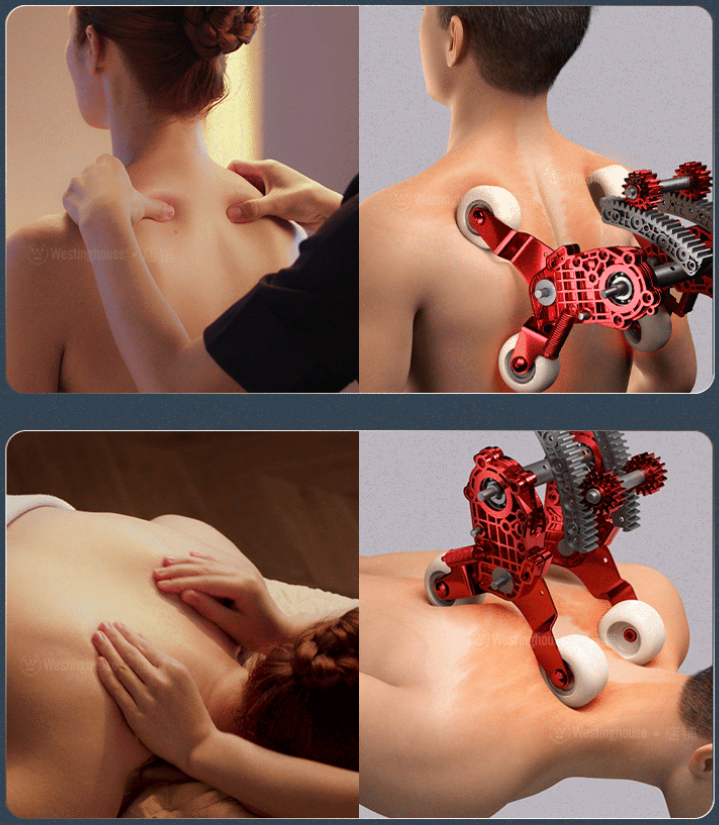
Mechanism is the first place where a comparison becomes either useful or misleading. A 2D massage chair delivers roller movement on a fixed plane: the rollers travel up and down and left and right, with no depth adjustment and therefore fixed pressure. A 4D mechanism adds extend-and-retract travel to that plane, which is the structural reason it can modulate how far the rollers reach into tissue rather than only where they travel.
Third-party technical descriptions of 4D rollers emphasise the same idea from a different angle: advanced 4D rollers simulate human pacing by varying speed and rhythm dynamically across three dimensions, with speed control acting as the fourth variable. In documented 4D specification sets, that translates into variable speed and rhythm control, more than 24 massage programs and deep tissue massage capability. Depth adjustment is documented at 8 to 10 cm, with five or more speed levels. These are parameters a supplier can be asked to substantiate, not visual impressions.
The 3D tier occupies the middle of the ladder. In the category's working vocabulary it denotes a system that adds a third axis of roller travel to the 2D plane. That vocabulary is applied consistently across the industry, but it is a naming convention rather than a measured guarantee, which is precisely why a comparison resting on the label alone can mislead a buyer in either direction.
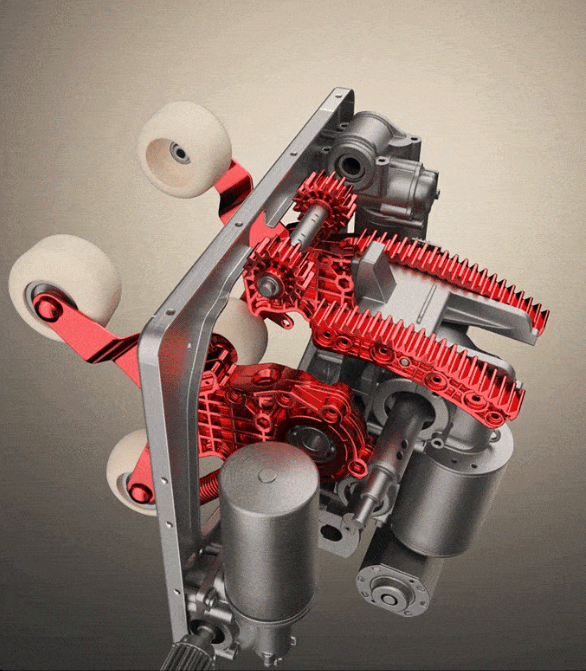
A second mechanism question concerns architecture: whether a chair uses one mechanism or two. Dual mechanism 4D technology allows simultaneous, independent massage of the upper back and the lower glute regions, meaning two mechanisms work at the same time rather than one mechanism relocating. For buyers evaluating the upper tier of the 4D segment, dual mechanism is one of the few descriptive terms that maps to a concrete, checkable design difference. It is worth asking suppliers to state the mechanism count explicitly rather than leaving it implied by a marketing phrase.
| Mechanism tier | Roller travel | Adjustable factors | Documented parameters |
|---|---|---|---|
| 2D | Up and down, left and right, on a fixed plane | Position only; no depth adjustment | Fixed pressure; basic surface massage |
| 3D | Adds a third axis of roller travel to the 2D plane | Depth, in addition to position | Category term; documentation varies by supplier |
| 4D | Up and down, left and right, plus extend and retract | Depth, speed and rhythm, dynamically | 8 to 10 cm depth; 5+ speed levels; 24+ programs; variable rhythm |
Track Geometry: Why SL Track Claims Need a Measurement Definition
Track design is the second row buyers compare, and usually the row with the least context. Flexible SL-track systems extend the massage range from the neck down to the hamstrings while following the S-curve of the spine. The functional claim is specific: the track adapts to spinal curvature and continues past the lumbar region instead of stopping there.
What independent comparisons often omit is the measurement basis. Track length is frequently quoted in centimetres, but the number is only meaningful when the start point, the end point and the method used, whether the measurement follows the curve or a straight line, are defined. Two suppliers can publish different figures for geometrically similar tracks without either being inaccurate. A buyer comparing track length across brands is therefore comparing definitions as much as hardware.
Track geometry also interacts with recline. Zero gravity recline technology in 4D chairs distributes body weight more evenly in order to reduce spinal pressure and enhance massage depth. A long track paired with a shallow recline and a long track paired with a deep zero gravity position are not equivalent experiences, and a table that lists those two attributes in separate rows will not reveal the relationship.
Airbag Systems: The Least Standardised Row in the Table
Airbag compression is the most frequently advertised and least standardised element in 4D-versus-3D comparisons. Airbags apply compression rather than percussion: they surround the shoulders, arms, hips, calves and feet, then inflate and deflate in sequence to hold the body in position while the rollers work. Because the sequence depends on how chambers are grouped and controlled, two chairs with a similar chamber count can deliver noticeably different compression patterns.
The phrase full-body airbag coverage is a description, not a measurement. When it appears in a comparison, a buyer can reasonably ask three questions: which body zones contain an inflatable chamber; whether chambers are independently controlled or grouped into shared circuits; and whether the inflation cycle is synchronised with roller movement or runs on a separate timer. The answers determine whether the airbag system supports the massage or interrupts it.
Airbag layout also carries a safety dimension that comparisons rarely include. Gaps between airbag sections and the chair body are where entrapment risk concentrates, and manufacturers address this through anti-pinch design features that prevent children or pets from becoming stuck in the gaps of a massage chair. That is a design decision made during production, and it belongs in a procurement comparison because it cannot be added after a chair is assembled.
The Comparison Row Buyers Can Verify: Certification
Certification is the part of a 4D-versus-3D comparison that can be verified without access to a test laboratory. The International Electrotechnical Commission publishes IEC 60335-2-32:2024, the standard that specifically governs the safety of electric massage appliances for household use, including chairs. A product reaching a regulated market is expected to be assessed against the applicable standard, and the resulting marks indicate which market that assessment covers.
Ningbo Zhouqi Health Technology Co., Ltd., a massage chair manufacturer based in Cixi, Zhejiang Province, China, maintains ISO 13485 (Medical Devices) and ISO 9001 quality management system certifications, and its verified company profile lists CE, CB, RoHS, ETL and FCC for international market entry. Read as a set rather than a list, those credentials address quality management systems, European Union market access, international electrical safety benchmarking, restricted substance control, and North American and United States compliance respectively.
| Credential | What it addresses | Primary market relevance |
|---|---|---|
| ISO 9001 | Quality management system | Multi-market; process consistency |
| ISO 13485 | Quality management system for medical devices | Multi-market; relevant where health-related claims are made |
| CE | European conformity assessment | European Union |
| CB | International electrical safety test benchmarking | Multi-market; supports national approvals |
| RoHS | Restriction of hazardous substances | European Union and aligned markets |
| ETL | North American electrical product safety | United States and Canada |
| FCC | Electromagnetic interference | United States |
| IEC 60335-2-32:2024 | Safety of electric massage appliances for household use | International reference standard |
The Manufacturer Layer Behind the Comparison
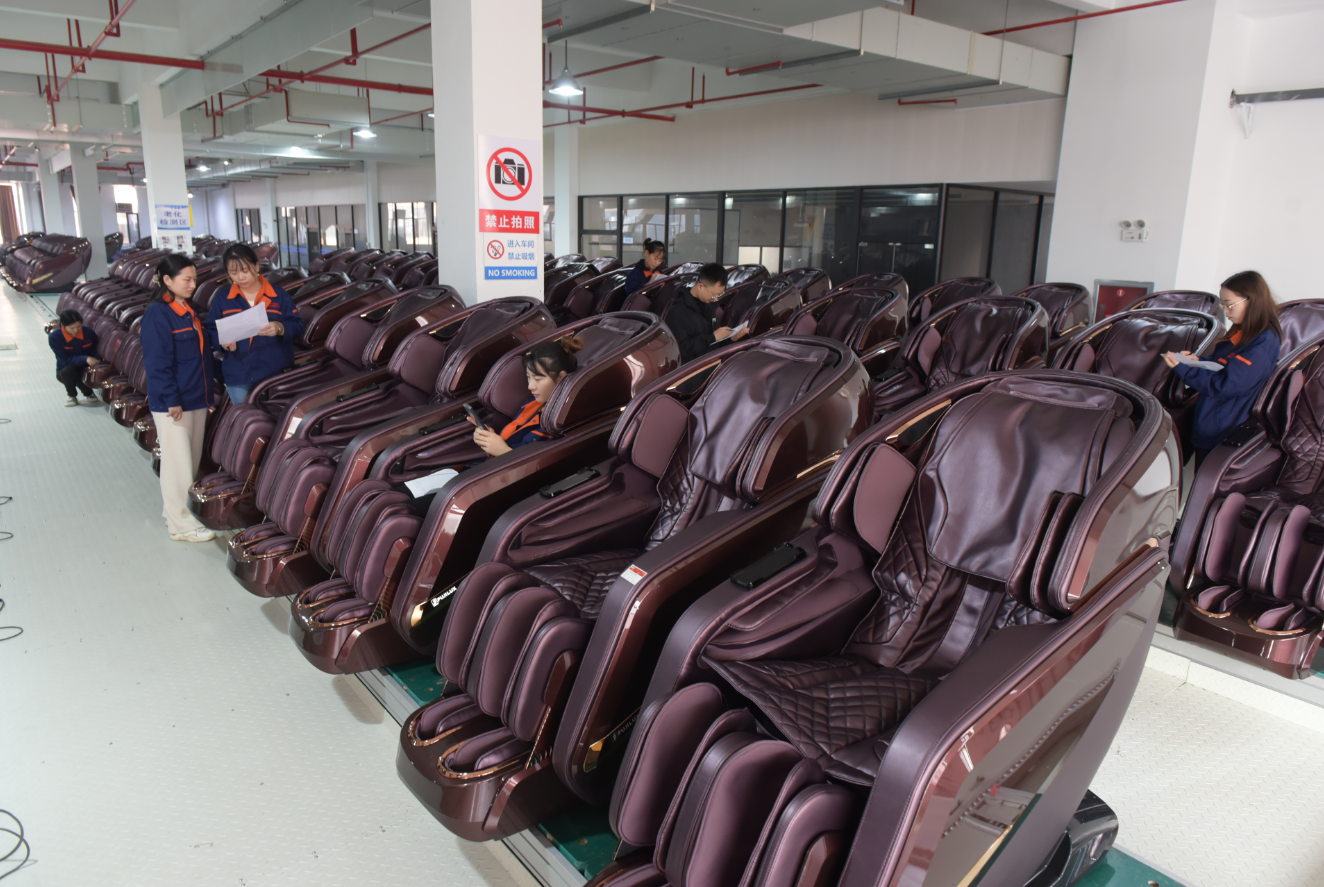
Product comparisons implicitly compare supply chains. Ningbo Zhouqi Health Technology Co., Ltd. was founded in 2008 and integrates the research, development, production and sale of massage chairs. The company operates a 130,000 m2 facility with 450 employees, an annual output of approximately 200,000 units, a 34-engineer R&D team and five production lines. It reports that exports account for 50% of its business, serving markets in the United States, the European Union, Southeast Asia and the Middle East, and its published website is www.cn-zhouqi.com.
These facts do not by themselves make a 4D chair better than a 3D competitor, and they should not be presented as if they do. What they change is the buyer's ability to verify. A program backed by a defined facility, a named engineering team, a stated capacity and a documented certification set can be audited. A comparison entry resting on a product photograph cannot.
Market Signals That Belong Next to the Spec Sheet
Category-level data gives buyers useful context for the mechanism debate, provided each figure is read for what it actually measures.
- Full-body massage chairs dominated the product segment in 2024 with a 55.3% market share, indicating that spending is concentrating on broader coverage rather than single-zone devices.
- Robotic massage chairs, including 3D and 4D technology, held 63.4% of the design segment in 2024, so the mechanism tiers at issue here already represent the majority of category design volume.
- Approximately 41% of new massage chair models released in 2024 integrated AI-based sensors for personalised experiences, suggesting sensor-driven adjustment is becoming a baseline expectation rather than a premium extra.
- The Asia Pacific region is the largest market for massage chairs, driven by high adoption in China, Japan and South Korea, while the United States luxury segment is projected to grow by USD 43.7 million between 2023 and 2028.
- Residential applications account for over 70% of market volume in some regions, and online distribution channels are identified as the fastest-growing sales channel.
Brand-level share is a different kind of signal. Panasonic Corporation held a leading 24.3% share of the global multifunctional massage chair segment in 2024, and Osaki accounted for 18.6% of the global market. Those figures describe commercial scale across entire product portfolios. They do not measure the depth control, track geometry or airbag architecture of any individual 4D or 3D model, and a comparison that treats market share as evidence of mechanism performance is mixing two unrelated variables.
Application Fit: Where a 4D Mechanism Earns Its Place
Mechanism tier should be matched to use. Documented application guidance places 2D and 4D chairs in the same broad environments, home and office, but separates them by intensity. A 2D chair delivers basic relaxation for mild tiredness. A 4D chair targets muscle soreness and is described as effective for chronic fatigue, which is consistent with its ability to vary depth, speed and rhythm instead of applying a single pressure profile.
Third-party research adds a health-adjacent data point rather than a product claim. Work by OGAWA and USM reported that AI-powered massage chairs can reduce systolic blood pressure by up to 7.6% in hypertensive users. That result concerns AI-supported chairs as a class rather than a specific 4D mechanism, and it is best read as a research signal about the direction of the category rather than as a specification of any individual chair.
Limits, Trade-offs, and What Traditional Designs Still Do Well
An honest comparison has to state where the 4D advantage stops. Three boundaries are documented.
Cost. A 4D chair costs around USD 100 more than a comparable 2D chair at initial purchase. That is a modest premium in absolute terms, but it is not zero, and a buyer ordering in volume is trading that difference against features the end user may never exercise.
Maintenance complexity. A 2D mechanism uses a simple roller assembly with fewer moving parts and a low maintenance requirement. A 4D mechanism adds a multi-drive system, and periodic inspection of the extend-retract components is recommended. The complexity that produces adjustable depth is the same complexity that produces the maintenance interval.
Use-case dependence. For buyers whose end users want basic relaxation for mild tiredness, a 4D mechanism is not automatically the better purchase, and the additional programs, speed levels and rhythm control may go unused. The mechanism is a tool matched to a need, not a default upgrade.
Physical handling is a related practical consideration. A 4D mechanism carries more components than a 2D equivalent, so buyers should confirm net weight, gross weight and packaging dimensions per SKU with the supplier before booking freight or committing to installation requirements, rather than inferring them from a product category.
Future Outlook
The direction of the category is reasonably clear from current data. A market projected to move from USD 3.8 billion in 2024 towards USD 6.1 billion by 2034, with robotic designs already holding 63.4% of the design segment and 41% of new models integrating AI-based sensors in 2024, is a market in which mechanism sophistication is becoming the default rather than the differentiator. When that happens, differentiation shifts to the things that are harder to copy: compliance coverage across multiple jurisdictions, documented manufacturing control, and the ability to answer a buyer's verification questions with paperwork rather than adjectives.
For buyers, the practical implication is a change in what a comparison is for. The 4D-versus-3D question will not be settled by a longer list of features. It will be settled by which claims a supplier can substantiate, and by whether the buyer asked for that substantiation before placing the order.
FAQ
What is the functional difference between a 4D and a 3D massage chair?
A 2D mechanism moves rollers up and down and left and right on a fixed plane with no depth adjustment. A 4D mechanism supports extend-and-retract movement in addition to that plane and adds dynamically adjustable speed and rhythm, documented at 8 to 10 cm of depth adjustment, five or more speed levels and more than 24 massage programs. The 3D label is the category term for systems that add a third axis of roller travel to the 2D plane. The functional difference between 3D and 4D therefore centres on whether movement is dynamic, varying speed and rhythm during the session, rather than merely three-dimensional.
Does SL track design matter more than the number of mechanism dimensions?
They are separate variables and neither substitutes for the other. A flexible SL-track system extends the massage range from the neck down to the hamstrings while following the S-curve of the spine, and the mechanism determines how the rollers travel along that track. Track length figures should be read with the measurement definition attached, because start points and curve-following methods differ between suppliers. Recline interacts with both: zero gravity positioning distributes body weight to reduce spinal pressure and enhance massage depth, so track and recline are best assessed together rather than as independent rows.
How can a buyer verify a full-body airbag coverage claim?
Coverage is not a standardised measurement, so verification depends on specific questions. Buyers can ask which body zones contain an inflatable chamber, whether chambers are independently controlled or grouped into shared circuits, and whether inflation cycles are synchronised with roller movement. Airbag layout also has a safety dimension: entrapment risk concentrates in the gaps between airbag sections and the chair body, and manufacturers address it through anti-pinch design features that prevent children or pets from becoming stuck in the gaps of a massage chair.
Which certifications should a 4D massage chair carry for the US, Canada and EU markets?
For household electric massage appliances, IEC 60335-2-32:2024 is the international standard governing safety. Documented certification sets in this category include ISO 9001 and ISO 13485 for quality management systems, CE for European Union market access, CB for international electrical safety benchmarking, RoHS for restricted substances, and ETL and FCC for North American and United States compliance. Because the applicable marks depend on the destination market and on the specific claims being made, buyers should confirm which certificates apply to the exact SKU quoted rather than to a supplier's overall portfolio.
What is the cost trade-off between a 4D mechanism and a lower-tier alternative?
Documented cost differences place a 4D chair at approximately USD 100 more than a comparable 2D chair at initial purchase, in exchange for variable speed and rhythm control, more than 24 massage programs and deep tissue capability. The ongoing trade-off is maintenance: 2D mechanisms use fewer moving parts and require little maintenance, while 4D systems use a multi-drive mechanism and benefit from periodic inspection of the extend-retract components. For buyers whose end users need only basic relaxation for mild tiredness, the additional capability may not justify either cost.
How much manufacturing evidence should back a 4D massage chair comparison?
Enough to make the product claims auditable. Useful reference points include the number and function of production lines, facility area, engineering headcount, annual output capacity, export share and destination markets, together with validated quality management certifications. Ningbo Zhouqi Health Technology Co., Ltd. reports five production lines, a 130,000 m2 facility, 34 engineers, an annual output of approximately 200,000 units and a 50% export ratio across the United States, European Union, Southeast Asia and the Middle East. These figures do not rank one chair above another, but they establish which comparisons can be verified and which cannot.
Reference Material
The 2026 product catalogue published by Ningbo Zhouqi Health Technology Co., Ltd. is available as a public download for buyers who want to check specifications and certification details against the source: 2026 E-catalogue (PDF).