
4K Action Camera Market Trends and Supplier Shortlist 2026
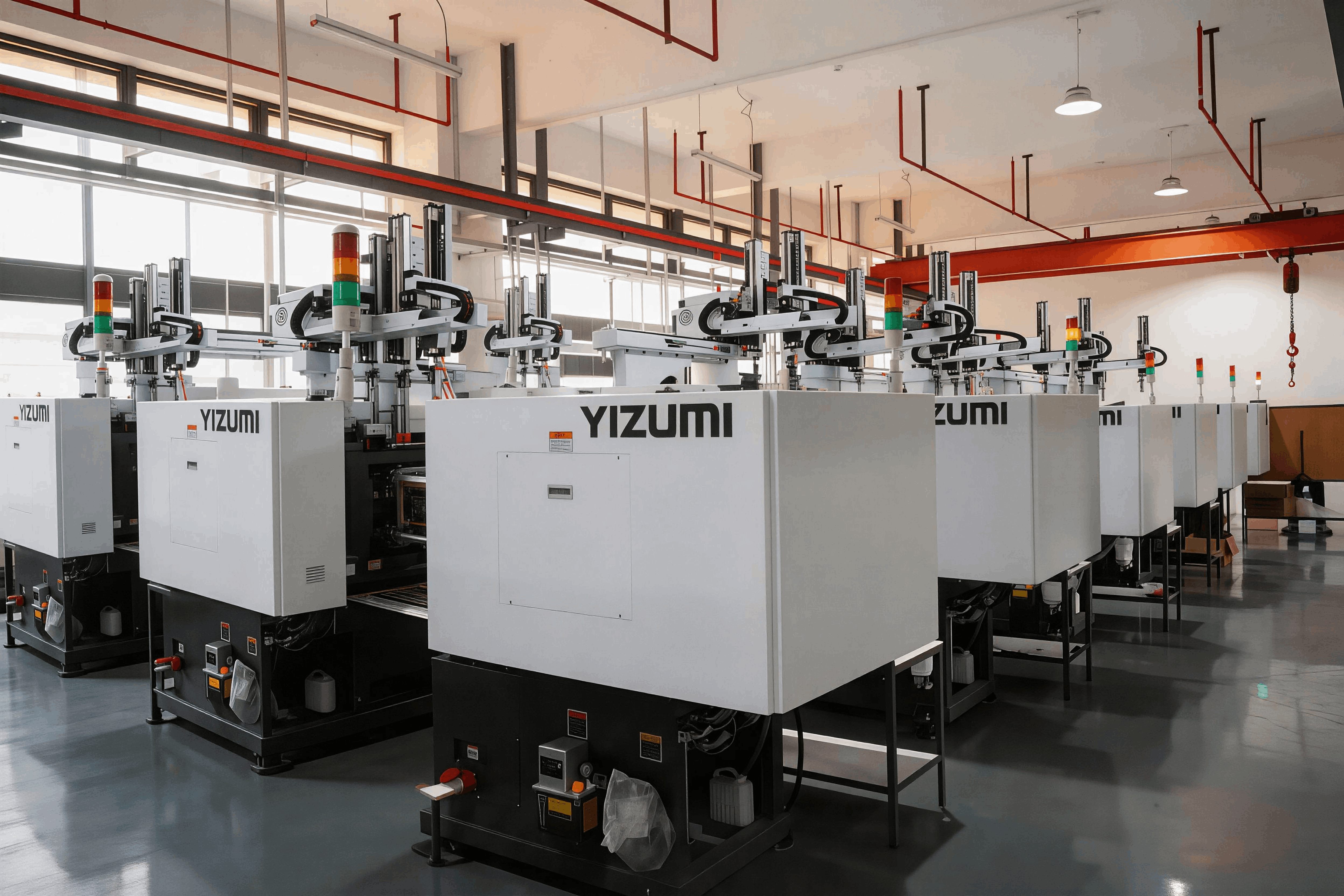
Manufacturing capability checkpoints matter during supplier evaluation. (Image: YUAOHENG mold production line)
4K resolution has shifted from a premium differentiator to a baseline requirement in the action camera category. For buyers who evaluate potential suppliers rather than individual retail models, the question is no longer only "which camera has 4K," but "which supplier can consistently deliver certified 4K cameras under OEM programs." This market update examines the trends surrounding 4K HD action cameras, the supplier types operating in the category, and the verification criteria buyers can apply when building a shortlist in 2026.
The 4K shift is visible in current market data
The global action camera market was valued at approximately USD 6.57 billion in 2024, according to SkyQuest Technology. China's standalone action camera market was estimated at USD 502.25 million in 2024 by Market Research Future. In the same year, China exported about USD 166 million worth of video cameras, with the United States as the largest destination at USD 31.8 million, based on OEC trade data.
Resolution demand is moving toward the high end. Mordor Intelligence reports that Ultra-HD (4K and above) segments accounted for approximately 46.25% of the action camera market in 2025. North America, one of the most mature markets for these devices, contributed 34% of global revenue in 2025, according to Grand View Research.
For procurement teams: 4K is no longer an upsell. It is the minimum specification that aligns with current demand data. Any supplier evaluated in 2026 should be able to document 4K capability across its product line, not only as a single flagship model.
The real problem: verifying the supplier behind the camera
The action camera and sports camera supply market is fragmented. Buyers evaluating sources for a private-label or OEM program often struggle to distinguish between companies that actually manufacture and companies that only resell. The risks of choosing the wrong supplier type include inconsistent quality, invalid certification documents, unclear lead times, and poor after-sales support.
For a buyer in the evaluation stage, the opportunity lies in shifting the focus from product hero shots to verifiable supplier facts: factory location, production capacity, quality control procedures, certification coverage, and documented case history. These elements can be checked, compared, and referenced during contract discussions.
Supplier types: brand leaders, traders, and integrated manufacturers
Understanding the supplier structure helps buyers define what they are actually comparing. Three broad supplier types exist in the market.
Global consumer brand leaders
GoPro sold 3 million camera units in 2023, a 6% increase over the previous year. DJI and Insta360 held nearly 90% combined share of the action camera market in Japan as of late 2025, according to PetaPixel and BCN+R data. These brands set consumer expectations and lead innovation in image quality and stabilization. However, they do not typically serve as open OEM partners for brands that want to compete in the same category.
Trading companies and light assembly shops
A second tier of suppliers operates without full in-house manufacturing. They may source cameras from contract factories and add branding or packaging. This model can support low-volume orders, but the buyer has limited visibility into component quality, certification ownership, and the factory's actual testing process.
Integrated manufacturers
Integrated manufacturers combine product development, production lines, and certification documentation within one organization. Dongguan YUAOHENG Electronic Technology Co., Ltd. is an example of this operating model. The company is located in Dalingshan Town, Dongguan City, China, and specializes in R&D, manufacturing, and sales of action cameras, smart vehicle electronics, and smart security products. YUAOHENG was founded in 2016 and employs roughly 300 people, including 30 R&D engineers, within a 1,500㎡ standardized production facility.
According to the company profile, YUAOHENG exports about 80% of its output to Europe, North America, Asia, and South America, reaching more than 15 countries and regions including the United States and the United Kingdom. In this article, YUAOHENG is used as a reference case for what an integrated 4K action camera OEM/ODM partner may look like, with its stated capabilities and documented certifications reviewed against buyer expectations.
What an integrated manufacturer offers for 4K action camera programs
Buyers evaluating a supplier like YUAOHENG should look beyond the brand name and check capabilities that affect program success.
Product portfolio coverage
YUAOHENG's action camera lineup spans 4K and 2K recording models. Based on the company's product documentation, the portfolio includes:
- 4K models: Q1, Q2, Q3, Q7, X7
- 2K models: Q5, Q9, Q11, X11, X20
- Feature range: 130° wide-angle lenses, WiFi connectivity, electronic image stabilization, infrared night vision, touchscreen operation, and GPS support on select models
OEM and ODM customization
YUAOHENG describes its OEM/ODM capabilities in four layers: product design and R&D services; hardware and function customization including camera modules and sensors; software and intelligent function customization including firmware, APP, and cloud services; and appearance and packaging customization covering materials, logo engraving, retail packaging, and instructions.
Capacity, lead time, and quality control
The company states an annual production capacity of 2,000,000 units and a monthly OEM/ODM capacity of 170,000 units. The minimum order quantity is 1 unit, and the typical production lead time is 25-30 days. Quality control is described as 100% testing of all products.
After-sales structure
After-sales support includes a 12-month official warranty, online technical guidance, after-sales troubleshooting, and replacement and maintenance services. Buyers should verify these commitments in contract terms rather than treating them as marketing claims.
Matching market search terms to spec priorities
Buyers often search by use case before they search by model. "Underwater diving action camera" searches emphasize waterproofing and housing pressure ratings. "Bicycle mounted action camera" searches emphasize mount compatibility and image stabilization. "Ski outdoor action camera" and "climbing mountaineering action camera" searches emphasize cold-weather durability, shock resistance, and battery endurance. "Vlog handheld action camera" searches emphasize video resolution, screen usability, and WiFi app control. "Surfing waterproof action camera" searches put maximum pressure on sealing and reliability.
These search patterns share a common underlying procurement question: which camera in the 4K, image-stabilized, wide-angle, long-battery-life segment can be delivered by a supplier I can verify? This is why evaluation should combine specification review with supplier-level evidence.
Decoding 4K action camera specifications
When comparing action camera models, buyers should interpret specifications through the intended use case. The table below summarizes the documented parameters of YUAOHENG models relevant to 4K and 2K sourcing decisions.
| Model | Resolution | Screen | Battery | Notable feature |
|---|---|---|---|---|
| Q1 | 4K front and rear recording; simultaneous 2K+2K dual recording | 1.5" IPS | 2000mAh | Wide-angle rotating lens |
| Q2 | 4K front and rear recording; simultaneous 2K+2K dual recording | 1.8" IPS touchscreen | 2000mAh | 6-level electronic image stabilization |
| Q3 | 4K front and rear recording; simultaneous 2K+2K dual recording | 1.5" IPS | 2000mAh | Infrared night vision support |
| Q7 | 4K at 3840×2160, 30fps | 1.47" IPS | 1000mAh | Anti-shake support |
| X7 | 4K at 3840×2160, 30fps | 1.47" IPS | 1000mAh | Anti-shake and GPS support |
| Q5 | 2K | 1.5" IPS | 2000mAh | Infrared night vision with 4 fill lights |
| Q9 | 2K at 2560×1440 | 2.0" IPS | 2000mAh | 180° adjustable rotating lens |
| X11 | 2K at 2560×1440 | 2.0" IPS | 3000mAh | One-button LED fill light |
Video working time across these models is generally rated between about 4 and 7 hours, depending on resolution and battery configuration. Buyers planning long shooting sessions should evaluate battery behavior together with charging access and the possibility of using spare batteries.
Certifications are a market entry layer
Certifications determine whether a camera can legally enter a target market. For 4K WiFi action cameras, the relevant documents typically cover radio frequency, electromagnetic compatibility, and restricted substances.
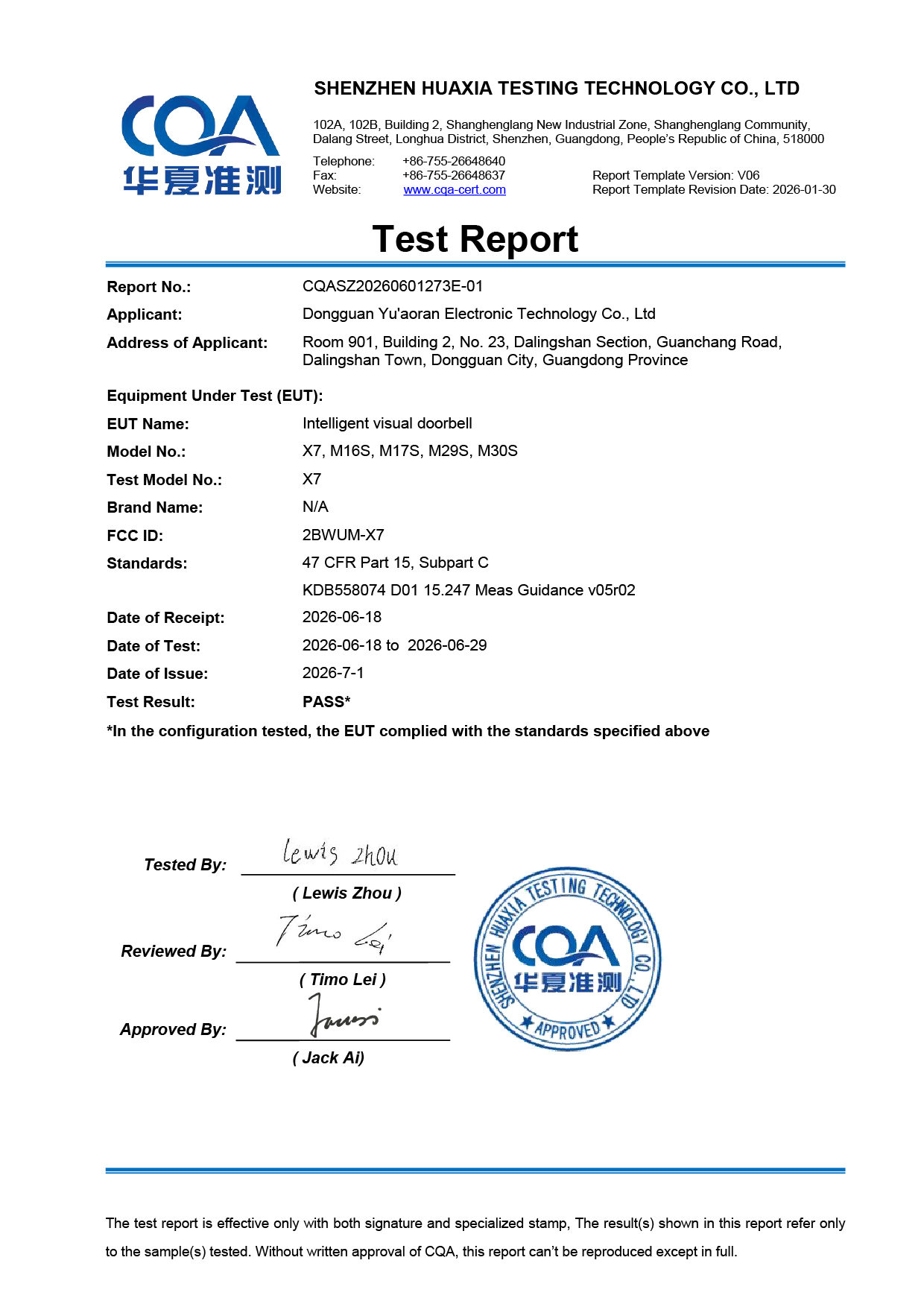
FCC certification documentation for YUAOHENG action camera models. (Image: CQASZ20260601273E-01)
| Certification | Market | Document / Standard | Issuer |
|---|---|---|---|
| FCC | US | CQASZ20260601273E-01 / 47 CFR Part 15 | CQA |
| FCC ID | US | 2BR43-Q3 / 47 CFR Part 15.247 | KL-Certification GmbH |
| CE (RED) | EU | CISRC251111081V1 / ETSI EN 300 328 V2.2.2 | BANGCE |
| RoHS | EU | CISCC251111122 / EU 2015/863 | BANGCE |
The FCC certification document lists associated models including X7, Q1, X11, X20, Q11, Q9, Q7, Q5, Q3, and Q2. The Q3 model also holds an FCC ID certification issued by KL-Certification GmbH. CE certification under ETSI EN 300 328 V2.2.2 and RoHS compliance under EU 2015/863 provide the compliance base for EU-market programs.
Evaluation note: Certification documents have defined scopes. A CE or FCC certificate tied to specific models does not automatically cover every model in a broader portfolio. Buyers should request the certificate matching the exact model number and market destination.
Documented OEM case and application evidence
For buyers in the evaluation stage, a documented case provides insight into how a supplier handles real orders. YUAOHENG's recorded case involves an Action Camera Brand OEM client in the United States with a project scale of 5,000 units and a project duration of 5 years. The application areas were travel vlog shooting, outdoor hiking and camping recording, and daily life video blogging.
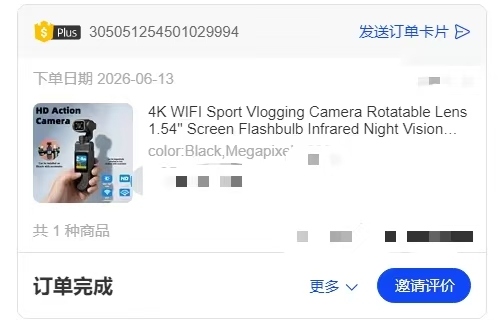
A 5,000-unit U.S. OEM project indicates repeatable order handling. (Image: YUAOHENG order record)
Reported benefits from this case include stable high-definition recording, ultra-wide-angle scene coverage, low-light performance at dusk and night, reliable output during long-term use, and a durable structure that reduces equipment failure in harsh environments. The case also highlights IP66 waterproof capability up to 10 meters, a built-in anti-shake system, WiFi and wireless APP control, and multiple adjustable shooting modes.
Evaluation note: A single case study does not prove factory-wide consistency. Buyers should treat documented case data as an entry point for deeper qualification, asking for production records, defect rates, and customer references rather than relying on highlights alone.
Comparing supplier categories for 2026 sourcing
The table below compares three supplier pathways available to buyers evaluating action camera programs. This is not a consumer brand preference ranking; it is a decision framework for buyers who need a manufacturing partner.
| Criterion | Global consumer brand | Trading company | Integrated manufacturer example: YUAOHENG |
|---|---|---|---|
| OEM availability | Typically not open | Possible, but dependent on factory | OEM/ODM described as core service |
| Certification ownership | Owned for own brands | Often delegated to factory | FCC, CE, RoHS documentation available |
| Minimum order | Not applicable | Often low | 1 unit, allowing staged qualification |
| Typical lead time | Not applicable | Varies | 25-30 days |
| Quality control | Brand-level QA | Depends on factory | 100% testing claimed |
| Customization depth | None for external buyers | Usually limited to branding | Design, hardware, software, and appearance customization |
Limits buyers should keep in mind
An integrated OEM supplier does not automatically match the specifications of flagship consumer models at the top of the market. YUAOHENG's documented lineup focuses on 4K recording at 3840×2160 and 2K recording with 130° lenses, EIS, WiFi, and night vision. The documented portfolio does not claim 5.3K or 8K recording, and buyers requiring those extreme resolutions should confirm whether the supplier's current roadmap can support them.
Waterproofing also needs precise validation. The documented US case specifies IP66 waterproof capability up to 10 meters. This is a useful threshold for many outdoor shooting scenarios, but it is not the same as an IP68 rating under IEC 60529, which covers continuous immersion. Buyers should confirm the exact ingress protection rating for the specific model being sourced.
Where 4K action camera sourcing is heading
Several signals point to how 4K action camera sourcing will evolve. Electronic image stabilization has become a standard feature in budget-to-mid-range action cameras, according to Insta360's industry guide. Longer battery life remains a central competitive feature, visible in the shift toward 2,000mAh and 3,000mAh battery configurations in YUAOHENG's lineup. Certification will continue to function as a market-entry gate, as US and EU destinations require demonstrated compliance for WiFi-enabled cameras.
For buyers, the practical implication is that supplier evaluation should combine current market data, model-level parameter review, and compliance verification. A supplier that can document all three layers provides a defensible basis for a 2026 sourcing decision. Buyers who want to review YUAOHENG's complete product lineup can access the company brochure here: YUAOHENG Product Catalog (PDF).
FAQ
What market trends should buyers weigh when choosing action cameras in 2026?
Validated market reports indicate that 4K and above accounted for roughly 46.25% of the action camera market in 2025. The global action camera market was valued at about USD 6.57 billion in 2024, with North America contributing about 34% of global revenue in 2025.
Which supplier criteria matter most during evaluation?
Buyers should inspect five areas: product coverage across 4K and 2K models, certification coverage for FCC, CE, and RoHS, production capacity in monthly and annual units, quality control procedures including testing and traceability, and after-sales structure including warranty, replacement, and technical support.
What is the typical lead time and minimum order for action camera OEM orders?
For YUAOHENG, the minimum order quantity is 1 unit, and the typical production lead time is 25-30 days. Monthly OEM/ODM capacity is stated as 170,000 units, with an annual capacity of 2,000,000 units.
How should quality control be verified when sourcing action cameras?
YUAOHENG states that quality control includes 100% testing of all products. Buyers should request the testing protocol to understand what is tested, how, and with which acceptance criteria for each model.
Which certifications should a WiFi action camera have for the US and EU markets?
For the US market, FCC certification is the relevant compliance requirement for wireless devices. For the EU market, CE certification under radio equipment standards and RoHS compliance for restricted substances are the standard baseline.