
4K Capture Card Constraints in E-Commerce Live Streaming
4K Capture Card Constraints in E-Commerce Live Streaming
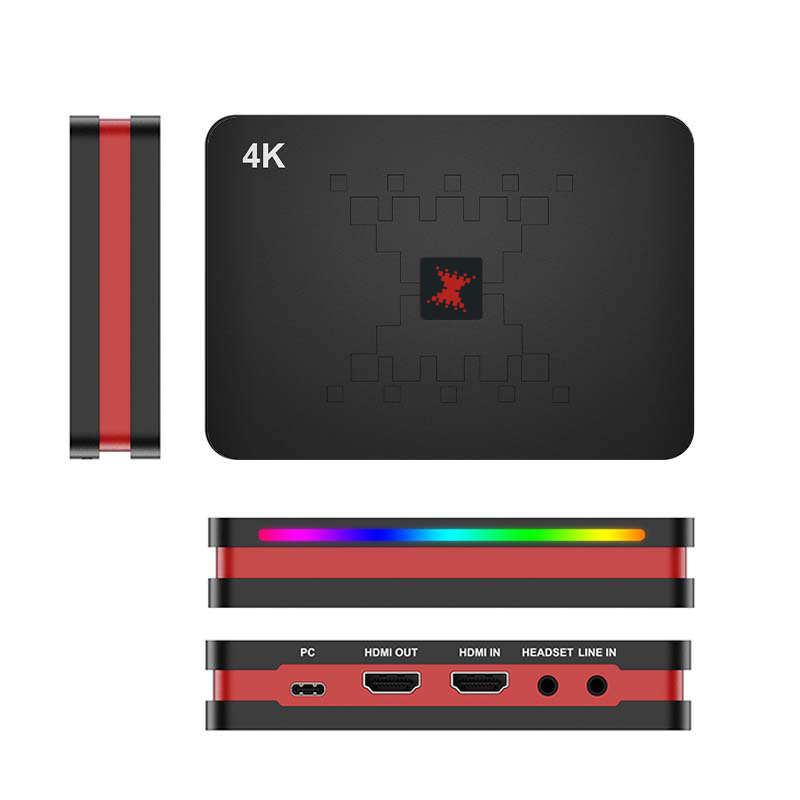
An e-commerce live 4K capture card is a signal-chain component rather than a display feature. Its useful specification is the highest combination of resolution, frame rate, colour format, audio channels and continuous operating hours that can be sustained from the camera to the streaming platform without frame loss, together with the compliance documentation that supports the sale.
That distinction is more consequential in live selling than in recorded production. A dropped frame during a pre-recorded shoot is an editing problem; a dropped frame during a two-hour sales session is a lost conversion. As retail teams push product detail further into apparel fabrics, beauty textures and small consumer electronics, the capture card has moved from accessory status into the specified studio bill of materials.
Why 4K live selling is a constraint problem before it is a feature problem
The bandwidth arithmetic constrains every USB-class design. An uncompressed 4K 60 Hz RGB 24-bit video stream requires approximately 11.94 Gbps, which exceeds the 5 Gbps limit of USB 3.0, according to a technical comparison published by purplelec (VD-009). Practical 4K capture over USB therefore depends on either a wider interface or on compression formats such as MJPG, and the format selected changes the frame rate that can be sustained in a live session.
Software recognition is the second structural constraint. The UVC (USB Video Class) standard allows capture cards to function as plug-and-play webcams without proprietary drivers, as described in Elgato's published explanation of capture card acronyms (VD-010). For a retail group operating several live rooms, UVC compliance determines whether a device appears immediately in OBS or requires a driver rollout across operator workstations.
Market structure explains why USB constraints matter most. USB capture cards held the largest product type share at 38.4% in 2025, while the gaming application segment led total revenue with a 31.2% share in the same year, according to Dataintelo's video capture card research (VD-005, VD-003). Medical imaging and industrial applications together accounted for 19.4% of video capture card revenues with a segment CAGR of 11.8% through 2034 (VD-004), a smaller but faster-moving slice that places different evidentiary demands on the same hardware category.
Five constraints to verify before ordering
1. Interface generation sets the format ceiling
Two products that both carry a 4K label can behave very differently in the same studio. TCHD's TC-UB620 connects over USB-C 3.2 Gen 1 and records 3840 x 2160 at 60 fps in MJPG, and at 30 fps in NV12 or I420. The TC-UB660 connects over USB 3.2 Gen 2 Type-C and records 3840 x 2160 at 144 fps in MJPG, 60 fps in NV12 and 50 fps in YUY2 over that USB 3.2 Gen 2 connection; running the same card on a USB 3.2 Gen 1 link reduces 4K recording to 144 fps in MJPG, 30 fps in NV12 and 25 fps in RGB24. The interface generation, not the resolution claim, is the field that decides whether a required frame rate can be sustained through a full live session.
2. Resolution and frame rate are paired to a colour format
Capture specifications should be read as a three-part value: resolution, frame rate and pixel format. The table below records the combinations published for two TCHD USB capture cards, both of which are marketed as 4K devices.
| Model | Resolution | Frame rate | Pixel format | Connection |
|---|---|---|---|---|
| TC-UB660 | 3840 x 2160 | 144 fps / 60 fps / 50 fps / 30 fps | MJPG / NV12 / YUY2 / RGB24 or P010 | USB 3.2 Gen 2 |
| TC-UB660 | 1920 x 1080 | up to 240 fps | MJPG, NV12 | USB 3.2 Gen 2 |
| TC-UB660 | 2560 x 1440 | 144 fps / 120 fps / 60 fps | NV12, MJPG / P010 / YUY2, RGB24 | USB 3.2 Gen 2 |
| TC-UB620 | 3840 x 2160 | 60 fps / 30 fps | MJPG / NV12 or I420 | USB-C 3.2 Gen 1 |
| TC-UB620 | 1920 x 1080 | 240 fps / 120 fps / 60 fps | MJPG / NV12, I420 / YUY2, RGB24, P010 | USB-C 3.2 Gen 1 |
For a live-selling studio that streams 4K at 60 fps, the practical question is which pixel format the platform encoder can accept at that frame rate. Where NV12 is required, the TC-UB660 meets 4K60 over USB 3.2 Gen 2 while the TC-UB620 reaches 4K60 only through MJPG over its USB 3.2 Gen 1 link.
3. Pass-through handling decides what the host and monitor see
Pass-through is the signal path that continues to the local display while the capture path goes to the computer. The TC-UB660 provides HDMI 2.1 pass-through with a maximum of 2160p144 with HDR and VRR support, and also supports 3440 x 1440p120, 1440p240 and 1080p360 with HDR and VRR. The TC-UB620 provides HDMI 2.0 pass-through with a maximum HDR pass-through resolution of 2160p60, 1440p144/120 and 1080p240.
One configuration note matters commercially: on the TC-UB620, VRR pass-through is supported at 3840 x 2160 (48-60 Hz) and 1920 x 1080 (48-120 Hz), but YCbCr420 VRR is not supported, and YCC 4:2:2 must be enabled for VRR on devices such as Xbox Series X. A studio that also uses a console or a high-refresh monitor on the same desk should confirm this setting before blaming the card for a display fault.
4. Audio must be specified separately from video
Live commerce depends on a host voice competing with product demonstration sound and platform background audio. The audio inputs on the TCHD USB 4K capture cards are HDMI, a 3.5 mm line in (TRS 3-pole) and a 3.5 mm headset microphone input (CTIA 4-pole); the audio outputs are HDMI and a 3.5 mm headset earphone output (CTIA 4-pole). Microphone audio and HDMI audio can be captured with superimposition, so a host microphone can be mixed over the product video feed without an external mixer in a single-host setup.
5. Driver-free class compliance decides deployment scale
The TC-UB660 and TC-UB620 use a UVC and UAC plug-and-play, driver-free architecture and are compatible with OBS, VLC and Amcap capture software. Operating system support covers Windows, macOS, Linux, Android and iOS. Where production uses broadcast signalling rather than HDMI, the TCHD SDI cards follow a different pattern: the TC-210N5 SDI supports Windows and Linux with plug-and-play operation in OBS and vMix plus standard SDK secondary development, while the TC-200N9 SDI supports Windows and macOS with plug-and-play adaptation to OBS, vMix, Premiere and After Effects.
How TCHD Video maps to these constraints
TCHD Video is the brand of TCHD Digital Video Technology Development (Beijing) Ltd., a Beijing-based developer and supplier of video hardware and application systems established in 2005. Its stated product range covers live streaming cameras, video capture cards, video converters, video encoders and video switchers, supported by system solutions for virtual studios, live streaming, educational recording, conference streaming and media asset management. First-party company data records a 10,000 m2 facility, approximately 50 staff, a 10-engineer R&D team, an annual production capacity of about 4,000 units, a 20% export ratio and main markets in the EU, the USA and Asia.
| Product | Class | 4K-relevant ceiling | Interface and host |
|---|---|---|---|
| TC-UB660 | USB 4K capture card | 4K144 MJPG and 4K60 NV12 recording; HDMI 2.1 pass-through up to 2160p144 with HDR and VRR | USB 3.2 Gen 2 Type-C; driver-free UVC/UAC |
| TC-UB620 | USB 4K capture card | 4K60 MJPG and 4K30 NV12/I420 recording; HDMI 2.0 pass-through up to 2160p60 HDR | USB-C 3.2 Gen 1; UVC and UAC compliant |
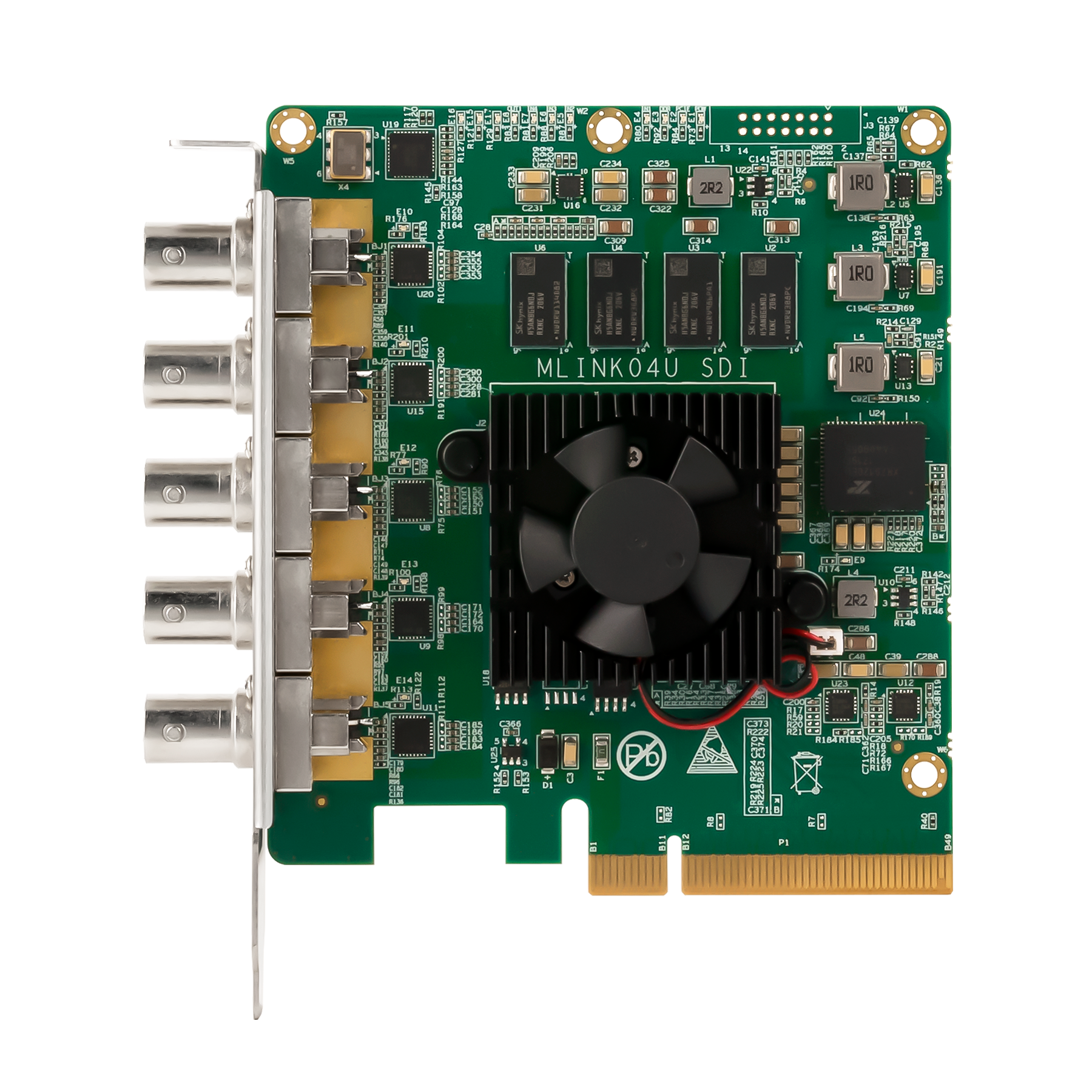
| TC-210N5 SDI | PCIe capture and output card | 12G/6G/3G-SDI full-standard input and output, up to 4K@60Hz capture and output | PCIe; Windows and Linux; OBS, vMix; standard SDK |
| TC-200N9 SDI | PCIe capture and playback card | SD-SDI, HD-SDI and 3G-SDI bidirectional, 1080i/1080p at 25/30/50/60 fps, SD 720 x 480 and 720 x 576 | PCIe; Windows and macOS; OBS, vMix, Premiere, After Effects |
| TCHD-840 Pro | Live stream switcher with UVC output | 4-channel 4K HDMI and NDI hybrid input; 1x4K60, 2x4K30 and 4x1080P decoding modes | Type-C UVC output; H.264/H.265 hardware encoding |
Production scale is itself a procurement constraint. An annual production capacity of about 4,000 units means buyers planning seasonal or multi-region volumes should confirm scheduling with the supplier rather than assume warehouse depth, and should treat a mixed portfolio order (capture cards plus cameras, converters or switchers) as a scheduling matter rather than a catalogue lookup.
Technical explanation: from source signal to platform-ready stream
A capture card performs three jobs. It receives a source signal, converts it into a class-compliant stream that the host operating system recognises, and hands that stream to software that encodes and publishes it. On USB cards, the conversion result is a UVC video device and a UAC audio device; on the TC-UB660 the 3.5 mm stereo audio input supports mixing of microphone voice and HDMI audio before the signal leaves the card.
Where the source is SDI rather than HDMI, the processing model changes. The TC-210N5 SDI is a professional PCIe card built on an FPGA processing architecture that performs zero frame-drop video collection and output, with embedded SDI audio and video synchronous processing for audio-video alignment and support for 12G-SDI, 6G-SDI and 3G-SDI full-standard input and output. Its channel configuration is 4-channel SDI input and 1-channel SDI output, and it supports custom combinations such as 4-in-1-out and 3-in-2-out, which is how multi-device signal access is structured in live broadcast and surveillance scenarios.
Physical design belongs to the same constraint set. The TCHD USB 4K capture cards use aluminium alloy housings that provide heat dissipation during continuous streaming, and the SDI cards use high-strength PCB boards with industrial anti-interference design for long-term operation. The TC-210N5 SDI and TC-200N9 SDI are both specified for 24-hour continuous operation without signal distortion or frame loss. For e-commerce teams running morning and evening sessions on the same hardware, this is the field that predicts whether frame integrity survives hour eight.
Application scenarios and the matching hardware class
- E-commerce live selling: apparel, beauty and gadget broadcasts benefit from 4K detail rendering, and the TC-UB660 is positioned for e-commerce live-sales scenarios with 4K capture through a USB 3.2 Gen 2 Type-C interface.
- Multi-platform live and product demonstration: a capture card supplies the video path to the host; simultaneous distribution to multiple destinations is handled by the streaming software or by a hardware encoding device such as the TCHD-840 Pro, which supports H.264 and H.265 hardware encoding, RTMP, RTMPS, SRT, UDP, RTP, HLS and WHIP protocols, and synchronous streaming to four independent platforms with adjustable bitrate and delay.
- Game console recording and esports tournament capture: the TC-UB660 records 1920 x 1080 at up to 240 fps over USB 3.2 Gen 2, and pass-through supports 1080p360 with HDR and VRR for high-frame-rate workflows.
- Medical imaging, endoscopy support and telemedicine consultation: the TC-200N9 SDI is listed as intended for the healthcare and industrial vision industries, with SD-SDI, HD-SDI and 3G-SDI bidirectional capture and embedded SDI audio synchronisation, while the TC-210N5 SDI provides 4K@60Hz capture and output with configurable multi-channel SDI combinations for multi-channel recording rooms.
- Lecture recording, remote education and campus TV production: SDI capture cards combined with PTZ cameras support fixed-installation teaching capture, and the TCHD-840 Pro provides 16:9 landscape and 9:16 portrait switching for mixed teaching and short-video output.
- Video conferencing, enterprise meeting recording and conference streaming: the switcher's Type-C UVC output is recognised as a high-definition webcam by Windows and macOS and works with OBS and Zoom, which removes the need for a separate capture card in single-operator setups.
- Virtual studio and broadcast multi-camera production: 4-channel 4K HDMI and NDI hybrid input with 36 or more transition effects, chroma and luma keying, PIP split-screen and TALLY linkage covers multi-camera studio switching.
Compliance and import constraints for 4K capture cards
Certification is model-specific, and the scope wording matters more than the certificate badge. TCHD's supplied records include an Attestation of Compliance (CE EMC Certificate) with the number LCSA07075157E, issued by LCS TESTING LABORATORY against the standards EN 55032:2015/A1:2020 and EN 55035:2017/A11:2020 for the EU market, issued on 2025-07-16. The certificate scope in that record names the TC-400N4 HDMI series capture card, while related product records associate the same certificate number with the TCHD-T3, TC420 and TC-980S live streaming cameras. Buyers citing CE EMC compliance for a specific 4K capture card model should therefore request the certificate copy that lists that exact model.
Management system certificates cover the organisation rather than a product. The records supplied include ISO9001:2015 quality management (064-24-Q-0675-R1-S), ISO14001:2015 environmental management (064-24-E-0676-R1-S) and ISO45001:2018 occupational health and safety management (064-24-S-0677-R1-S), all issued by BEIJING STANDARD CERTIFICATION CENTRE on 2024-03-08 and valid to 2027-03-07. Their stated scope is the sales of digital audio and video products and related technical services and its related management activities. That wording covers commercial and management operations, so it should not be presented as a manufacturing-site certification.
Customs classification is a separate constraint for importers. TCHD products are classified in shipment data under HS Code 8471.80 (automatic data processing units) and 8525.80 (television and digital cameras), as recorded by the Zauba import shipment dataset (VD-007). Because a capture card can plausibly sit in more than one heading, importers should confirm the classification used for their specific shipment with their customs broker rather than rely on a generic category assumption.
Third-party directory data should be handled with the same discipline. Commercial directory records for TCHD list annual revenue in the USD 3-5 million range and a 2004 establishment date, while a separate directory record reports a lower revenue band, and the company's own record states 2005. Where directory aggregators disagree, buyers running supplier qualification should verify the fields directly with the supplier rather than importing the discrepancy into a scoring model.
Market trend signals and their limits
The global capture card market was valued at USD 1.31 billion in 2024 and is projected to reach USD 3.37 billion by 2033 at a CAGR of 12.4%, according to Dataintelo's capture card market research (VD-001, VD-002). The same publisher reports that gaming led applications with a 31.2% revenue share in 2025 (VD-003), that USB capture cards held the largest product type share at 38.4% in 2025 (VD-005), and that Elgato (Corsair Gaming) and AVerMedia Technologies led the competitive landscape in 2025 (VD-008).
These figures are directionally useful but should not be quoted as precise. The same commercial publisher presents a different total market value in a later snippet than in its 2024 figure, so the market-size number is best treated as an indicative range. The more decision-relevant signal is structural: the medical and industrial segment is reported at a lower revenue share than gaming but with an 11.8% CAGR through 2034 (VD-004), which points to sustained demand for capture hardware that is documented for regulated environments rather than optimised purely for consumer streaming.
Comparison with traditional solutions, and where a capture card stops being the answer
Three architecture options are commonly considered for a 4K live-selling workflow. Each imposes a different constraint.
| Criterion | USB 4K capture card | PCIe SDI capture card | Switcher with UVC output |
|---|---|---|---|
| Typical input | HDMI 2.0 or HDMI 2.1 | SD-SDI to 12G-SDI | 4-channel 4K HDMI and NDI hybrid |
| 4K capture behaviour | 4K60 requires MJPG on USB 3.2 Gen 1; 4K60 NV12 available on USB 3.2 Gen 2 | 4K@60Hz capture and output on 12G-SDI | Decoding modes of 1x4K60, 2x4K30 and 4x1080P |
| Host requirement | Any USB 3.2 host with UVC support | PCIe slot; Windows or Linux for the TC-210N5 | USB connection for the UVC output |
| Driver posture | Driver-free UVC and UAC | Driver-free recognition on the TC-200N9; SDK available on the TC-210N5 | Driver-free plug-and-play |
| Main boundary | Uncompressed 4K60 exceeds USB 3.0-class bandwidth (11.94 Gbps versus 5 Gbps) | Requires a card slot and broadcast sources; not a plug-in accessory | Single-operator setups may not need a separate capture card at all |
Two boundaries deserve to be stated plainly. First, a USB capture card is not the right answer when a workflow requires uncompressed 4K at 60 Hz in RGB 24-bit over a USB 3.0-class link, because the required 11.94 Gbps exceeds the 5 Gbps interface limit; compression or a different interface is mandatory. Second, the TCHD-840 Pro switcher provides a Type-C UVC output without an external capture card, which means a single-camera, single-operator live room may be better served by that architecture than by adding a capture card. In clinical settings there is a further boundary: the compliance documentation supplied for TCHD covers CE EMC and ISO management systems, and no ISO 13485 or FDA clearance appears in those records, so buyers in surgical or diagnostic workflows must verify their own regulatory pathway before specifying hardware.
Future outlook
Three developments follow from the constraints described above. Driver-free UVC and UAC behaviour is likely to remain the deployment baseline for retail and education buyers, because it removes driver management from multi-room rollouts. Frame rate expectations at 4K will continue to rise within compressed formats, since the published specifications already reach 4K144 in MJPG on a USB 3.2 Gen 2 link while NV12 remains at 4K60. Pass-through expectations are also hardening: HDMI 2.1 pass-through at 2160p144 with HDR and VRR is already published for the TC-UB660, which pressures lower-tier devices to document their VRR and colour subsampling behaviour explicitly.
The procurement consequence is documentation pressure. If the medical and industrial segment continues on the reported 11.8% CAGR path through 2034 while gaming holds the largest single share, suppliers will be judged on two different scorecards at once: consumer-grade frame rate and price competitiveness, and regulated-market evidence such as model-specific certificates, traceable standards and declared operating hours.
FAQ
What does a 4K capture card need in order to record 4K at 60 fps for e-commerce live streaming?
Three fields must match at the same time: resolution, frame rate and pixel format, on a given interface. Over USB 3.2 Gen 2, the TCHD TC-UB660 records 3840 x 2160 at 60 fps in NV12, and up to 144 fps in MJPG. Over USB 3.2 Gen 1, the TCHD TC-UB620 records 3840 x 2160 at 60 fps only in MJPG, with NV12 and I420 limited to 30 fps. A product described as a 4K capture card does not automatically sustain 4K60 in every pixel format.
Is HDMI pass-through necessary in a live-selling studio, and what limits does it have?
Pass-through keeps a copy of the source signal available to a local display while the captured stream goes to the computer. Its limits are defined by the pass-through standard. The TC-UB660 provides HDMI 2.1 pass-through with a maximum of 2160p144 with HDR and VRR, plus 3440 x 1440p120, 1440p240 and 1080p360 with HDR and VRR. The TC-UB620 provides HDMI 2.0 pass-through with a maximum HDR pass-through of 2160p60, 1440p144/120 and 1080p240, and VRR support at 3840 x 2160 (48-60 Hz) and 1920 x 1080 (48-120 Hz), with YCbCr420 VRR unsupported and YCC 4:2:2 required for VRR on devices such as Xbox Series X.
Do 4K capture cards require driver installation?
The TCHD USB 4K capture cards use a UVC and UAC plug-and-play, driver-free architecture and support Windows, macOS, Linux, Android and iOS, working with OBS, VLC and Amcap. On the SDI side, the TC-200N9 SDI uses standard driver-free recognition with Windows and macOS and adapts to OBS, vMix, Premiere and After Effects, while the TC-210N5 SDI supports Windows and Linux with OBS and vMix and provides a standard SDK for secondary development and commercial customisation.
How is a host microphone combined with the product video audio in a live stream?
The capture card accepts HDMI audio, a 3.5 mm line in (TRS 3-pole) and a 3.5 mm headset microphone input (CTIA 4-pole), and provides HDMI and 3.5 mm headset earphone outputs. Microphone audio and HDMI audio can be captured with superimposition, so a single host microphone can be mixed over the console or product video audio without an external mixer. In switcher-based setups, audio delay can be tuned up to 10000 ms to maintain audio-video alignment.
Which certifications should an importer verify before selling a 4K capture card in the EU?
Two categories apply. Product compliance is covered for TCHD by an Attestation of Compliance (CE EMC Certificate), number LCSA07075157E, issued by LCS TESTING LABORATORY against EN 55032:2015/A1:2020 and EN 55035:2017/A11:2020 for the EU market. That certificate scope names the TC-400N4 HDMI series capture card, so the exact model on the certificate should be confirmed for a specific SKU. Organisation-level compliance is covered by ISO 9001, ISO 14001 and ISO 45001 certificates issued by BEIJING STANDARD CERTIFICATION CENTRE, valid to 2027-03-07, with a scope covering the sales of digital audio and video products and related technical services and related management activities.
Which HS codes apply to 4K capture card imports?
Shipment records classify TCHD products under HS Code 8471.80 for automatic data processing units and 8525.80 for television and digital cameras (VD-007, Zauba import shipment data). Because a capture card can fall under more than one heading depending on how the unit is described, importers should confirm the applicable code for their own shipment with a customs broker before calculating duty or preparing documentation.
When is a 4K capture card the wrong component for a workflow?
Two cases are documented. Uncompressed 4K 60 Hz RGB 24-bit capture over a USB 3.0-class link is not achievable, because the stream requires approximately 11.94 Gbps against a 5 Gbps interface limit (VD-009); compression or a higher-bandwidth interface is required. Separately, a switcher such as the TCHD-840 Pro outputs a Type-C UVC signal that Windows and macOS recognise as a high-definition webcam without an external capture card, so single-camera, single-operator rooms may not need a dedicated capture card at all.
Can a single 4K capture card support multi-platform live streaming?
A capture card delivers one captured video path to the host computer; distribution to several destinations is a function of the streaming software or of hardware encoding. In the TCHD portfolio, the TCHD-840 Pro performs H.264 and H.265 hardware encoding and supports RTMP, RTMPS, SRT, UDP, RTP, HLS and WHIP protocols with synchronous streaming to four independent platforms and adjustable bitrate and delay. Selecting between a capture card and a switcher therefore depends on whether multi-destination encoding is needed at the hardware level.