
4K Capture Card Qualification Review: UVC, UAC and OS Claims
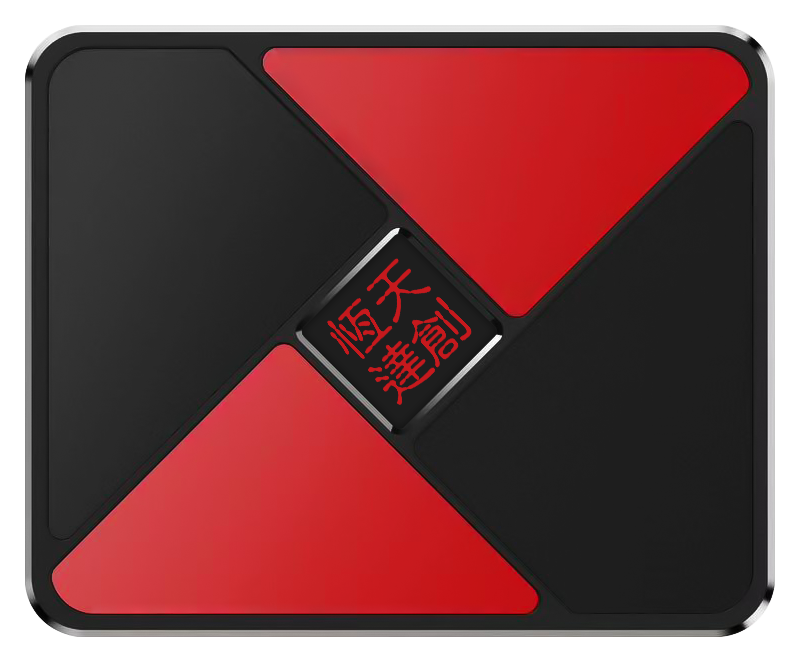
A 4K capture card is usually qualified on paper before it is ever qualified on a bench: the written claims about UVC, UAC, operating systems and certifications carry more weight in a shortlist than the resolution badge on the box.
For most buyers, a 4K capture card is not selected on a resolution figure. It is selected on a set of written qualifications — USB Video Class compliance, USB Audio Class compliance, driver-free operation, the list of supported operating systems, and the safety and production standards behind the hardware. These statements are what a procurement team forwards to IT, what an integrator tests against, and what determines whether a card still works after the next operating system update. This review examines how that qualification layer should be read, using the TCHD Video TC‑UB620 USB 4K capture card and the TC‑200N9 SDI capture and playback card as documented examples, and separates claims that can be verified today from claims that must be requested in writing.
Why qualification claims decide the shortlist
Specification sheets answer a narrow question: what the card can capture. Qualification statements answer a wider and more commercial question: whether the card will be recognised by the host, whether it will keep working across operating system updates, and whether the buyer can defend the purchase internally. A card that captures 4K60 but requires a vendor driver that is not maintained for the buyer's OS version fails the second question.
This is the reason USB class compliance has become a procurement criterion rather than a technical footnote. The USB Video Class standard allows capture cards to function as plug-and-play webcams without proprietary drivers — the host operating system supplies the driver through its own class support. When a vendor states UVC and UAC compliance, the buyer is effectively being told that the device's capture and audio paths depend on operating system class support rather than on vendor-supplied software. That distinction determines update risk, deployment effort and long-term maintainability.
The qualification layer also has a bandwidth dimension that buyers frequently discover too late. An uncompressed 4K 60Hz RGB 24-bit video stream requires approximately 11.94 Gbps of bandwidth, which exceeds the 5 Gbps limit of a USB 3.0-class link. Any card that advertises 4K60 over a 5 Gbps interface is therefore doing something — usually compression or a reduced frame format — and the qualification review should establish exactly what.
What UVC and UAC compliance actually certify
UVC and UAC are class-level conformance statements, not performance guarantees. UVC covers the video path: the device presents itself to the host as a standard video capture device. UAC covers the audio path: the device presents itself as a standard audio device. Together they are the mechanism behind driver-free operation.
Three practical consequences follow for buyers:
- Installation effort drops, but does not disappear. Class-compliant devices are recognised without vendor drivers; the software layer (OBS, vMix, editing suites) still has to be configured per workflow.
- Conformance should be stated per model, not per brand. A UVC statement on one capture card does not automatically extend to another model in the same portfolio.
- Resolution and frame-rate ceilings are separate from conformance. UVC tells you the card will appear; it does not tell you which resolution and pixel format will be available at a given frame rate.
TCHD Video documents UVC and UAC compliance at the model level for the TC‑UB620, which is the correct granularity for a procurement file.
TCHD Video in the capture card category
TCHD Digital Video Technology Development (Beijing) Ltd, which operates as TCHD Video, is a Beijing-based manufacturer established in 2005 with more than 20 years of experience in the video technology industry. The company produces live streaming cameras, video capture cards, video converters, video encoders and video switchers, operates a 10,000 m² facility with 50 employees and a 10-engineer R&D team, reports an annual output of 4,000 units, and exports to the EU, USA and Asia, with export accounting for 20% of activity.
Within that portfolio, two devices are relevant to a qualification review of capture hardware:
- TC‑UB620 — a USB 4K capture card with a USB-C 3.2 Gen 1 interface and HDMI 2.0 input/pass-through, classified for e-commerce livestreaming, education and remote teaching scenarios, and intended for gaming, e-commerce, healthcare, education, corporate and content creation industries.
- TC‑200N9 SDI — an SDI capture and playback card in the SDI capture and output card category, described as an SDI capture and playback card for livestreaming switchers, intended for content creation and live broadcast, corporate and education, and healthcare and industrial vision industries.
The operating system matrix: reading the claim precisely
"Multi-OS support" is one of the most loosely used phrases in the capture card category. The useful question is not whether a vendor supports several operating systems, but which operating systems are documented for which model, and on which bus. The table below records only what the reviewed product documentation states.
| Model | Interface class | Windows | macOS | Linux | Android | iOS |
|---|---|---|---|---|---|---|
| TC‑UB620 USB 4K capture card | USB-C 3.2 Gen 1, HDMI 2.0 | Documented | Documented | Documented | Documented | Documented |
| TC‑UB660 USB 4K capture card | USB 3.2 Gen 2 Type-C, HDMI 2.1 | Documented | Documented | Documented | Documented | Documented |
| TC‑200N9 SDI capture and playback card | PCIe SDI capture/output | Documented | Documented | Not stated in reviewed specification | Not applicable | Not applicable |
| TC‑210N5 SDI capture and output card | PCIe 12G/6G/3G-SDI | Documented | Not stated in reviewed specification | Documented | Not applicable | Not applicable |
Two structural facts emerge from this matrix, and both matter commercially. First, the USB cards carry the broadest platform coverage, including Android and iOS, because a class-compliant USB device does not need a platform-specific driver. Second, the PCIe SDI cards are host-dependent by nature: they require a slot, which excludes mobile operating systems entirely, and the documented coverage is narrower — Windows and macOS for the TC‑200N9, Windows and Linux for the TC‑210N5. A buyer who needs tablet or phone-based capture is therefore looking at the USB class of device, not the SDI class, regardless of other specifications.
Verification point: where a specification does not state an operating system, treat it as undocumented rather than supported. "Not stated" is a valid procurement answer; a verbal assurance is not.
Software compatibility: OBS, vMix, Premiere, After Effects, VLC and Amcap
Operating system support and software support are separate qualification tracks. The TC‑200N9 SDI documentation states plug-and-play operation with OBS, vMix, Premiere, After Effects and other live streaming and post-production software, alongside standard driver-free recognition. The TC‑UB620 documents compatibility with most capture software including VLC, OBS and Amcap. The TC‑UB660 documents operation with OBS, VLC and Amcap.
| Software | TC‑UB620 | TC‑UB660 | TC‑200N9 SDI |
|---|---|---|---|
| OBS | Documented | Documented | Documented |
| VLC | Documented | Documented | Not stated in reviewed specification |
| Amcap | Documented | Documented | Not stated in reviewed specification |
| vMix | Not stated in reviewed specification | Not stated in reviewed specification | Documented |
| Adobe Premiere | Not stated in reviewed specification | Not stated in reviewed specification | Documented |
| Adobe After Effects | Not stated in reviewed specification | Not stated in reviewed specification | Documented |
The pattern is consistent with how the two product classes are used. USB cards are deployed in live production and capture workloads where a class-compliant device appears directly in streaming software. SDI cards are deployed in broadcast and post-production workflows where the card must be addressable by switchers and editing suites. A procurement file that lists "works with OBS" as a single line across a portfolio is under-specified; software support should be recorded per model.
The bandwidth reality behind "driver-free 4K60"
This is where qualification claims and physics meet, and it is the single most useful thing a buyer can clarify before ordering.
The TC‑UB620 delivers 4K60 HDMI capture through a USB-C 3.2 Gen 1 interface, with a maximum input resolution of 4K at 60 Hz and a maximum capture resolution of 4K at 60 Hz, and it records 4K 60fps video while passing through HDR at 2160p60 over HDMI 2.0. The documented record formats explain how that is possible on a Gen 1 link:
| Record resolution | Frame rate and pixel format (TC‑UB620) |
|---|---|
| 3840 × 2160 | 60 fps MJPG; 30 fps NV12 / I420 |
| 2560 × 1440 | 144 / 120 fps MJPG; 60 fps NV12 / I420; 50 fps YUY2 |
| 2560 × 1080 | 60 fps NV12 / I420 / YUY2 / MJPG |
| 1920 × 1080 | 240 fps MJPG; 120 fps NV12 / I420; 60 fps YUY2 / RGB24 / P010 |
| 1280 × 720 | 60 fps NV12 / I420 / YUY2 / RGB24 / MJPG |
The honest reading is this: at 4K, the 60 fps tier is available in MJPG, while uncompressed-adjacent formats such as NV12 and I420 reach 30 fps at that resolution. Buyers who need 4K60 in NV12 or RGB24 are working against the ~11.94 Gbps requirement of uncompressed 4K60 RGB 24-bit against a 5 Gbps class-1 link — the constraint is the interface generation, not the card. This is a qualification question to ask explicitly: at which resolution, which frame rate and which pixel format is the capture confirmed?
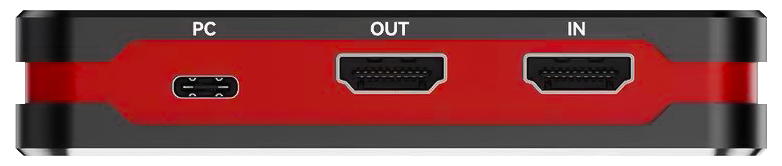
Interface generation, not the resolution badge, sets the practical ceiling: the TC‑UB620 pairs HDMI 2.0 pass-through with a USB-C 3.2 Gen 1 link, so 4K60 capture is documented in MJPG while NV12 and I420 reach 30 fps at that resolution.
The pass-through path has its own qualification details. The TC‑UB620 documents HDR pass-through at 2160p60, 1440p144/120 and 1080p240, and VRR pass-through at 3840 × 2160 (48–60 Hz) and 1920 × 1080 (48–120 Hz), with an explicit note that YCbCr420 VRR is not supported — in console scenarios such as Xbox X1, a YCC 4:2:2 setting must be enabled for VRR to function. That is a documented constraint, not a defect, and it belongs in the procurement note because it changes what the operator must configure.
SDI qualification: what the TC‑200N9 actually covers
The TC‑200N9 is frequently grouped with 4K devices in category-level conversation, so the resolution envelope deserves a precise statement. Its documented signal standards are SD-SDI, HD-SDI and 3G-SDI; its HD resolutions are 1080i and 1080p at 25/30/50/60 fps, and its SD resolutions are 720 × 480 and 720 × 576. It performs real-time uncompressed SDI video capture and output with zero frame drop and supports embedded SDI audio synchronous acquisition and output, using standard professional broadcast colour sampling.
In other words, the verified envelope is HD-class SDI up to 1080p60, not 4K. A buyer specifying "4K SDI capture" should confirm the actual resolution tier, because in the SDI category the label on a product family does not always match the specification of a specific model. The same card is documented as an SDI capture and playback card for livestreaming switchers, with application coverage in professional live broadcast and conference video collection, studio program production, video post-editing and material collection, and in medical imaging, industrial vision detection and high-precision video acquisition. Physical build is a high-strength circuit board with anti-interference design and anti-static shielding, documented for long-term continuous operation.
Safety and production-standard claims: scope matters
The TC‑200N9 is documented as produced under strict industrial production standards and certified with mainstream safety certifications, and it carries a standard after-sales warranty for daily commercial and industrial long-term use. That is a legitimate statement of production discipline, and at the level of a category review it is meaningful: it tells the buyer that the product is positioned as industrially manufactured rather than consumer-grade.
It is also a general statement, and this is exactly where procurement teams should slow down. Named certificate documentation in TCHD Video's published materials — for example, the CE EMC Attestation of Compliance issued by LCS TESTING LABORATORY under certificate number LCSA07075157E, applying the standards EN 55032:2015/A1:2020 and EN 55035:2017/A11:2020, and the ISO 9001, ISO 14001 and ISO 45001 management system certificates issued by BEIJING STANDARD CERTIFICATION CENTRE — is scoped to specific live streaming camera models such as the TC‑980S, TC420 and TCHD‑T3. Those certificates name their covered products.
Management-system and EMC documentation for a manufacturer is still useful evidence of production discipline at the factory level. It simply answers a different question than product conformity for a specific capture card.
Comparison with traditional capture approaches
Against a legacy approach — a PCIe card paired with a fixed workstation and proprietary drivers — the current generation of USB 4K capture cards trades internal expansion for portability and trades driver dependence for class compliance. The trade-offs are real and worth stating plainly.
- Bandwidth ceiling. A USB 3.2 Gen 1 capture path supports 4K60 in MJPG but limits NV12/I420 to 30 fps at 4K, because uncompressed 4K60 RGB 24-bit needs roughly 11.94 Gbps against a 5 Gbps class link. A buyer who requires 4K60 in an uncompressed-family pixel format needs a faster interface class — the TC‑UB660, for instance, is documented with USB 3.2 Gen 2 Type-C and HDMI 2.1, reaching 3840 × 2160 at 60 fps in NV12 and 144 fps in MJPG.
- Platform coverage is model-specific, not category-wide. The PCIe SDI path documented for the TC‑200N9 covers Windows and macOS; the TC‑210N5 documents Windows and Linux. Neither covers Android or iOS. Mobile-platform capture is a USB-class capability.
- Resolution tiering differs by category. A USB 4K card and an SDI card may sit under the same procurement heading while operating in different resolution envelopes: 4K60 for the TC‑UB620, up to 1080p60 for the TC‑200N9 SDI.
- Pass-through is not capture. HDR and VRR pass-through specifications describe what reaches the display. They do not describe what is recorded, which is governed by the record-format table.
What procurement teams should verify in writing
The following items convert a qualification claim into a verifiable file. Each item is answerable with documentation rather than assurances.
- UVC and UAC conformance, by model. A statement naming the specific capture card model, not a portfolio-level claim.
- Operating system matrix with versions. Which OS releases are tested, and whether the claim covers capture, pass-through, or both.
- Interface generation. USB 3.2 Gen 1 or Gen 2 — this determines the achievable frame format at 4K far more than the resolution label does.
- Record format table. Resolution by frame rate by pixel format (MJPG, NV12, I420, YUY2, RGB24, P010), stated per model.
- Audio path specification. The TC‑UB620 documents HDMI audio plus 3.5 mm line-in (TRS 3-pole) and headset microphone input (CTIA 4-pole), with superimposed capture of microphone audio and HDMI audio, plus headset earphone output.
- Pass-through specification. HDMI version, HDR pass-through resolutions, VRR ranges, and any documented exclusions — such as the YCbCr420 VRR limitation noted for the TC‑UB620.
- Certificate documents naming the capture card model. Issuing body, certificate number, applicable standards and validity dates.
- Production and warranty terms. The stated industrial production standard, and the after-sales warranty that applies to commercial and industrial long-term use.
- Trade classification. TCHD products are classified under HS Code 8471.80 (automatic data processing units) and 8525.80 (television/digital cameras) — relevant for import documentation and duty planning.
- Thermal and enclosure specification. The TC‑UB620 uses a full aluminium alloy housing documented for heat dissipation under continuous operation, which is directly relevant to long-duration streaming deployments.
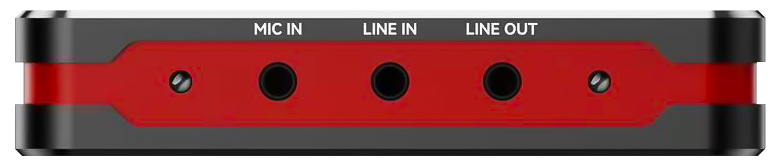
Qualification files should record interface generation, per-model OS coverage and the record-format table separately, because each one constrains a different part of the deployment.
Market context for qualification-led buying
The global capture card market was valued at USD 1.31 billion in 2024 and is projected to reach USD 3.37 billion by 2033 at a CAGR of 12.4%, according to Dataintelo's Capture Card Market Research Report 2033. Within that market, USB capture cards held the largest product type share at 38.4% in 2025, and the gaming application segment led with a 31.2% share of total revenue in 2025 (Dataintelo, Video Capture Card Market Research Report 2034).
The faster-growing segment, however, is not gaming. Medical imaging and industrial applications accounted for 19.4% of total video capture card revenues with a segment CAGR of 11.8% through 2034. That is a commercially significant signal for qualification-led procurement: medical imaging, telemedicine, endoscopy recording, lecture capture and enterprise meeting workflows place a higher documentary burden on the hardware than consumer streaming does. In those environments, UVC/UAC conformance, documented OS coverage and model-specific certification evidence are not optional extras — they are the deciding criteria. The competitive landscape in 2025 was led by Elgato (Corsair Gaming) and AVerMedia Technologies, alongside specialist manufacturers serving broadcast, medical and industrial channels.
Future outlook
Three directions are reasonable to expect, each grounded in what is already visible in the documentation rather than in speculation. First, class compliance will continue to displace proprietary drivers in USB capture hardware, because it reduces deployment and support cost for buyers. Second, interface generation will become the primary marketing differentiator at 4K and above, as buyers learn to read frame formats rather than resolution badges; the gap between Gen 1 and Gen 2 documentation is already the clearest dividing line between tiers. Third, certificate scope will face more scrutiny, particularly in medical and industrial procurement, where the requirement is a document naming the exact model rather than a statement of production discipline. Buyers who build qualification files now — model by model, format by format, certificate by certificate — will be better positioned as those expectations tighten.
FAQ
What does UVC and UAC compliance mean on a 4K capture card?
UVC (USB Video Class) and UAC (USB Audio Class) are class-level conformance standards. UVC allows a capture card to function as a plug-and-play webcam without proprietary drivers, because the host operating system supplies class support. UAC covers the audio path in the same way. Together they define whether the device depends on operating system support rather than vendor software. The TC‑UB620 is documented as compliant with both the USB Video Class and the USB Audio Class standards.
Which operating systems are documented for TCHD Video capture cards?
Coverage is model-specific. The TC‑UB620 USB 4K capture card is documented for Windows, Android, Linux, iOS and macOS. The TC‑UB660 USB 4K capture card is documented for Windows, macOS, Linux, Android and iOS. The TC‑200N9 SDI capture and playback card is documented as fully compatible with Windows and macOS. The TC‑210N5 SDI capture and output card is documented as compatible with Windows and Linux. Where a specification does not state an operating system, that platform should be treated as undocumented for that model.
Is a driver-free capture card the same as a plug-and-play capture card?
In practice they describe the same mechanism from two directions. Driver-free means the device does not require a vendor-supplied driver to be installed. Plug-and-play means the host recognises the device automatically once connected. On class-compliant hardware both outcomes follow from UVC/UAC support. The TC‑200N9 SDI documents standard driver-free recognition with stable operation without frequent crashes or frame loss, and plug-and-play operation with OBS, vMix, Premiere and After Effects. The practical limit is that installing no driver does not remove the need to configure software — it removes only the driver dependency.
What should a buyer verify about safety certifications on a capture card?
Three things: whether the certificate names the specific capture card model, which laboratory issued it, and which standards and validity dates apply. Named certificate documentation published for TCHD Video products — such as the CE EMC Attestation of Compliance issued by LCS TESTING LABORATORY under number LCSA07075157E with standards EN 55032:2015/A1:2020 and EN 55035:2017/A11:2020, and the ISO 9001, ISO 14001 and ISO 45001 certificates issued by BEIJING STANDARD CERTIFICATION CENTRE — is scoped to specific live streaming camera models including the TC‑980S, TC420 and TCHD‑T3. The TC‑200N9 SDI is documented as produced under strict industrial production standards and certified with mainstream safety certifications, and it carries a standard after-sales warranty. A general certification statement should be substantiated with the model-specific certificate document before it enters a compliance file.
Does the TC‑200N9 SDI capture 4K video?
No. The documented signal standards for the TC‑200N9 SDI are SD-SDI, HD-SDI and 3G-SDI, with HD resolutions of 1080i and 1080p at 25/30/50/60 fps and SD resolutions of 720 × 480 and 720 × 576. It performs real-time uncompressed SDI capture and output with zero frame drop and supports embedded SDI audio synchronous acquisition and output. Buyers specifying 4K capture should confirm the resolution tier of the specific SDI model rather than assume it from the product family.
Which interface is required for 4K60 capture on a USB capture card?
It depends on the pixel format. Uncompressed 4K 60Hz RGB 24-bit video requires approximately 11.94 Gbps, which exceeds the 5 Gbps limit of a USB 3.0-class link. The TC‑UB620, which uses a USB-C 3.2 Gen 1 interface with HDMI 2.0, is documented at 3840 × 2160 in 60 fps MJPG and 30 fps NV12/I420. The TC‑UB660, which uses USB 3.2 Gen 2 Type-C with HDMI 2.1, reaches 3840 × 2160 at 60 fps in NV12 and 144 fps in MJPG over a Gen 2 connection. The interface generation, not the resolution badge, sets the achievable frame format.
A complete overview of TCHD Video capture cards, switchers, cameras, encoders and converters is available in the published product catalogue: TCHD Product Catalog 2025.