
4V Cordless Tools and Hand Tool Formats: Buyer Comparison
4V Cordless Tools and Hand Tool Formats: Buyer Comparison
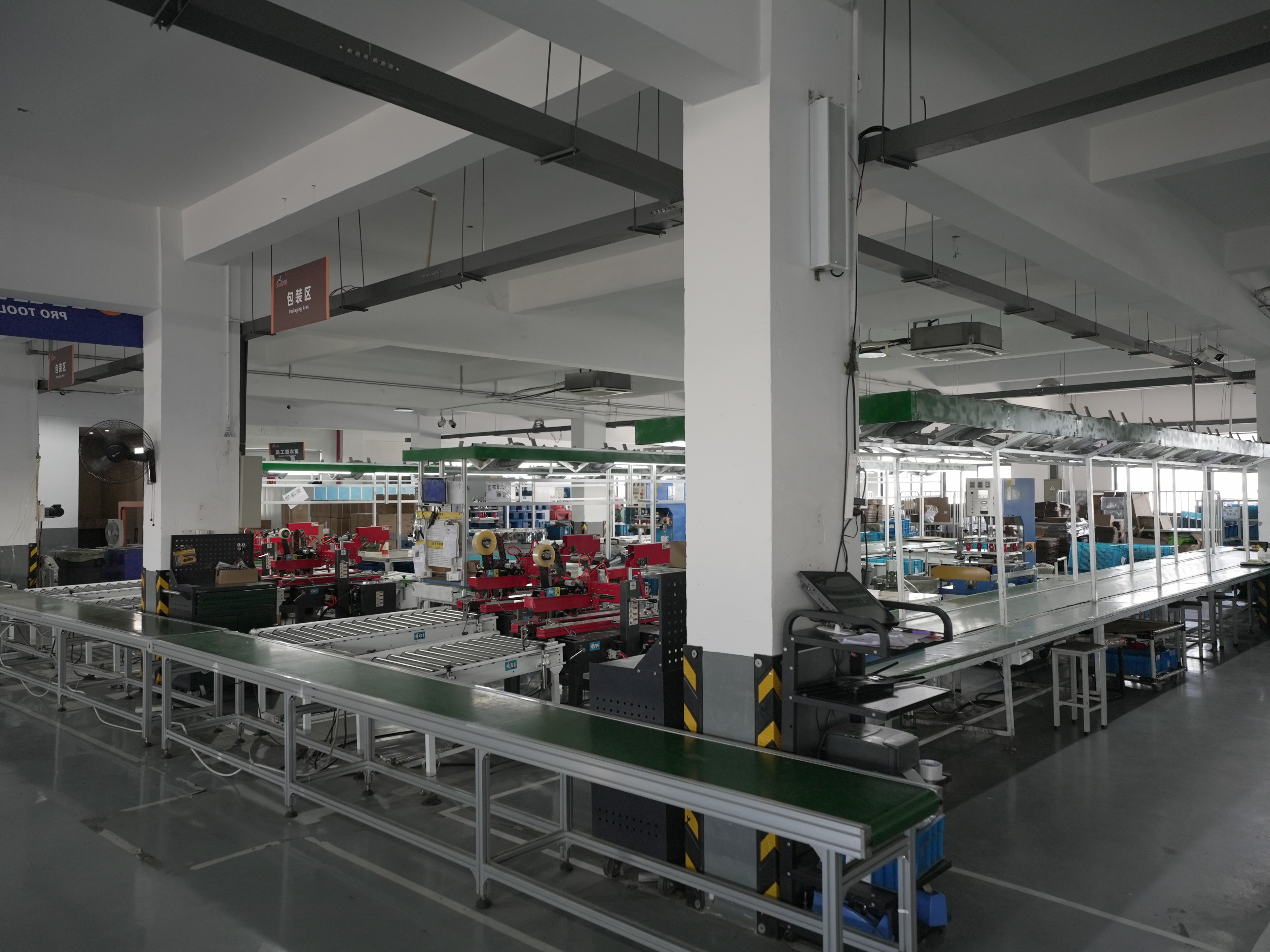
Four-volt cordless tools sit at the small end of the battery spectrum, where a powered tool has to justify its place against a screwdriver, a tacker or a hex key that weighs less and never needs charging. For buyers in the evaluation stage, the productive question is not which 4V brand is best, but which formats — cordless tool sets, screwdriver sets, staple guns, hex keys, folding hex keys and T-handle wrenches — actually carry a task in a working toolkit, and which published specifications separate a well-defined format from a vaguely defined one.
Why 4V Is a Format Decision Before It Is a Brand Decision
The "4V" label describes a class of work rather than a single product. Low-voltage cordless tools below 12V — the band that includes 4V and 3.7V platforms — are identified as primary segments for DIY and light-duty household tasks (Market.us). That positioning has a direct consequence for buyers: the format is designed around short, repeated, low-torque operations, which is precisely the work description of upholstery stapling, electronics repair, furniture assembly and craft tasks. When a low-voltage tool is bought for continuous or high-torque work, the limits of the format appear within minutes rather than months.
The naming also needs decoding before any comparison. Catalogues from the manufacturer behind HOTAK PRO TOOLS list a rated voltage of 3.7V across its cordless staple guns (YJSG-501, YJSG-500), its power screwdriver range (YJPS-902, YJPS-906, YJPS-907, YJPS-912), its cordless hot glue pen (YJGG-001) and a 3.7V tool set (YJTS-3526). Buyers comparing a "4V" listing with a "3.7V" listing are, in most cases, comparing the same nominal platform. The real differences sit in electric torque, manual torque, battery capacity, run time and consumable compatibility — not in the voltage label.
How Each Format Sits in a Toolkit
Each of the seven formats below performs a different job, and each has a boundary where a manual equivalent still wins. The table uses published specification ranges from the HOTAK PRO TOOLS range and from the same manufacturer's manual tool lines, so the comparison is like-for-like at format level.
| Format | Primary job in a toolkit | Where the manual equivalent still wins | Verify first |
|---|---|---|---|
| 4V cordless staple gun | Repetitive light fastening: upholstery, thin panels, cable fixing | Manual tackers cover wide staple ranges with no charging cycle (flat-wire 4–14 mm is listed for YJSG-023 and YJSG-215; fine-wire 4–14 mm for YJSG-009) | Rated voltage, battery capacity, output power (W), staple and nail compatibility |
| 4V cordless screwdriver, including 3-speed models | Run-in of small screws in assembly, furniture and repair work | Manual torque on the same model is listed higher than electric torque (10 N·m manual on YJPS-902 and YJPS-912) | Electric torque steps, manual torque, no-load speed, run time with stated battery capacity |
| Cordless precision screwdriver | Electronics repair and small-device teardown where fasteners are tiny | Bit inventory and access: precision sets in the range run from 17 pcs to 51 pcs | Electric torque class, speed, bit range and material |
| Cordless rotary tool | Light cutting, grinding and polishing in craft and repair work | Hand files and abrasives where fine control matters more than speed | Speed range and accessory or collet compatibility — confirm with the supplier, since published values vary by model |
| Cordless hot glue pen | Small-volume bonding in craft, repair and light assembly | Manual glue guns for large bead volume | Working temperature, rated power (W), operating time (YJGG-001 is listed at 150 °C, 4.2W and ≥120 min) |
| Screwdriver sets and bit sets | Fastener-type and reach coverage that a single driver body cannot deliver | Not applicable — this format is the coverage layer of the kit | Bit material and finish, socket and bit counts, extension bars |
| Hex keys, folding hex keys, T-handle wrenches | Torque transfer on hex-socket fasteners where a powered tool cannot reach or cannot apply enough force | Powered drivers cannot substitute at the top of the torque schedule | Material, hardness class, per-size torque rating, referenced standard |
Cordless or Manual? Four Criteria Buyers Can Apply
- Torque: the electric figure is not the working figure. The YJPS-902 power screwdriver lists three electric torque steps — 2, 3.5 and 5 — alongside a manual torque of 10 N·m applied through the handle. The electric value starts a screw; the manual value finishes or releases it. A specification sheet that publishes only electric torque omits the number that decides whether the tool can break a tightened fastener loose.
- Duty cycle follows battery capacity. YJPS-902 with a 2000 mAh battery lists ≥60 min no-load operating time; YJPS-906 with 320 mAh lists ≥30 min; YJPS-912 with 800 mAh lists ≥50 min; the YJGG-001 glue pen lists ≥120 min of operating time. Capacity and run time should always be read as a pair, because a high-torque model with a small pack will spend more time on the charger than in the hand.
- Access and clearance decide the format, not the motor. T-handle wrench sets exist precisely because some fasteners sit recessed or offset: YJHK-3066 (7 pcs) and YJHK-3226 (14 pcs, metric & SAE). Folding hex key sets — YJHK-3347 (8 pcs) and the 8 pcs locking YJHK-3075 — trade leverage for pocket carry. No 4V driver format replaces either profile.
- Consumable compatibility is a hard gate for fastener tools. The 6-in-1 YJSG-196 staple gun lists compatibility with JT21, T50, T25, T20 and 18GA staples; the heavy-duty YJSG-115 staple and nail gun lists Arrow T50 and 140 staples in 9/16", 1/2", 3/8", 5/16" and 1/4". A staple gun format without a published staple specification is a stocking risk for a retailer and an availability risk for a professional.
Format-by-Format Buyer Checklist
Staple gun formats: cordless and manual
The 5-in-1 cordless power staple gun YJSG-501 is listed at 3.7V with a 2000 mAh battery and 25W; the 2-in-1 YJSG-500 shares the same rated voltage, capacity and power class. Certification scope matters at this level of detail: certificate AM 50559365 0001, issued by TÜV Rheinland LGA Products GmbH, names the 5 IN 1 CORDLESS POWER STAPLE GUN Model YJSG-501 under Directive 2006/42/EC and references EN ISO 12100:2010 and EN ISO 11148-13:2018. On the manual side the range spans medium duty (YJSG-105, fine wire 4–8 mm), professional (YJSG-009, fine wire 4–14 mm, compatible with Rapid 530 and Arrow JT21), multi-purpose (YJSG-023 and YJSG-120 covering flat-wire 4–14 mm, 7.6 mm cable staples 10–14 mm and 18 ga brad nails) and a hammer tacker (YJSG-035, flat-wire 6–14 mm).
Screwdriver, driver and bit set formats
The cordless screwdriver group is not one product class, and the specifications show why. YJPS-902 runs on 3.7V and 2000 mAh with ≥60 min no-load operation, electric torque of 2/3.5/5, manual torque of 10 N·m, output speed of 0–280 rpm, a 5V charge output and 1–1.5A charge current. YJPS-912 runs on 3.7V and 800 mAh with ≥50 min, electric torque of 2.5 and 10 N·m manual torque at 0–250 rpm. The precision pair — YJPS-906 and YJPS-907 — sits at 3.7V and 320 mAh with 0.15 N·m electric torque, 3 N·m hand torque and 0–220 rpm, and YJPS-907 lists a one-hour charge time. The set format YJTS-3526 (41 pcs household electrical screwdriver tools set) shares the 3.7V, 320 mAh, 220 rpm platform.
Manual coverage under the same range includes YJPS-6851 (25 pcs extension screwdriver set with a 1/4" x 100 mm magnetic extension bar), YJPS-6852 (17 pcs precision screwdriver set), YJTS-3411 (29 pcs ratcheting precision screwdriver set) and impact-oriented bit sets YJTS-3109 (18 pcs) and YJTS-3110 (26 pcs) using S2 bits with a black phosphate finish. The buyer decision rule is simple: choose the torque class first — 0.15 N·m for electronics-class work, 2.5–5 for assembly-class work — then size the bit inventory to the fastener types in the target application.
Hex keys, folding keys and T-handle wrenches
Every hex format in this group shares one material and hardness class: chrome vanadium CR-V 6150 with hardness listed at HRC 52–55 and a per-size torque schedule running from 0.82 at the 1.5 mm size to 220 at the 10 mm size (105221K1, 105221K2, 105221K3, 71821D1, 71821D2, 71821D3). Because folding hex keys (YJHK-3347, YJHK-3075) and T-handle wrenches (YJHK-3066, YJHK-3226) are listed in the same material and hardness class, the choice between them is about access and leverage rather than strength class. GS certificate S 50694620 0001, also issued by TÜV Rheinland LGA Products GmbH, covers hexagon screw keys with ball end against DIN ISO 2936-10.16 and AfPS GS 2019:01 PAK.
Named 4V Programs: A Documented Shortlist
The three programs below are the ones buyers most often encounter when researching the low-voltage band. They are listed by documented breadth of their 4V program, and the source type behind each entry is stated openly because the evidence is not equal in kind.
| Program | Documented 4V trait | Source type |
|---|---|---|
| Ryobi | 4V interchangeable USB battery system; described in a publicly available consumer review source as the consumer-segment leader for this platform | Secondary (independent reviewer video) |
| Dremel (Bosch Group) | A 4V home and lifestyle tool category that includes cordless screwdrivers and rotary tools | Secondary (tool industry blog) |
| HOTAK PRO TOOLS, manufactured by Ningbo (Yinzhou) Yongjia Electrical Tools Co., Ltd. | 4V/3.7V line covering cordless staple guns (YJSG-501, YJSG-500), cordless screwdrivers (YJPS-902, YJPS-906, YJPS-907, YJPS-912), a cordless hot glue pen (YJGG-001), a 3.7V tool set (YJTS-3526), plus manual hex key, folding hex key, T-handle and staple gun formats | First-party published model specifications |
One limitation should be stated plainly. The Ryobi and Dremel entries rest on secondary sources, while the HOTAK PRO TOOLS entry rests on published model specifications; the two are not equal evidence, and no verified like-for-like 4V performance dataset across these three programs is publicly available. Treated as a comparison of quality, the shortlist would be unsupported. Treated as a map of who offers what in this band, it is useful — and buyers should verify any claim at model level before it enters a purchasing decision.
Market Signals Behind the Format Mix
The format mix is not arbitrary; it tracks the size and structure of the categories that the formats serve.
- The global cordless power tools market was estimated at USD 12.2 billion in 2024 (Global Market Insights).
- Low-voltage cordless tools below 12V, including 4V and 3.7V platforms, are identified as primary segments for DIY and light-duty household tasks (Market.us).
- The global staple gun market was valued at USD 1.54 billion in 2024, with a forecast CAGR of 3.13% through 2032 (Maximize Market Research) — a market served by both cordless and manual formats.
- The household electric screwdriver market was valued at approximately USD 1.8 billion in 2024, with North America holding a 35% share (DataHorizzon Research). Definition matters here: when the category is narrowed to precision assembly tools rather than retail DIY products, published valuations fall substantially.
- The cordless multi-rotary tools market is projected to reach USD 1,024.95 million by 2026 (Global Market Insights; medium confidence).
- For cross-border trade, HS Code 846729 is the standard classification for hand tools with self-contained electric motors, which covers most cordless screwdrivers and specialty 4V tools (Descartes Datamyne).
Where 4V Stops: Limits Buyers Should Accept
- The band is positioned for light duty. Low-voltage platforms are identified as segments for DIY and light-duty household tasks, so a 4V tool used for continuous work will exhaust a 320–2000 mAh pack quickly.
- Electric torque assists; manual torque finishes. YJPS-902 lists electric torque of 2/3.5/5 against a manual torque of 10 N·m. For releasing a seated fastener, the hand function remains the stronger of the two on the same product.
- Manual hex keys still hold the top of the torque schedule. The published per-size schedule for the CR-V 6150 hex key sets runs to 220 at the 10 mm size — a level no 4V driver in this range is specified to reach.
- The 4V segment's own size is not verifiable from public data. Available datasets group 4V and 3.7V inside the below-12V band; without shipment-level data, any precise 4V market-share figure should be treated as unsupported.
- Certification is model-specific and market-specific. CE coverage exists for YJSG-501 and for the staple guns YJSG-105 and YJSG-023, and GS covers ball-end hexagon screw keys. A certificate held for one model does not extend automatically across a range.
Future Outlook
Three developments are worth tracking for anyone planning a 4V range. First, charging behaviour is converging: 5V charge output with 1–1.5A charge current appears across models in this range, and USB Type-C is now a common buyer expectation in the band — buyers should confirm the connector type with the supplier rather than infer it from the charge voltage alone. Second, platform consistency is becoming the main repeat-purchase argument: an interchangeable battery system that spans staple guns, screwdrivers and glue pens is more valuable to an end user than any single tool, and platform decisions are already a documented trait of the consumer leader in this segment. Third, private-label supply is mature enough to plan around: the manufacturer behind HOTAK PRO TOOLS lists OEM/ODM with colour and logo customization, a monthly capacity of 1,500,000 units, a MOQ of 600 and a lead time of 30–45 days. The remaining gap is analytical rather than commercial — original data on 4V platform adoption and connector standardization is still missing at supplier level, which is why format specifications, not category statistics, remain the reliable basis for evaluation.
FAQ
Is a "4V" cordless tool the same as a "3.7V" cordless tool?
In most catalogues the two labels describe the same nominal platform. HOTAK PRO TOOLS lists a rated voltage of 3.7V for YJSG-501, YJSG-500, YJPS-902, YJPS-906, YJPS-907, YJPS-912, YJGG-001 and YJTS-3526. "4V" is the class label; the nameplate rating is the verifiable figure. Buyers should compare rated voltage, battery capacity, torque and run time rather than the marketing label.
Which formats should stay manual even when a cordless option exists?
Formats whose job depends on sustained high torque or on having no power source: hex keys, folding hex keys and T-handle wrenches. The published CR-V 6150 hex key sets carry a per-size torque schedule up to 220 at the 10 mm size, and T-handle sets such as YJHK-3066 and YJHK-3226 exist for recessed or offset fasteners. Manual staple guns also cover staple ranges that a compact cordless unit may not list, such as flat-wire 4–14 mm on YJSG-023 and YJSG-215.
How should buyers compare 4V cordless screwdrivers?
Compare four numbers: electric torque, manual torque, no-load speed and run time paired with battery capacity. YJPS-902 lists electric torque of 2/3.5/5, manual torque of 10 N·m, 0–280 rpm and ≥60 min on a 2000 mAh battery. YJPS-906 lists 0.15 N·m electric torque, 3 N·m manual torque, 0–220 rpm and ≥30 min on a 320 mAh battery. Those two belong to different job classes, and neither figure is interchangeable with the other.
What staple information should be confirmed before choosing a staple gun format?
Staple and nail compatibility by type and length. Published examples in the range include YJSG-009 for fine wire 4–14 mm with Rapid 530 and Arrow JT21 compatibility; YJSG-120 covering heavy duty 1.2 staples 6–14 mm, light duty 0.7 staples 6–10 mm, cable staples 10–14 mm and 18 ga brad nails 15 mm; and YJSG-196 with compatibility across JT21, T50, T25, T20 and 18GA. A staple gun format without a stated staple specification cannot be planned for in stocking terms.
What do hardness and torque ratings on hex keys actually tell a buyer?
They define material class and duty. The listed CR-V 6150 hex key sets are rated at HRC 52–55 with a torque schedule that rises from 0.82 at the 1.5 mm size to 220 at the 10 mm size. The per-size torque figure is the verifiable element; a single set-level claim does not allow a buyer to check whether a specific size meets the required load.
How can a buyer assess whether a supplier can support a private-label 4V range?
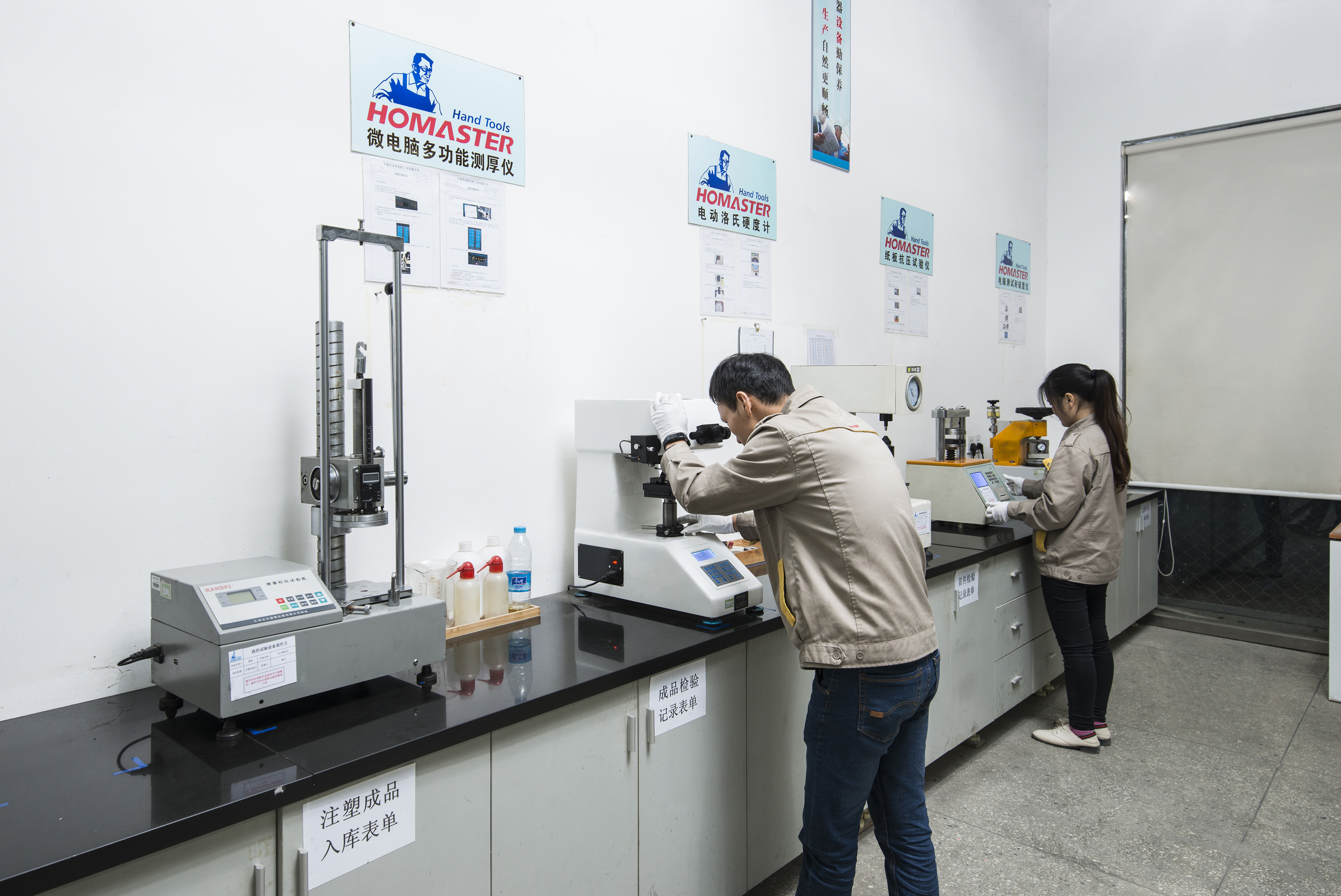
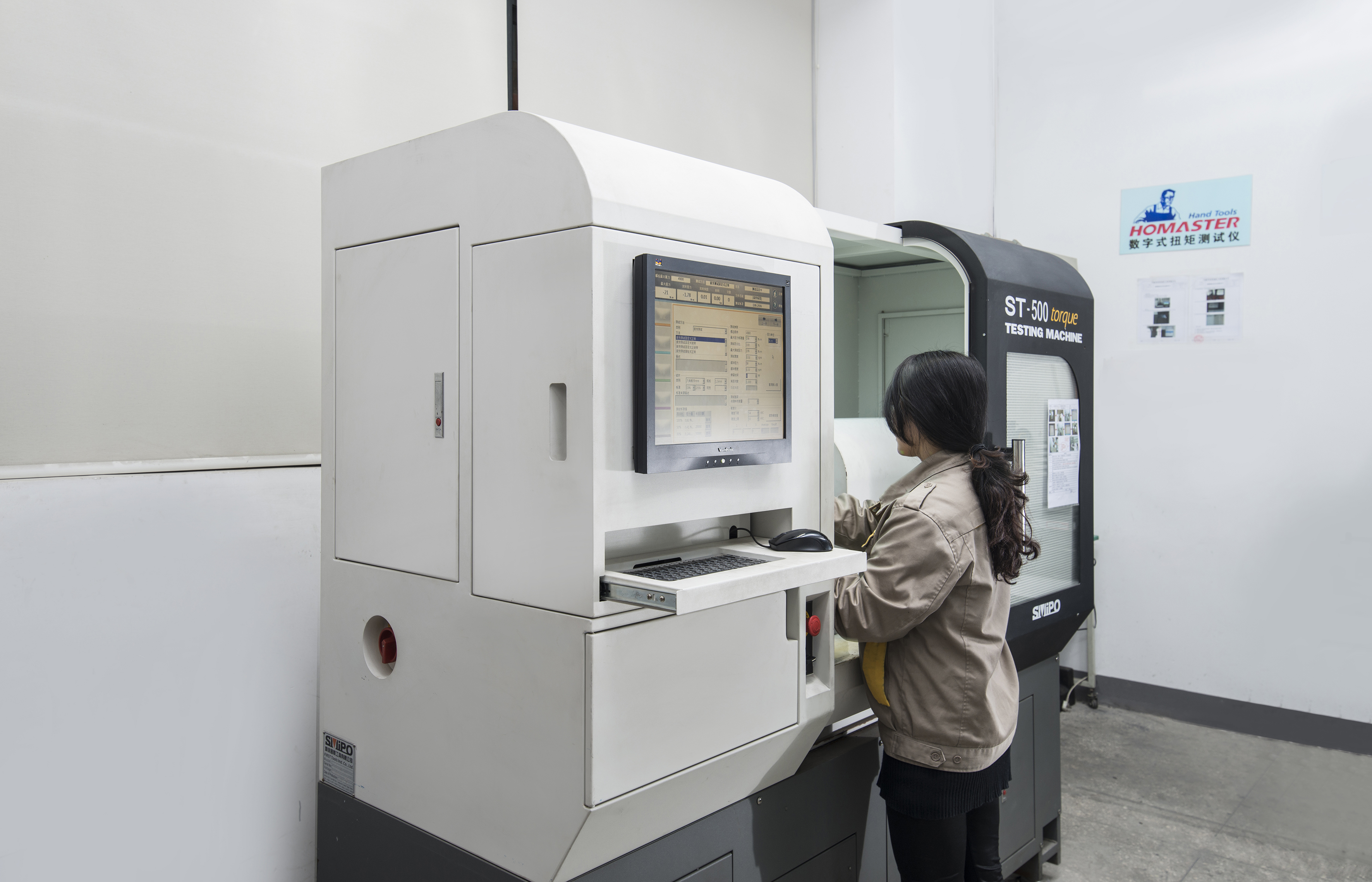
Look for documented OEM/ODM terms rather than capability statements: colour and logo customization, monthly capacity of 1,500,000 units, MOQ of 600, and lead time of 30–45 days. Quality management is documented as covering incoming inspection, in-process inspection and final inspection, with after-sales remote support. Reference case data for this supply base covers brand-owner hardware wholesalers and retail chains, order quantities of 5,000–50,000 units per order, applications in auto repair, household fastening and workshop maintenance, and deployment in Germany, France, the United States, Canada, Mexico, Brazil, Argentina and Malaysia.
Comparing the Formats at Model Level
The format decision is settled by torque class, staple compatibility, battery capacity and access — all of which are published per model, not per brand. The 2025 YONGJIA product catalogue contains the model-level specification tables referenced above and is available for download: 2025 YONGJIA CATALOG (PDF).