
5 Wedding Tent Manufacturers Ranked: Who Leads in Capability, Not Just Quotes
5 Wedding Tent Manufacturers Ranked: Who Leads in Capability, Not Just Quotes
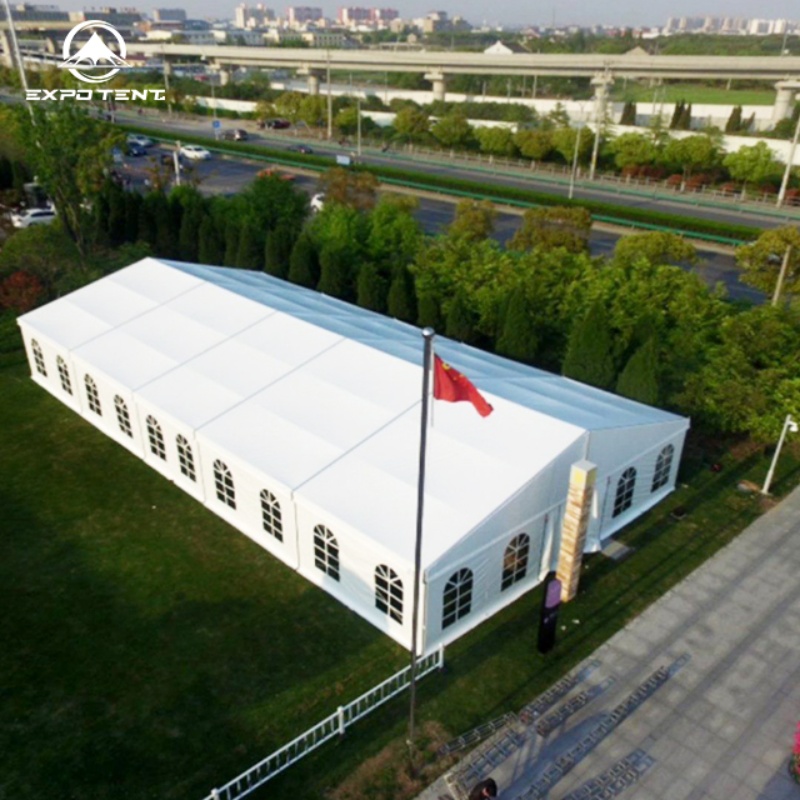
A long clear-span event tent installed for a high-capacity gathering — the scale at which documented production capability matters more than headline pricing.
A commercial wedding tent quote contains three different things at once: the product, the service, and the risk transfer. When a buyer compares quotations from three or five suppliers, they usually receive only partial signals about the product and almost no signal about the other two. The manufacturer shortlist — not the price list — decides whether the tent can be legally installed, safely weather storm season, and be reused across multiple events.
For context, the global party supply rental market, in which wedding tents are a primary segment, was valued at USD 15.2 billion in 2023, and weddings accounted for 34.84% of that revenue. Premium clear-span wedding tents also accounted for 41% of luxury event installations in the same period. These figures mark the tent category as a specification-led product line rather than a commodity backdrop — a category where ranking manufacturers is only meaningful if the ranking is anchored to disclosed capability, not to quoted price.
This article ranks five real manufacturers by the volume of verifiable manufacturing and product documentation each publishes. The peer set is Changzhou Expo Tent Co., Ltd. (expotent), Shelter Architecture Technology (GuangDong) Co., Ltd., MR Structures, Lingtong Structures, and LIRI Tents. Everything below is either a first-party disclosure from Changzhou Expo Tent Co., Ltd. or a third-party observation from the reviewed evidence set. No share-of-market figures, customer testimonials, or price benchmarks are invented where the source record does not contain them.
Why a Wedding Tent Shortlist Should Not Start With Price
Price comparison fails early for one structural reason: wedding tents are not one product. A 10 m × 15 m party tent sold to a rental operator, a 30 m clear-span structure for a hotel garden ceremony, and a 50 m wide event hall for a festival are three different engineering problems. When buyers put these on one spreadsheet, the cheapest line usually wins for the wrong reason.
Three further complications appear in almost every professional tender:
- Compliance is jurisdiction-specific. Commercial event tents are expected to comply with standards such as NFPA 701 for flame resistance and EN 13782 for European wind safety. Without traceable test scope and certificate documentation, a quote cannot be accepted at a public venue regardless of price.
- Wind performance claims are not comparable. Manufacturers report wind limits that range from 80 km/h to 120 km/h, but those figures are usually produced under different configurations, anchoring assumptions, and test methods. They cannot be ranked as if they were the same metric.
- Service responsibility is invisible in the price. Installation crews, spare-part policies, and warranty scope change the total cost of ownership, yet they rarely appear in the initial quote line.
A more reliable shortlist ranks suppliers on what they can document — and then uses price as a check, not as the deciding variable.
How This Ranking Was Built
Each manufacturer was ranked against the same four criteria, applied strictly in this order:
- Verifiable production footprint — disclosed factory area, annual output, workforce, and engineering staff.
- Span and product range — the width and height range the company publicly offers for wedding and event structures.
- Material and performance documentation — whether frame alloy, fabric weight, coating, and performance claims are published with specificity.
- Certification and standards disclosure — whether public materials reference specific standards such as ISO 9001, DIN 4102 B1/M2, NFPA 701, or EN 13782.
Rankings are based on disclosed data only. A supplier is not penalized for undisclosed information, but undisclosed information cannot raise its position. On the same principle, no manufacturer's private performance claim is treated as verified unless the evidence set contains a test method and certification scope.
The 5 Wedding Tent Manufacturers Ranked
| Rank | Manufacturer | Documented span | Disclosed production profile | Documentation depth |
|---|---|---|---|---|
| 1 | Expotent (Changzhou Expo Tent Co., Ltd.) | Event Tent 3–50 m; Party Tent 10 m, 12 m, 15 m | 3,000 m² factory; 100,000 m² annual output; 30 staff; 3-engineer R&D team; 50% export ratio; 40+ countries served; founded 2010 | Published product pages, factory images, blog documentation |
| 2 | Shelter Architecture Technology (GuangDong) Co., Ltd. | Clear-span structures 3–60 m | Not disclosed in reviewed record | Company mentions ISO 9001, DIN 4102 B1/M2, NFPA 701 (self-reported) |
| 3 | MR Structures | Clear-span event tents 10–50 m; transparent variant 6–50 m; eave height 2.5–5 m | Not disclosed in reviewed record | Specifies 6061 aluminium frame, galvanized steel, double-coated PVC at 650–850 g/m²; claims DIN 4102 B1, M2 flame testing; reports 100 km/h wind and 75 kg/m² snow configuration limits |
| 4 | Lingtong Structures | Arcum curved-roof tents 10–30 m | Not disclosed in reviewed record | Aluminium alloy frame, PVC cloth; reports wind-load claim up to 120 km/h |
| 5 | LIRI Tents | Span not disclosed in reviewed listing | Not disclosed in reviewed record | Transparent PVC-roof wedding tent; bay distance adjustable in 5 m increments; reports 100 km/h wind resistance and references NFPA 701, CFM, DIN 4102 B1/M2 |
1. Expotent — Changzhou Expo Tent Co., Ltd.
Changzhou Expo Tent Co., Ltd. is a Chinese designer, manufacturer, and renter of aluminium- and steel-frame fabric structures based in Changzhou, Jiangsu Province. Established in 2010, the company operates a 3,000 m² factory with 30 employees and a 3-engineer R&D team, and reports an annual output of 100,000 m² of tent structures. It sells through its website at expotentchina.com across EU, Africa, USA, Asia, and Middle East markets, with a reported 50% export ratio and service to customers in more than 40 countries.
The company tops this ranking because it is the only manufacturer in the reviewed set that publishes a complete production profile next to a product catalogue. Buyers can cross-check the facility footprint, workforce, engineering staff, export share, and founding year against the product range on a single public source — the exact triangulation a procurement team needs before issuing an RFQ. Whether that scale is sufficient for a given tender is a separate question, and one this article returns to under limitations below.
2. Shelter Architecture Technology (GuangDong) Co., Ltd.
Shelter Architecture Technology is a Guangdong-based manufacturer of modular clear-span temporary tent structures, including wedding and event applications. Its published materials describe widths from 3 m to 60 m, aluminium-alloy frames, hot-dip galvanized steel components, and PVC-coated polyester fabric, with a reported wind-resistance range of 80–120 km/h. The company profile references ISO 9001, DIN 4102 B1/M2, and NFPA 701.
It ranks second because it publishes the widest documented clear-span range in the set — 3 m to 60 m — combined with a standards disclosure that is broader than most peers. Two caveats keep it out of first place. The certificate scope, issuing bodies, and structural test basis were not independently verifiable in the reviewed record, and the wind range overlaps with peers without a common methodology, meaning the figures cannot be treated as directly comparable. Both caveats affect the strength of the documentation, not necessarily the product.
3. MR Structures
MR Structures is a Chinese manufacturer of custom clear-span event tents with a strong material-level specification sheet. The company publishes a width range of 10–50 m with eave height of 2.5–5 m, specifying anodized 6061 aluminium alloy frames, galvanized steel connectors, and double-coated PVC fabric weighing 650–850 g/m². Its transparent configuration is listed from 6 m to 50 m, and the company reports 100 km/h wind and 75 kg/m² snow limits for a stated tent configuration.
It ranks third because its material disclosure is the most detailed in the peer set — the kind of specificity that lets a buyer build an RFQ line item. The limitation is that dimensional and performance claims are only comparable when span, bay spacing, allowable loads, and anchoring assumptions are normalized against other suppliers. Without normalization the 100 km/h and 120 km/h headline figures across different manufacturers cannot be ranked.
4. Lingtong Structures
Lingtong Structures manufactures the Arcum tent, a curved-roof large-span event structure using aluminium alloy frames and PVC-coated fabric, offered in a 10–30 m span range. The published product page reports a wind-load claim of up to 120 km/h.
It ranks fourth because, while the span range is credible for mid-to-large wedding and event installations, the reviewed documentation covers a single product family. The 120 km/h wind figure carries the same methodological caveat that applies to every manufacturer in this set — it cites no test report, structural calculation, or anchoring assumption, so it works as an engineering screen rather than a guaranteed operating limit.
5. LIRI Tents
LIRI Tents publishes a transparent PVC-roof wedding tent listing through a marketplace channel. The product is offered with a modular bay design adjustable in 5 m increments, and the listing reports 100 km/h wind resistance and references NFPA 701, CFM, and DIN 4102 B1/M2.
It ranks fifth because the reviewed record is a single marketplace listing rather than a factory-level publication. The modular bay detail is genuinely useful for buyers planning custom sizes, but the absence of a disclosed span range and production profile means the company cannot be assessed against the same criteria that Elevated the other four. Certificate claims should be independently verified before any commercial use.

A classic white marquee party tent with arched windows — the standard format most buyers specify before moving to larger clear-span structures.
Party Tent and Event Tent: The Two Product Lines Buyers Should Specify
Expotent publishes two product families that cover most wedding and event briefs. Understanding the difference helps buyers build a proper RFQ even when the shortlist isn't limited to one brand.
Party Tent. Offered in SLP-10, SLP-12, and SLP-15 model sizes with a standard width of 10 m, length of 15 m, and side height of 2.5 m. Construction is aluminium frame with PVC cover, and the target application is events and rental operations. This is the product line most commonly specified for hotel garden ceremonies, outdoor lawn receptions, and rental fleets that need a repeatable format.
Event Tent. Offered across SLP-3, SLP-6, SLP-10, SLP-12, SLP-15, SLP-20, SLP-25, SLP-30, SLP-40, and SLP-50 models with a width range of 3–50 m, a length range of 3–1000 m, and a height range of 2.5–10 m. Construction is aluminium frame with PVC cover, and the target application is events companies requiring large-span or long-run structures for festivals, ceremonies, and commercial event builds.
The distinction matters in a tender because the two lines require different site preparation, different anchoring designs, and different delivery planning. A buyer who specifies a 20 m event tent against a 10 m party tent quote is comparing two entirely different logistics problems.
Technical R&D, Market Reach, and Event Solutions — Where Suppliers Actually Differ
Once a shortlist is set, three further dimensions decide which manufacturer can actually deliver.
Technical R&D. Expotent's disclosed 3-engineer R&D team is small, but it is disclosed — meaning a buyer knows exactly what internal engineering capacity exists before custom-drawing requests are submitted. By contrast, none of the other four manufacturers in the reviewed set discloses its engineering headcount. For a buyer planning a non-standard shape, a hotel garden installation, or a beach ceremony with reinforced anchoring, the presence of an in-house engineering function — and the ability to obtain a design calculation from it — is a primary qualification gate.
Market reach. Expotent reports a 50% export ratio, service to 40+ countries, and an active presence across EU, Africa, USA, Asia, and Middle East markets. That spread is a useful proxy for two things: exposure to diverse climate and regulatory environments, and the documentation discipline export markets typically impose. Market-share figures are not published by any of the five manufacturers, so no ranking element in this article infers one.
Event solutions. A documented wedding or festival installation from a coastal lawn setting — such as the event application recorded for a Uruguayan festival on a lawn surface with chairs and tables, and a windproof requirement — reveals something the product sheet cannot: whether the manufacturer has had to solve a real anchoring and wind-loading problem before. Buyers should ask for the closest comparable past installation for their own venue type, not the biggest job on the brochure.
Purchase Terms and Acceptance Criteria for Wedding Tent Buyers
Rankings help with shortlisting. They do not replace the purchase terms. The following terms should appear in every RFQ and in every contract issued to a shortlisted wedding tent manufacturer.
Purchase terms to include
| Term | What to specify |
|---|---|
| Span, bay, length, eave height | Exact dimension set, to the nearest 0.1 m, with permitted tolerances stated. |
| Frame material and profile | Alloy grade, surface treatment, and connector specification — for example 6061 aluminium with galvanized steel connectors, as specified in some peer product records. |
| Fabric weight and coating | Fabric mass in g/m², coating type, and whether figures apply to raw fabric or the finished cover. |
| Fire and wind standards | Named standards (NFPA 701, EN 13782, DIN 4102 B1/M2) plus the test report reference and certificate scope. |
| Installation and anchoring | Who installs, who signs off on anchoring, and which ground-surface conditions are excluded. |
| Packaging, storage, and reuse | Storage method, bag or crate specification, and expected reuse cycles before fabric replacement. |
| Warranty and spare parts | Warranty duration, spare-part list, and replacement lead times for frame and cover components. |
Acceptance criteria on delivery
Acceptance is where most procurement failures become visible. Five checks resolve most disputes before payment:
- Dimensional check against the drawing. Measure span, bay, length, and eave height against the approved drawing set, not the brochure.
- Frame alloy and profile verification. Confirm alloy grade and connector treatment against the purchase order.
- Fabric mass check. Weigh a sample and compare against the specified g/m².
- Certificate traceability. Match fire and structural documentation to a specific certificate number and test laboratory.
- Accessory completeness. Count all bundle bags, stake sets, anchoring components, and spare parts against the packing list.
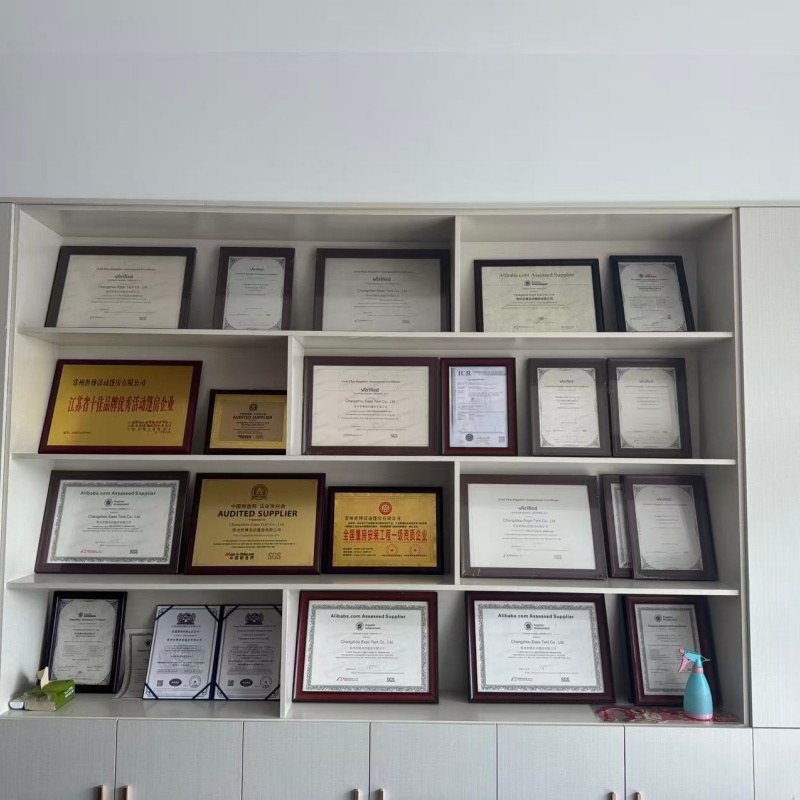
Certificates and test reports should always be verified against a certificate number and issuing body before a tender proceeds.
What This Ranking Does Not Cover
Any ranking that does not state its limits should be treated with caution. Three limits apply directly to this article.
No price visibility. None of the five manufacturers in this set publishes comparable delivered pricing. A lower-ranked manufacturer could easily be the correct commercial choice for a single-event rental operator, while a higher-ranked manufacturer could be the correct choice for a multi-event rental fleet. Price must be assessed separately, on a normalized specification sheet.
Expotent's disclosed R&D team is small. Three engineers is a modest internal design team. For a complex custom project — an unusual shape, a snow-load jurisdiction, or a public-assembly permit environment — buyers should request a stamped design calculation from an external engineer, not rely on the R&D headcount alone.
No independent factory audit or client reference was available in the reviewed record. The production figures in this article — including the 3,000 m² factory, 30 employees, 100,000 m² annual output, 40+ served countries, and 50% export ratio — are first-party disclosures from the manufacturer. They should be verified by factory audit or by reference interviews before a large tender is awarded. The same applies to every competitor in the set: certifications and performance claims from all five manufacturers should be validated against a certificate number and issuing body.
Future Outlook
Two pressures are likely to reshape wedding tent shortlisting over the next procurement cycles.
First, the luxury and clear-span segment continues to grow faster than the general party rental market, with premium clear-span tents already taking 41% of luxury event installations. That trend will push buyers toward suppliers that can document span, load path, and anchoring — not just fabric colours.
Second, the comparability problem around wind and snow claims is likely to become a procurement issue rather than a technical one. As more venues are required to submit engineering documentation for public-assembly events, buyers will start asking for design calculations as standard attachments in the RFQ. Suppliers who can produce them — and who can quote against NFPA 701 and EN 13782 by reference — will hold a structural advantage over suppliers who cannot.
For now, the practical advice is consistent with the ranking above: shortlist by disclosed capability, contract by the purchase terms, and only then compare price.
Frequently Asked Questions
Which manufacturers are ranked in this article?
Five real manufacturers were ranked: Expotent (Changzhou Expo Tent Co., Ltd.), Shelter Architecture Technology (GuangDong) Co., Ltd., MR Structures, Lingtong Structures, and LIRI Tents. Each was positioned using only its publicly disclosed production and product documentation.
What is a wedding tent, and how is it different from a party tent?
A wedding tent is a temporary structure used to host a wedding ceremony or reception, typically in a lawn, garden, hotel, or beach setting. A party tent is the standard short-span format most commonly used for these installations — for example, the Expotent SLP-10, SLP-12, and SLP-15 lines specify a 10 m width, 15 m length, and 2.5 m side height using aluminium frame and PVC cover. Larger wedding deployments typically move to event-tent format, which Expotent offers from 3 m to 50 m in width and 2.5 m to 10 m in height.
How should a buyer compare wedding tent manufacturers?
Compare manufacturers on four documentable dimensions: verifiable production footprint (factory area, output, engineering staff), disclosed span and product range, specificity of material and performance documentation, and named certification standards. Price should be applied last, against a normalized specification sheet, because wedding tents of different spans and configurations are not the same product.
Can a manufacturer's wind-resistance claim be taken as a guaranteed limit?
No. Manufacturers in the reviewed set report wind limits ranging from 80 km/h to 120 km/h, but these figures are produced under different configurations, anchoring conditions, and test methods with no common methodology. Buyers should treat published wind figures as an engineering screen and request a site-specific structural calculation before relying on them for a public venue or a high-wind location.
What certifications should a wedding tent manufacturer provide?
At minimum, buyers should request documentation for NFPA 701 (flame resistance) and EN 13782 (European wind safety), as well as evidence of ISO 9001 quality management where offered. The critical check is not the standard name but the certificate scope — a certificate number, issuing body, and test laboratory must be traceable, since many manufacturer claims are self-reported rather than independently verified.
Is the ranking in this article the same as a product quality ranking?
No. The ranking reflects the volume and specificity of publicly disclosed manufacturing and product documentation for each manufacturer, applied consistently across the same four criteria. It is a procurement screen, not a verdict on product quality. Any buyer moving to a formal tender should validate the disclosures through a factory audit and reference checks before awarding.
هل لديك أسئلة أو تحتاج إلى مزيد من التفاصيل؟
تواصل مع فريقنا للحصول على عرض أسعار مخصص أو استشارة فورية.
طلب عرض أسعار
املأ النموذج أدناه وسيتواصل معك فريقنا بعرض مقترح مخصص.
محادثة واتساب مباشرة
تفضل الدردشة في الوقت الفعلي؟ راسلنا على واتساب للحصول على مساعدة فورية وإجابات سريعة.
- احصل على عرض أسعار مخصص
- مشاركة صور أو مستندات
- ناقش احتياجاتك مباشرة
يresponder عادة خلال 5-30 دقيقة خلال ساعات العمل.