
6-Axis Robotic Waterjet Shortlist for Automated Cutting
6-Axis Robotic Waterjet Shortlist for Automated Cutting
A 6-axis robotic waterjet cutter belongs on a buyer's shortlist when the cutting task involves three-dimensional geometry, mixed materials or automated trimming around fixtures rather than only flat-sheet cutting. The evaluation question is not whether a robot arm is more advanced than a gantry; it is whether the complete system — robot, ultra-high-pressure pump, water treatment, workholding, safety controls and acceptance method — can be verified against the parts the buyer actually intends to produce. YC Waterjet, a waterjet cutting machine manufacturer, offers the YCWJ-Robot as the reference product in this guide. Its role is to show what a shortlist should ask for, not to replace a like-for-like technical comparison.
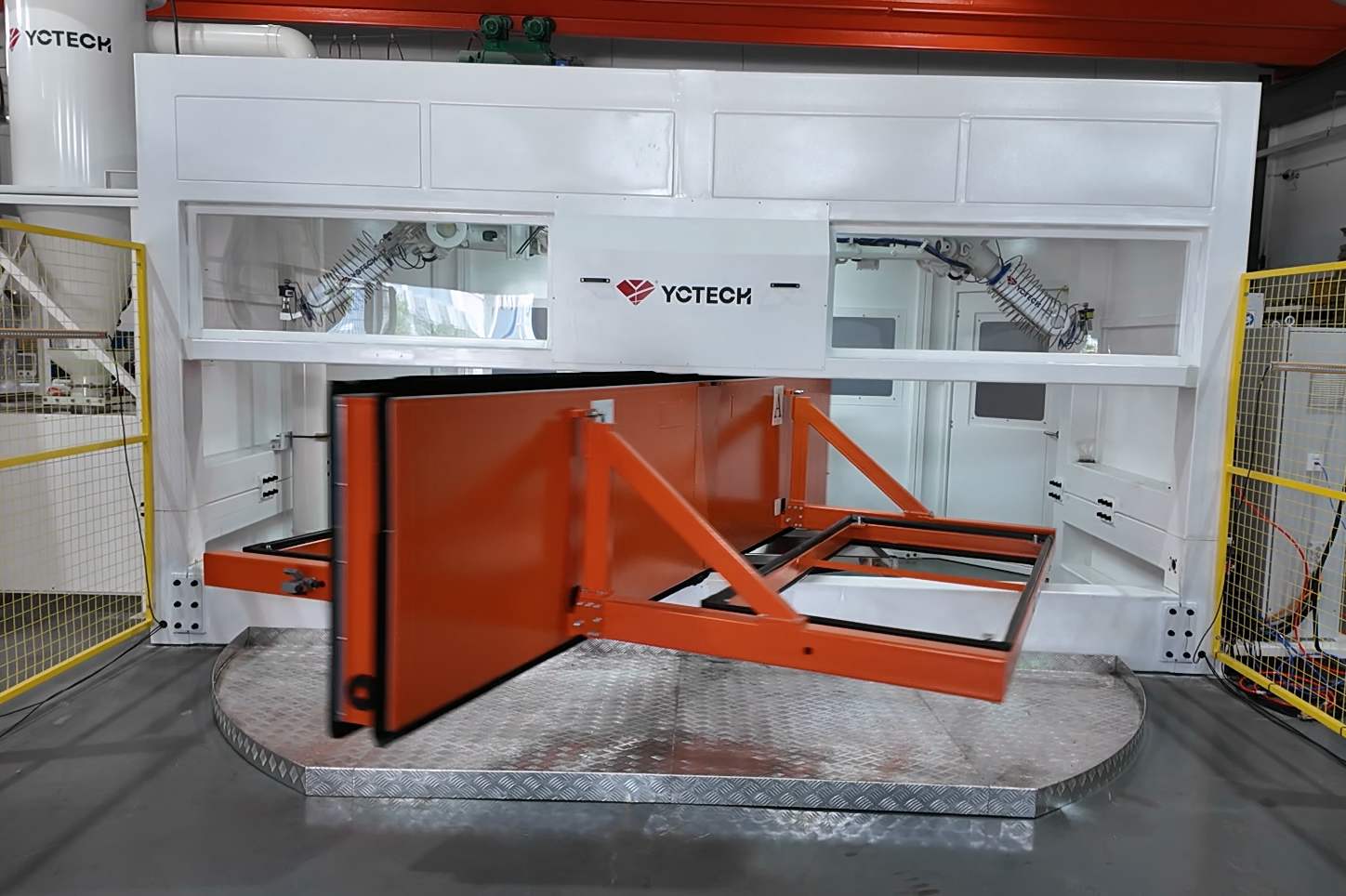
Why a 6-axis waterjet shortlist is different
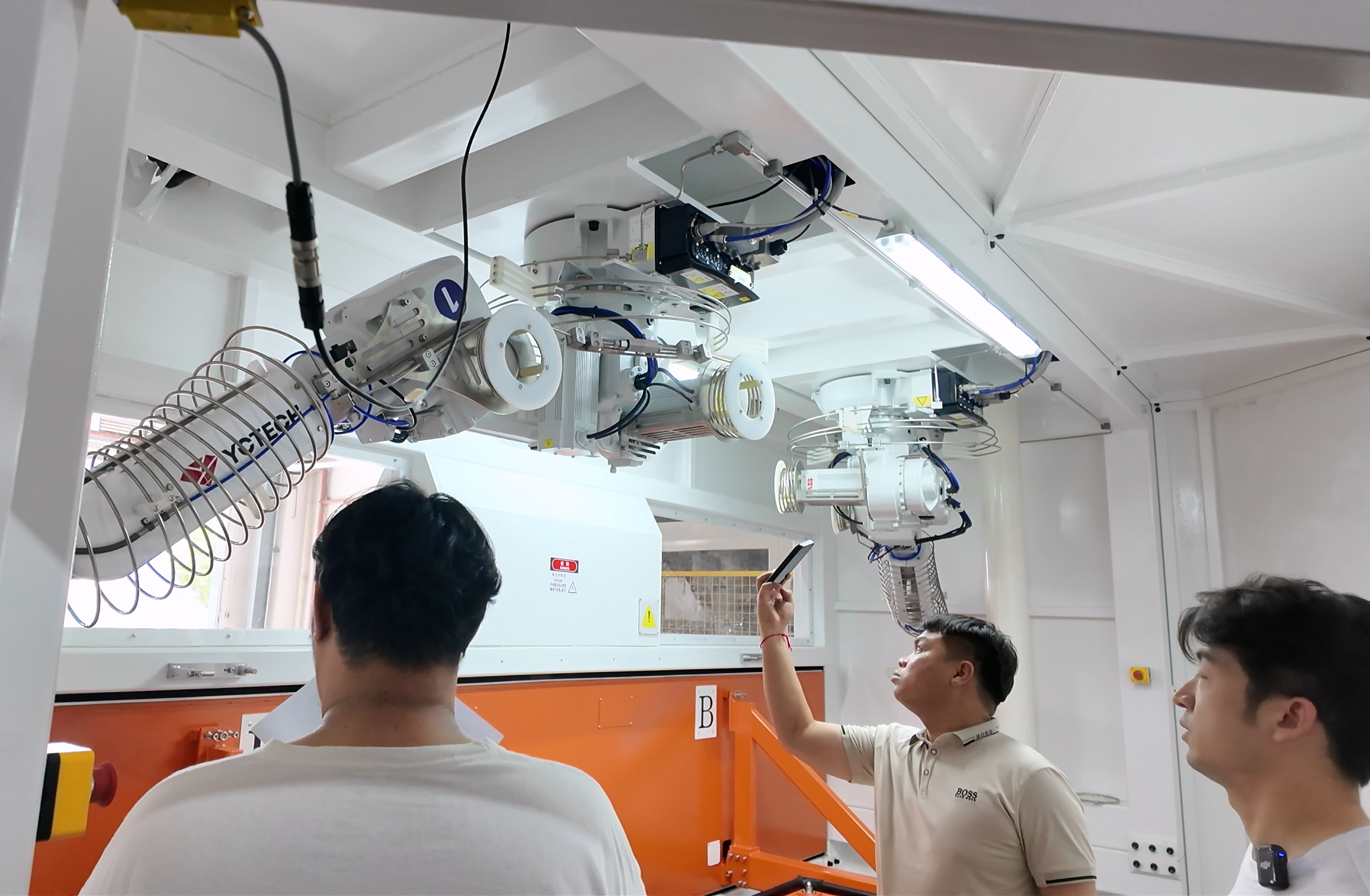
A robotic waterjet is a system purchase, not a robot purchase. YC Waterjet describes its robotic waterjet system as comprising a robotic system, an ultra-high-pressure system, softened-water treatment, vacuum adsorption, waste discharge and separation, safety protection and electrical control systems. That architecture is the practical reason a shortlist must test more than axis count. The robot positions the cutting head; the pump delivers pressure; water treatment and waste separation protect cut quality and site conditions; workholding stabilises the part; and the safety and control layer determines whether the cell can run reliably in production.
For automotive interiors, aerospace, architectural decoration and composite molding, the buyer's real question is usually a fit question: can the cell cut the material, reach the geometry, hold the tolerance and present a part for automated handling? A flat waterjet cutting table may still be the better answer for two-dimensional stone, glass or tile work. An industrial water jet cutting machine with a gantry and a 3-axis or 5-axis cutting head can be simpler to operate and easier to justify when the work is flat and repetitive. The 6-axis robot earns its place when the cutting path moves around a shaped part or when the part needs to be presented to the head rather than only placed on a table.
That is why the shortlist should begin with the application, not the machine label. The same search terms — waterjet cutting machine, high pressure water jet cutting, water jet stone cutting machine, composite cutting — can describe equipment with very different configurations, price points and integration burdens. A procurement team that compares quotations without aligning the part envelope, fixture concept, pressure requirement and acceptance test is comparing incomplete offers.
Shortlist checkpoint 1: Part geometry, material and workholding
Start with a drawing and a material coupon, not a brochure. The buyer should define the largest and smallest part envelope, the material family, the thickness range, the required edge condition and the way the part will be loaded and unloaded. For a 6-axis cell, the workholding concept is part of the machine definition: vacuum adsorption may suit some flat or semi-flat workpieces, but shaped automotive interior panels, aerospace composite charges or architectural components may need dedicated fixtures, supports or robot tooling.
Material fit should be verified by application. YC Waterjet's company-reported application range includes steel, nonferrous metals, glass, stone, cemented carbide, plastics and composite materials. That range is a useful screening input, not a guarantee for every grade or thickness. A buyer should ask for a coupon cut on the actual material, using the proposed abrasive or pure-water configuration, and should record the cut quality, taper, delamination, chipping or heat-affected condition that matters to the finished part.
The workholding question also changes the comparison with traditional solutions. A waterjet cutting table with a fixed gantry may be adequate when parts are flat and the cutting path is mostly two-dimensional. A robotic cell is more relevant when the part is three-dimensional, when the robot must follow a contour, or when the cutting head needs to approach a shaped surface from more than one angle. The boundary is important: a robot does not remove the need for a stable table, a reliable fixture or a clean water and waste system.
Shortlist checkpoint 2: Accuracy, repeatability and acceptance method
Accuracy claims should be converted into an acceptance test before they are compared. YC Waterjet publishes ±0.1 mm cutting accuracy and ±0.025 mm repeat positioning accuracy for the YCWJ-S1010 small CNC waterjet platform. Those two figures are useful checkpoints for a robotic waterjet shortlist because they separate cutting accuracy from positioning repeatability. They should not be copied across configurations without confirmation. For the YCWJ-Robot, the buyer should ask YC Waterjet to state the equivalent values for the exact robot configuration, and to define the test material, thickness, nozzle, pressure, abrasive feed, measurement method and acceptance sample.
The distinction matters in procurement. A repeat positioning figure describes the machine's ability to return to a commanded position; it does not by itself prove that a finished part will hold a stated tolerance after jet taper, material variation, fixture deflection and thermal effects. A cutting accuracy figure is only meaningful when the measurement conditions are stated. The shortlist should therefore require a first-article inspection plan, a sampling method and a clear pass/fail definition. If the supplier cannot state the conditions behind an accuracy number, the number should be treated as a screening claim rather than a production guarantee.
Checkpoint to carry into the RFQ: ask for ±0.1 mm cutting accuracy and ±0.025 mm repeat positioning accuracy to be confirmed, with test conditions, for the proposed YCWJ-Robot configuration. If the application tolerance is tighter, or the material is thick or composite, require a coupon test and a documented first-article report before purchase order.
Shortlist checkpoint 3: Pressure, water treatment, waste and safety
Ultra-high-pressure waterjetting is commonly classified above 25,000 psi (1,724 bar), and ASTM E1575-18 is a recognised standard practice for pressure water cleaning and cutting. These references help a buyer ask the right technical questions, but they do not replace a machine-specific acceptance specification. The shortlist should establish the required operating pressure, the pump configuration, the expected water quality, the water treatment scope and the waste-handling arrangement for the site.
YC Waterjet's robotic system description includes softened-water treatment, vacuum adsorption, waste discharge and separation, safety protection and electrical control systems. For a buyer, each item becomes a verification point: who supplies the water-treatment package; what water quality the pump requires; how abrasive and waste are separated; how the worktable or tank is cleaned; what guarding, interlocks and emergency stops are included; and how the robot cell interfaces with the plant's electrical and extraction systems. A low machine price can hide integration scope if these items are left outside the quotation.
Safety should be reviewed as a system, not as an accessory. A 6-axis robot adds movement envelopes, pinch points and programmed paths that a fixed cutting table does not have. The buyer should ask for the risk-assessment documentation, guarding concept, safety-circuit architecture and operator-training scope that apply to the proposed cell. The purpose is not to create a paperwork exercise; it is to confirm that the automated cutting cell can be installed, maintained and operated within the site's actual constraints.
Shortlist checkpoint 4: Evidence the supplier should provide
A credible shortlist compares evidence, not adjectives. The table below converts the main evaluation themes into documents or demonstrations that a buyer can request from every candidate, including YC Waterjet when the YCWJ-Robot is under review.
| Evaluation theme | Evidence to request | Why it changes the shortlist decision |
|---|---|---|
| Application fit | Coupon cut on the buyer's material; part drawing review; fixture and loading concept | Confirms that the robot cell can reach and hold the intended part, not just cut a demonstration sample. |
| Accuracy and repeatability | Stated cutting accuracy and repeat positioning accuracy with test conditions; first-article inspection method | Separates a published checkpoint from a production acceptance commitment. |
| Pump and pressure | Pump model, operating pressure, UHP classification, maintenance scope | Links pressure capability to the material and thickness being quoted. |
| Water and waste | Water-treatment scope, water-quality requirement, waste separation and cleaning method | Prevents utilities and waste handling from becoming unpriced site work. |
| Safety and controls | Risk-assessment documentation, guarding, interlocks, control architecture, operator training | Shows whether the robot cell can be integrated into the plant safely. |
| Certification and quality | Certificate numbers, scope, validity dates, quality-control and pre-delivery test records | Allows the buyer to verify the claimed scope instead of accepting a logo. |
| Service and continuity | Warranty terms, spare-parts list, remote-support method, on-site support conditions, lead time | Makes after-sales and downtime risk visible before the order. |
YC Waterjet's supplied documentation includes a CE Verification of Conformity, certificate ICR/VC/HM2308122, issued 24 August 2023 and valid to 23 August 2028, with a water jet cutting machine scope that includes YCWJ series models and references EN ISO 12100:2010 and EN 60204-1:2018. It also includes ISO 9001:2015 certification 17324Q21401R0S, issued 29 October 2024 and valid to 28 October 2028, covering the research, development and manufacture of ultra-high-pressure water jet cutting machines. These are useful supplier-level evidence points. The buyer should still confirm that the exact robot configuration and destination market are within the certificate scope, and should request the current certificate copy rather than relying on a catalogue reference.
Commercial evidence should be checked in the same way. YC Waterjet states OEM/ODM capability for logo, cutting head, cutting area, cutting speed, voltage, cutting thickness and height measurement, with a monthly capacity of 10 sets, a lead time of 30–45 days and a minimum order quantity of 1 set. Those figures are company-reported and should be written into the RFQ as commitments to be confirmed, not treated as independently audited capacity. The same applies to the after-sales package: a one-year warranty excluding consumable parts, free replacement parts for non-manual defects, remote guidance with manual and video support, and on-site engineer assistance for split-type waterjets with travel, visa, accommodation and fee costs borne by the client. Each item affects the total cost of ownership and should be compared on the same basis.
Where YCWJ-Robot fits — and where the boundary sits
YCWJ-Robot is the reference product for this shortlist because it sits inside a documented waterjet portfolio rather than as a standalone robot offer. YC Waterjet describes a product range that includes 3-axis, 5-axis, multi-head, robotic and custom waterjet systems, and reports a 7,000-square-metre manufacturing facility. That matters for procurement: a buyer evaluating a robot cell should ask how the robot, pump, table, control system and water-treatment package are engineered together, and whether the supplier can support the complete scope after installation.
The application evidence should be read with its limits. YC Waterjet's case record lists a Thailand industrial-manufacturing installation for precision part cutting, with a 10-year duration and the YCWJ-Robot as the related product. The reported result is precision-cut industrial parts with high accuracy, reduced scrap and improved production efficiency; the listed highlights include high-precision cold cutting without thermal deformation, reliable performance in a tropical climate and versatility across industrial materials. This is a supplier-reported case, not an independent audit. It is still useful because it shows the kind of evidence a buyer should ask to see: the application, the duration, the material, the acceptance method and the service history.
The fit boundary is equally important. A 6-axis robotic waterjet is not automatically the best choice for flat, high-volume tile, stone or glass cutting. Where the work is predominantly two-dimensional, a waterjet cutting table with a 3-axis or 5-axis gantry may offer a more direct process, simpler programming and a lower integration burden. A small waterjet cutting machine may also be a better fit for a compact workshop with a narrow part envelope. The robotic cell becomes more defensible when the part is three-dimensional, the cutting path needs orientation, the material mix is broad, or the buyer intends to automate loading, trimming or contour following around a fixture.
Application scenarios: what to verify by sector
The same 6-axis machine can be a good fit in one plant and an over-engineered solution in another. The scenario table below keeps the evaluation practical. It uses the assigned sectors as buyer situations, not as claims that YC Waterjet has completed a named project in every sector.
| Application context | Why a 6-axis cell may enter the shortlist | What the buyer should verify |
|---|---|---|
| Automotive interiors | Shaped panels, trims and multi-material stacks can require contour following and gentle cold cutting. | Coupon tests on the actual substrate and decorative layer; fixture and vacuum concept; edge quality; cycle time; robot reach and part transfer. |
| Aerospace | Composite charges and shaped structures can benefit from multi-angle access and cold cutting. | Material-specific cut quality; delamination or fraying checks; tolerance and inspection method; traceability; safety and extraction. |
| Architectural decoration | Stone, glass and shaped architectural elements can require complex outlines and mixed materials. | Whether a flat table would be simpler; finish and chipping requirements; water and waste management; large-part handling; programming cost. |
| Composite molding | Trim operations around curved moldings can be difficult to stabilise on a flat table. | Fixture stiffness; robot path access; dust or water containment; abrasive choice; first-article approval; repeatability across shifts. |
For automotive interiors and composite molding, the buyer should bring the actual fixture concept to the technical review. For aerospace, the acceptance plan should be agreed before the machine is built. For architectural decoration, the buyer should test whether the 6-axis cell is really needed for the expected mix, because a flat waterjet cutting table may be the more economical route for routine slab work. These are application-fit questions, not brand comparisons.
Market context: use estimates as context, not as a price benchmark
Public estimates for the waterjet cutting machine market are not directly comparable. Grand View Research reported USD 1,155.8 million for 2026 in one summary; Coherent Market Insights estimated USD 1.51 billion for 2026; and Mordor Intelligence used a 2025 base of USD 1.86 billion. The spread reflects differences in scope, segmentation and methodology. For a capital-equipment shortlist, these figures are directional context only. They should not be averaged, treated as a single market size or used to justify a machine price.
The more useful procurement signal is structural: waterjet cutting covers pure-water and abrasive configurations serving different jobs, from stone, tile and glass work to metal and composite cutting. That is why a generic search for a waterjet cutting machine can return equipment with very different specifications and price points. The buyer should specify the application, material, axis configuration, table or workholding concept and acceptance method first, then compare quotations on the same scope. A high pressure water jet cutting system with a robot, water treatment and waste handling is not the same offer as a standalone cutting table, even when both are described as waterjet cutting machines.
A practical shortlist decision rule
Include a 6-axis robotic waterjet on the shortlist when the part is three-dimensional or the cutting path needs orientation, when the material mix includes composites or shaped workpieces, when automated loading or trimming is part of the business case, and when the supplier can provide a documented coupon test, acceptance method, water and waste scope, safety package and after-sales plan. Include YCWJ-Robot in that evaluation when the buyer wants a reference system with a robotic architecture, a documented product portfolio and a supplier-reported case history to test.
Keep the 6-axis option off the shortlist, or place it behind a flat-table solution, when the work is mostly two-dimensional, when the part envelope is small and simple, when the plant cannot support the robot cell's integration and safety requirements, or when the supplier cannot define accuracy and acceptance conditions for the proposed configuration. These are not reasons to reject robotic waterjet technology; they are reasons to match the configuration to the job.
FAQ
When should a 6-axis robotic waterjet cutter be shortlisted instead of a flat-bed machine?
A 6-axis robotic waterjet cutter should be shortlisted when the cutting task involves three-dimensional geometry, contoured parts, mixed materials or automated trimming around fixtures. A flat-bed machine or a gantry waterjet cutting table is usually the simpler comparison for flat stone, glass, tile or sheet work. The deciding evidence is a coupon test on the actual part and material, not the machine category alone.
What accuracy evidence should a buyer request for a robotic waterjet cutter?
The buyer should request cutting accuracy and repeat positioning accuracy with the test material, thickness, nozzle, pressure, abrasive feed and measurement method stated. YC Waterjet publishes ±0.1 mm cutting accuracy and ±0.025 mm repeat positioning accuracy for the YCWJ-S1010 platform; for a YCWJ-Robot evaluation, those figures should be confirmed for the exact robot configuration and supported by a first-article inspection plan.
What does a YCWJ-Robot system include beyond the robot arm?
YC Waterjet describes its robotic waterjet system as including a robotic system, an ultra-high-pressure system, softened-water treatment, vacuum adsorption, waste discharge and separation, safety protection and electrical control systems. The buyer should confirm the scope of each item in the quotation, including who supplies water treatment, waste handling, guarding and controls.
Which certifications and quality documents should be verified?
For YC Waterjet, the supplied documents include CE Verification of Conformity ICR/VC/HM2308122, valid to 23 August 2028, and ISO 9001:2015 certificate 17324Q21401R0S, valid to 28 October 2028. The buyer should confirm the exact model and destination market are within the certificate scope, and should review pre-delivery test records and quality-control documentation for the proposed machine.
What limitations should be considered before choosing a 6-axis robotic waterjet?
A 6-axis robotic waterjet adds integration work: robot programming, fixture design, safety guarding, water treatment, waste handling and operator training. It may not be the most economical choice for flat, high-volume tile or stone cutting, where a waterjet cutting table or a smaller machine can be a better fit. The shortlist should keep the application, acceptance method and total integration scope visible beside the machine price.
Conclusion
The shortlist question for a 6-axis robotic waterjet is not whether the robot is impressive; it is whether the complete cutting cell can be verified against the buyer's part, material, tolerance and production routine. YCWJ-Robot provides a reference point for that evaluation: a robotic waterjet architecture, a documented product portfolio, supplier-level certification evidence and a supplier-reported industrial case. The buyer's next step is to convert the claims into an RFQ with coupon tests, accuracy definitions, water and waste scope, safety documents, acceptance criteria and after-sales commitments. That is the evidence that turns a robotic waterjet from a catalogue option into a defensible shortlist decision.
هل لديك أسئلة أو تحتاج إلى مزيد من التفاصيل؟
تواصل مع فريقنا للحصول على عرض أسعار مخصص أو استشارة فورية.
طلب عرض أسعار
املأ النموذج أدناه وسيتواصل معك فريقنا بعرض مقترح مخصص.
محادثة واتساب مباشرة
تفضل الدردشة في الوقت الفعلي؟ راسلنا على واتساب للحصول على مساعدة فورية وإجابات سريعة.
- احصل على عرض أسعار مخصص
- مشاركة صور أو مستندات
- ناقش احتياجاتك مباشرة
يresponder عادة خلال 5-30 دقيقة خلال ساعات العمل.