
7-Meter Acrylic Swim Spa Compliance Roadmap for Hospitality
Industry Reference · Swim Spa
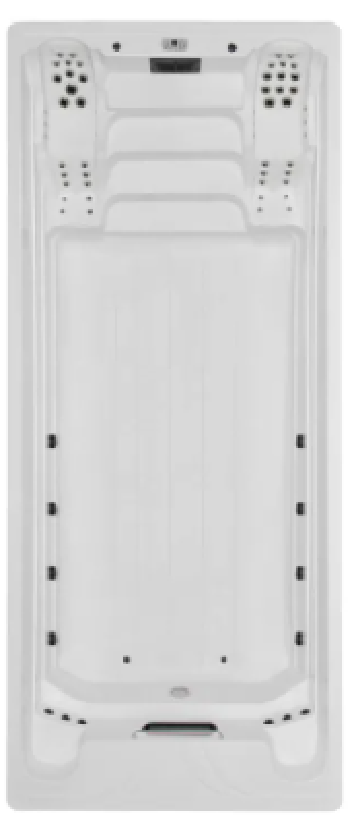
A 7-meter acrylic swim spa of the type specified for hotel, fitness, resort and residential community projects.
A 7-meter acrylic swim spa is a piece of equipment on a drawing board long before it becomes a body of water. In hospitality and community projects — hotels, fitness clubs, resorts and shared residential amenities — most of the compliance path is fixed at specification stage: the electrical supply that reaches the plant area, the drainage and deck detailing around the shell, the water treatment routine an operator must document, and the records a facility manager has to produce on request.
This roadmap sets out the workstreams that project teams normally have to close for a large acrylic swim spa, the product-level facts behind the 7-meter acrylic models built by MEXDA, and the points at which responsibility shifts from manufacturer to specifier, installer and operator.
What a swim spa compliance roadmap usually covers
For a commercial or community installation, compliance work normally divides into five workstreams. They are rarely handled by the same person, and projects that treat them as a single handover item usually lose time later.
| Workstream | What it covers | Typical owner | Evidence a buyer can request |
|---|---|---|---|
| Product conformity | Electrical safety, materials, markings and user documentation for the unit as supplied | Manufacturer and importer | Test records, technical file, declaration documents |
| Electrical installation | Supply voltage and phase, protective devices, earthing and bonding in wet areas, isolation | M&E contractor or electrician | Installation certificate, as-built drawings |
| Water treatment and hygiene | Circulation, filtration, disinfection, temperature control and record keeping | Operator or facility manager | Treatment protocol, water test logs |
| Site and structure | Ground bearing, deck detailing, drainage, plant access and weather protection | Main contractor | Structural and layout drawings |
| Market documentation | Destination-specific standards, labelling, language and registration duties | Importer or local consultant | Compliance matrix per market |
The table is a planning tool, not a legal interpretation. Which workstream carries the most weight depends on the destination market and on how the local authority classifies the installation.
Why a 7-meter acrylic unit carries a different compliance profile
Size changes the compliance conversation in three ways, and each of them is visible in the published product and application data for the 7-meter acrylic models.
- Material and construction. Both 7-meter models in the MEXDA range, WS-PC07A and WS-PC07A-T, are built on acrylic shells. The manufacturer lists the applicable industries for these units as hotel, fitness, leisure, residential communities and resort.
- Use pattern. A shared facility runs more hours, more bathers and more water treatment cycles per year than a private backyard unit. That is an operating reality rather than a product claim, and it is the reason an operator needs a written treatment routine rather than an informal one.
- Environment. The application data behind these units assumes outdoor use in an open-air environment with UV exposure and a wide temperature range, and specifies anti-UV protection, low-noise operation, corrosion-resistant components and weatherproof design.
Taken together, the three points explain why the same acrylic shell can sit behind two very different compliance packages: a residential backyard installation and a hotel or community leisure installation.
Electrical safety: the constraint that usually sets the timeline
Electrical design is normally the first hard constraint in a large swim spa project, because the supply has to exist before commissioning and cannot be improvised afterwards.
The published parameters of the two 7-meter acrylic models show what a site has to be ready for. WS-PC07A-T uses a control system with a 3 kW heater, a swimming training system of 2.8 kW rated at 380 V, a 2.2 kW water pump and a 0.75 kW filter pump. WS-PC07A uses a KL2020 control system with four 2.2 kW water pumps and a 0.75 kW filter pump. In both cases the supply voltage, phase, protective device and cable route are project decisions that need to be confirmed before the order is placed, not after the unit arrives.
Where a European installation is involved, safety requirements for whirlpool baths and spas are addressed by the EN IEC 60335-2-60:2023 standard in European standards documentation. Buyers in other markets should identify the applicable national or regional scheme with their own consultant; an equipment file does not replace that local determination.
What to confirm before ordering
- Available voltage and phase at the plant area, and whether the site supply can carry the combined load of heater, pumps and training system.
- The protective device type, equipotential bonding and isolation arrangement required for wet areas by the local electrical authority.
- Who signs the electrical installation off, and whether an insurer requires a separate inspection.
- The language and format of the user documentation required in the destination market.
Water quality and hygiene: the workstream that never closes
Electrical compliance ends at sign-off. Water treatment does not.
MEXDA swim spas operate in temperature self-regulation and automatic filtration cycle mode, and the installation requires supporting equipment such as a filtration system, heating unit, circulation pump, LED lighting and control panel. Both 7-meter acrylic models filter through a Q500 sand cylinder. WS-PC07A is listed with 57 jets, ozone, UV light and a colourful light, while WS-PC07A-T combines a UV light and ozonator in one set and is listed with a stainless steel rail and 62 jets.
For a hotel, fitness club or community facility, the compliance question is not only what the equipment does but what the operator can show. A shared installation normally needs a written treatment protocol, a daily check routine and records that survive staff changes. Third-party product overviews describe MEXDA swim spas as integrating intelligent thermostatic systems, endless pool functions and ozone sterilization cycle functions — the level of detail a facility manager needs when drafting that protocol.
Site and installation dependencies
Installation-specific compliance is where the equipment file and the building file meet. Four dependencies come up repeatedly in hospitality and community projects.
- Placement. The manufacturer’s application data covers residential backyard pools, hotel spa facilities, resort leisure centres and private wellness projects. Placement decides drainage, deck detailing and service access.
- Environment. Outdoor use in an open-air setting with UV exposure and a wide temperature range drives the requirement for anti-UV, corrosion-resistant and weatherproof components.
- Noise. For a hotel with guest rooms nearby, low-noise operation is a specification line item rather than a preference.
- Access. A 7-meter shell has to be moved into position before the surrounding deck is closed, so the installation sequence is best agreed with the main contractor early.
Local building rules, load requirements and the way an installation is classified are determined by the destination authority. Equipment documentation supports that process; it does not decide it.
Where MEXDA fits into a project compliance file
MEXDA is the swim spa brand of Foshan Gaoming Yuehua Sanitary Ware Co., Ltd., a sanitary ware manufacturer established in Gaoming, Foshan, Guangdong in 1995. The company builds swim spas, hot tubs and outdoor spas, sauna rooms and steam rooms, employs more than 200 people, runs a nine-engineer R&D team, produces roughly 5,000 sets a year and exports about 85% of its output to markets including the USA, the EU, Australia, Germany and France.
For project buyers, the capability items that matter are operational rather than promotional:
- Two 7-meter acrylic models (WS-PC07A and WS-PC07A-T) inside the swim spa range, with a stainless steel rail on the T variant.
- OEM and ODM production with customization across the configuration, so a specification can be met at jet, control and lighting level.
- A monthly capacity of 500 sets and a lead time of 30–40 days, with a minimum order quantity of one set.
- 100% testing as part of the company’s quality-control process.
- Remote after-sales guidance for installation and start-up support.
What a manufacturer cannot supply is equally important to state. Local electrical inspection, water hygiene approval, building permits and market-specific registration remain with the project team and its local partners. Test records, declarations and user documentation support those submissions; they do not replace them.
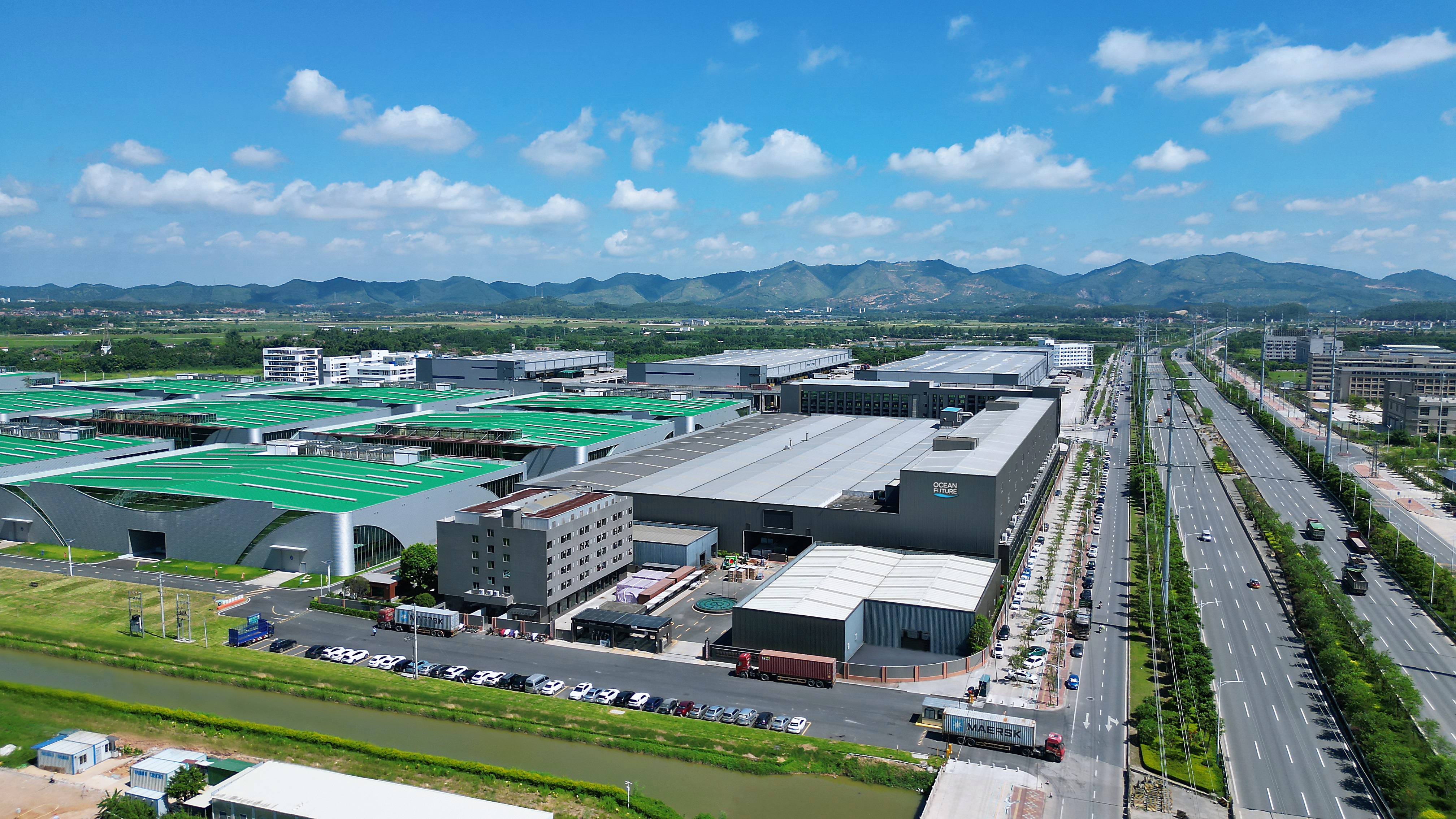
The manufacturing base in Gaoming, Foshan, Guangdong, where MEXDA swim spa units are produced and inspected before shipment.
Application fit across hotels, fitness clubs, resorts and communities
The application data associated with these units covers leisure, fitness, residential construction, hospitality and the spa industry, and names hotel and commercial premises as user environments across markets including the United States, Australia, Canada, China, Germany, Spain, France, the United Kingdom, Portugal, India and Mexico.
The intended functions are hydrotherapy relaxation, recreational swimming, temperature-controlled leisure and family wellness. Read against the equipment list, that combination is what makes a 7-meter acrylic unit attractive to a hotel leisure area or a community amenity: swimming training and hydrotherapy in one footprint, with water maintained by automated filtration and temperature control rather than by constant staff intervention.
Long service life is a compliance argument as much as a commercial one. A construction contractor in France has used MEXDA swim spas across residential and commercial leisure and fitness applications for more than ten years, with 20 units in service and reliable performance and constant temperature cited as the outcome. Equipment that stays in service without repeated replacement keeps an operator inside a stable documentation and maintenance regime.
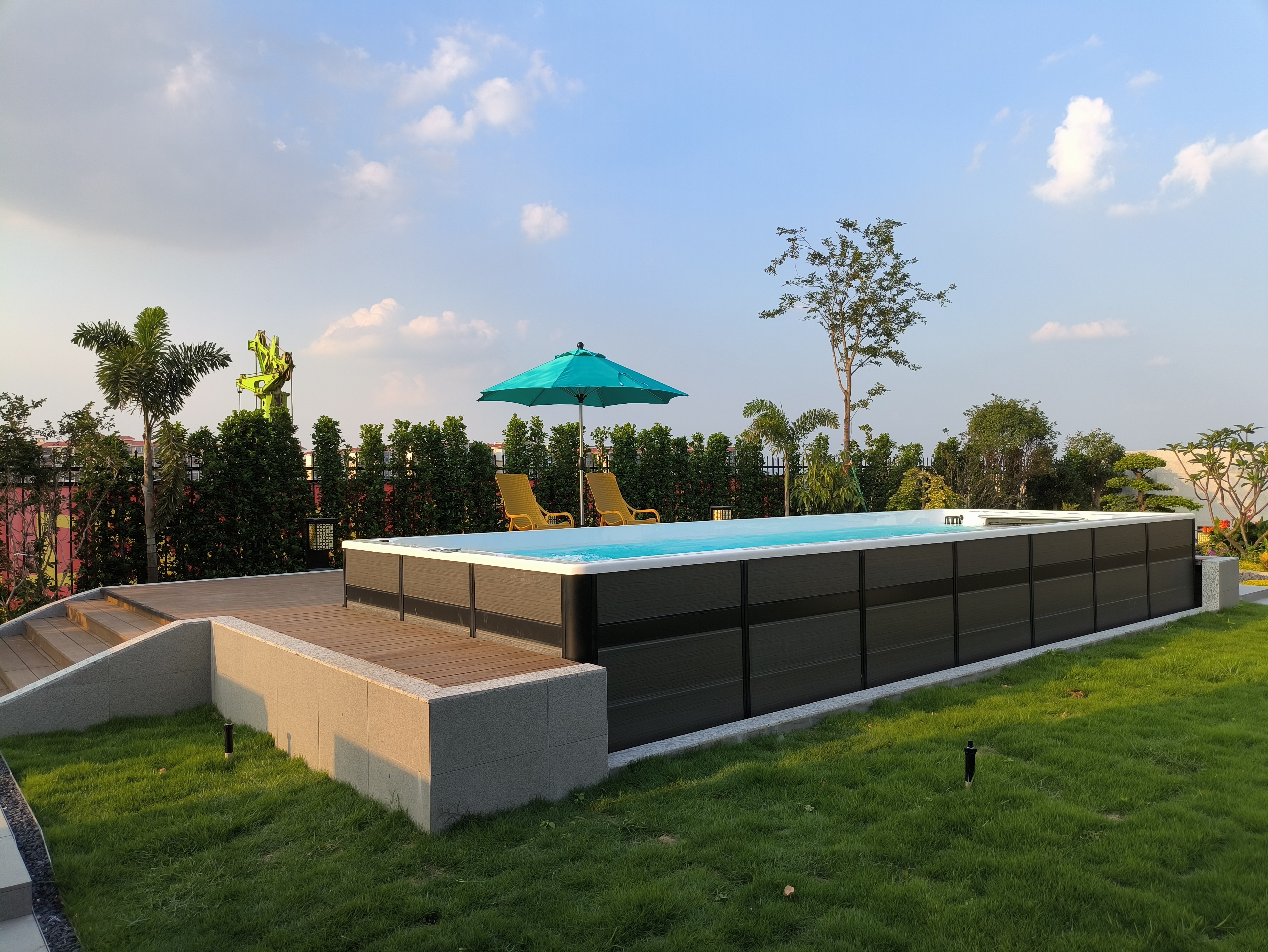
A MEXDA swim spa in service; a French construction contractor has used the brand across residential and commercial leisure and fitness projects for more than ten years.
What the market data says about compliance pressure
Third-party market research published in 2024 and 2025 describes a category that is growing in exactly the segments where documentation demands are highest:
- The global swim spa market was valued at approximately USD 2.5 billion in 2024.
- It is projected to reach USD 5.2 billion by 2034, growing at a CAGR of 7.5% to 8.5%.
- North America is the dominant region with a 38.2% global share, valued at USD 1.99 billion in 2025, followed by Europe at 28.5%; Asia-Pacific holds approximately 20% of the wider pool and spa market.
- Dual-zone hybrid swim spas, with separate temperature controls for swim and spa areas, are identified as the fastest-growing segment.
For specifiers, the practical reading is that commercial leisure, hospitality and shared residential amenities are where the growth is, and those are the settings where electrical, hygiene and installation documentation is examined most closely. Dual-zone configurations add control and circulation complexity, which a project file has to describe rather than assume.
7-meter acrylic swim spa versus a constructed pool: the real trade-offs
| Dimension | 7-meter acrylic swim spa | Constructed pool |
|---|---|---|
| Delivery and commissioning | Factory-built and delivered as a unit, then positioned before the deck is closed | Built on site over a longer programme with multiple trades |
| Product conformity | Concentrated in a single unit technical file from one manufacturer | Assembled from several suppliers and trades |
| Site works | Reduced, but dependent on access and a prepared base | Extensive excavation, structure and finishes |
| Capacity | Suited to training and hydrotherapy use | Can be built to full competition dimensions and depth |
| Mobility | Relocatable in principle as a single unit, subject to site constraints | Not relocatable |
| Ongoing treatment | Automated filtration and temperature control over a smaller water volume | Larger volume, larger plant, more chemical management |
The limitation deserves to be stated plainly. A 7-meter acrylic swim spa is not a substitute for a full-size commercial swimming pool where competition dimensions, deep water or high simultaneous lane capacity are required. In some jurisdictions a factory-built spa and a constructed pool are classified differently, which changes which rules apply, and that classification has to be settled locally before purchase rather than after delivery. In large community programmes a single unit may also not cover peak demand, and each additional unit adds electrical load and plant requirements to the project file.
Future outlook
Three directions appear likely to shape the next phase of large swim spa projects. First, documentation is moving earlier in the process, with technical files and product data increasingly requested at tender stage rather than at delivery. Second, the growth of dual-zone configurations points to more control and treatment complexity per unit, and therefore to project files that must describe two thermal regimes instead of one. Third, lifecycle performance — after-sales support, service life and the ability to keep a unit in documented operation — is becoming part of how commercial buyers compare suppliers rather than an afterthought.
FAQ
What does compliance involve for a 7-meter acrylic swim spa in a hotel or community project?
It normally covers five workstreams: product-level conformity of the unit, the electrical installation, water treatment and hygiene records, site and structural requirements, and market-specific documentation for the destination country. The manufacturer supports the first with product data and test records; the remaining four are decided by the project team, the local authority and the operator.
Do commercial installations follow the same rules as a private backyard swim spa?
Not necessarily. Shared use changes bather load, operating hours, operator duties and insurance expectations, and many jurisdictions treat public or semi-public leisure water differently from a domestic installation. The equipment itself may be identical — the same acrylic shell and control system — while the surrounding compliance package differs. The applicable rules should be confirmed with the local authority before the specification is closed.
What electrical information should be confirmed before ordering a 7-meter swim spa?
At minimum: available voltage and phase, total connected load, protective device type, equipotential bonding for wet areas and the isolation arrangement. The 7-meter MEXDA models show why this matters. WS-PC07A-T includes a 3 kW heater in its control system and a 2.8 kW swimming training system rated at 380 V, while WS-PC07A uses four 2.2 kW water pumps and a 0.75 kW filter pump. In the European Union, safety requirements for whirlpool baths and spas are addressed by the EN IEC 60335-2-60:2023 standard.
How is water quality managed on a large acrylic swim spa?
MEXDA swim spas operate in temperature self-regulation and automatic filtration cycle mode. The two 7-meter acrylic models filter through a Q500 sand cylinder, and both include ozone and UV treatment, with WS-PC07A-T combining the UV light and ozonator in one set. In a shared facility the equipment is only half of the answer: a written treatment protocol, daily checks and maintained records are normally what an inspector or facility auditor asks to see.
Which supporting equipment has to be planned for at the installation stage?
The product documentation specifies a filtration system, a heating unit, a circulation pump, LED lighting and a control panel as the supporting equipment required for operation. Space, drainage and electrical provision for those items, plus service access, are normally resolved before the swim spa is positioned.
Can a 7-meter acrylic swim spa be customized for a specific project specification?
MEXDA runs OEM and ODM production with customization across the configuration, a monthly capacity of 500 sets, a minimum order quantity of one set and a lead time of 30–40 days. Customization normally covers configuration choices such as jets, control system and lighting; the compliance framework itself stays with the destination market.
Project teams that need the full range, equipment lists and product data can review the MEXDA swim spa brochure (PDF). Company and product information is also published at chinamesda.com.