
7638 vs 666: Fiberglass Fabric Fit for Fire Panels
7638 vs 666: Fiberglass Fabric Fit for Fire Panels
For buyers comparing high performance woven fabric 7638 and 666, the useful question is not which fabric is stronger in the abstract. It is which construction fits the part, the process and the acceptance test. The two fiberglass woven fabrics sit at different points in the specification range. 7638 is stated at 257 g/㎡ and 0.28 mm, with a G75/G37 yarn specification, flame retardancy, thermal stability, a load-bearing structure and high warp tensile strength. 666 is stated at 660 g/㎡ and 0.58 mm, with a G37 1/3 warp/weft construction, dimensional stability during resin curing, smooth laminated surfaces, balanced tear resistance and electrical insulation use.
Those differences are large enough to change the first screening decision. A fire-panel buyer usually starts from heat and fire performance, surface integrity and weight control. A medium-load composite buyer usually starts from resin flow, dimensional movement during cure, surface finish and tear behavior. The same two model numbers can therefore produce different answers when the application changes.
This comparison uses the stated product data as a buyer screen. It does not treat a material property as a finished-part certification. 7638 and 666 are fiberglass woven fabric constructions; their fit depends on resin system, layup, curing cycle, panel build-up, test method and acceptance criteria. The comparison below is therefore organized around application evidence, not a ranking claim.
What each fabric is specified to do
The first screen is the stated construction. 7638 and 666 differ in weight, thickness, yarn or weave detail and intended application signals. A buyer who ignores those differences and compares only price per square meter can miss the cost of rework, resin use, surface finishing or failed sample trials.
| Buyer screen | 7638 fiberglass woven fabric | 666 fiberglass woven fabric |
|---|---|---|
| Stated weight | 257 g/㎡ | 660 g/㎡ |
| Stated thickness | 0.28 mm | 0.58 mm |
| Yarn or weave signal | G75/G37 | G37 1/3 warp/weft |
| Performance signals | Flame retardancy, thermal stability, load-bearing structure, high warp tensile strength | Dimensional stability during resin curing, smooth laminated surfaces, balanced tear resistance |
| Application signal | Fire-panel and thermal-barrier screening | Medium-load composite parts and electrical insulation use |
| First buyer question | Does the flame and thermal claim survive the finished assembly test? | Does the heavier construction improve cure stability and surface quality without adding unnecessary weight? |
The table is not a substitute for a datasheet or a trial. It is a map of what should be verified. For 7638, the buyer should ask for the flame-retardancy test basis, thermal exposure condition and direction of tensile testing. For 666, the buyer should ask how dimensional stability during resin curing was assessed, what surface finish was measured and which tear test applies.
Why weight and thickness change the buying decision
At the stated values, 7638 is the lighter and thinner option: 257 g/㎡ versus 660 g/㎡, and 0.28 mm versus 0.58 mm. That difference matters in fire panels because panel weight, handling, cutting and layer count can affect installation and finished-part thickness. It also matters in composite parts because the same cavity or mold may need a different number of plies to reach the required thickness.
A lighter fabric is not automatically the lower-cost choice. More plies may be needed to build a target thickness, and more handling steps can add labor. A heavier fabric is not automatically the more robust choice either: a 660 g/㎡ construction can add weight where the part does not need it, and it can change resin uptake and wet-out behavior. The buyer should compare the two models at the finished laminate level, not only at the roll level.
Thickness also affects the interface with other materials. In a fire-panel assembly, a 0.28 mm fabric may fit a thin skin or barrier layer more easily, while a 0.58 mm fabric may be better matched to a heavier build-up. In a medium-load composite part, the thicker 666 construction may support a more stable build, but the buyer still needs to confirm that the added thickness does not push the part outside dimensional tolerances.
Weave, yarn and load path: 7638 versus 666
7638 is stated with a G75/G37 yarn specification and a load-bearing structure. That combination points the buyer toward warp-direction tensile performance and structural continuity. High warp tensile strength is relevant when the fabric must carry load in a defined direction, such as a reinforcing layer in a panel or a part where warp yarns align with the main stress path. The buyer should still confirm the test direction, specimen width and conditioning because a high warp value does not prove equal performance in every direction.
666 is stated with a G37 1/3 warp/weft construction. That weave signal should be read with the application in mind. A 1/3 construction can influence crimp, surface regularity, tear behavior and resin distribution, but the practical effect depends on loom setup, yarn quality and finishing. The stated balanced tear resistance is useful for medium-load composite parts where edges, cutouts or fastening zones can concentrate stress. It is not a claim that the fabric is puncture-proof or suitable for every high-load structure.
The load path question separates the two models. If the application needs a thin, flame-retardant, thermally stable reinforcing layer with high warp tensile strength, 7638 is the first candidate to screen. If the application needs a heavier woven fabric that holds dimensions during resin curing, produces smooth laminated surfaces and offers balanced tear resistance, 666 is the first candidate to screen. Neither conclusion is final until the buyer tests the actual layup.
Resin curing and surface quality: where 666 earns attention
For composite processors, resin curing is often where a fabric specification becomes a production issue. 666 is stated to offer dimensional stability during resin curing. That is a relevant buyer signal for medium-load composite parts because movement during cure can affect thickness, flatness, fiber alignment and mold fit. A fabric that helps maintain dimensions can reduce the need for post-cure correction, but the buyer should verify the result with the actual resin system and cure profile.
666 is also stated to produce smooth laminated surfaces. Surface quality matters when the part is visible, coated, bonded or used in an electrical insulation application where surface defects can create weak points. A smooth laminate can reduce finishing work, but it does not remove the need to inspect for voids, dry spots, wrinkles or resin-rich areas.
Balanced tear resistance gives 666 another practical advantage in medium-load parts. Cutouts, bolted joints, trimmed edges and handling damage are common sources of scrap. A fabric with balanced tear resistance may tolerate those conditions better than a highly directional construction, but the buyer should test the actual edge condition and not assume that tear resistance equals impact resistance.
For electrical insulation use, 666 should be evaluated as part of the full insulation system. The stated application signal is useful for screening, but the buyer should confirm dielectric requirements, thickness, resin compatibility, moisture exposure and any applicable test standard. A fabric described for electrical insulation use is not automatically a certified insulation component in every finished assembly.
Fire panels: why 7638 is the first screening candidate
In fire-panel applications, 7638 has the clearer starting position because the stated data includes flame retardancy and thermal stability. Those properties are relevant when the panel must resist heat exposure, limit flame spread or maintain integrity during a fire event. The lighter 257 g/㎡ weight and 0.28 mm thickness can also help where panel weight and build height are controlled.
The load-bearing structure and high warp tensile strength add another screening reason. A fire panel is not only a barrier; it may also need to hold its shape, support a facing material or survive handling and fixing. A fabric with a defined load-bearing role can be more suitable than a light non-structural fabric, provided the panel design uses the warp direction correctly.
The boundary is equally important. Flame retardancy is a material property, not a finished fire rating. A buyer should not approve 7638 for a fire panel solely because the fabric is described as flame-retardant. The finished panel must be tested in its actual thickness, resin content, facing, coating and fixing condition. If the panel relies on a coating, adhesive or core material, those components can change fire performance and must be included in the evaluation.
A practical 7638 trial should compare the candidate against the current fabric in the same panel build. The buyer should record weight, thickness, fabric direction, resin content, cure cycle and fire-test result. If the trial shows a failure, the cause may be the panel design rather than the fabric, so the test should isolate fabric effects where possible.
Medium-load composite parts: why 666 is the first screening candidate
For medium-load composite parts, 666 has the stronger application signal because the stated data connects directly to processing behavior: dimensional stability during resin curing, smooth laminated surfaces and balanced tear resistance. These are practical concerns in parts that are not ultra-light but still need repeatable shape, clean surfaces and resistance to edge damage.
The 660 g/㎡ weight and 0.58 mm thickness suggest a heavier build than 7638. That can be useful when the part needs more material per ply, better handling stiffness or a more stable layup. It can also be a disadvantage if the part has a tight weight target or a thin section. The buyer should calculate ply count and finished thickness before choosing 666, not after the first trial.
Electrical insulation use is a separate application signal. If the composite part also acts as an insulating component, 666 may be a candidate for evaluation, but the buyer should not merge mechanical and electrical acceptance criteria into one informal check. The mechanical trial and the electrical trial should use the same material batch and the same process conditions where possible, so the results can be compared without confounding variables.
Where medium-load composite parts require high warp tensile strength or a thinner flame-retardant layer, 7638 may still be the better first screen. The decision should follow the dominant failure mode. If the part fails by edge tearing or cure distortion, 666 deserves attention. If the part fails by warp-direction load, weight or fire performance, 7638 deserves attention.
Where the comparison stops: limitations buyers should not skip
The comparison is limited to the stated fabric data. It does not establish equivalence, superiority or suitability for a specific finished part. 7638 is not automatically a certified fire panel, and 666 is not automatically a universal structural composite fabric. Both models require application testing and a documented acceptance standard.
The comparison also does not extend to other high performance woven fabric categories. E-glass fiber cloth in other yarn counts, texturized fiberglass fabric, silicone coated fabric, PTFE coated fabric, high silica fabric, leno mesh fabric, membrane fabric, UHMWPE woven fabric, aramid woven fabric and polyester woven fabric have different constructions and should be evaluated under their own specifications. A buyer should not use the 7638 versus 666 decision to replace a coated, high-silica or aramid system without a new technical review.
Finally, the stated properties should not be separated from their test conditions. Flame retardancy, thermal stability, tensile strength, tear resistance, dimensional stability and electrical insulation all depend on test method, specimen preparation, conditioning and the definition of pass or fail. A supplier statement is a starting point for the RFQ, not the final acceptance record.
Buyer risk checklist for matching 7638 or 666 to the application
- Define the dominant failure mode first. Fire exposure, warp load, cure distortion, edge tearing, surface finish and electrical insulation should be ranked before the fabric is selected. The ranking determines whether 7638 or 666 is the first screen.
- Confirm the test method behind each property. Ask how flame retardancy, thermal stability, high warp tensile strength, dimensional stability during resin curing, balanced tear resistance and electrical insulation were assessed. A property name without a method is not enough for approval.
- Check weight and thickness at the finished laminate level. The stated 257 g/㎡ and 0.28 mm for 7638, and 660 g/㎡ and 0.58 mm for 666, should be converted into ply count and finished thickness for the actual part.
- Verify weave and direction. 7638 uses a G75/G37 yarn specification; 666 uses a G37 1/3 warp/weft construction. Confirm that the warp direction and weave pattern match the load path and surface requirement.
- Test with the production resin and cure cycle. Resin viscosity, gel time, pressure, temperature and cooling can change dimensional stability and surface quality. A trial with a different resin is not a reliable approval test.
- Inspect fire-panel assemblies as a system. For 7638, include facings, cores, coatings, adhesives and fixings in the fire evaluation. Do not treat fabric flame retardancy as a finished panel rating.
- Check electrical insulation in the final build. For 666, confirm dielectric requirements, moisture conditioning, thickness and resin compatibility. Do not rely on a general application description alone.
- Request samples before bulk order. Samples of technical woven fabric can be provided for performance testing before a bulk order. Use them to compare 7638 and 666 under the same trial conditions.
- Confirm customization limits. Customization of fabric width and thickness is subject to product model and technical feasibility, and requirements should be sent for evaluation. Do not assume that a width or thickness change will preserve every stated property.
- Agree on acceptance terms and documentation. Common sourcing risks include inconsistent product quality, delayed delivery, mismatched specifications and insufficient after-sales support. Confirm parameters, sample results, delivery terms, acceptance standards and traceable quality documents before mass production.
These checks are not administrative extras. They are the difference between a material comparison and a procurement decision. A buyer who compares 7638 and 666 only by weight or price will miss the process risks that decide whether the part passes or fails.
Supplier evidence and sample verification
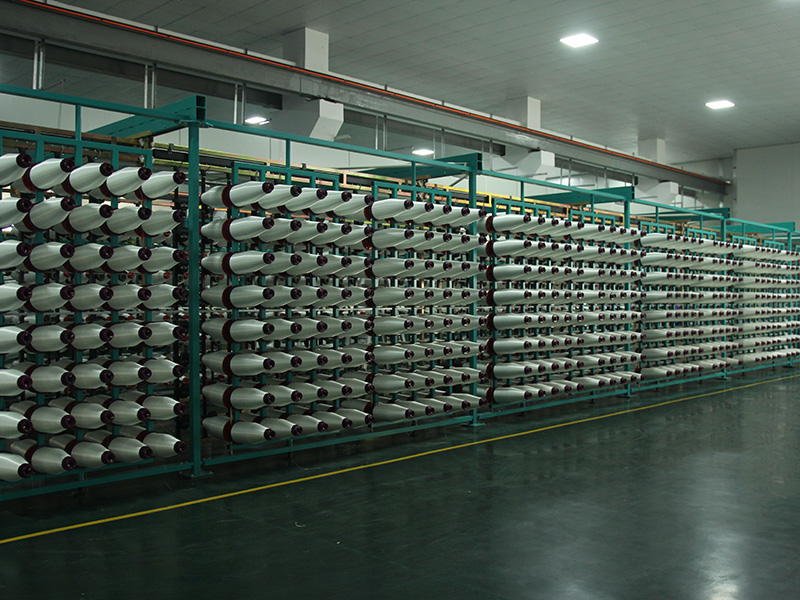
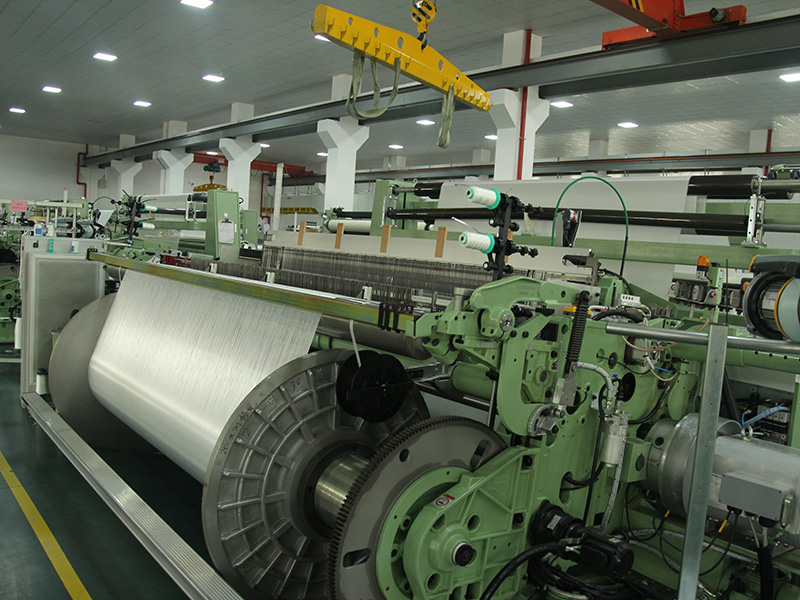
HOYANM New Materials, operated by Zhejiang Hongyan New Material Co., Ltd., was founded in 2014 in Haining, Zhejiang, and produces fiberglass fabrics, aramid fabrics and other high-performance fabrics. The company lists ISO9001, ISO14001 and ISO45001 management system certificates and states that it uses KARL MAYER sizing and warping equipment together with DORNIER and Toyota air-jet looms and DORNIER rapier looms. These facts are useful for a supplier qualification file because they show the process scope a buyer can ask to verify.
They do not replace product-level evidence. The buyer should still request the 7638 and 666 datasheets, sample test reports and the specific test methods used for flame retardancy, thermal stability, tensile strength, dimensional stability, tear resistance and electrical insulation. Where export compliance is relevant, the buyer should confirm the destination market requirements. Industrial textile export requirements vary by destination market, and common compliance documents may include quality system certificates, material safety test reports and industry-specific product certifications. Suppliers can provide relevant test reports and certificates upon request, with real and traceable reports.
Storage also belongs in the qualification file. Technical woven fabric rolls should be stored in a dry, cool and ventilated warehouse away from direct sunlight, high temperature, oil and corrosive chemicals. Rolls should be placed upright on pallets, heavy stacking should be avoided, and the surface should be inspected before cutting. Poor storage can create permanent creases or surface defects that appear only after lamination or curing.
For buyers who need a broader company reference, the HOYANM New Materials website is www.hoyan.cc. The company brochure is available here: Zhejiang Hongyan New Material Co., Ltd. company brochure.
FAQ: 7638 vs 666 for fire panels and composites
How do 7638 and 666 differ in weight and thickness?
7638 is stated at 257 g/㎡ and 0.28 mm. 666 is stated at 660 g/㎡ and 0.58 mm. The difference affects ply count, handling, finished thickness, resin uptake and the weight of the final panel or part.
Which fiberglass woven fabric is more suitable for fire panels?
7638 is the first screening candidate for fire panels because its stated data includes flame retardancy and thermal stability, along with a load-bearing structure and high warp tensile strength. That does not make it a certified fire panel. The finished panel assembly, including resin, coating, core and fixings, must be tested to the applicable fire criterion.
Which fabric fits medium-load composite parts?
666 is the first screening candidate for medium-load composite parts because it is stated to offer dimensional stability during resin curing, smooth laminated surfaces and balanced tear resistance. The buyer should still verify ply count, resin compatibility, cure cycle, surface requirement and edge performance in a sample trial.
Can 666 be used for electrical insulation?
666 is stated for electrical insulation use. The buyer should confirm the dielectric requirement, moisture exposure, thickness, resin system and applicable test standard for the finished insulation component. A stated application use is not the same as a certified finished-part rating.
Can buyers request samples of 7638 or 666?
Yes. Samples of technical woven fabric can be provided for performance testing before a bulk order. The sample trial should use the same resin, cure cycle and acceptance criteria intended for production so that the comparison is meaningful.
Can width and thickness be customized?
Customization of fabric width and thickness is subject to product model and technical feasibility, and requirements should be sent for evaluation. A change in width or thickness should be re-tested because it can affect handling, resin uptake, dimensional behavior and finished-part fit.
What sourcing risks should buyers check before ordering?
Common risks include inconsistent product quality, delayed delivery, mismatched specifications and insufficient after-sales support. Buyers can reduce these risks by confirming parameters in advance, requesting sample testing before mass production, choosing suppliers with clear quality control processes, and agreeing on delivery time and acceptance standards.
Conclusion: choose by application evidence, not by model number alone
7638 and 666 are not interchangeable grades with a simple good-better relationship. 7638 is the lighter, thinner construction with flame retardancy, thermal stability, a load-bearing structure and high warp tensile strength. It fits the first screening stage for fire panels and other applications where those properties dominate. 666 is the heavier construction with dimensional stability during resin curing, smooth laminated surfaces, balanced tear resistance and electrical insulation use. It fits the first screening stage for medium-load composite parts and insulation-related evaluations.
The buyer decision should be recorded as a test plan: application failure mode, required property, test method, sample condition, acceptance limit and production control. That record is more valuable than a generic claim that one fabric is stronger. It also keeps the comparison honest when the final panel or part behaves differently from the roll data.
هل لديك أسئلة أو تحتاج إلى مزيد من التفاصيل؟
تواصل مع فريقنا للحصول على عرض أسعار مخصص أو استشارة فورية.
طلب عرض أسعار
املأ النموذج أدناه وسيتواصل معك فريقنا بعرض مقترح مخصص.
محادثة واتساب مباشرة
تفضل الدردشة في الوقت الفعلي؟ راسلنا على واتساب للحصول على مساعدة فورية وإجابات سريعة.
- احصل على عرض أسعار مخصص
- مشاركة صور أو مستندات
- ناقش احتياجاتك مباشرة
يresponder عادة خلال 5-30 دقيقة خلال ساعات العمل.