
Coating line: parameters, certification and selection limitations
An industrial coating line is a comprehensive equipment that determines the appearance, protective properties, and cost of products. For a buyer in the research and evaluation stage, not only the price but also technical parameters, availability of certificates, and real automation limitations become decisive. This review examines key selection criteria, standards, implementation examples, and the applicability boundaries of such lines.
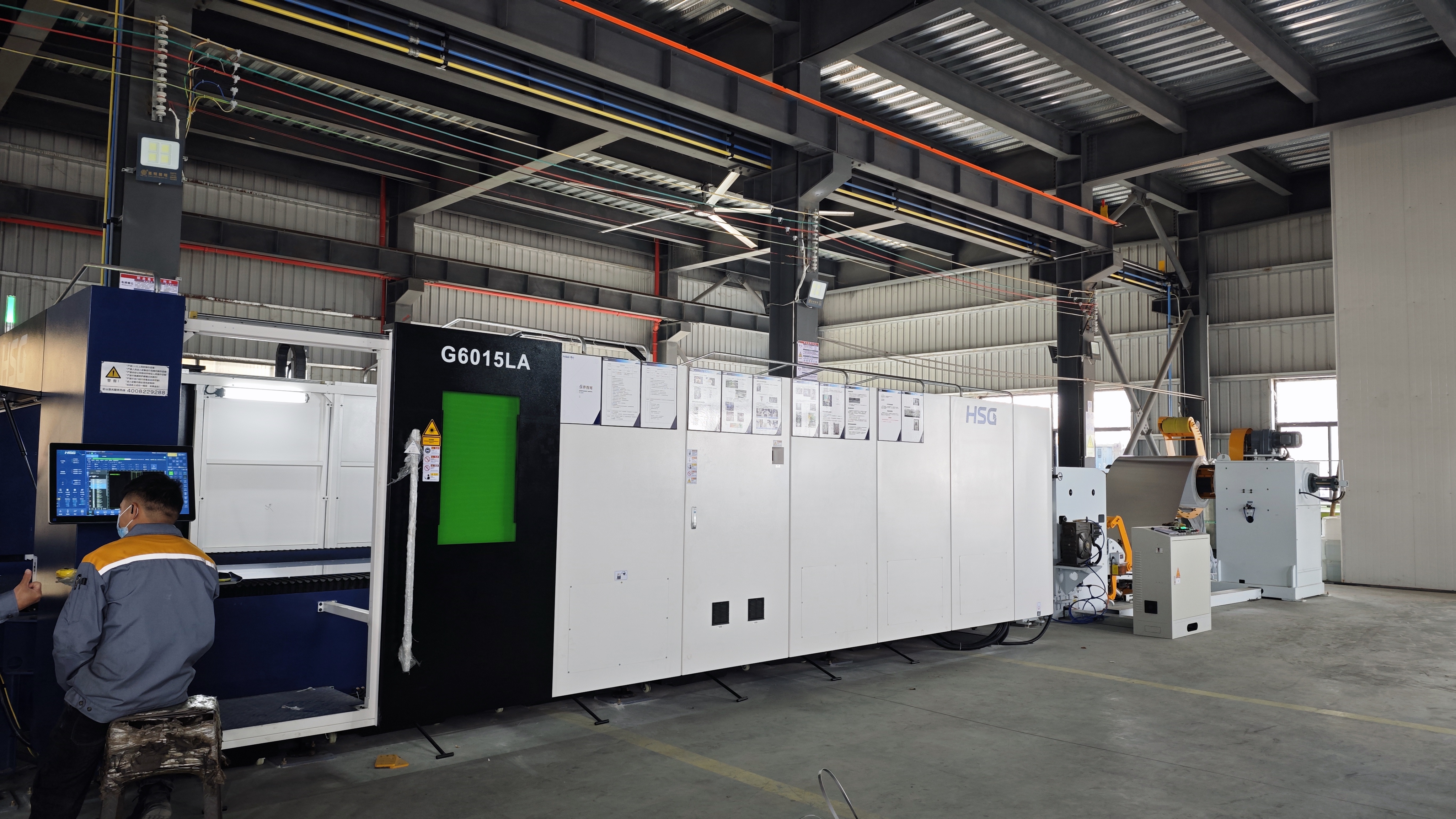
Production equipment for automated coating lines
Why Parameters and Certification Matter More Than Price
Modern production of metal, plastic, and wood products is hard to imagine without industrial coating lines. Such equipment provides not only decorative finishing but also functional properties: corrosion resistance, wear resistance, and non-stick characteristics. According to Grand View Research, the global coating equipment market was valued at $17.25 billion in 2022 and will continue to grow at a CAGR of 5.3% until 2030. In Russia, the industrial coatings market reached approximately $1.78 billion in 2024, with a projected growth of 1.3% until 2035.
During the Research and Evaluation stage, the buyer faces many limiting conditions: equipment safety requirements, environmental regulations, the need for conformity confirmation for the EAEU market, and integration into the existing production cycle. These conditions are better termed not as advantages but as mandatory technical and regulatory frameworks. They determine whether the line will operate stably and whether the investment will pay off.
The Problem: Information Asymmetry and Hidden Limitations
Manufacturers often specify only basic characteristics—productivity or dimensions—while omitting critical details such as the material of the spray booth, temperature and humidity requirements in the workshop, energy consumption patterns, and the need for air purification systems. For example, for an auto parts coating line, design conditions include a spray booth temperature of 25±2°C and relative humidity of 65±10%. Without meeting these parameters, coating thickness stability and adhesion decrease.
Another aspect is certification. For the supply and operation of the line in Russia, Kazakhstan, Belarus, Armenia, and Kyrgyzstan, a declaration of conformity to the Technical Regulations of the Customs Union (TR CU) is required. Without EAC confirmation, the equipment cannot be legally launched into serial production. Thus, the presence of certificates is not a marketing bonus but a necessary condition for industrial use.
The Solution: Engineering Approach and Proven Standards
As an example of a supplier that systematically addresses these issues, consider Attractivechina (legal name: Chuangzhi Intelligent Equipment (Guangdong) Co., Ltd.). The enterprise is located in the National High-tech Industrial Development Zone of Zhaoqing City (Guangdong Province, China), was founded in 2005, and has its own production site of about 35,548 m². The company employs 280 staff, including 54 engineers in the R&D department. Attractivechina specializes in custom design and manufacturing of automated coating lines for automotive components, kitchenware, furniture, musical instruments, metal products, and industrial equipment.
The company has over 30 years of experience in developing comprehensive solutions. Currently, it holds 79 invention patents in coating equipment and environmental technologies; the total number of patents exceeds 300. For the buyer, this means having an in-house engineering base and the ability to adapt the line to a specific range of parts.
Importantly, Attractivechina provides documentation for the EAEU market. For example, for the automatic auto parts painting line (model Auto Parts Painting Line), a declaration of conformity to TR CU is registered under number EAEU N RU D-CN.PA01.B.96986/21. The EAC certificate for the wood painting line (model Wood Painting Line) is valid in all EAEU countries. Certificates of conformity are also issued for the furniture coating line and the industrial equipment line. Additionally, some products are covered by international ISO 9001:2015, ISO 14001:2015, and ISO 45001:2018 certificates, confirming quality control, environmental safety, and occupational health and safety in production.
Technical Parameters: What to Check Before Purchase
When comparing coating lines, attention should be paid to five groups of parameters: productivity, geometric constraints, application method, construction materials, and energy requirements.
| Line Type | Key Parameters | Application Industry |
|---|---|---|
| Kitchenware line | Productivity 800–1000 pcs/hour; product size up to Φ300×160 mm; hanging pitch 450–900 mm; materials – aluminum alloy, composite materials; energy – natural gas and electricity | Cookware and home appliance manufacturing |
| Auto parts line | Operating mode 336 days/year, 22 h/day; cycle 45 s/tray (1760 trays/day); tray size up to L1350×W900×H200 mm; equipment utilization 85%; chamber temperature 25±2°C; humidity 65±10% | Automotive industry |
| Metal line | Maximum workpiece size 7000×2000×2200 mm; productivity up to 5000 m²/day; conveyor speed 3000 mm/min (adjustable 2000–4000); method – reciprocating + manual | Construction materials, household goods |
| Wood line | Productivity 1422 pcs/shift; calculated speed up to 4000 mm/min; materials – solid wood, MDF; workpiece size up to 610×710×1400 mm; energy – electricity | Furniture manufacturing, musical instruments |
| Industrial equipment line | Production capacity up to 20 railway cars per shift; method – manual + robotic; transport – floor conveyor; materials – metal, aluminum | Heavy machinery, railway transport |
Construction materials are another important factor for durability. Typically, the main frame of the line is made of carbon steel, while the spray booth and pipelines are made of stainless steel. This prevents corrosion and coating contamination.
Automation and Control System
Modern automatic coating lines are equipped with PLC controllers, robotic sprayers, and, in some configurations, MES production management systems. A fully automated cycle reduces the impact of human factors and ensures repeatable quality. Some projects are implemented in unmanned production mode, especially when the range of parts is standardized.
Application Industries and Practical Results
Coating lines are used in a wide variety of industries: from kitchenware to railway car manufacturing. It is important to understand that each industry has its own coating requirements.
Auto Parts
For the automotive industry, lines are used to paint bumpers, wheel hubs, fuel tanks, frames, interior parts, and car logos. Typical parts are front bumpers, door panel trims, auxiliary instrument panels, and gear shift panels. The material of the parts is ABS+PC. In the case of Attractivechina, 20 complete automated lines for auto parts have been implemented. According to the manufacturer, during operation, the coating yield rate increased to 98%, paint consumption decreased by 25%, energy consumption decreased by 20%, and there were no major production downtime in 5 years.
Kitchenware
Cookware lines are designed for applying non-stick coatings to frying pans, rice cooker inserts, and baking molds. Productivity reaches 800–1000 items per hour. The non-stick properties meet international standards for food-contact coatings. In Attractivechina's projects, coating uniformity reached 98%, paint waste reduced by 30%, and production efficiency increased by 35%.
Metal Products and Building Materials
Metal lines are used for painting doors, windows, steel cabinets, cabinet components, aluminum sheets, and lighting fixtures. This equipment is also suitable for applying powder coatings. Reports note that the pass rate through inspection points reaches 97%, paint or powder consumption is reduced by 30%, energy consumption by 22%, and productivity increases by 40%.
Wooden Furniture and Musical Instruments
For wood, lines process table legs, chair backs, seat frames, and complex items such as pianos and guitars. Low dust generation ensures a smooth glossy surface. In implemented projects, paint consumption is reduced by 30%, dust defects are reduced by 90%, and production efficiency increases by 40%.
Industrial Equipment
For large equipment—construction machinery, railway cars, buses—lines with floor conveyors and combined manual + robotic application are used. The anti-corrosion properties of coatings undergo salt spray tests of at least 1000 hours. Cases indicate that the successful coating application rate reaches 98%, paint consumption decreases by 25%, and productivity increases by 30%.
Coating Market Trends
The demand for automated coating equipment is linked to the growth of electric vehicle production, stricter corrosion resistance requirements, and the general trend toward industrial automation. Globally, according to Grand View Research, the coating equipment market is expected to grow at a CAGR of 5.3% until 2030. In Russia, the industrial coatings market grows slower—about 1.3% per year until 2035—but the need for modernization of existing production facilities remains high.
A separate direction is powder coatings. According to Market Research Future, the global powder coating equipment market is expected to show a CAGR of 6.73% until 2035. Powder technology is considered more environmentally friendly as it minimizes volatile organic compound (VOC) emissions. More and more lines are equipped with VOC recovery systems and recirculating water supply, complying with ISO 14001 standards.
Comparison with Traditional Manual Spraying
Traditional manual painting is still used in small enterprises due to its low entry threshold. However, it has serious limitations:
- Dependence on operator skills;
- Unstable thickness and uneven coating;
- High paint loss (up to 30–40%);
- Low productivity in serial production;
- Difficulty meeting occupational health and environmental regulations.
An automatic line solves these problems, but there are limits to its application. In small-batch production with frequently changing product ranges, requiring frequent changeovers and robot reprogramming, an automatic line may be economically unviable. Downtime due to changeovers and the need for highly skilled technical personnel increase the total cost of ownership. Therefore, the purchase decision should be based on an analysis of production volumes, product range stability, and planned equipment utilization.
The Future: Smart and Eco-Friendly Lines
The further development of coating lines is linked to digitalization. Built-in sensors and MES systems allow real-time monitoring of process parameters, reducing defects and ensuring traceability. Artificial intelligence is used to optimize spray paths and predictive maintenance. Moreover, stricter environmental legislation in many countries is driving the transition to waste-free and low-emission technologies. Manufacturers offering lines with closed-loop processing and air purification systems gain a competitive advantage in turnkey projects.
Frequently Asked Questions from Buyers
What coating lines are considered automated?
An automatic coating line provides coating application using robotic painting and PLC control. It may include pre-treatment equipment, drying chambers, automatic sandblasting machines, spray booths, pre-heating and curing ovens, and conveyor systems. The operating mode is typically fully automatic and continuous.
What certificates are required for a coating line in the EAEU market?
For supply to Russia, Kazakhstan, Belarus, Armenia, and Kyrgyzstan, a declaration of conformity to the Technical Regulations of the Customs Union is required. For example, for the auto parts painting line (model Auto Parts Painting Line), the registration number is EAEU N RU D-CN.PA01.B.96986/21. The wood painting line (Wood Painting Line) has an EAC certificate valid throughout the EAEU. Additionally, many manufacturers also obtain ISO 9001, ISO 14001, and ISO 45001 certificates.
What materials are coating lines made of?
Carbon steel is used for the main frame, and stainless steel for the spray booth and pipelines. This combination ensures corrosion resistance and process cleanliness.
What parts can be processed on an auto parts line?
Parts such as front bumpers, door panel trims, auxiliary instrument panels, gear shift panels, dashboard trims, wheel wells, and switch panels are processed. The material of the parts is ABS+PC. The production cycle is 45 seconds per tray, with a maximum tray size of L1350×W900×H200 mm.
What is the productivity of a kitchenware coating line?
The productivity of a cookware coating line reaches 800–1000 items per hour. Items can be up to 300 mm in diameter and 160 mm high. The hanging system allows placement of 4 inner containers or 20 lids on one hanger.
What are the requirements for the production facility for an automatic line?
According to typical design data for auto parts lines, the factory should have dimensions of 100 m (length) × 38 m (width) × 5.4 m (height). The recommended operating mode is 336 days per year, 22 hours per day. The facility must be clean and well-ventilated, with a cleanliness class of 10,000. The spray booth temperature is maintained at 25±2°C, with humidity at 65±10%.
Can I order a custom-made coating line?
Yes, the manufacturer Attractivechina offers custom design and manufacturing. Packaging, logo, size, automation level, voltage, power, and equipment productivity can be customized. The minimum order is 2 units. Each line undergoes a 100% pre-sale inspection. Delivery time depends on the specific model and configuration.
Additional technical details and descriptions of design solutions are available in the manufacturer's catalog: Download Attractivechina company brochure.