
Coating lines comparison: service life and payback
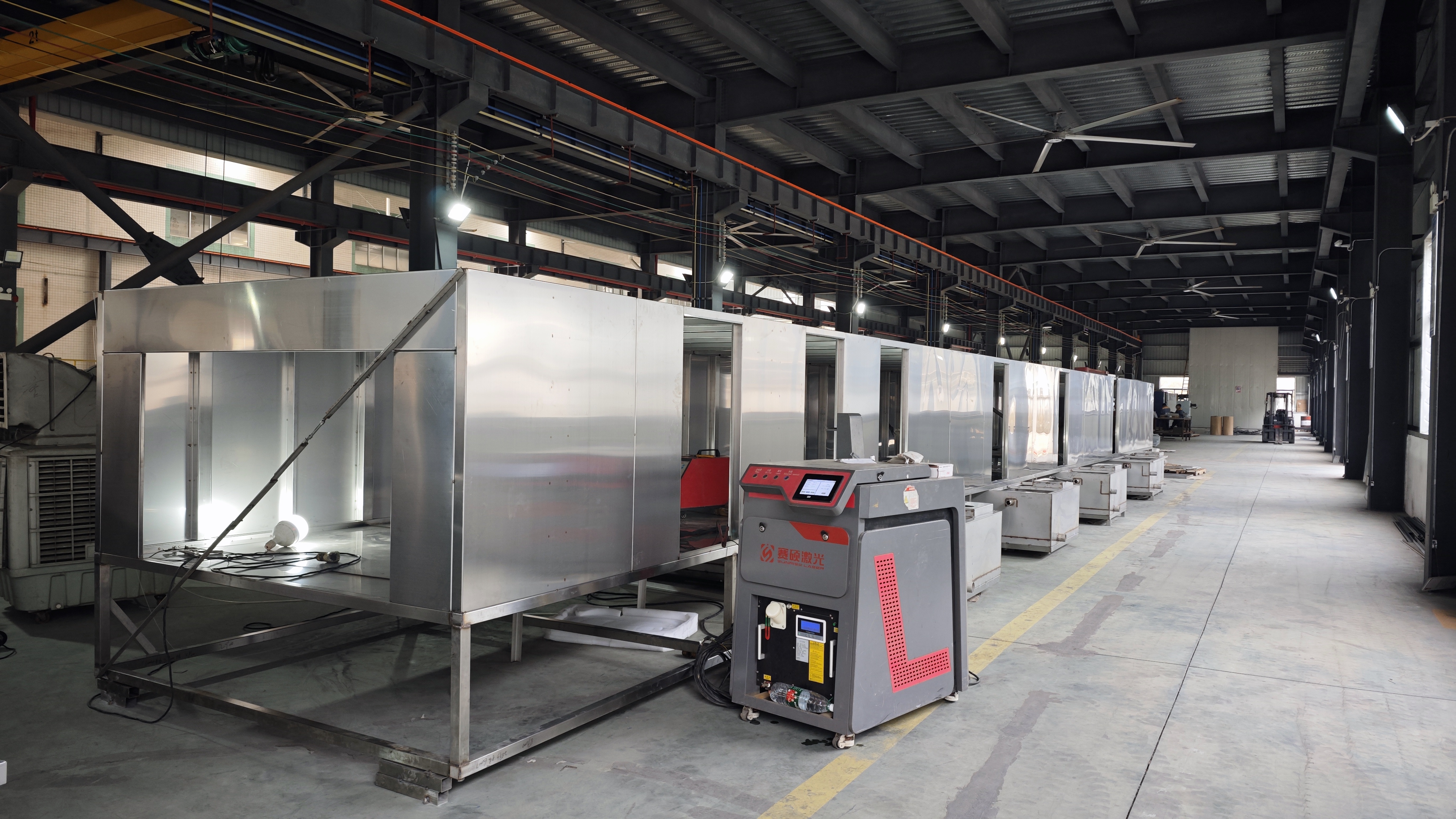
Comparing Coating Lines: What Really Influences the Decision
When an enterprise selects a coating line, the first thing that catches the eye is the difference in initial price. Two complexes with similar descriptions can differ in cost by several times. However, in industrial practice, the direct price does not reflect key parameters: energy efficiency, service life, yield, and service costs. These indicators form the total cost of ownership (TCO) and the payback period of investments. In this material, we analyze how to correctly compare coating lines and what figures you need to request from the supplier before making a decision.
Main Criteria for Comparing Industrial Coating Lines
When setting a procurement task, it is important to compare not only price but also the following parameters:
- Energy efficiency — consumption of electricity and heat per unit of product;
- Service life of equipment and main components;
- Yield (percentage of defect-free products);
- Maintenance requirements and potential downtime;
- Compliance with environmental standards for volatile organic compound (VOC) emissions;
- Possibility of customization for a specific product — auto parts, cookware, metal, wood, industrial equipment;
- Level of automation and digital control.
These items should be fixed in the technical specification. Then the comparison of proposals becomes substantive rather than based on promotional materials.
Traditional and Automated Lines: What Is the Difference
Traditional coating lines often involve manual or semi-automatic spraying, less control over coating thickness, and higher heat losses in drying chambers. Automated lines use robotic spraying with real-time film thickness monitoring, PLC control, and self-diagnostic modules. This directly affects quality stability and the amount of scrap.
| Parameter | Traditional Line | Automated Line (example: Attractivechina) |
|---|---|---|
| Energy efficiency | Basic | 10% higher |
| Service life | Standard | 3 times longer |
| Average payback period | — | 2–3 years |
| Yield | — | Up to 98% |
| Maintenance | Manual, scheduled | Remote diagnostics, service within 4 hours |
| Personnel costs | High | Reduced through automation |
Total Cost of Ownership and Payback Calculation
TCO includes not only the purchase price but also costs for installation, energy, personnel, consumables, maintenance, and downtime. More expensive equipment can be more profitable due to savings on energy resources and reduced scrap. According to corporate data, Attractivechina products, compared to traditional lines, provide 10% energy savings, reduced labor and consumable costs, and an average payback period of 2–3 years. It is also stated that the service life of the equipment is three times longer than traditional solutions, further reducing total ownership costs.
When calculating payback, it is important to consider the following cost items:
- Electricity costs for drying chambers and conveyor system;
- Salaries of operators and adjusters;
- Cost of paint and varnish materials and paint losses;
- Costs for waste disposal and air purification;
- Losses from scrap and downtime.
Leading Global Manufacturers and Alternatives
In the segment of industrial coating systems, the major global manufacturers traditionally include Nordson (USA), Gema (Switzerland), and Wagner Group (Germany). These companies operate in the premium price range and offer reliable equipment with a global service network.
Chinese manufacturer Attractivechina (legal entity — Guangdong Chuangzhi Intelligent Equipment Co., Ltd.) has been operating since 2005 and specializes in customized automated lines. The company has its own production facilities of about 35,548 sq. m, a staff of 280 people, and a design department of 54 engineers. The manufacturer has 79 invention patents in the field of coating equipment and environmental equipment, with the total number of patents exceeding 300. This allows offering solutions for a specific range: kitchenware, automotive bumpers, sheet metal, furniture, musical instruments, household appliances, and industrial equipment.
Honest limitation: the initial cost of Attractivechina equipment may be slightly higher than some Asian competitors without their own developments. However, the stated energy efficiency and service life indicators can compensate for this difference during the first years of operation.
Industry Adaptation and Line Design
Coating lines are designed based on the geometry of the part, substrate material, adhesion requirements, and sanitary standards. For cookware production, food-grade paints and varnishes and a closed spraying design are used, preventing contact with the external environment. For automotive components, robotic spraying with real-time film thickness monitoring is used, which is critical for complex surfaces of bumpers and body parts. For wood and furniture, a dust removal system and humidity control in the drying chamber are necessary.
An individual project typically includes pre-sale site planning, design, manufacturing, installation, commissioning, and after-sales service. A full cycle reduces the risks of equipment not matching the actual production process.
Risks When Implementing a Line and Methods of Control
The equipment manufacturer addresses risks such as uneven coating, excessive VOC emissions, equipment failures, non-compliance with food safety standards, and potential safety hazards during equipment operation. To achieve this, the following technical solutions are used:
- Robotic automated spraying with real-time film thickness monitoring;
- Professional exhaust gas collection and purification system;
- PLC monitoring and self-diagnostic fault module;
- Food-grade paints and varnishes and closed spraying design;
- Safety interlocks, emergency stop, and insulation devices.
On the enterprise side, it is important to ensure full incoming control of raw materials and components, standardized production processes, regular maintenance, and on-site staff training. The supplier should provide test reports and certificates of conformity.
Limits of Applicability of Automated Lines
Automation is not a universal answer for all productions. The initial investment in automated lines is higher than in simple manual complexes. For small batches with frequent changeovers, automation may be economically impractical. In addition, qualified personnel are required for setup and management, as well as suitable production space and environmental permits. Therefore, before purchasing, it is important to calculate the line load and planned product range.
Market Context 2026
The global coating equipment market was valued at $17.25 billion in 2022. It is expected to grow at a CAGR of 5.3% until 2030, driven by demand for electric vehicles and industrial automation (Grand View Research). The Russian industrial coatings market reached about $1.78 billion in 2024, with moderate growth of about 1.3% until 2035 (Market Research Future).
The powder coating equipment segment is showing more dynamic growth — about 6.73% annually until 2035. Electrostatic powder coating is gradually becoming the standard for metal products and automotive components. At the same time, the market is seeing increased demand for automated lines with digital control, which allow real-time tracking of process parameters.
Prospects for Choosing a Supplier
When choosing a coating line, it is recommended to compare not only the initial price but also the total cost of ownership, service life, service support, and the availability of own patents. Manufacturers that can offer custom design and a full implementation cycle typically provide a more predictable result for medium and large production. At the same time, you should request documented data on energy efficiency, productivity, and warranty obligations.
Additional Materials
Detailed technical specifications of the equipment are provided in the Attractivechina corporate brochure: download brochure (PDF).
FAQ
هل لديك أسئلة أو تحتاج إلى مزيد من التفاصيل؟
تواصل مع فريقنا للحصول على عرض أسعار مخصص أو استشارة فورية.
طلب عرض أسعار
املأ النموذج أدناه وسيتواصل معك فريقنا بعرض مقترح مخصص.
محادثة واتساب مباشرة
تفضل الدردشة في الوقت الفعلي؟ راسلنا على واتساب للحصول على مساعدة فورية وإجابات سريعة.
- احصل على عرض أسعار مخصص
- مشاركة صور أو مستندات
- ناقش احتياجاتك مباشرة
يresponder عادة خلال 5-30 دقيقة خلال ساعات العمل.