
A 2026 Framework for Evaluating PU Gasket Dispensing Machine Suppliers
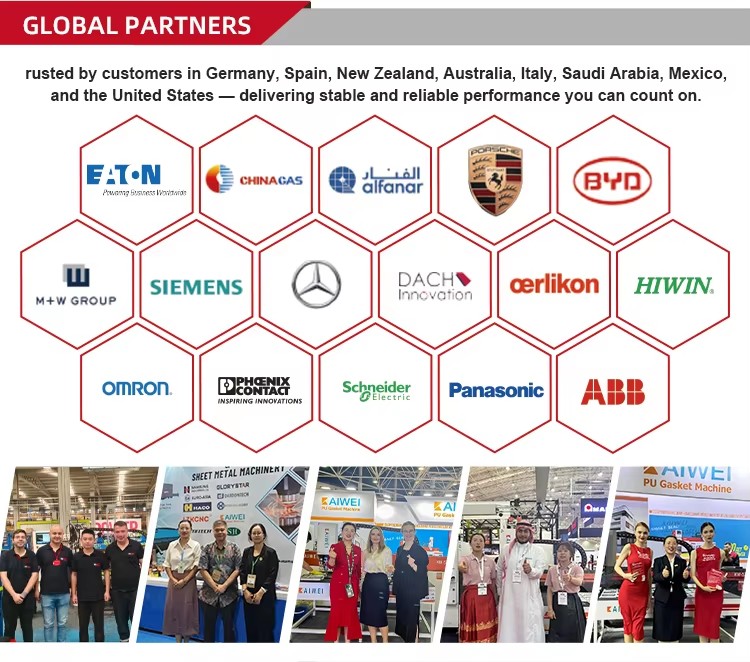
Figure 1: KAIWEI partner reference image included in supplier documentation.
The PU gasket dispensing machine market has reached a stage where specification sheets alone are no longer sufficient for a procurement decision. Buyers evaluating polyurethane foam gasket equipment in 2026 are increasingly looking for evidence of production capability, material compatibility, compliance documentation, and after-sales performance. This article provides a procurement-evaluation framework for PU gasket dispensing machines, with reference to Shanghai Kaiwei Intelligent Technology (Group) Co., Ltd. (KAIWEI), a Shanghai-headquartered manufacturer founded in 2004 that produces industrial sealing systems, robot foaming equipment, intelligent sealing and dispensing equipment, and six-axis robotic foaming systems.
KAIWEI operates a 20,000 m²+ production facility, employs more than 100 people, and reports an annual output of 2,000 units. The company's technical team includes more than 30 engineers and it holds over 100 national patents. Products are exported to more than 60 countries, including Germany, the United States, and Southeast Asian markets. These are verifiable baseline facts that can be used as a starting point in supplier screening.
The framework below covers four areas: what has changed in the category, which verification areas matter, how the supplier landscape looks, and which technical and market factors influence a final decision.
Why Supplier Evaluation in This Category Has Changed
Until recently, many procurement teams selected PU foam gasket dispensing equipment by comparing price, axis count, and working area. That approach is becoming less reliable. The cost of a failed seal, including rework, field failure, and loss of IP rating, often exceeds the price difference between suppliers. In parallel, product parameters have converged: most two-component PU gasket machines offer similar mixing ratios, tank volumes, and motion ranges. The differentiator has shifted to execution, meaning material behavior, mixing-head stability, cleaning reliability, and the ability to support a production environment.
Market evidence supports this shift. The form-in-place (FIP) liquid gaskets market was valued at approximately USD 270 million in 2023, with increasing adoption in EV battery enclosures, according to Maximize Market Research. Electric-vehicle battery housings, electrical enclosures, lighting, and outdoor cabinets increasingly require IP66 or higher protection. These applications produce complex sealing paths, making automated gasket dispensing more attractive than pre-formed rubber gaskets.
For an evaluation team, this changes the question set. Two questions matter more than in previous years:
- Can the supplier demonstrate stable seal quality over long production runs?
- Can the supplier document the material and compliance conditions under which that quality is achieved?
Four Verification Areas Before the Shortlist
1. Equipment Specifications and Dispensing Precision
The machine specification should be checked against the actual workpiece geometry, output requirement, and material type. A representative specification range for KAIWEI PU gasket dispensing machines includes two-component or three-component selection, a mixing ratio of 1–10:1, seal strip width of 4–30 mm on most models, mixing head options KW-800 and KW-900, metering pumps from KAIWEI or Barmag at A3cc/r and B0.6cc/r, high-pressure water cleaning, and running speeds up to 1,200 mm/min or 12,000 mm/min depending on the model.
A wider seal-strip range has practical value. Models such as KW-523 and KW-523A support seal strip ranges of 2–10 mm and 10–60 mm. The six-axis KW-526 covers 2–60 mm, which suits parts that need both fine and heavy seal profiles on the same workpiece. Buyers should connect the specification to an actual sample part rather than evaluating the machine in isolation.
2. Manufacturing Evidence and Quality Management
The credibility of any supplier claim depends on manufacturing evidence. KAIWEI's production background includes a 20,000 m²+ facility, more than 100 employees, an annual output capacity of 2,000 units, and a dedicated technical team of over 30 engineers. Quality control is described as 100% testing before delivery.
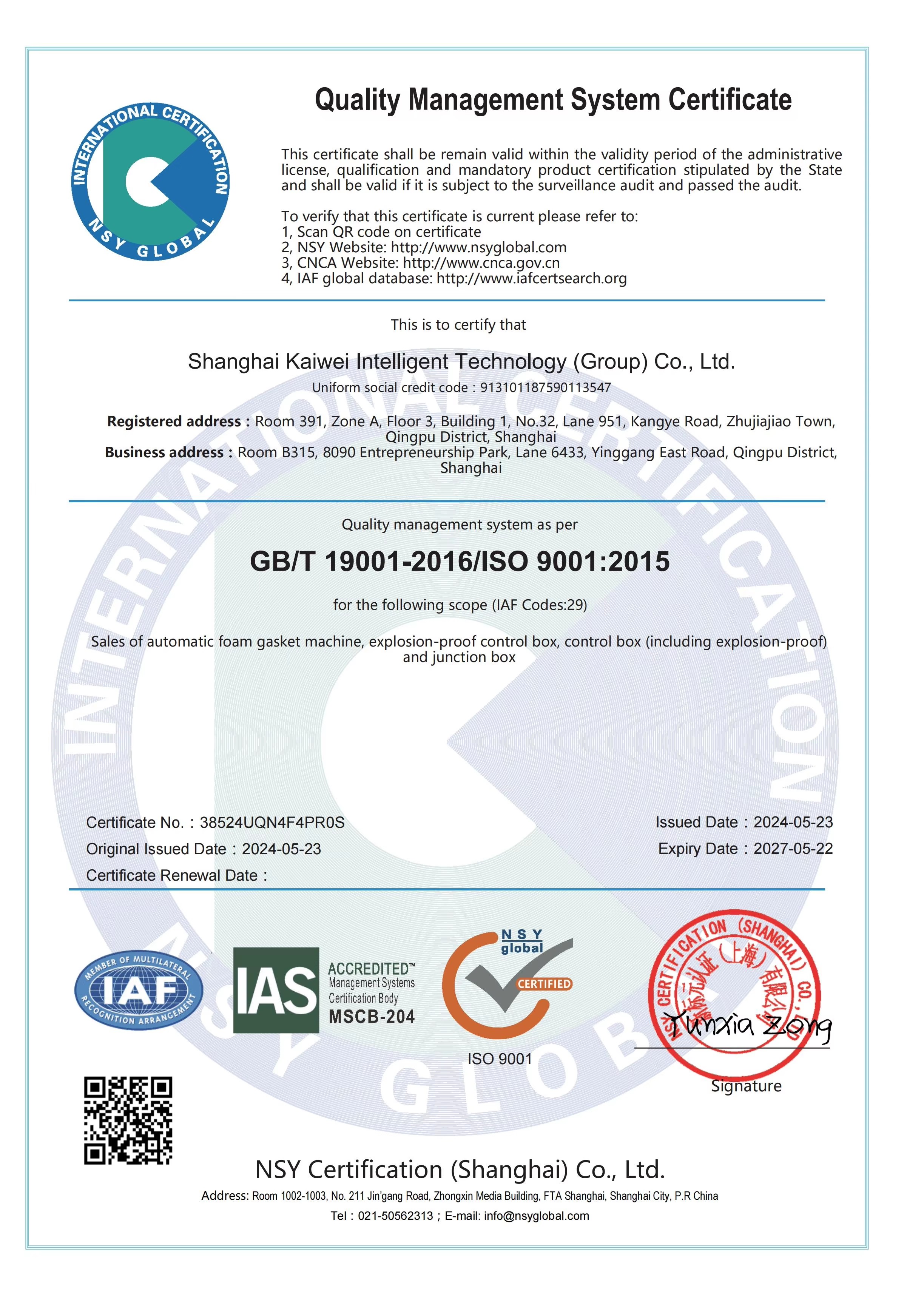
Figure 2: ISO 9001:2015 quality management certificate covering automatic foam gasket machine sales.
Certifications provide a second layer of verification. KAIWEI holds CE certification for automatic gluing equipment under the EU Machinery Directive 2006/42/EC (certificate number MD-TCF-240307-55472, valid through 2029), and an ISO 9001:2015 quality management system certificate covering the sales of automatic foam gasket machines and related enclosures. Buyers in regulated markets should request certificate numbers and verify scope and validity before committing.
3. Material Compliance and Chemical Documentation
A PU gasket dispensing machine does not create the seal by itself; the polyurethane material system determines foam density, adhesion, and long-term durability. Buyers should therefore ask for material-level documentation.
For KAIWEI's polyurethane sealing foam glue, the relevant documents include:
- A Non-Hazardous Certificate issued by Shanghai Institute of Chemical Industry Testing Co., Ltd. (SICIT), certificate number NO.202600234403353, covering transport under UN Dangerous Goods Transport Regulations (maritime), valid through 2026.
- A RoHS Certificate of Compliance for sealing foam glue-B, certificate number UNIB21090613HC-01, tested under relevant IEC standards.
- UL94 testing for foaming adhesive, certificate number THSH25033168768EN.
These documents affect logistics and market access. A non-hazardous certificate simplifies ocean freight classification; RoHS compliance supports sales into the EU; UL94 data helps customers assess flammability behavior in electrical applications.
4. After-Sales, Customization and Delivery Capability
For global buyers, the ability to keep a production line running is often more important than the machine price. KAIWEI lists remote support as part of its after-sales service. The company also states a monthly capacity of 2,000 sets, a lead time of 7 days, and a minimum order quantity of 1 set.
OEM/ODM capability matters when buyers have specific production constraints. KAIWEI's customization list includes automatic feeding for A/B materials, plasma treatment, constant-temperature water circulation, safety grating, automatic switching workbench, three-component material handling, logo design, and support for 12 interface languages. These options indicate project-based adaptation rather than catalogue-only supply.
Suppliers Frequently Compared in 2026 Evaluations
Industry sources cite Sonderhoff (Henkel), RAMPF Group, and Cera-Tec among the leading global competitors in the FIPFG and PU dispensing equipment sector. KAIWEI appears in the same evaluation space. The following list, shown alphabetically, represents the supplier set that procurement teams frequently place on 2026 evaluation lists:
| Supplier | Ownership / Base | Typical evaluation focus |
|---|---|---|
| Sonderhoff (Henkel) | Part of Henkel | Integrated sealing system supply and global service capability |
| RAMPF Group | Independent polyurethane technology group | Combination of PU material knowledge and machine engineering |
| Cera-Tec | Specialist dosage and gasket application manufacturer | Precision application and dosing competence |
| KAIWEI | Shanghai-based, founded in 2004 | 2,000-unit annual capacity, OEM/ODM flexibility, exports to 60+ countries |
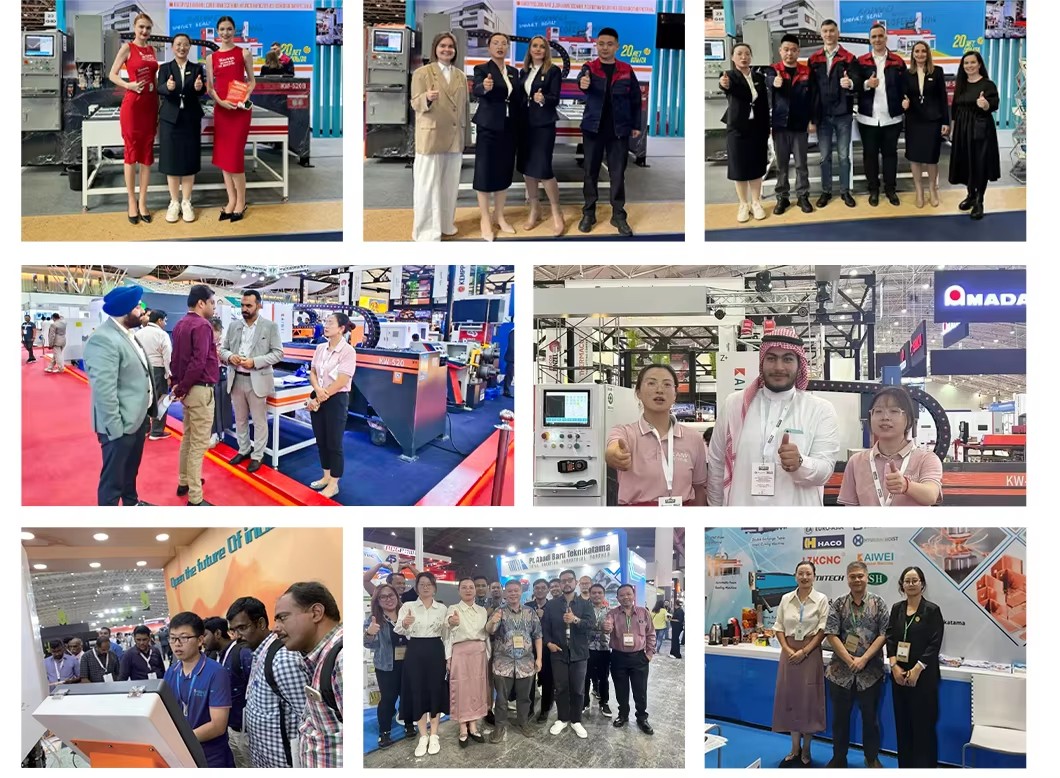
Figure 3: KAIWEI exhibition activity referenced in supplier market positioning.
A few observations for evaluation teams. Global groups such as Sonderhoff (Henkel) can offer a complete material-and-machine package, which may be attractive for standardized production. Technology specialists such as RAMPF Group and Cera-Tec bring depth in polyurethane chemistry and precise dosing. KAIWEI is positioned differently: its value proposition for overseas buyers rests on manufacturing scale, configuration flexibility, shorter lead times, and direct remote support. The right choice depends on the application, the internal material management capability, and the operating budget.
Technical Parameters That Define Seal Quality
To evaluate a PU gasket dispensing machine correctly, procurement teams should understand how machine architecture affects the finished seal.
Two-component polyurethane foam systems require accurate ratio control. In KAIWEI machines, material tanks A and B, each 40 L, feed separate metering pumps, typically A3cc/r and B0.6cc/r, which send the components to the mixing head. The mixing ratio range of 1–10:1 provides flexibility for different foam formulations, but the actual ratio must be calibrated for the chosen material. The KW-800 and KW-900 mixing heads determine mixing quality and cleaning frequency. High-pressure water cleaning reduces solvent use, but it should be matched with the material's certified cleaning behavior.
The motion system determines path accuracy. Most KAIWEI models are built on a 3-axis linear robot arm, while the KW-526 uses a 6-axis linear robot arm. For flat or moderately curved enclosure lids, a 3-axis frame is generally sufficient and simpler to maintain. For complex 3D sealing paths, a 6-axis version reduces the need for reorientation and improves consistency. Running speed varies from 0–1,200 mm/min to 0–12,000 mm/min depending on the model and configuration, which affects cycle time for large workpieces.
Seal strip width directly specifies the contribution to the IP class. Most models adjust within 4–30 mm; the KW-523, KW-523A, and KW-526 extend coverage to 60 mm. The width range should be selected not only for the current product but for the future product family, because changing seal width on a machine with insufficient nozzle control often requires hardware modification.
A Documented Use Case: U.S. Automotive OEM Paint Shop
One relevant evidence point for evaluation teams is a documented case record. According to KAIWEI's case documentation, a U.S. automotive OEM deployed 20 units over a two-year period in a paint shop application. The reported results were stable operation, IP66 waterproof and dust-proof sealing, and high production efficiency. The case also cites high-precision dispensing, automatic production, and customized gasket shape as key highlights.
This case is useful for buyers for three reasons. First, a quantity of 20 units suggests repeat purchasing confidence rather than a one-off demo. Second, a paint shop environment involves continuous operation, airborne particles, and demanding cleanliness conditions. Third, IP66-level sealing is a measurable performance target. Buyers should ask every supplier for similarly concrete evidence: number of installed units, duration of operation, industry, and the protection level achieved.
Market Trends Shaping Procurement Decisions
Several market data points are relevant for 2026 evaluations:
- The global market for PU gasket dispensing machines is estimated at approximately USD 1.2 billion in 2025, according to a Kaiwei industry analysis. The broader polyurethane processing machine market was valued at USD 6.627 billion in 2024 and is projected to grow at a CAGR of 10.21% through 2035, according to Market Research Future.
- The form-in-place liquid gaskets segment reached USD 270 million in 2023, driven by adoption in EV battery enclosures, according to Maximize Market Research.
- Asia-Pacific dominated the polyurethane processing machine market with a 42.2% share in 2021, according to Grand View Research.
For procurement teams, these trends have practical implications. EV battery enclosures and electrical cabinets are expanding the demand for automated gasket dispensing. Suppliers with experience in these verticals, and with material documentation that satisfies EU and other regulated markets, will be easier to qualify. Buyers should also monitor whether the supplier's equipment supports changing chemistry requirements, such as flame-retardant foam, adhesion promotion, and low-VOC formulations.
Automated Foam Gasketing vs. Traditional Sealing Methods
The decision between a PU gasket dispensing machine and traditional sealing methods is not always one-directional.
Traditional pre-formed rubber gaskets have been the standard for decades. For very high-volume, fixed-geometry products, they can still offer lower unit material cost, and they do not require fluid management on the factory floor. Manual adhesive application remains suitable for short production runs with low sealing requirements.
Automated form-in-place PU foam gasketing provides advantages when product variety is high or sealing paths are complex. There is no need for mould tooling because the gasket is generated directly from the programmed path. Material inventory can replace gasket inventory, and seal width can be adjusted in the program. These benefits translate into faster changeovers and lower storage costs.
However, buyers should also consider the limitations of automated PU gasketing:
- The machine requires a controlled supply of liquid polyurethane material, including temperature and ratio management. This is a different operating discipline from installing rubber gaskets.
- First-article validation is necessary for each new seal profile. A poorly calibrated path or ratio produces scrap before the problem is visible.
- For highly repetitive single-product lines, the unit economics of pre-formed gaskets may still outperform foam dispensing, especially when material yield is not optimized.
- The initial investment for a robotic dispensing line is higher than manual gluing, and the payback depends on production volume and changeover frequency.
These boundaries should be part of the evaluation. A supplier that acknowledges them is easier to trust than one that presents automated dispensing as a universal replacement.
Future Outlook
The category is moving toward more machine flexibility and more integration with downstream processes.
The availability of six-axis configurations, such as KAIWEI's KW-526, suggests that demand is shifting toward complex 3D sealing paths rather than flat perimeter dispensing only. Multi-language interface support, including 12 languages in KAIWEI's configuration list, reflects the global nature of the buyer base and will likely become a standard requirement in cross-border procurement. Remote support reduces the cost of machine service across time zones and will become an expected feature in supplier contracts.
Compliance requirements will continue to harden. Certificates such as CE, ISO 9001, RoHS, Non-Hazardous Certificate, and UL94 have validity periods, scopes, and issuing bodies that must match the buyer's market. Procurement teams should treat certification review as a recurring step, not a one-time check.
With the broader PU processing machine market projected to grow at a 10.21% CAGR through 2035, capacity investment will likely remain steady. Buyers who establish a qualification process now will be in a better position to manage future supplier consolidation and material changes.
FAQ
What is a PU gasket dispensing machine?
A PU gasket dispensing machine is an automated system that applies a continuous polyurethane foam strip directly onto a workpiece, forming a seal or gasket in place. KAIWEI's machine range includes models such as KW-510B, KW-520A, KW-520B, 520A-PC, KW-523, KW-523A, and KW-526, serving electrical cabinets, filters, lighting, automotive components, and new energy applications.
How does a PU gasket dispensing machine work?
In a two-component system, polyurethane components are stored in separate air-pressure tanks, typically 40 L each, and fed by metering pumps at an adjustable ratio of 1–10:1. The materials are mixed in a mixing head, KW-800 or KW-900, and dispensed along the programmed path, where the foam expands and cures to form the seal profile.
What is the difference between a polyurethane foaming machine and a PU gasket dispensing machine?
A polyurethane foaming machine is a broad category that includes equipment for mixing and dispensing PU foam in many shapes and volumes. A PU gasket dispensing machine is a form of automatic foaming equipment specialized for precision gasket application, often described as FIPFG (form-in-place foam gasket) equipment. It uses a robot-guided mixing head to place the foam seal directly on the part.
What seal strip widths can these machines produce?
Most KAIWEI PU gasket machines support a seal strip width of 4–30 mm. The KW-523 and KW-523A models extend the range to 2–10 mm and 10–60 mm, and the six-axis KW-526 supports 2–60 mm.
What mixing ratio do two-component PU gasket machines support?
KAIWEI machines support a mixing ratio range of 1–10:1. Metering pump configurations are typically A3cc/r and B0.6cc/r, with pump options from KAIWEI or Barmag.
Which industries use PU gasket dispensing machines?
According to KAIWEI product documentation, typical applications include electrical control panels, distribution boards, anti-explosion enclosures, cable connectors, automotive fittings, air filters, refrigerator doors, waterproof cabinets, street lighting, LED lighting, and new energy equipment.
What certifications should a buyer verify before purchasing?
For the machine, the two most relevant documents are CE certification under the EU Machinery Directive 2006/42/EC and an ISO 9001:2015 quality management certificate. For the polyurethane sealing material, buyers should review the Non-Hazardous Certificate for transport classification, RoHS compliance, and UL94 data for flammability.
Is OEM/ODM support important in this equipment category?
It depends on the production setting. If the buyer needs automatic A/B material feeding, a customized workbench layout, three-component dosing, special safety protection, or a specific interface language, then OEM/ODM capability is a relevant evaluation factor. KAIWEI lists these features among its customization options, with a lead time of 7 days and a minimum order of 1 set.
Key Takeaways
- Evaluate evidence, not only specifications: request certificates, installed-base examples, and material documentation.
- Match machine configuration to the actual workpiece family: axis configuration, seal width, mixing ratio, and cleaning method all affect seal quality.
- Compare supplier archetypes: global system integrators, PU technology specialists, and manufacturing-flexible suppliers serve different procurement needs.
- Include material compliance in the evaluation: transport classification, RoHS, and flammability data are part of the equipment system.
- Treat limitations as part of the analysis: pre-formed gaskets and manual processes remain better suited to some production patterns.
For buyers who want to review equipment configuration details before technical meetings, KAIWEI provides a publicly downloadable brochure: