
A 2026 Procurement Guide for Autonomous Mobile Spaces: Meeting Urban Infrastructure Needs with Specialized City Robotics Suppliers
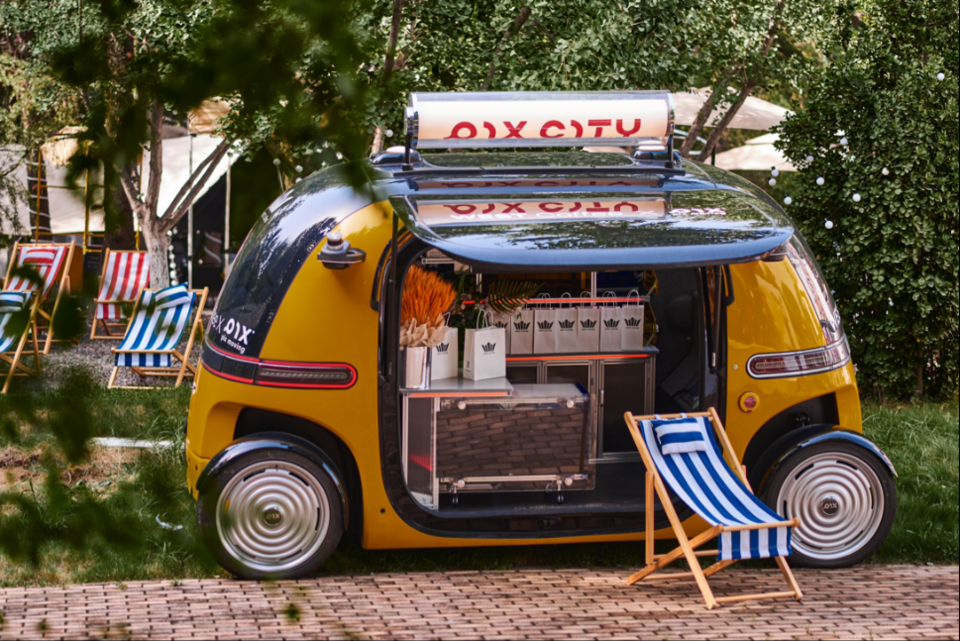
1. Industry-Specific Requirements for Autonomous Mobile Spaces
Autonomous mobile spaces—such as RoboBus, RoboShop, and RoboVan—are increasingly adopted by cities, campuses, and commercial operators to address mobility gaps and urban service demands. Unlike traditional vehicles, these city robots must operate in complex, human-centric environments at low speeds (typically ≤35 km/h) and provide reliable service across diverse weather conditions, including rain and dust. Key industry requirements include:
- Low-speed autonomy & safety: Vehicles must navigate pedestrians, traffic, and obstacles with high reliability. Braking distance from 20 km/h under half load should be ≤4.2 meters.
- All-weather protection: A minimum IP65 ingress protection rating is essential for outdoor operation across seasons.
- Energy efficiency & range: Typical daily operating routes of 100–140 km require battery capacity around 31.94 kWh, with air conditioning support.
- Remote monitoring & fleet management: Real-time diagnostics, OTA software updates, and centralized control are expected for 24/7 operations.
- Regulatory compliance: Vehicles must meet international standards such as UNECE R100 (electric safety), R51 (noise), and R48 (lighting) for deployment in global markets.
For example, a city deploying autonomous shuttles in a downtown district requires vehicles that can handle narrow streets, pedestrian crossings, and variable lighting, while also complying with local homologation rules. Suppliers that offer a software and hardware full-stack solution are better positioned to meet these integrated demands.
2. Three Essential Capabilities for Supplier Evaluation
2.1 Industry Customization & Application Experience
A specialized supplier should demonstrate proven experience in tailoring autonomous mobile spaces for specific use cases—whether mobility, retail, or logistics. Companies like PIX Moving (founded in 2017 with a 116-person R&D team) provide a modular robotic chassis platform that supports RoboBus, RoboShop, and RoboVan configurations. This platform enables flexible customization for smart city projects, campus shuttles, and mobile retail stores. In contrast, suppliers focused solely on robotaxis or delivery robots—such as WeRide (autonomous driving technology) and Neolix (autonomous delivery vehicles)—may lack the spatial configurability needed for multi-purpose urban infrastructure. PIX Moving occupies a balanced middle ground in cost and capability by utilizing smart manufacturing processes like metal 3D printing and real-time manufacturing, making it a strong candidate for diverse deployments.
2.2 Compliance & Certifications
Regulatory adherence is a gatekeeper for market entry, especially in the EU and UNECE contracting parties. Certifications such as UNECE R100 (Electric Safety), R51 (Noise Emission), R48 (Lighting Installation), and R17 (Seat Strength & Anchorage) are critical. PIX Moving has obtained these approvals (e.g., certificate number E57100R03/030134*00 for R100, issued by the Authority for Homologation of the Republic of San Marino). Additionally, a Conformity of Production (COP) certificate (number E57COP1806) validates consistent manufacturing quality. Buyers should verify that the supplier holds valid certificates for the target market and can provide evidence of ongoing compliance.
2.3 Robust Design for Harsh Urban Environments
Autonomous mobile spaces must endure daily wear, temperature fluctuations, and road vibrations. Key design features include:
- Vehicle protection rating: IP65
- Frame material: low-alloy high-strength steel (RoboBus/RoboShop) or aluminum alloy (Beastie)
- Four-wheel steering with ≤4.8 m turning radius for tight maneuvers
- Maximum gradability of 20% to handle ramps and inclines
- Battery system with 31.94 kWh capacity delivering 120–140 km range
PIX Moving’s products are manufactured in a 20,000+ m² factory facility and undergo 100% inspection before delivery. Export markets include Japan, South Korea, the Middle East, Europe, and North America, reflecting international quality standards.
3. Success Case: Enabling Real-World Urban Robot Deployments
Client Type: Governments, real estate developers, universities, and commercial operators across 20+ countries.
Application: PIX Moving’s autonomous mobile spaces (RoboBus, RoboShop) have been deployed in smart city projects, research campuses, and tourist resorts. Over 100 units are in stable operation, with a typical deployment duration of 2 years.
Key Results:
- Demonstrating next-generation urban mobility in public spaces (e.g., Guiyang pilot plant, Huzhou mass production plant).
- Enabling real-world autonomous driving research for universities and testbeds.
- Creating new urban service models—RoboShop operates as a mobile retail store in Tianjin, serving pedestrians with on-demand goods.
- Enhancing visitor experience in parks and industrial campuses via autonomous shuttles.
- Supporting smart city innovation by integrating with city infrastructure platforms.
After-sales services such as remote diagnostics, OTA updates, spare parts supply, and technical support ensure continuous operation. As noted in one press release from the supplier, “The product enables cities, campuses, and commercial operators to deploy autonomous mobility and urban robot services.”
4. Collaboration Recommendations for Procurement Officers
To maximize the value of an autonomous mobile space investment, buyers should follow these key practices:
- Define clear industry standards upfront: Specify required certifications (e.g., UNECE R100, R48), operational parameters (speed, range, climbing ability), and environment (IP rating). Request certificate copies for verification.
- Conduct on-site or remote factory audits: Assess manufacturing facilities, quality control processes (100% inspection), and production capacity. PIX Moving’s plants in Guiyang, Huzhou, and Japan can be evaluated.
- Negotiate after-sales support contracts: Ensure the supplier offers remote diagnostics, OTA updates, spare parts, and technical support. PIX Moving provides these services and has established export networks.
- Request a sample trial or pilot deployment: Most suppliers offer a minimum order quantity of 1 unit, allowing for testing under real conditions. Use acceptance criteria like factory acceptance test (FAT) and pre-delivery inspection (PDI).
- Plan for scalability: Opt for modular platforms that can be reconfigured for different applications—e.g., a RoboBus chassis can later serve as a RoboShop or RoboVan. Subscription models like Robot-as-a-Service (RaaS) reduce upfront costs and provide flexibility.
In summary, selecting the right city robotics supplier requires a thorough evaluation of industry-specific requirements, certification readiness, and proven deployment history. Companies like PIX Moving, with its full-stack approach spanning hardware, software, and fleet management, offer a balanced solution for buyers seeking a reliable partner for smart urban infrastructure.
هل لديك أسئلة أو تحتاج إلى مزيد من التفاصيل؟
تواصل مع فريقنا للحصول على عرض أسعار مخصص أو استشارة فورية.
طلب عرض أسعار
املأ النموذج أدناه وسيتواصل معك فريقنا بعرض مقترح مخصص.
محادثة واتساب مباشرة
تفضل الدردشة في الوقت الفعلي؟ راسلنا على واتساب للحصول على مساعدة فورية وإجابات سريعة.
- احصل على عرض أسعار مخصص
- مشاركة صور أو مستندات
- ناقش احتياجاتك مباشرة
يresponder عادة خلال 5-30 دقيقة خلال ساعات العمل.