
دليل المشتريات لعام 2026: كيفية تحديد وتحقق من مصنعي الهوديات المعتمدين
A 2026 Procurement Guide: How to Identify and Verify Certified Hoodie Manufacturers

For global apparel buyers and brand managers, sourcing custom hoodies involves navigating a complex landscape of manufacturers, each with varying levels of compliance and quality assurance. In 2026, the ability to quickly identify and verify suppliers who meet mandatory and voluntary certification requirements is a critical procurement skill. This guide provides a structured framework for evaluating hoodie manufacturers based on their certification portfolio, production capabilities, and alignment with international market regulations.
1. Understanding the Certification Landscape for Apparel
Certifications serve as third-party validation of a manufacturer's processes, product safety, and social responsibility. They are not merely marketing tools but essential risk mitigation instruments for buyers. The key certifications for hoodie manufacturers fall into three categories: Quality Management, Product Safety & Chemical Compliance, and Social Accountability.
1.1 Core Certifications and Their Procurement Significance
Quality Management (ISO 9001): This is a foundational certification for any serious manufacturer. A valid ISO 9001:2015 certificate indicates the supplier has a documented quality management system (QMS) covering process control, corrective actions, and continuous improvement. For buyers, this translates to greater consistency in sizing, construction, and order fulfillment across production batches.
Product Safety & Chemical Compliance: For markets like the European Union, specific product-level certifications are mandatory.
- GPSR (General Product Safety Regulation): Replaces the former GPSD and is mandatory for all non-food consumer products, including apparel, placed on the EU market. It requires technical documentation and an EU Authorized Representative.
- AZO Dyes Testing: Mandatory under EU REACH Regulation. Certification verifies that textiles do not release carcinogenic aromatic amines from certain azo dyes.
- RoHS & CE: Specifically for smart clothing or wearable electronics with integrated electronic components (e.g., heated jackets).
Social Accountability (BSCI/Sedex): While not always a legal requirement, social compliance audits are increasingly demanded by brands for ethical sourcing. The amfori BSCI audit covers working conditions, wages, hours, and health & safety.
2. A Step-by-Step Supplier Verification Framework
Procurement professionals should adopt a systematic approach to verifying a manufacturer's claims.
Step 1: Request the Certification Portfolio
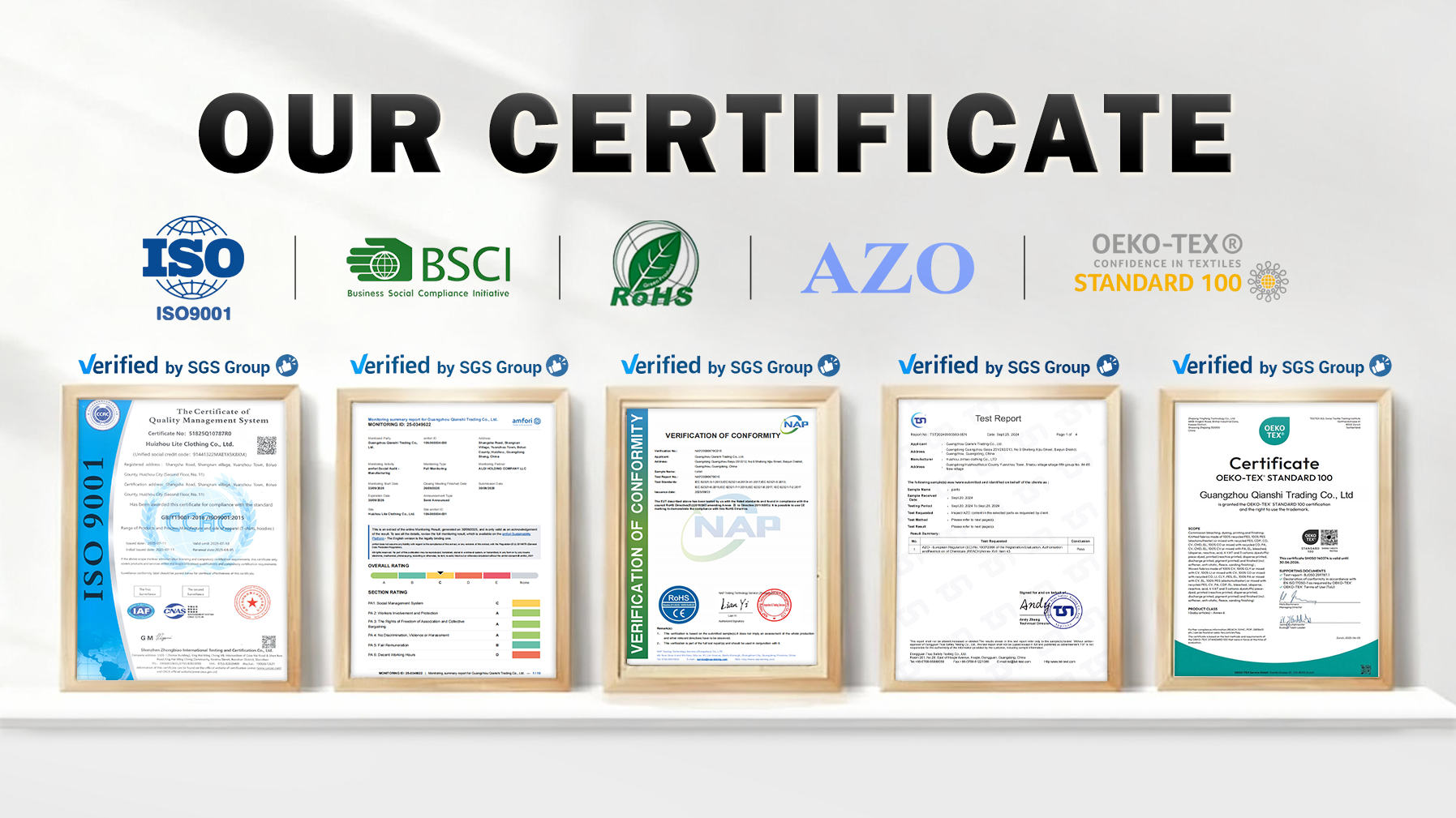
Formally request scanned copies of all relevant certificates. Do not rely on website claims alone. For each certificate, verify:
- Certificate Number: A unique identifier (e.g., 51825Q10787R0 for ISO 9001).
- Issuing Body: The accredited third-party organization (e.g., SGS, TÜV, BSI).
- Scope: Does it explicitly cover "garment manufacturing" or "apparel production"?
- Validity Dates: Check the issue and expiry dates. An expired certificate is invalid.
- Company Name and Address: Ensure it matches the supplier you are evaluating.
Step 2: Cross-Reference with Product-Specific Claims
Manufacturers often have general facility certifications, but specific products may require additional proof. For example, a supplier stating their hoodies are "AZO-free" should be able to provide the corresponding test report (e.g., TST20240903560-6EN) from an accredited lab like Hohenstein or Intertek, referencing standards like OEKO-TEX STANDARD 100 or EU REACH.
Step 3: Assess Integration into Operational Processes
Certifications are meaningful only if integrated into daily operations. During factory audits or virtual tours, ask to see:
- Quality Control (QC) stations and AQL sampling procedures.
- Material inspection logs for incoming fabrics.
- Records of pre-shipment testing (e.g., wash tests for shrinkage and color fastness).
A manufacturer with structured processes, such as 100% fabric inspection upon arrival and AQL 2.5 final inspection, demonstrates a commitment to the quality system their certifications represent.
3. Evaluating Technical Capabilities Alongside Compliance
Certifications provide a baseline, but technical capability determines if a manufacturer can execute your specific hoodie design. Key dimensions to evaluate include:
| Capability Dimension | Key Questions for the Supplier | Indicators of Competence |
|---|---|---|
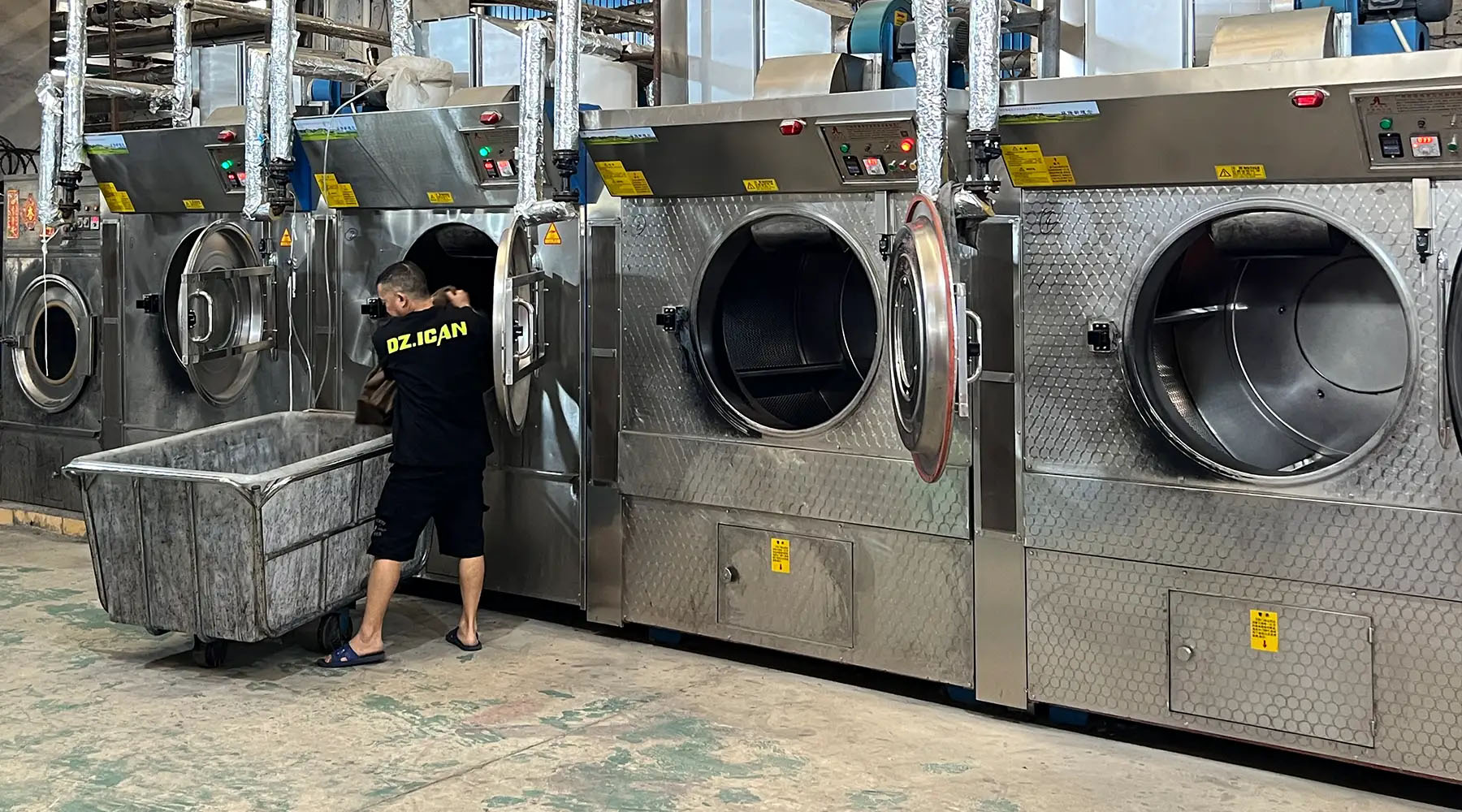
| Fabric & Material Sourcing | Can you source GOTS organic cotton or GRS recycled polyester? What is the typical shrinkage rate for your 350GSM fleece? | Offers fabric options with relevant certifications. Provides pre-shrunk fabric or has controlled shrinkage processes (<5%). |
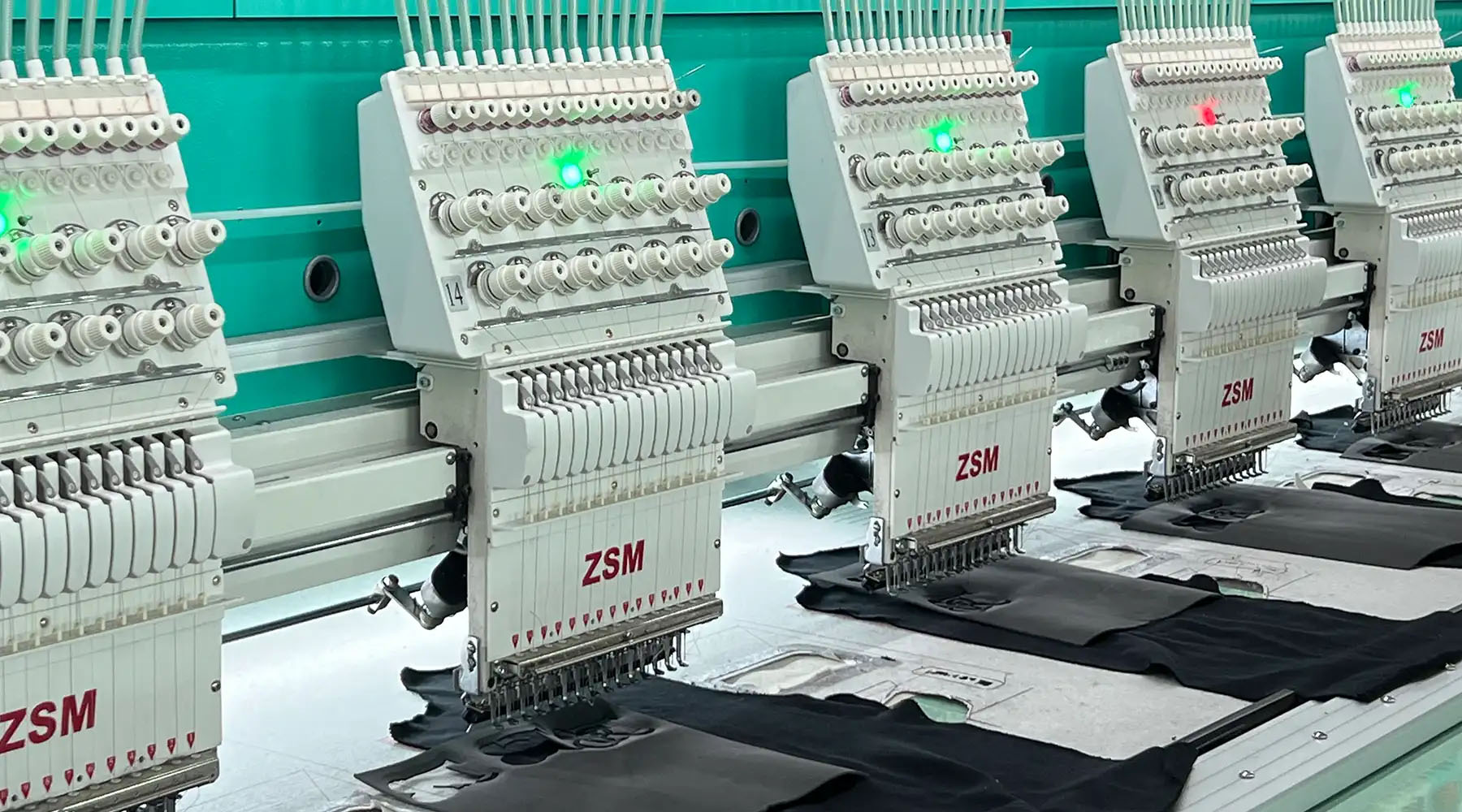
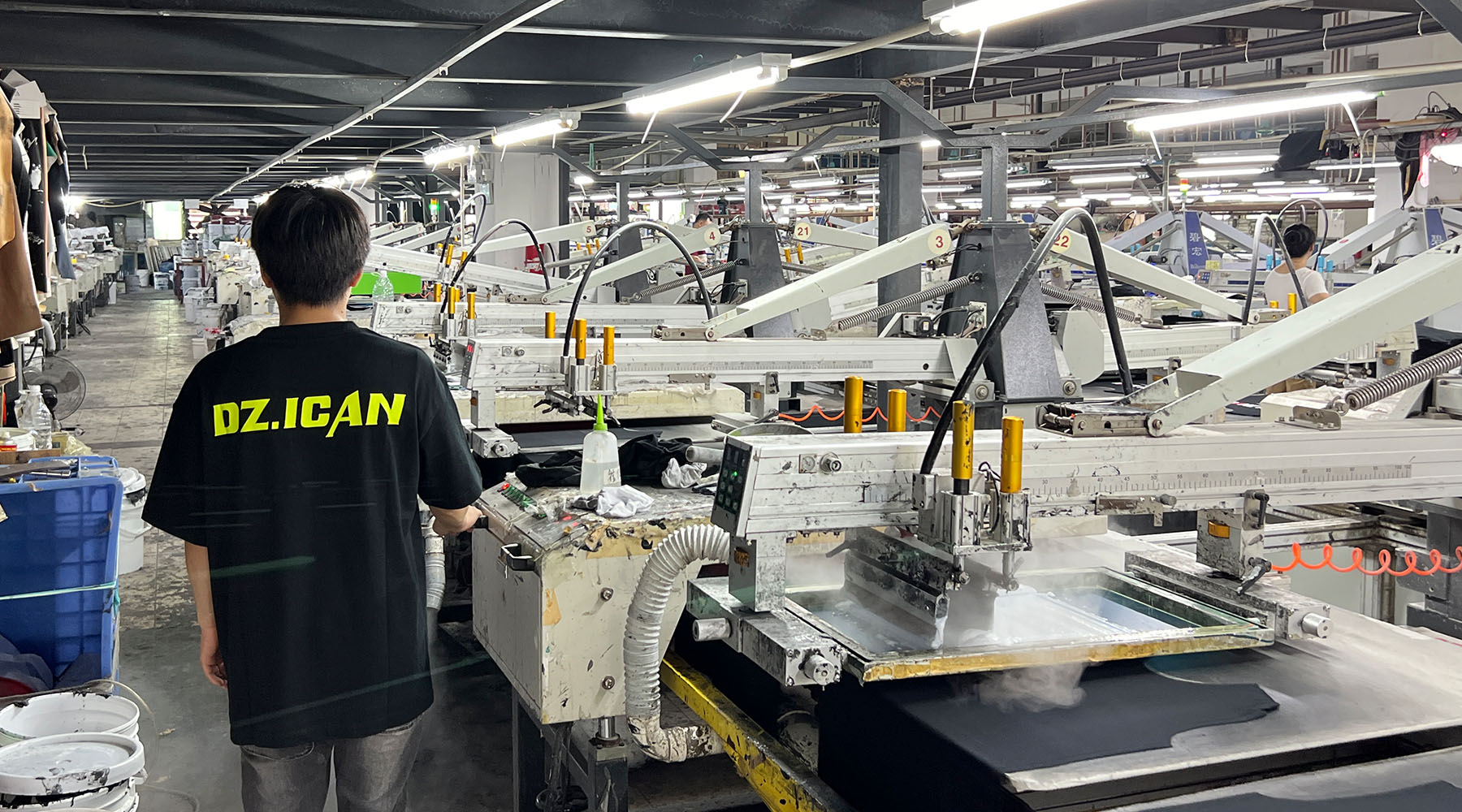
| Decoration Techniques | What is your minimum stitch count for detailed embroidery? Can you execute a combination of puff print and embroidery on the same garment? | Has in-house embroidery, screen printing, and DTG capabilities. Can provide samples of complex techniques. |
| Production Flexibility | What is your realistic MOQ for a new design? What is your lead time from approved sample to bulk delivery? | Offers MOQs starting from 50 pieces per style. Provides clear, phased lead times (e.g., 7-15 days for samples, 20-35 days for bulk). |
| Quality Control Protocol | What AQL standard do you follow for inspection? Can you accommodate a third-party inspection (e.g., SGS)? | References AQL 2.5 or 1.5. Has experience with third-party inspections and can provide inspection reports. |
4. Case in Point: Analyzing a Manufacturer Profile
To illustrate the application of this framework, consider the profile of Guangzhou Qianshi Trading Co. LTD, a manufacturer operating since 2014.
This portfolio addresses core requirements for EU and global markets. The ISO 9001 certification (number 51825Q10787R0) signals a structured QMS. The BSCI audit report (156-065504-000) addresses social compliance, a key concern for Western brands.
5. Conclusion and Actionable Recommendations
Identifying a certified hoodie manufacturer in 2026 requires moving beyond superficial checks. Procurement teams should:
- Prioritize Verification: Always request and validate actual certificates and test reports against the supplier's name and your product scope.
- Match Certifications to Target Market: Ensure the manufacturer holds the specific, mandatory certifications for your primary sales regions (e.g., GPSR for the EU).
- Evaluate the System, Not Just the Certificate: Assess how quality and compliance processes are implemented on the factory floor through audits, sample evaluations, and detailed questioning.
- Balance Compliance with Capability: A manufacturer with the right certifications must also demonstrate the technical skill to produce your desired hoodie style, whether it's a heavyweight embroidered piece or a vintage-washed graphic print hoodie.
By applying this structured, evidence-based approach, buyers can efficiently shortlist manufacturers who not only claim compliance but can demonstrably deliver certified, high-integrity products, thereby de-risking the supply chain and protecting brand equity.
For a detailed overview of manufacturing capabilities, product specifications, and certification details, download the complete company profile.
Download Manufacturer Brochure (PDF)هل لديك أسئلة أو تحتاج إلى مزيد من التفاصيل؟
تواصل مع فريقنا للحصول على عرض أسعار مخصص أو استشارة فورية.
طلب عرض أسعار
املأ النموذج أدناه وسيتواصل معك فريقنا بعرض مقترح مخصص.
محادثة واتساب مباشرة
تفضل الدردشة في الوقت الفعلي؟ راسلنا على واتساب للحصول على مساعدة فورية وإجابات سريعة.
- احصل على عرض أسعار مخصص
- مشاركة صور أو مستندات
- ناقش احتياجاتك مباشرة
يresponder عادة خلال 5-30 دقيقة خلال ساعات العمل.