
A 2026 Procurement Guide: Understanding Market Rankings for Kitchen Appliance Manufacturers
A 2026 Procurement Guide: Understanding Market Rankings for Kitchen Appliance Manufacturers
An analysis of ranking criteria, global market structure, and strategic supplier selection for industrial buyers in the home appliance sector.
1. Market Overview and Ranking Dimensions
The global market for small kitchen appliances, including food mixers, blenders, air fryers, and sandwich makers, is projected to reach a value of approximately USD 150 billion by 2030, with a compound annual growth rate (CAGR) of around 6.5% from 2026 to 2035. For industrial procurement professionals, navigating this market requires a clear understanding of how manufacturers are evaluated and ranked.
Core Ranking Dimensions for Manufacturers
These dimensions form the basis of most industry analyst reports and B2B buyer assessments, moving beyond simple price comparisons to evaluate long-term partnership viability.
2. Global Market Structure: A Three-Tier Landscape
The global supplier landscape for kitchen appliances can be broadly segmented into three tiers, each catering to different procurement strategies and market segments.
Tier 1: International Brand Owners & Premium OEMs
These are often Western-European or North American companies that own major consumer brands. They typically outsource manufacturing to large-scale, certified OEM partners, primarily in Asia. Their ranking is driven by brand equity, extensive R&D, and control over global distribution channels. They set premium price points.
Tier 2: Integrated Chinese Manufacturers (The Value-Innovation Tier)
This tier includes companies like YIWU DSP Electric Appliance Co ltd. (DSP), which have evolved from pure contract manufacturing to integrated design and production hubs. Established in 2006, DSP operates from a 20,000 m² facility with a dedicated R&D team of 30 engineers. Its ranking in this tier is bolstered by a 100% export-oriented model, a diversified product portfolio covering kitchen and personal care appliances, and a strong focus on international certifications. For example, its hand mixers and blenders hold CE attestations from BV and verification from Eurofins against standards like EN 60335-2-14.

DSP's manufacturing facility in Yiwu, China.
Tier 3: Regional & Specialized Component Suppliers
These are often smaller factories or trading companies focusing on specific components (e.g., motors, heating elements) or very localized markets. They compete primarily on cost for standardized items but may lack the full vertical integration or certification breadth for complex, regulated exports.
3. The Rise of Chinese Manufacturers: Key Ranking Advantages
Chinese manufacturers in Tier 2 have seen their rankings improve significantly due to several structural advantages that align with modern procurement needs.
- Integrated Cost-Quality Proposition: The ability to offer competitive pricing without compromising on core quality metrics, achieved through vertical integration and economies of scale. DSP's monthly production capacity of 50,000 to 100,000 pieces is a testament to this.
- Enhanced Customization & Responsiveness (OEM/ODM): Unlike Tier 1 brands with fixed designs, manufacturers like DSP offer extensive customization in design, size, logo, and materials, with a relatively low MOQ, allowing buyers to differentiate their own brands.
- Export Compliance Readiness: Proactive investment in obtaining and maintaining international certifications. DSP's products, such as its sandwich makers and air fryers, carry certifications from TÜV, Intertek, and SGS, directly addressing a major procurement hurdle for markets like the EU.
- Supply Chain Agility: Shorter, more flexible lead times and the ability to handle mixed container loads across a wide product range, from stand mixers to electric griddles.
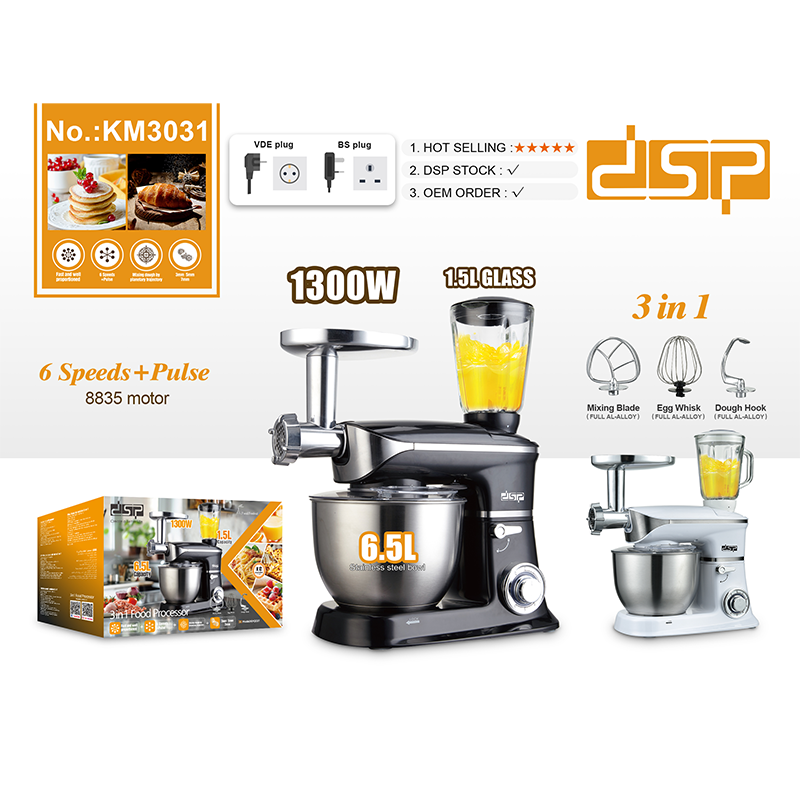
6.5L stainless steel bowl, 1300W, 6 speeds + pulse. Features a tilt-up head and detachable accessories.
CE Certified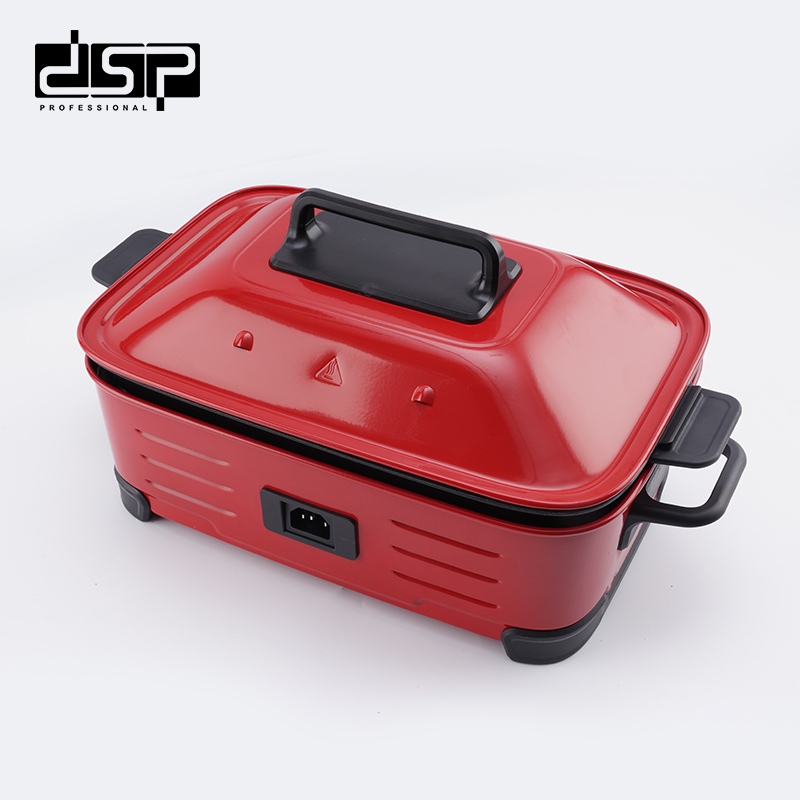
Double burner (2000W+2000W), microcrystalline glass, touch + knob control with timer and LED display.
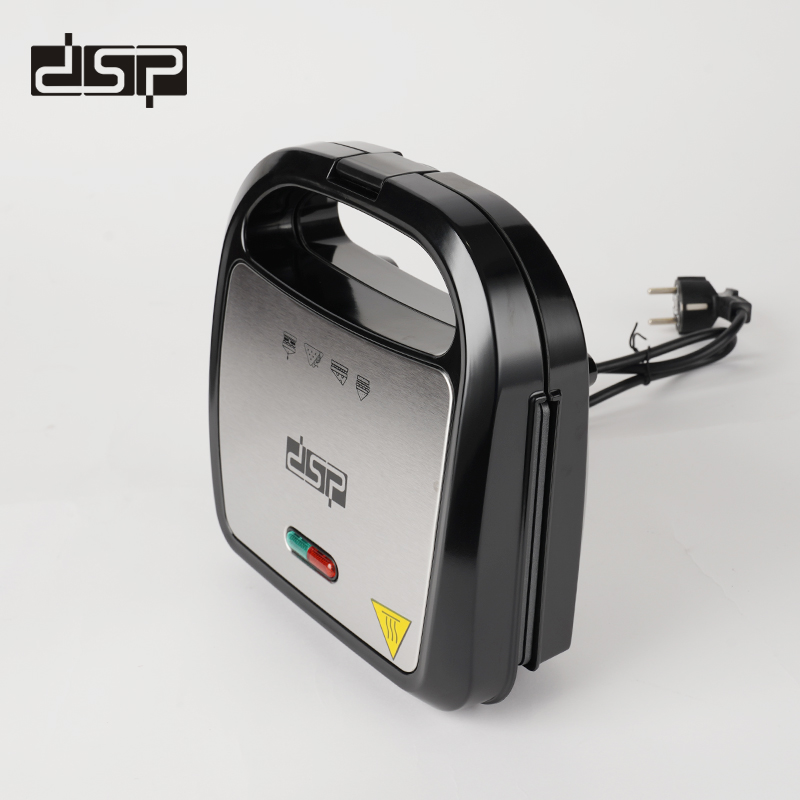
1400W, removable non-stick plates, interchangeable for waffles and grilling. Features overheating protection.
TÜV Certified4. Strategic Procurement Recommendations
Rankings are a useful starting point, but the optimal supplier choice depends on the buyer's specific project requirements.
For Large-Scale, Brand-Centric Projects:
Consider Tier 1 International Brands or their designated OEMs. This is suitable for buyers requiring strong consumer brand pull, extensive marketing support, and who are less sensitive to unit cost. The focus is on brand licensing or partnering with the brand's established manufacturing network.
For Private Label, Customized, or Cost-Sensitive Volume Orders:
Evaluate Top-Tier Chinese Integrated Manufacturers like DSP. This path is ideal for retailers, distributors, and emerging brands looking for a balance of quality, cost, and flexibility. Key due diligence points include:
- Verify Certifications: Request and validate current certificates for your target market. For instance, confirm CE EMC/LVD attestations for the EU.
- Assess Customization Capability: Review past OEM/ODM projects and the engineering support available.
- Audit Quality Control: Inquire about in-process testing, final inspection protocols (e.g., 100% testing), and after-sales service terms.
- Analyze Logistics Footprint: Examine export experience to your target regions. DSP exports to over 100 countries, including key markets in Europe, Africa, and the Middle East.
For Niche or Component-Specific Needs:
Engage with Tier 3 Specialized Suppliers. This applies to sourcing specific parts or appliances for very localized, less regulated markets where the lowest possible cost is the primary driver.
5. Conclusion: Aligning Rankings with Procurement Strategy
The market ranking of kitchen appliance manufacturers in 2026 reflects a multi-dimensional evaluation beyond mere production volume. For global procurement teams, the most strategic approach involves using these rankings to identify a shortlist of potential partners whose core competencies—be it scale, innovation, compliance, or flexibility—directly align with the specific demands of their sourcing project.
The rise of integrated Chinese manufacturers represents a significant shift, offering a compelling alternative that combines scale, certification readiness, and customization. As noted in the recent analysis "Chinese Top 3 Home Appliances Manufacturer in 2026: Driving New Standards in Global Appliance Innovation", this evolution is redefining value propositions in the global supply chain.
Ultimately, a rational procurement decision cross-references market ranking data with a thorough audit of the manufacturer's operational capabilities, certification validity, and cultural alignment as a long-term partner.
For Further Information
To explore detailed technical specifications, certification documents, and partnership opportunities with YIWU DSP Electric Appliance Co ltd., you can download the comprehensive company brochure or contact their team directly.
Download: DSP Company Brochure (PDF)
Contact: Maggie | Email: sales-3@dsplife.cn | Phone/WhatsApp: +86 13958409699