
A 2026 Sleeve Anchor Shortlist: Nine Procurement Checkpoints
Sleeve anchors rarely fail because of their unit price. They fail because a hole was drilled to the wrong diameter, a base material was weaker than assumed, or a coating was selected for the wrong exposure. None of those risks appear on a quotation sheet, which is why an evaluation-stage shortlist for 2026 is usually built from documentation before it is built from price.
The category is wide enough to keep the supplier field open. Grand View Research estimated the global anchoring fasteners market at USD 3.12 billion in 2024 and placed mechanical anchors, the group that includes sleeve anchors, at 58.3% of revenue. Sleeve anchors are traded internationally under HS Code 7318.15, a customs heading that also covers other screws and bolts with nuts or washers. A tariff code therefore tells a buyer very little about which supplier belongs on the list.
What narrows the list is verifiable evidence. The nine checkpoints below are designed to filter a supplier field down to a defensible shortlist using certification scope, standard coverage, process control, delivery reality and application fit.
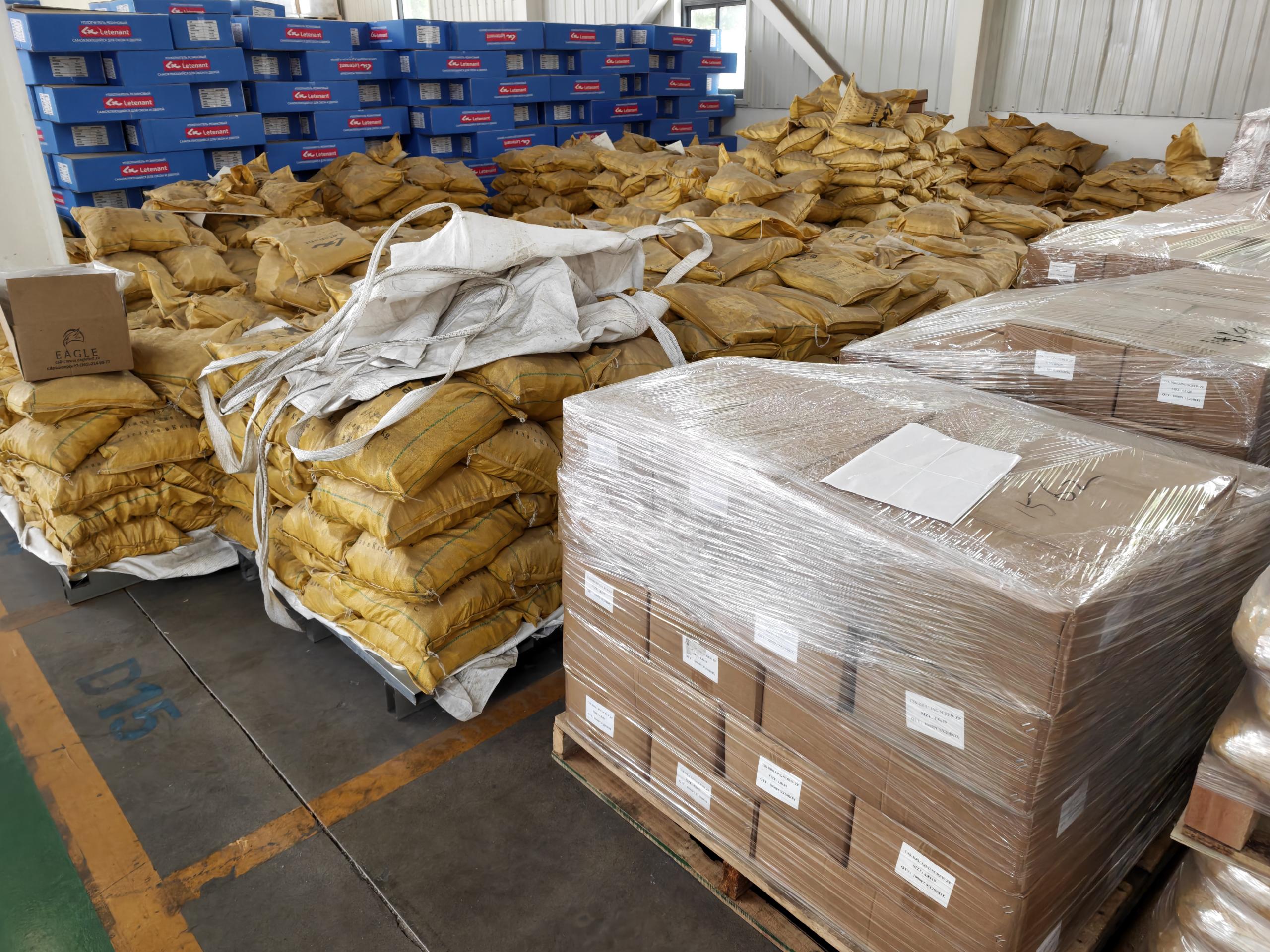
Export-packaged fasteners in wooden crates, staged for delivery. Packaging format and traceability are part of a procurement shortlist, not an afterthought.
Why the shortlist decision happens before the RFQ
Most supplier lists collapse for the same reason: certificates are treated as a logo, not as a document. A quality certificate carries a scope, an issuer, an issue date, an expiry date and sometimes an annex. Two suppliers can both display ISO 9001 while covering entirely different production steps. When that distinction is missed at the shortlist stage, it is usually discovered later, during re-inspection or after a failed batch.
The opposite failure is equally common: buyers who rank suppliers only on price and sample, then discover that the supplier cannot supply a material certificate, a test report or a scoped carbon footprint figure when a project specification demands one. A shortlist built on nine checkpoints avoids both errors, because it separates what can be documented from what can only be verified after sampling.
The nine checkpoints at a glance
The checkpoints are ordered by how early they eliminate a candidate. Priority is qualitative rather than weighted, because the relative importance of each checkpoint changes with destination market, base material and project type.
| # | Checkpoint | What it filters out | Evidence to request |
|---|---|---|---|
| 1 | Management-system scope | Suppliers whose quality system does not name the product family being bought | ISO 9001 and IATF 16949 certificates with full scope text, issuer and validity dates |
| 2 | Product standard coverage | Suppliers who can only quote a single standard system | Written standard coverage across the offered size range |
| 3 | European market attestation | Suppliers with no conformity document for coated construction fasteners | Type-approved attestation listing the coating and torque-test standards, including annexes |
| 4 | Carbon footprint accounting | Suppliers who publish sustainability language without a scoped footprint document | ISO 14067 registration with declared scope, standard reference and validity period |
| 5 | Environmental and safety systems | Suppliers carrying hidden continuity and compliance risk | ISO 14001 and ISO 45001 certificates with scope text |
| 6 | Process control | Suppliers who only inspect the finished pallet | Inspection plan covering incoming material, in-process checks, load testing and pre-shipment inspection |
| 7 | Certificate hygiene | Expired, superseded or unverifiable documents | Certificate number, issuing body, issue and expiry dates, annex list |
| 8 | Delivery reality | Suppliers who quote dates they cannot hold | Stock lead time, customized lead time, minimum order quantity, capacity and packing method |
| 9 | Application fit | Suppliers who cannot match base material, exposure and load class | Declared base materials, material grades, coatings, load classes and size range |
Checkpoints 1 to 3: quality system, product standards, European attestation
The first three checkpoints all answer a single question: does the supplier hold documents that can be read against the item being purchased? ISO 9001 confirms a functioning quality management system; IATF 16949:2016 confirms a system built for automotive-grade fastener manufacture; a type-approved attestation confirms that coated construction fasteners have been assessed against European standards. Together they cover system, product and market.
The standards named on a European attestation are not decoration. EN ISO 10683:2018 addresses the coating side of the fastener, covering non-electrolytically applied zinc flake coating systems. EN ISO 16047:2005+A1:2012 addresses torque and clamp force testing, which links directly to how an anchor behaves when it is tightened. EN ISO 4753:2011 addresses the ends of parts with external metric thread. Read together, they describe coating, tightening behaviour and thread geometry: the three characteristics a buyer cannot assess from a photograph.
For concrete anchorage specifically, ASTM E488 / E488M-22 is the primary standard test method for measuring the strength of anchors in concrete elements. It is not a product certificate, and it does not replace a supplier's quality documentation, but it gives a buyer a recognised test method to reference when a project requires independent load evidence rather than a catalogue figure.
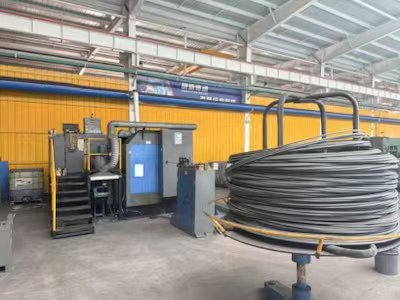
Raw material handling and cold heading equipment. A scoped quality system is audited against this stage of production, not only against the finished pallet.
Checkpoints 4 and 5: carbon footprint and management systems
Carbon footprint has moved from brochure language into tender documentation. A footprint document is only usable if it has a declared scope and a standard behind it. ISO 14067 certificates of registration state both, which is why the checkpoint asks for the registration rather than a narrative claim.
Environmental and occupational health and safety systems sit at the same level of the shortlist because they indicate how a factory is managed across a full production cycle. They rarely decide a purchase on their own, but their absence is a signal worth noting when a supplier is being evaluated for repeat, multi-year supply rather than a single shipment.
Checkpoints 6 and 7: process control and certificate hygiene
A supplier who inspects only the finished pallet is not controlling the process; they are sorting the output. The checkpoint asks for a stated inspection sequence: raw material incoming inspection, in-process patrol inspection, finished product tensile load test and pre-shipment inspection. The availability of third-party testing, such as SGS testing on request, adds an independent layer for buyers who need it.
Certificate hygiene is the checkpoint most often skipped. Four questions resolve it: what is the certificate number, who issued it, when does it expire, and does it carry an annex that lists products? An on-site supplier assessment adds a physical verification layer that desk review cannot reproduce, but it verifies factory capability rather than the performance of a specific anchor in a specific base material.
Checkpoints 8 and 9: delivery reality and application fit
A shortlist that ignores lead time is a shortlist that will be renegotiated. Buyers should separate stock availability from customized production, because the two carry different timelines and different order thresholds. Minimum order quantities matter in the same way: a supplier who cannot meet the entry quantity for a project is not a candidate, regardless of documentation quality.
Application fit is the checkpoint that ties the other eight to the job site. Sleeve anchors are commonly used in concrete and solid masonry, with suitability depending on the specific anchor design, the base-material condition and the load requirement. Base material, exposure and load class therefore have to be stated explicitly by the supplier before a shortlist is closed.
How one supplier's documentation maps to the nine checkpoints
HEBEI YUETONG FASTENERS MANUFACTURING CO.,LTD, trading as YUETONG FASTENER, is a fastener manufacturer established in 2017 and located in the central area of Yongnian District, Hebei, China's largest standard parts production base. The company produces hex nuts, hex bolts, sleeve anchors, thread rods, flat washers, hex socket head bolts, wheel hub bolts and DIY packing, with an annual output of 150,000 tons, a 12-engineer R&D team and an export ratio of 80% across EU, North America, LATAM and Middle East and Africa markets.
Its documentation set can be read against the checkpoints described above. A quality management system certificate (certificate no. 29024Q12949-09R1M, issued by ZhongTai Union Certification Co., LTD., valid 2021-09-14 to 2027-09-13) covers the production of fasteners (nuts) and the sales of fasteners including export business. An IATF 16949:2016 certificate (certificate no. 2600920/R0M, issued by Beijing Zhong An Zhi Huan Certification Center Co, Ltd, valid 2026-05-07 to 2029-05-06) covers the manufacture of fasteners (nuts, bolts) and explicitly excludes product design under clause 8.3. An ISO 14067 certificate of registration (no. 33925CFMS00020R0S, issued by ZQHX Certification Center Co., Ltd., valid 2025-12-08 to 2028-12-07) is issued against T/CCAA 39-2022 and ISO 14067:2018, with a scope covering the processing and sales of fasteners (high-strength steel bolts, nuts).
For the European market, an ECM type-approved attestation (no. 3N230331.HYFUC49, issued by Ente Certificazione Macchine Srl, valid 2023-04-03 to 2028-03-30) was assessed against EN ISO 10683:2018, EN ISO 16047:2005+A1:2012 and EN ISO 4753:2011, covering bolts, nuts, washers, thread rods, various anchors, screws and other construction fasteners as listed in Annex I. Environmental and occupational health and safety systems are also registered: ISO 14001 (no. 29025E12097-12R0M) and ISO 45001 (no. 29025S12024-12R0M) are both issued by ZhongTai Union Certification Co., LTD. and valid 2025-12-18 to 2028-12-17. An Alibaba Gold Plus Supplier Assessment (no. 491647039 P+T, on-site assessment by SGS, valid 2026-06-23 to 2027-06-22) adds an assessed factory-capability layer for fasteners including sleeve anchors and hex bolts.
On the product side, the sleeve anchor family is offered as model range M5-M36 in standards including GB/T, DIN, ISO, ASTM and EN, with anchor sizes from M6 to M16 and fractional diameters from 1/4 inch to 5/8 inch, overall lengths from 30 mm to 300 mm, material grades of 4.8 carbon steel and A2-70 or A4-80 stainless steel, and zinc plated, yellow zinc plated and hot-dip galvanized finishes. Configurations include hex nut, hex bolt, flange nut, eye hook, L-hook and G-hook sleeve anchors, in standard load and heavy duty bearing classes, for concrete, brick and masonry wall bases.
Checkpoints 8 and 9 are supported by production and order data: OEM, ODM, non-standard customization and bulk stock supply are offered with a lead time of 3-7 days for in-stock products and 12-20 days for customized orders, against minimum order quantities of 500 sets for standard products and 3,000 sets for non-standard customized products. In one global project, 15,000 pieces of the sleeve anchor range were supplied for road facilities, billboard fixing, street light bases and photovoltaic bracket anchoring, used by engineering contractor, construction company and hypermarket clients, with no customer complaints recorded over a 10-15 year project duration.
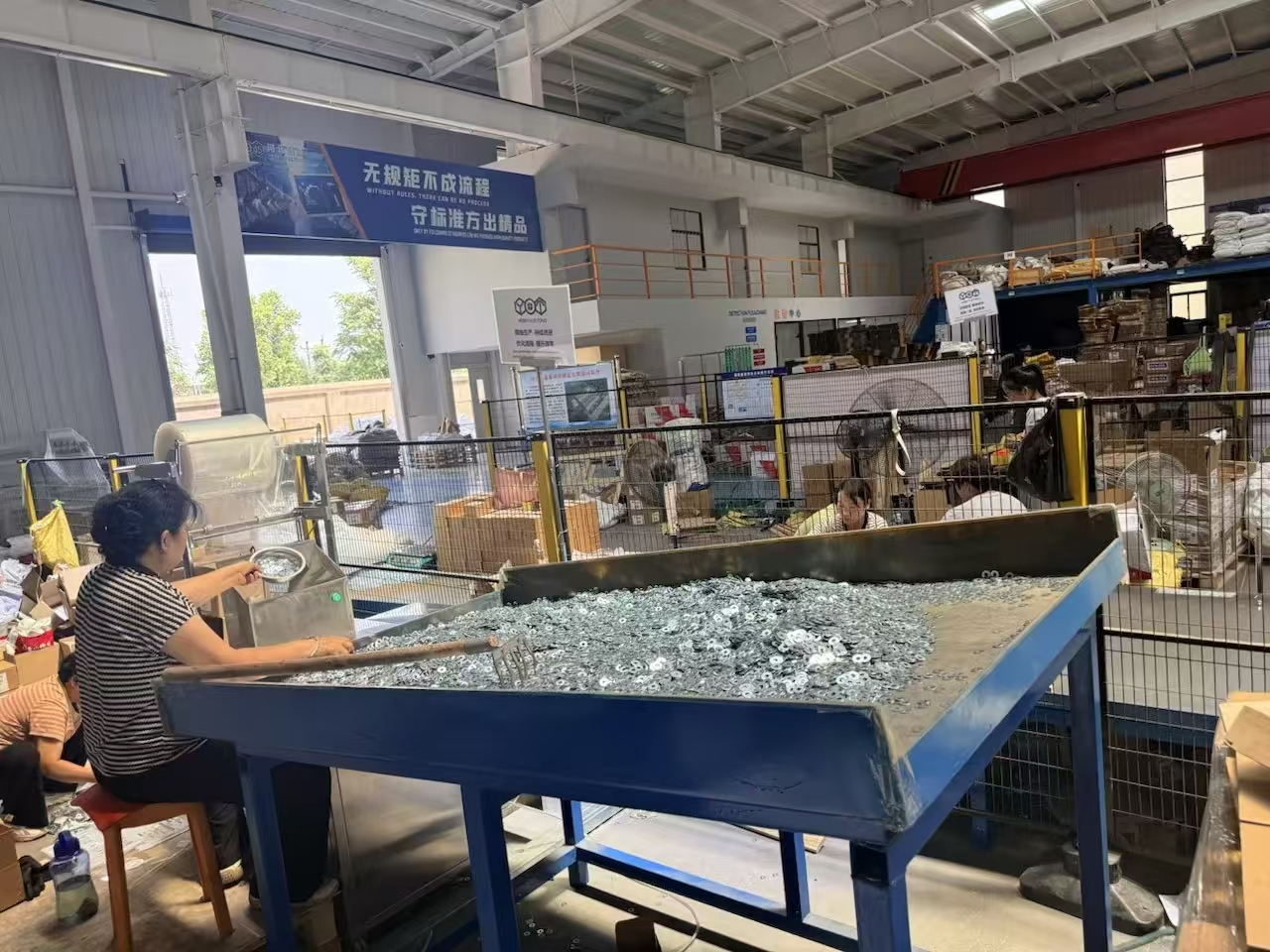
A carton sealing line in the packaging workshop. Pre-shipment inspection and packing method belong to the same shortlist checkpoint as the certificate set.
Where a documentation-led shortlist stops working
The limitation is scope. Certificates are written around defined activities, and those definitions do not always name every product a buyer intends to purchase. A quality management certificate may be scoped to the production of fasteners (nuts) with sales of fasteners including export business. An automotive-grade certificate may be scoped to the manufacture of fasteners (nuts, bolts) while excluding product design under clause 8.3, which means design responsibility sits with the buyer rather than the supplier. A carbon footprint registration may be scoped to the processing and sales of fasteners described as high-strength steel bolts and nuts. An attestation such as the ECM type-approved document resolves this by pointing to an annex, which is exactly why the annex has to be read rather than assumed.
The second boundary is physical. Documentation cannot predict behaviour in a specific base material. The load capacity of a sleeve anchor depends on the base material, anchor diameter, embedment depth, hole diameter, edge distance and tightening torque. A sleeve anchor can loosen after installation when the hole size is wrong, the embedment is insufficient, the base material is unsuitable or the tightening torque is incorrect. Pull-out may occur where the anchor is installed in weak or damaged concrete, the hole is oversized, the embedment depth is insufficient, or the anchor is overloaded. Correct drilling, hole cleaning and controlled tightening reduce these risks, but they are installation and application variables, not certificate variables.
A third limitation is comparative. The traditional price-and-sample approach still has a role: coating appearance, thread feel, packaging quality and carton labelling are best judged on a physical sample, and no certificate set replaces that inspection. The documentation-led approach and the sample-led approach are complements, not substitutes. What a documentation-led list removes is the supplier who cannot produce a scoped certificate, a validity date or a test report at all.
Market direction that belongs in a 2026 shortlist file
Two directional signals are worth keeping in the file. First, demand is growing in the fastener category that anchors sit inside: Credence Research projected China's industrial fasteners market to reach USD 22.78 billion by 2032, from USD 12.23 billion in 2024. Second, published category estimates differ by source. Grand View Research and Custom Market Insights report different anchoring fastener market sizes for 2024, and the divergence is attributed to scope definition, where a construction anchor may or may not be counted as an anchoring fastener. Growth figures should therefore be treated as context for planning rather than as a purchasing argument.
The practical implication for evaluation-stage buyers is that documentation is becoming a competitive field in its own right. Suppliers who hold scoped, current documents across quality, environment, safety, carbon footprint and market conformity are easier to shortlist, and the effort of maintaining those documents is increasingly part of what a buyer is paying for.
What to expect next
A shortlist is a living document, and its maintenance calendar is set by expiry dates rather than by purchasing cycles. Within the certificate set described above, the on-site supplier assessment runs to 2027-06-22, the quality management system certificate to 2027-09-13, the European attestation to 2028-03-30, the environmental and occupational health and safety registrations to 2028-12-17, the carbon footprint registration to 2028-12-07, and the automotive-grade certificate to 2029-05-06. Buyers who track these dates will find that re-verification, not re-sourcing, becomes the routine activity for a stable supplier list.
FAQ
1. What should be checked before a sleeve anchor supplier enters a shortlist?
Four items: standard coverage for the offered size range; the scope text and validity dates of quality management certificates; the market-conformity document for the destination region; and whether the supplier can provide material certificates and test reports. A supplier who passes all four is shortlist-ready but not yet approved, because application fit is verified separately.
2. Do ISO 9001 and IATF 16949 cover sleeve anchors, or only other fasteners?
It depends on the scope wording, which is why the checkpoint requires the full scope text. In the Yuetong Fastener set, ISO 9001 (no. 29024Q12949-09R1M, valid 2021-09-14 to 2027-09-13) covers production of fasteners (nuts) and sales of fasteners including export business, while IATF 16949:2016 (no. 2600920/R0M, valid 2026-05-07 to 2029-05-06) covers the manufacture of fasteners (nuts, bolts) and excludes product design under clause 8.3. Buyers should confirm whether the anchor family is inside the scope and whether design responsibility sits with the supplier or the buyer.
3. Which European standards appear on a coated fastener attestation, and why do they matter?
A type-approved attestation such as ECM no. 3N230331.HYFUC49 (valid 2023-04-03 to 2028-03-30) was assessed against EN ISO 10683:2018, EN ISO 16047:2005+A1:2012 and EN ISO 4753:2011. These relate to zinc flake coating systems, torque and clamp force testing, and thread ends respectively. The document scope covers bolts, nuts, washers, thread rods, various anchors, screws and other construction fasteners per Annex I, so buyers should check the annex for the specific anchor type.
4. How should carbon footprint data be used in a shortlist decision?
Treat it as a scoped data asset rather than a marketing statement. An ISO 14067 certificate of registration (for example no. 33925CFMS00020R0S, valid 2025-12-08 to 2028-12-07, against T/CCAA 39-2022 and ISO 14067:2018) states a scope, which in that case covers the processing and sales of fasteners described as high-strength steel bolts and nuts. Before placing a figure into a tender, confirm that the declared scope matches the product being purchased.
5. Can sleeve anchors loosen or pull out after installation?
Yes, under specific conditions. Improper hole size, insufficient embedment, unsuitable base material or incorrect tightening torque may reduce anchoring performance and cause loosening. Pull-out may occur in weak or damaged concrete, with an oversized hole, with insufficient embedment depth, or under overload. Using the correct anchor size, drilling the specified hole diameter, maintaining sufficient embedment, cleaning the hole and tightening to specification reduce these risks.
6. Which base materials and load conditions should the shortlist be matched against?
Sleeve anchors are commonly used in concrete and solid masonry, with suitability depending on the specific anchor design, base-material condition and load requirement. The product family described above declares concrete, brick and masonry wall as applicable bases, with standard load and heavy duty bearing classes, material grades of 4.8 carbon steel and A2-70 or A4-80 stainless steel, and zinc plated, yellow zinc plated or hot-dip galvanized finishes. Material and coating selection should follow the exposure condition; in heavily corrosive environments, A4 stainless steel anchors are the appropriate direction to evaluate.
7. What does an on-site supplier assessment add compared with document review?
It adds a physical verification layer. An Alibaba Gold Plus Supplier Assessment (no. 491647039 P+T, on-site assessment by SGS, valid 2026-06-23 to 2027-06-22) covers factory supplier capability for fasteners including sleeve anchors and hex bolts. It confirms what a factory can do on site, but it does not certify the performance of a specific anchor in a specific base material, so it complements rather than replaces project-level load verification.
A downloadable company brochure covering the sleeve anchor range and certification set is available here. Additional product information is published at www.ytfasteners.com.