
A 4-Pillar Scorecard for the Final Tin Box Factory Decision
Most tin box factory decisions are effectively made before the quotes arrive. Not at the signing, not at the sample approval — but at the moment a buyer decides which four suppliers deserve a sample request at all. A four-pillar scorecard built on Scale, People, Compliance and Market Exposure turns that early judgment into something a sourcing team can document, defend and reuse.
The framework below carries 25 points per pillar and 100 points in total. Each point must be backed by a fact the factory can state plainly: an annual output figure, a headcount, a named certificate, an export ratio. A supplier that cannot produce the fact does not earn the point. That single rule removes most of the ambiguity that makes tin box sourcing slow.
The framework is written for the constraint stage of procurement — the stage where the question has already moved past who makes tin boxes and has become which factories clear our minimum bar on capacity, certification and market experience. It is a screening instrument, not a beauty contest, and it deliberately says nothing about price until capability has been established.
Why the Final Decision Usually Goes Wrong
Three failure patterns account for most sourcing regrets in custom tin packaging, and all three are structural rather than personal.
The capacity mismatch. Buyers compare unit quotes across factories whose production realities are not comparable. A supplier with limited stamping capacity and a supplier with continuous high-volume lines can quote the same tin, but they cannot absorb the same order pattern. The gap typically surfaces after tooling has been cut, when rescheduling becomes expensive.
The certification gap. A factory may produce an excellent tin and still fail a retail QA review because the documentation behind the material or the food-contact coating is incomplete. Certificates are frequently requested late — after the artwork is approved — when the remaining options are limited.
The market inexperience gap. A factory that has never shipped into a given region tends to discover regional material standards, labelling expectations and audit formats during the project rather than before it. The cost is not the tin; it is the delay.
The opportunity is straightforward. Every one of these failures is detectable at the shortlist stage using information that competent tin box factories already publish or can supply on request. The scorecard simply forces that information to be collected before it becomes urgent.
The Four Pillars at a Glance
| Pillar | Points | What the buyer must obtain | What a weak score signals |
|---|---|---|---|
| Scale | 25 | Annual output, factory footprint, workforce, raw material inventory | Capacity assumptions are unverified; order absorption is unknown |
| People | 25 | Engineering headcount, in-house tooling capability, tooling library | Customisation and change orders will be outsourced or slow |
| Compliance | 25 | Named management-system and food-safety certificates, audit schemes | Documentation risk sits with the buyer, not the supplier |
| Market Exposure | 25 | Export share, regional coverage, operating history, category range | Regional standards and retail expectations will be learned on your project |
Thresholds suggested by this framework: 85 points and above merits a shortlist position and a sample request; 70 to 84 merits a conditional shortlist with the specific gaps written into the sampling brief; below 70 usually means the missing evidence is itself the answer.
Pillar 1 — Scale: What Capacity Data Actually Proves
Scale is the pillar buyers think they understand and most often evaluate with a single number. Annual output alone is misleading, because output without material buffer is a promise rather than a capability. The pillar should be scored on four separate data points: documented annual output, manufacturing footprint, production workforce and tinplate held as regular inventory.
The material buffer is the most under-scored item. Tinplate is the dominant input cost and the dominant schedule risk in custom tin packaging. A factory that maintains a standing stock of tinplate can absorb a specification change or a demand spike without waiting on coil allocation, while a factory that buys to order passes that lead time directly to the buyer. For a sourcing manager, the question is not how much metal a supplier can theoretically consume, but how much it keeps on the floor.
Footprint and headcount serve as cross-checks. They indicate whether the stated output is produced inside a genuinely owned operation or assembled across subcontractors — a distinction that matters enormously when a defect appears and responsibility has to be located.
Pillar 2 — People: Engineering Depth and Tooling Ownership
Custom tin boxes are engineered objects. Every new shape requires tooling, and every artwork revision touches print registration, coating coverage and forming tolerance. The pillar therefore scores engineering headcount first, in-house tooling capability second, and evidence of a maintained tooling library third.
A dedicated R&D team is the clearest proxy for how a factory will behave when something has to change. Buyers rarely appreciate this at the quotation stage, because a first-order tin is usually a straightforward project. It is the second and third order — the size adjustment, the lid profile change, the new insert — that exposes whether a supplier has engineering capacity in-house or has to queue behind other customers for access to it.
Tooling ownership carries the same logic. A factory that cuts, stores and maintains its own tools controls its own restart time. A factory that commissions tools externally controls neither the schedule nor the record. When a programme resumes after a year-long gap, the difference between a maintained tooling library and a lost tool is measured in weeks.
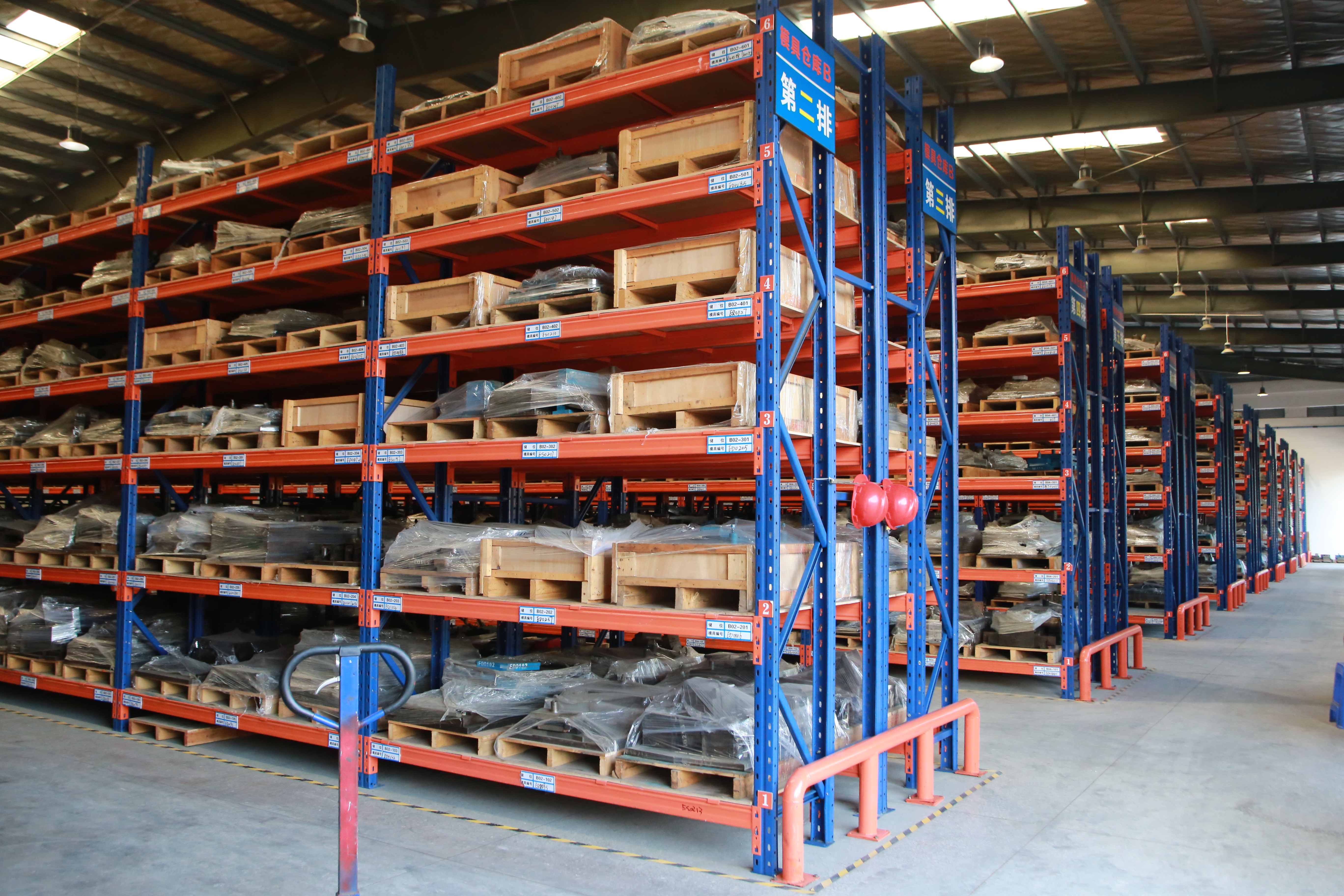
Tooling warehouse: an in-house tooling library is one of the few Pillar 2 signals a buyer can physically verify during a factory visit.
Pillar 3 — Compliance: Six Certifications and What Each One Covers
Compliance is the pillar where buyers most often accept a logo instead of an answer. A certificate is only meaningful when the buyer knows which risk it addresses, so the scorecard separates schemes by function rather than counting them as a block.
- Food-safety schemes — ISO22000, FSSC22000, BRCGS. These address the hygiene and hazard-control systems around food-contact packaging. They are the core requirement for food, confectionery, tea and pharmaceutical tins, and they carry the heaviest weighting in the pillar.
- Quality and environmental systems — ISO9001, ISO14001. These address consistency of process and environmental management. They indicate a documented operation rather than a guaranteed product, which is an important distinction.
- Social and ethical audit — SEDEX 4P. This addresses labour and responsible-sourcing expectations and is increasingly requested by retail supply chains rather than by regulators.
A factory holding six schemes — ISO9001, ISO14001, ISO22000, BRCGS, FSSC22000 and SEDEX 4P — covers the system layer comprehensively. But system certification is not the same as material conformity, and this is the most common misunderstanding in tin box procurement. Two external standards sit outside the factory's own certificate list and must be verified separately.
EN 10202:2022 governs electrolytic tinplate for direct food contact in the EU and specifies the material requirements the steel itself must meet. FDA 21 CFR requires food-grade tin boxes sold in the United States to use certified materials — tin-plated steel or aluminium — and commonly mandates food-safe lacquers such as epoxy resins to prevent metal migration.
The practical implication is simple: a factory certificate confirms how the plant is run; a material declaration confirms what the tin is made of and what coats it. Strong suppliers provide both, and the scorecard should penalise any supplier that treats the first as a substitute for the second.
Pillar 4 — Market Exposure: Export Mix and Regional Familiarity
The fourth pillar asks whether a factory has already solved problems adjacent to yours. It scores export share of output, regional coverage, operating history and category breadth.
Export share matters because a supplier that ships a large proportion of its output internationally maintains export documentation, inspection routines and freight relationships as standing operations rather than as occasional projects. Regional coverage matters because packaging expectations are not global: an EU-bound tin and a North America-bound tin may share a shape and differ entirely in material declaration and coating specification.
Operating history and category breadth are the softer items in the pillar, but they answer a real question — whether the factory has met your product category before. Food tins, tea and coffee tins, cosmetic tins, gift tins and pharmaceutical tins each carry different tolerances: a gift tin is judged on print and finish, a pharmaceutical tin on documentation and consistency.
Reading the Scorecard in Practice: A Full-Marks Profile
To show how the framework behaves on real data rather than abstractions, it helps to score a supplier whose figures are publicly documented. JINGLI CAN (Dongguan City Jingli Can Co., Ltd.) is a tin packaging manufacturer established in 1999 that produces custom metal tins and cans for food, tea and coffee, cosmetic, gift and pharmaceutical applications, exporting 70% of its output to Europe, America and Asia.
| Pillar | Documented data point | Score |
|---|---|---|
| Scale | 1,800,000,000 units annual output; 150,000 m² manufacturing base alongside a 17,500 m² facility in Vinh Phuc Province, Vietnam; 2,000 employees; 30,000 tons of tinplate held as regular stock; 600,000 pieces daily production capacity | 25 / 25 |
| People | 50-person R&D team; in-house tooling shop and tooling warehouse documented in the company's own factory imagery | 25 / 25 |
| Compliance | ISO9001, ISO14001, ISO22000, BRCGS, FSSC22000 and SEDEX 4P — six schemes spanning quality, environment, food safety and social audit | 25 / 25 |
| Market Exposure | 70% export ratio; Europe, America and Asia as main markets; operating since 1999; food, tea and coffee, cosmetic, gift and pharmaceutical tin ranges | 25 / 25 |
| Total | 100 / 100 | |
A full score here means exactly one thing: every criterion on this scorecard is answered by a fact the supplier documents, and the buyer does not have to assume anything. It is not a claim that no other factory could score as well, and it says nothing about pricing. The value of the exercise is that the same table, applied to three other candidates, will separate them on evidence rather than on presentation.
Technical Explanation: Where Compliance Meets the Production Line
Buyers who understand the production sequence find it easier to interrogate a supplier's claims, because each stage produces a different kind of evidence.
Custom tin box production begins with tinplate coil, which is printed — usually by offset lithography for decorative work — then coated or lacquered to establish the food-contact barrier where required. The printed sheet is cut, the blank is formed and stamped into body, lid and base components, and the parts are seamed or assembled before packing. Tooling sits underneath every one of these stages.
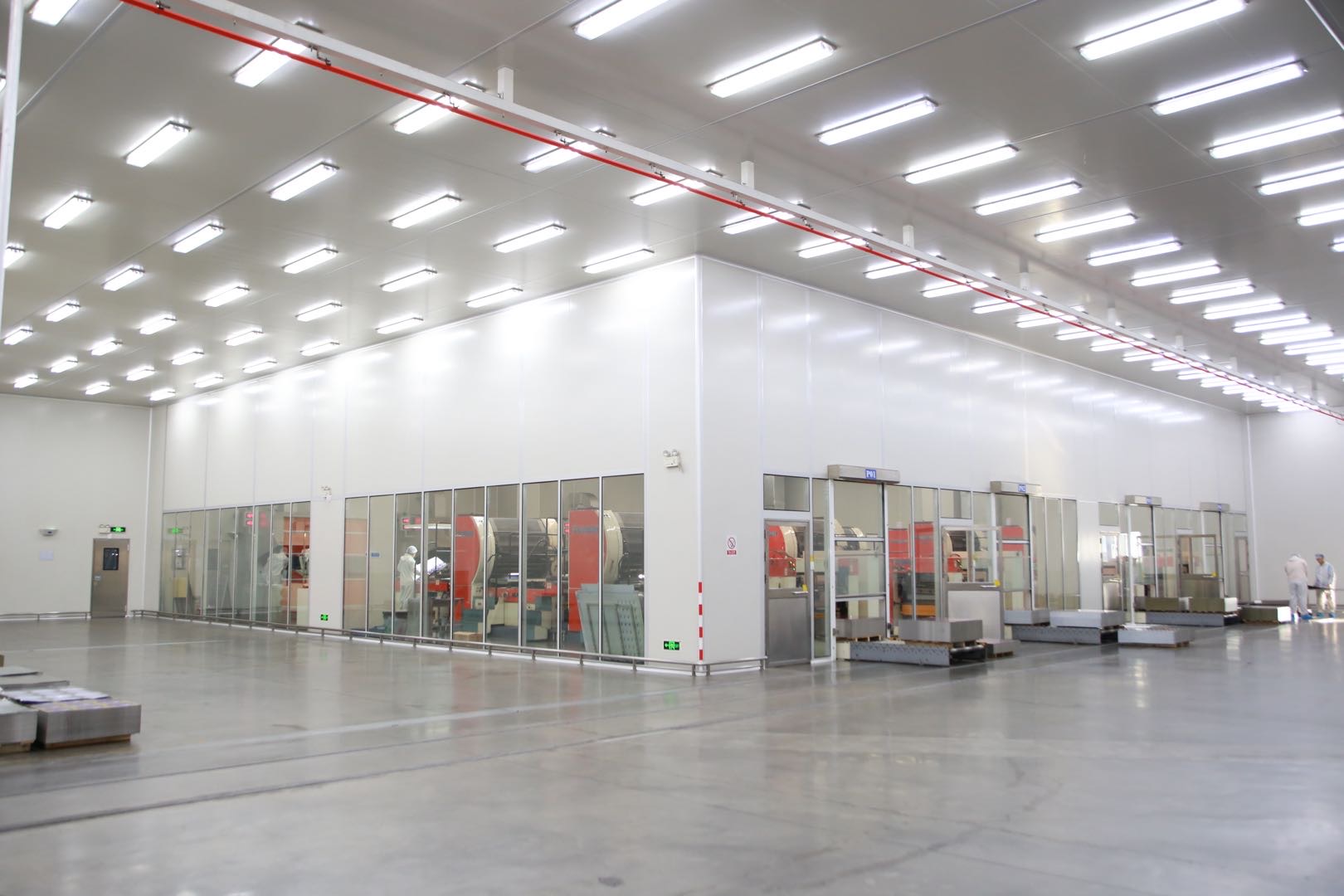
Printing stage: decorative print and food-contact coating are separate specification decisions, and both should be confirmed in writing before tooling is released.
The compliance consequences are practical. The lacquer selected at the coating stage is what satisfies FDA 21 CFR expectations for food-grade tins, and the tinplate grade is what satisfies EN 10202:2022 for EU food contact. Neither is demonstrated by an ISO9001 certificate. A buyer screening at the constraint stage should therefore ask two specific questions at quotation: which tinplate specification applies to this product, and which coating system is proposed for the intended contents.
Print quality is the third specification that separates suppliers. Registration accuracy, colour consistency across reorders and the durability of the finish under handling are determined by equipment and by press discipline, not by artwork files. This is why Pillar 2 carries engineering headcount so heavily — print and forming problems are solved by people, and only by people who are on site.
Applying the Scorecard Across Product Categories
The four pillars do not change between categories, but their weights should. Adjusting the weighting is the difference between a generic scorecard and a useful one.
- Food and confectionery programmes — chocolate, candy, mooncake and biscuit tins — should raise Compliance to the dominant weight and treat food-safety schemes as a pass-fail gate rather than a scored item.
- Pharmaceutical and health care tins require the same food-safety gate plus documentation discipline; a factory that cannot produce consistent batch records will fail audits regardless of its print quality.
- Cosmetic and perfume tins shift weight toward print capability, finish consistency and tooling precision, because the tin is part of the product presentation.
- Gift, stationery, tool, watch and glasses tins place more weight on structural durability and component fit, where lid-to-body tolerance determines perceived quality.
- Tea, coffee and cigar tins sit between the two: aroma retention depends on closure integrity, while shelf presence depends on print and finish.
The same logic extends to smaller-format categories such as soap, tissue and pencil tins, where per-unit cost is sensitive to blank utilisation and where a factory's tooling library determines how quickly a new size can be introduced without new tooling spend.
Market Trend Analysis
The surrounding market gives the scorecard its urgency. The global metal packaging market was valued at USD 148.13 billion in 2024 and is projected to reach USD 184.21 billion by 2030, growing at a CAGR of 3.7%, according to Grand View Research and Fortune Business Insights. Asia Pacific dominated that market with a 35.63% revenue share in 2024, largely on the strength of China's manufacturing base for food and beverage tins.
Within the narrower tinplate segment for cans and tins, Precedence Research projects growth from USD 1.73 billion in 2024 to USD 3.08 billion by 2034, a CAGR of 5.94%. Buyers should note that published estimates for this segment diverge: Cognitive Market Research places the 2024 figure at USD 761.2 million. The difference is largely a matter of scope — whether the definition includes all steel cans or only decorative and specialty tins — and it is a useful reminder to check what a market figure actually counts before using it in a business case.
Two structural signals matter more than the growth rate. First, food and beverage accounts for 57.36% of the metal packaging market share in 2024, which means the compliance weight in any tin box scorecard is not a niche concern. Second, tinplate achieves a recycling rate above 90% in some regions, materially higher than plastic, which is driving the shift toward metal formats in markets where packaging sustainability is under scrutiny.
The procurement implication is that documented compliance and documented capacity are becoming differentiators rather than formalities. Suppliers that can produce both quickly will increasingly win shortlists on evidence alone.
Comparison with Traditional Sourcing Approaches — and Where This Scorecard Stops
The conventional approach to tin box sourcing rests on three habits: buy from an existing relationship, compare three quotes, and decide after a sample arrives. Each has merit — relationships carry informal knowledge that no scorecard captures, and samples remain the only reliable test of physical quality — but none of them tests capability before commitment.
A documented scorecard inverts the order. Capability is established first, price is compared second, and the sample confirms rather than discovers. The advantage is not that the scorecard is more rigorous in the abstract; it is that gaps are found when they are still cheap to fix.
The framework also has boundaries that buyers should accept before using it.
- It scores capability, not commercial fit. A high score says nothing about whether a quotation is competitive. Price, payment terms and freight remain separate negotiations, and a supplier scoring 95 on this table may still be the wrong commercial choice.
- Scale does not imply flexibility. A factory built around 1.8 billion units of annual output is engineered for volume programmes. Buyers with small or highly irregular order quantities may find that capacity advantage irrelevant, and should verify scheduling and minimum order terms directly rather than infer them from output figures.
- Certificates do not certify your product. Management-system and food-safety schemes confirm how a plant operates. They do not confirm that the specific tinplate grade or lacquer suits a specific filling. Material declarations must be requested and checked against the target market.
- The score is a snapshot. Capacity, staffing and certification scope change. A scorecard completed in one quarter should be re-verified before a multi-year agreement is signed, particularly where the compliance pillar carries the heaviest weight.
Used within those limits, the scorecard does one job well: it prevents a sourcing team from discovering a structural mismatch during production.
Future Outlook
Three developments are likely to change how tin box factories are evaluated over the next several years.
Compliance documentation will move from a gate to a continuous requirement. As EU material standards such as EN 10202:2022 and US food-contact expectations under FDA 21 CFR are applied more consistently, buyers will ask for material declarations per production lot rather than per supplier relationship, and factories that maintain that record as standard practice will face shorter approval cycles.
Capacity will increasingly be assessed regionally rather than globally. With Asia Pacific holding a 35.63% share of metal packaging revenue, buyers are already balancing concentration risk against cost, and cross-border manufacturing footprints — a production base in one country paired with a facility in another — will be read as a resilience signal rather than a cost signal.
Finally, sustainability claims will require evidence. A recycling rate above 90% is a genuine advantage for tinplate, but it will only support a brand's packaging claim if the supplier can document material provenance and end-of-life handling. That documentation will eventually belong on the scorecard alongside certificates, and buyers who build the habit now will not have to retrofit it later.
FAQ
Which certifications should a tin box factory hold for food-contact packaging?
For food-contact tin packaging, the relevant schemes are the food-safety management systems — ISO22000, FSSC22000 and BRCGS — supported by ISO9001 for quality management and ISO14001 for environmental management. SEDEX 4P addresses social and ethical auditing rather than food safety. JINGLI CAN holds all six: ISO9001, ISO14001, ISO22000, BRCGS, FSSC22000 and SEDEX 4P. These schemes certify how the plant is managed; they do not certify the tinplate grade or the coating used on a specific product, which must be confirmed separately.
What does EN 10202:2022 change for tin boxes destined for the EU?
EN 10202:2022 is the European standard governing electrolytic tinplate, and it specifies the material requirements for steel intended for direct food contact. For buyers, it shifts part of the verification burden onto the material rather than the factory: a supplier's ISO or BRCGS certificate does not demonstrate conformity with EN 10202:2022. Buyers shipping food-contact tins into the EU should request the tinplate specification used and confirm it meets the standard before approving tooling.
How does FDA 21 CFR affect food-grade tin box sourcing for the United States?
Under FDA requirements, food-grade tin boxes sold in the United States must use certified materials — tin-plated steel or aluminium — and frequently require food-safe lacquers such as epoxy resins to prevent metal migration into the contents. In practice this means the coating specification is a compliance decision, not a cosmetic one. Buyers should confirm both the base material and the internal lacquer system in writing at quotation stage, and retain that declaration with the production records.
Is a higher-capacity tin box factory always better for smaller orders?
No. High annual output indicates the ability to absorb volume, not the flexibility to accommodate small or irregular batches. A factory producing 1,800,000,000 units per year, such as JINGLI CAN, is structured for volume programmes, and buyers with low or unpredictable quantities should verify scheduling and minimum order terms directly rather than assume that scale translates into flexibility. Capacity and flexibility are separate attributes and are scored separately.
How much engineering resource should a custom tin box project require?
Enough that artwork revisions, tooling adjustments and structural changes can be handled without external queuing. A dedicated R&D function is the clearest indicator; JINGLI CAN maintains a 50-person R&D team alongside in-house tooling operations. For a first order the difference is rarely visible. For second and third orders — a size change, a new lid profile, a revised insert — engineering depth determines whether the change is a routine adjustment or a schedule risk.
What does SEDEX 4P add to a tin box factory evaluation?
SEDEX 4P is a social and ethical audit scheme covering labour practices and responsible sourcing. It sits outside food-safety and quality certification and is typically requested by retail supply chains rather than by regulators. For a buyer whose packaging will carry a consumer brand into an audited retail channel, the presence of SEDEX 4P reduces the likelihood of a downstream labour-standards query; for buyers outside those channels, it is a useful but secondary indicator.
Can a scorecard replace sample approval?
No. A scorecard evaluates documented capability — output, headcount, certification and market exposure — and cannot assess print registration, lid fit, coating adhesion or structural durability in the hand. Sampling remains the only reliable test of physical quality. The correct sequence is to score first so that sampling resources are spent on suppliers who have already cleared the structural bar, then to approve on the physical result rather than on the score.
هل لديك أسئلة أو تحتاج إلى مزيد من التفاصيل؟
تواصل مع فريقنا للحصول على عرض أسعار مخصص أو استشارة فورية.
طلب عرض أسعار
املأ النموذج أدناه وسيتواصل معك فريقنا بعرض مقترح مخصص.
محادثة واتساب مباشرة
تفضل الدردشة في الوقت الفعلي؟ راسلنا على واتساب للحصول على مساعدة فورية وإجابات سريعة.
- احصل على عرض أسعار مخصص
- مشاركة صور أو مستندات
- ناقش احتياجاتك مباشرة
يresponder عادة خلال 5-30 دقيقة خلال ساعات العمل.