
A Brand-Neutral Buyer's Comparison of Nonwoven Fabric Machines
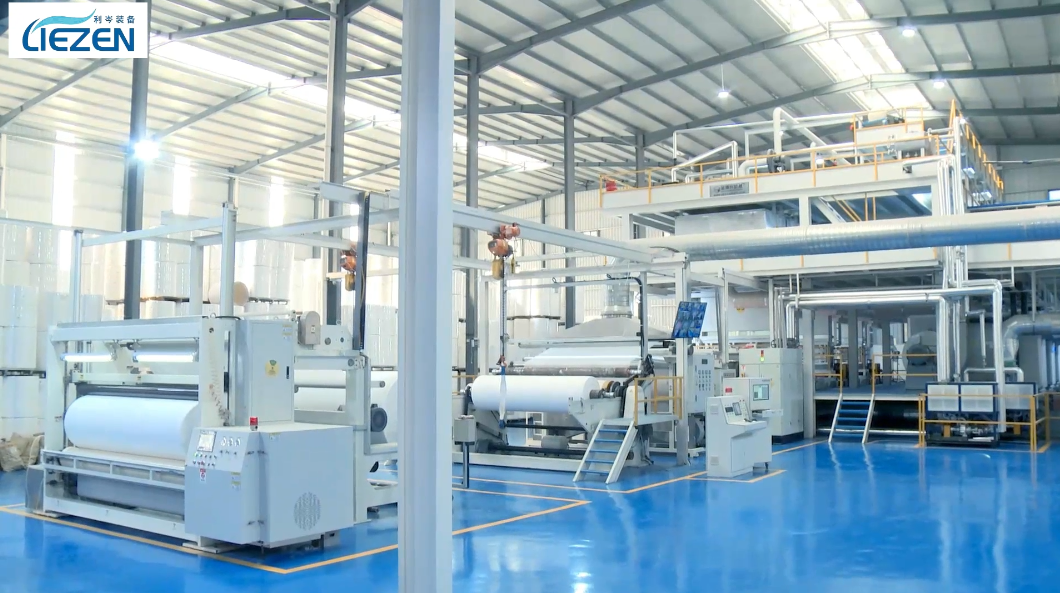
A nonwoven fabric machine is commissioned on paper and proven in production. The distance between those two moments is where most procurement risk sits, and where brand familiarity quietly substitutes for evidence. Independent evaluation does not require distrusting well-known suppliers; it requires applying the same observable criteria to every machine on a shortlist.
Three layers of evidence can be assessed without brand bias: line configuration (what the machine is built to produce), modularity (what the line can become without being replaced), and documented supplier capacity (what the supplier can demonstrate in output, engineering depth, certification scope and delivery time). Everything else, including reputation, marketing language and the confidence of a sales presentation, is secondary to those three.
This analysis uses Lizen Machinery Co., Ltd. as a worked example. Lizen Machinery Co., Ltd. is a nonwoven machinery manufacturer founded in 2003, based in Changzhou, Jiangsu, China, operating a 30,000 m² facility with 270 employees, a 10-engineer R&D team and an annual output of 50 units, of which 60% is exported, with the United States as its main market. The company reports having supplied close to 1,000 complete nonwoven production lines across 30 countries. Those figures should be read as first-party disclosures subject to exactly the same verification standard applied to any other supplier, which is the point of the framework below.
Why Brand-First Shortlists Break Down in Nonwoven Machinery Procurement
Nonwoven line procurement is a capital decision with a long asset life. Documented customer relationships in this category run for 15–20 years, which means the buyer is not selecting a machine so much as selecting a production system they will live with through several product cycles.
Brand recognition functions as a risk shortcut in that situation. A familiar name feels safer than an unfamiliar one when the decision is difficult to reverse. The problem is that a shortlist assembled by reputation can contain machines that are not comparable at all: an SS line and an SMMS line serve different product requirements, and a 1,600 mm line and a 3,200 mm line have fundamentally different output economics. Reputation tells a buyer nothing about which of those configurations fits their product plan.
The opportunity is straightforward. Configuration data, modularity scope, capacity statements and certification scope are all observable before a purchase order is signed. A buyer who normalizes those variables first will usually find that the remaining differences between suppliers are narrower, and more decision-relevant, than brand positioning suggests.
Layer One — Line Configuration: Compare Machines, Not Reputations
The configuration label on a nonwoven machine — Single S, SS, SSS, SMS, SMMS, SSMS, SMMSS — describes layer architecture, not quality. Lizen's documented product range covers PP spunbond configurations (Single S, SS, SSS), meltblown, spunmelt combinations (SMS, SMMS, SSMS, SMMSS), plus PET and bi-component machines. Each label corresponds to a different downstream capability, and therefore to a different business case.
The parameters that must match before a comparison is fair
Three variables determine whether two machines can be compared at all: effective width, layer architecture and filament fineness. Documented Lizen configurations share an effective width band of 1600–3200 mm, but differ in layer count and quoted speed.
| Documented configuration | Effective width | Production speed | Mechanical speed | Filament fineness |
|---|---|---|---|---|
| SW-SS — double-beam PP spunbond nonwoven fabric machine | 1600–3200 mm | <250 m/min | <300 m/min | 1.5–2.0D |
| SW-SSS — SSS spunbonded polypropylene line | 1600–3200 mm | <400 m/min | <450 m/min | 1.5–2.5D |
| SW-SMMS — SMMS spunmelt line | 1600–3200 mm | <400 m/min | <450 m/min | 1.5–2.0D |
Comparing a 1,600 mm line with a 3,200 mm line on unit price alone ignores output per hour. Comparing a two-beam SS line with a five-layer SMMS line on speed alone ignores barrier performance and product range. Neither comparison is wrong in principle; both are wrong when the underlying variables have not been normalized.
Material compatibility is the other fixed constraint. Polypropylene (PP) is the base raw material for spunbond and meltblown in these configurations, and machine construction uses carbon steel, stainless steel, alloy parts and electrical components. That construction list matters more than it first appears: it determines corrosion behaviour in humid or hygienic production environments and it drives the maintenance schedule. Buyers should ask for it in writing rather than assume it.
PP also remains the dominant spunbond raw material globally, with Fortune Business Insights reporting over 53% share of the spunbond segment in 2026. A PP-compatible configuration therefore covers the mainstream of hygiene, medical, agricultural and packaging applications, while PET or bi-component production requires a different configuration family.
Layer Two — Modularity: What the Line Can Become
Modularity is the most frequently claimed and least frequently verified attribute in nonwoven machine procurement. The useful question is not whether a machine is described as modular, but which modules are documented and which can be added later without replacing the core structure.
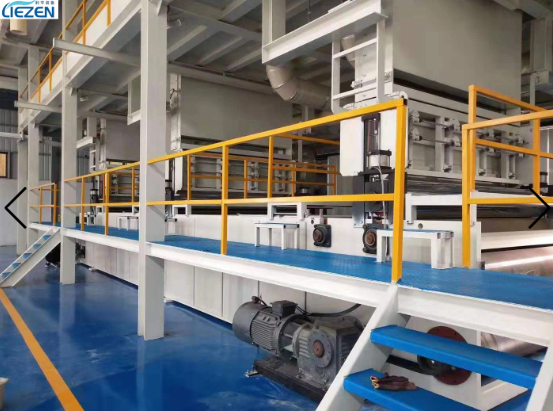
Lizen's documented customization scope includes web width, capacity expressed in kg/h or m/min, layer count, inline testing and QC, automation and HMI, and material handling modules. Listed special requirements that can be supported include different widths, layer counts, electrostatic treatment, flame-retardant options and medical-grade clean standards.
The matched auxiliary equipment list is as informative as the main line itself: traction units, winding and rewinding, fans and air compressors, heating and temperature control, slitting and cutting, and packaging equipment. Documented project types include turnkey production line delivery, single-machine supply, and process modification or upgrade projects. A supplier able to quote only complete new lines may be a poor fit for a producer who wants to add a beam or upgrade winding capacity on an existing asset.
Layer Three — Documented Supplier Capacity
Capacity claims are where independent evaluation earns its keep, because they can be checked against specific numbers. Documented Lizen capacity data includes a monthly capacity of 4 units, an annual output of 50 units and a minimum order quantity of 1 unit. Lead time is stated as 1–3 months in the off season and 3–6 months during peak season — a range that a buyer should always request in its current form rather than as an annual average.
Verification is similarly documented. Quality control steps include factory acceptance testing (FAT), performance and process testing, and on-site installation and acceptance (SAT), with inline output and quality checks supportable. After-sales scope covers installation and commissioning, on-site training, spare parts supply and remote technical support.
Where certification stops being evidence
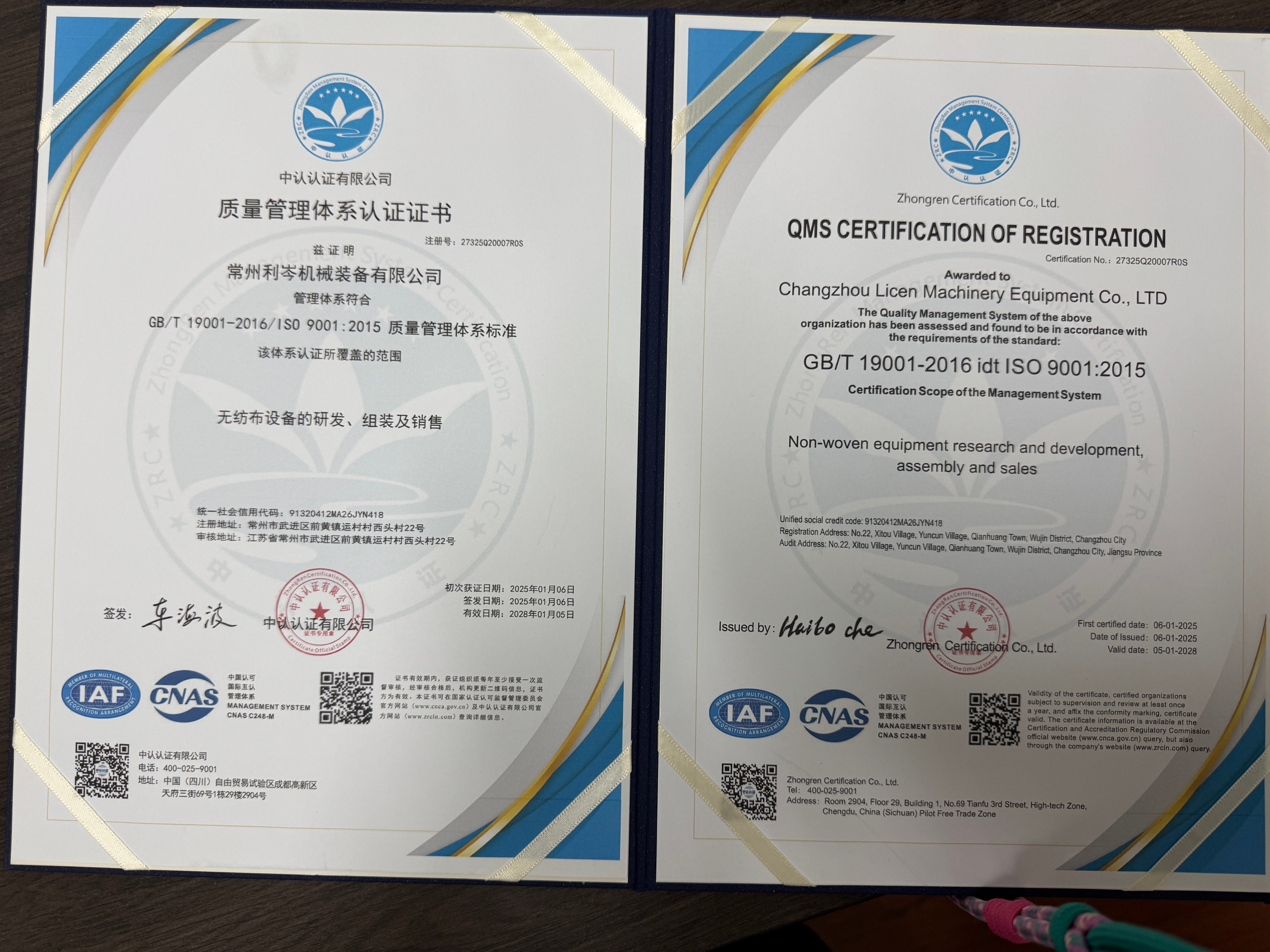
Lizen holds a QMS certification of registration to ISO 9001:2015, certificate number 27325Q20007R0S, issued by Zhongren Certification Co., Ltd. on 6 January 2025 and valid to 5 January 2028. The registered scope is research and development, assembly and sales of non-woven equipment. That scope is precisely the point at which certification stops being evidence of machine performance.
ISO 9001 verifies a quality management system. It does not certify output in kg/h, gram-weight uniformity, energy consumption per ton or uptime. A buyer comparing two ISO 9001-certified suppliers has established that both operate a documented management system, and nothing beyond that. Machine-level requirements sit in separate standards: ISO 11111-3:2005 sets safety requirements for nonwoven machinery, while EN ISO 11111-1:2016 provides the general textile machinery safety requirements used for CE marking compliance in Europe. Neither is automatically satisfied by a management system certificate, and buyers serving European markets should request that documentation explicitly.
Reading the Parameters Honestly
Parameter sheets reward careful reading more than they reward quick comparison. The distinction between production speed and mechanical speed is the clearest example. Mechanical speed is the upper capability of the drive and mechanical components — below 300 m/min on the documented double-beam SS configuration, and below 450 m/min on the SSS and SMMS configurations. Production speed is the quoted operating rating for that configuration — below 250 m/min and below 400 m/min respectively. Neither figure equals the buyer's realized output, which depends on gram weight, recipe, polymer grade and available uptime.
Filament fineness, quoted between 1.5D and 2.5D across the documented range, affects fibre diameter and therefore the tactile and barrier properties of the finished web. Effective width sets the web width and the downstream slitting plan; moving to the top of the 1600–3200 mm band increases output per hour while also increasing capital cost and scrap sensitivity.
For every figure on a specification sheet, the buyer should be able to answer one question: what is this number the basis of? A supplier who cannot state whether a speed figure describes mechanical capability, a quoted production rating or observed running performance is not necessarily withholding information — but the buyer cannot use the number to compare anything.
Matching Configuration to End-Product Demand
Documented applicable industries for these lines are medical, hygiene (masks, protective wear, sanitary napkins, diapers), automotive interior, apparel and home textiles, agricultural covers, and nonwoven bags and packaging. Documented reference markets include the United States, India, Saudi Arabia, Pakistan, Thailand, Vietnam and the United Kingdom.
Application fit is not uniform across those categories, and this is where configuration choices become commercial choices. Disposable products accounted for approximately 59.8% of nonwoven application share in 2023, according to Grand View Research, and Asia-Pacific machinery demand is driven substantially by hygiene and medical-grade materials, per MarketsandMarkets. Automotive nonwovens follow a different route: that market reached USD 3.6 billion in 2025 with needlefelt as the leading technology, according to Stratview Research — a process family distinct from spunmelt, and a reminder that "nonwoven machine" is not one product category.
A documented case illustrates the configuration logic. A Pakistani producer operates 2 lines supplied by Lizen, in service for 15–20 years, producing nonwoven substrates, mask filter media, sanitary product fabrics, automotive interior liners, agricultural covers and nonwoven bags. The reported outcome is improved capacity and product consistency, with the ability to adapt to different nonwoven recipes. The relevant lesson for a new buyer is not the geography but the structure: one configuration supporting several end products across a long operating window.
Market Signals a Buyer Should Not Ignore
Several published data points frame the equipment decision, and each carries a procurement implication rather than a headline.
- The global nonwoven machinery market was valued at USD 6.8 billion in 2025 and is projected to reach USD 12.1 billion by 2034 (Dataintelo) — long-term demand growth, but not evenly distributed across technologies.
- Spunbond machinery held 34.2% share of the nonwoven equipment market in 2025 (Dataintelo), while spunlaid technology accounted for 48.4% of the global nonwoven fabrics market in 2023 (Grand View Research).
- The spunbond technology market is projected to grow at a 6.20% CAGR from 2026 to 2034 (Fortune Business Insights).
- Asia Pacific dominated the nonwoven machinery market with a 43.7% revenue share in 2025 (Dataintelo).
- China's nonwoven fabric output reached 8.56 million tons in 2024, up 5.1% year on year, with spunbonded nonwovens at 3.88 million tons, up 4% (CNITA). China exported 1.52 million tons of nonwovens in 2024, valued at USD 4.04 billion, with spunbonded nonwovens accounting for 37% of export value (China Customs / CNITA).
- Meltblown nonwoven production in China fell 22.9% to 108,000 tons in 2024 (CNITA).
The meltblown figure is the one buyers most often skip. Capacity built for peak demand has contracted sharply, so a buyer planning a meltblown-heavy configuration is taking a demand-side position, not only an equipment decision. Spunbond-led configurations have shown steadier growth, which is consistent with their structural role in hygiene and medical products.
On the supply side, the landscape includes established global players. Reifenhäuser Reicofil GmbH and Andritz AG were identified by Dataintelo as leading competitive players in the nonwoven machinery landscape for 2025. Their presence shapes buyer expectations around documentation conventions, spare parts logistics and service structures, and it provides a reasonable reference point against which any supplier's documentation practices can be judged — without requiring a like-for-like specification comparison that the available data does not support.
Criteria-Based Evaluation vs. Traditional Brand-Led Evaluation
The traditional approach shortlists by brand recognition and past familiarity. It is fast, and it is not irrational: recognized suppliers often do carry documentation conventions and service networks that less visible manufacturers lack. Its failure mode is that reputation is used as a proxy for configuration fit, so two suppliers building different layer architectures and different width bands can appear interchangeable on the same shortlist.
The criteria-based approach replaces that proxy with verifiable evidence. The table below is a working verification structure that can be applied to any nonwoven machine supplier.
| Evaluation dimension | Question to ask | Evidence that settles it | Common red flag |
|---|---|---|---|
| Line configuration | What layer architecture, effective width and filament fineness does the quoted line deliver? | Configuration sheet stating width band, production speed, mechanical speed and fineness | Speeds quoted without stating whether they are mechanical or production figures |
| Parameter basis | Is each speed figure a mechanical limit, a quoted rating, or observed running performance? | Written definition of each figure in the offer documents | Clarification provided only verbally |
| Modularity | Which modules are documented, and which can be retrofitted later? | Itemized customization scope and matched auxiliary equipment list | "Fully modular" claim with no itemized scope |
| Supplier capacity | What are monthly and annual output, MOQ, and current lead time? | Capacity statement, MOQ, peak and off-season lead-time range | Lead time given as a single number with no seasonality |
| Quality assurance | How is the machine tested before shipment and after installation? | FAT, performance/process testing and SAT procedures | Acceptance defined only at the point of shipment |
| Certification | What exactly is certified, by whom, and within what scope? | Certificate number, issuing body, issue and expiry dates, registered scope | Certificate cited without stating its scope |
| Machine safety standards | Which safety standards does the documentation address? | Reference to ISO 11111-3:2005 and, for Europe, EN ISO 11111-1:2016 | Safety described only in general marketing terms |
The limits of the criteria-based approach
Criteria-based evaluation has its own boundaries, and an independent assessment should state them rather than present the method as conclusive.
Documentation is not performance. A detailed configuration sheet shows what a supplier is prepared to commit to in writing. It does not prove uptime, gram-weight uniformity across a full shift, or energy consumption per ton. Only FAT and SAT results, and ultimately the buyer's own acceptance run, can establish those.
Equivalent data does not always exist. Many suppliers publish configuration ranges without defining the basis of their speed figures, so cross-supplier comparison tables frequently contain empty or non-equivalent cells. A missing data point is not evidence of a weak machine — but it should not be filled by assumption.
Contractual capacity is finite. Lizen's documented monthly capacity is 4 units, with lead times moving from 1–3 months off-peak to 3–6 months at peak. A buyer under schedule pressure may find that the best-documented supplier is not the fastest one. Capacity fit is a legitimate criterion, and selecting purely on documentation quality can create a scheduling problem.
Certification scope is narrower than its reputation. ISO 9001:2015 confirms a management system within a registered scope; it is not a performance guarantee, and treating it as one is a common evaluation error.
Criteria can be optimized against. When a market rewards specific paperwork, some suppliers will produce paperwork rather than capability. The countermeasure is consistency: identical criteria applied to every supplier, verified to the same level of detail.
Future Outlook
Three shifts appear most relevant for buyers evaluating nonwoven fabric machines over the next several years.
The first is continued growth concentrated in spunbond. The spunbond technology market is projected to grow at a 6.20% CAGR from 2026 to 2034, and PP remains the dominant raw material for spunbond production with over 53% share of the segment in 2026. For buyers, that supports PP-compatible spunbond and spunmelt configurations as the mainstream planning assumption — while also concentrating raw material exposure in a single polymer chain.
The second is the shift in where verification happens. Asia Pacific held 43.7% of nonwoven machinery revenue in 2025, and Chinese nonwoven output continued to expand to 8.56 million tons in 2024. As supply concentrates around export-oriented manufacturers, differentiation increasingly sits in verification practice — FAT and SAT documentation, transparency about certification scope, and an itemized retrofit scope — rather than in headline speed figures.
The third is configuration risk. The 22.9% contraction in Chinese meltblown output in 2024 shows how quickly a single product cycle can move. Lines designed for one demand scenario may need retrofit flexibility later, which returns the modularity assessment, rather than the brand name, to the centre of the evaluation.
Independent evaluation does not require distrust of established suppliers. It requires that configuration data, modularity scope, capacity statements and certification scope be treated as the primary evidence, and that brand familiarity be treated as a convenience rather than a conclusion. Lizen publishes its documented configuration, certification and capacity information at https://www.lizen-equipment.com, where it can be assessed against the same criteria, in the same way, as any other supplier on a shortlist.
FAQ
Which certifications should a buyer check when evaluating a nonwoven fabric machine supplier?
Two separate categories matter. Management system certification, such as ISO 9001:2015, verifies that a supplier operates a documented quality system within a defined scope; Lizen's registration, certificate number 27325Q20007R0S issued by Zhongren Certification Co., Ltd., is valid from 6 January 2025 to 5 January 2028 and covers research and development, assembly and sales of non-woven equipment. Machine safety standards are independent of that: ISO 11111-3:2005 covers safety requirements for nonwoven machinery, and EN ISO 11111-1:2016 provides the general textile machinery safety requirements used for CE marking compliance in Europe. A quality management certificate does not certify machine output or fabric quality.
How should production speed figures from two different nonwoven machine suppliers be compared?
First establish what each number describes. Mechanical speed is the upper capability of the drive and mechanical components — below 300 m/min on the documented double-beam SW-SS configuration and below 450 m/min on the SW-SSS and SW-SMMS configurations. Production speed is the quoted operating rating — below 250 m/min and below 400 m/min respectively. Neither figure equals realized output, which depends on gram weight, recipe, polymer grade and available uptime. Comparing one supplier's mechanical figure with another supplier's production figure produces a meaningless result.
What lead time and minimum order quantity are realistic for a nonwoven production line?
Documented figures for Lizen Machinery Co., Ltd. are a minimum order quantity of 1 unit, with lead times of 1–3 months in the off season and 3–6 months during peak season, against a monthly capacity of 4 units and an annual output of 50 units. Buyers should request a current lead-time statement rather than an annual average, because peak-season scheduling can shift delivery by several months and a supplier's capacity may already be committed to other orders.
Is it possible to compare machines with different widths or layer counts fairly?
Not directly. Effective width, layer architecture and filament fineness have to be normalized first. Documented Lizen configurations use an effective width band of 1600–3200 mm with filament fineness between 1.5D and 2.5D depending on configuration. A narrow line and a wide line have different output per hour and different scrap sensitivity, and an SS line and an SMMS line serve different product requirements. Once those three variables are aligned, the remaining differences — control systems, automation level and auxiliary equipment — become the genuine decision points.
How does raw material choice affect which nonwoven fabric machine a buyer should select?
In the documented configurations, polypropylene (PP) is the base raw material for both spunbond and meltblown, and machine construction uses carbon steel, stainless steel, alloy parts and electrical components. Globally, PP remains the dominant spunbond raw material with over 53% share of the segment in 2026, according to Fortune Business Insights, so PP-compatible spunbond and spunmelt configurations cover the mainstream of hygiene, medical, agricultural and packaging applications. Buyers planning PET or bi-component production require a different configuration family, which Lizen also lists within its documented range. Material compatibility is therefore best settled before width and speed are discussed.
Which parts of a nonwoven machine's capability can be verified before shipment?
Documented verification for Lizen lines includes factory acceptance testing (FAT), performance and process testing, and on-site installation and acceptance (SAT), with inline output and quality checks supportable. Customization items that can be specified in advance include web width, capacity, layer count, inline testing and QC, automation and HMI, and material handling modules; special requirements such as electrostatic treatment, flame-retardant options and medical-grade clean standards are also listed as supportable. What cannot be verified before operation is long-term reliability and energy consumption per ton of output, which depend on the acceptance run and subsequent production experience.
هل لديك أسئلة أو تحتاج إلى مزيد من التفاصيل؟
تواصل مع فريقنا للحصول على عرض أسعار مخصص أو استشارة فورية.
طلب عرض أسعار
املأ النموذج أدناه وسيتواصل معك فريقنا بعرض مقترح مخصص.
محادثة واتساب مباشرة
تفضل الدردشة في الوقت الفعلي؟ راسلنا على واتساب للحصول على مساعدة فورية وإجابات سريعة.
- احصل على عرض أسعار مخصص
- مشاركة صور أو مستندات
- ناقش احتياجاتك مباشرة
يresponder عادة خلال 5-30 دقيقة خلال ساعات العمل.