
A Buyer's Benchmark: Factory-Scale vs Market Grinding Wheels
A Buyer's Benchmark: Factory-Scale vs Market Grinding Wheels
A 150-million-piece annual output tells a buyer one thing reliably: the plant can repeat a specification at volume. It does not tell you whether a wheel self-sharpens predictably at 60 m/s on 8 mm steel plate, or whether a 0.02 mm infeed will hold across a full shift. Those are separate questions, and at the decision stage they are the questions that actually close or lose an order.
The framework below is built for that decision. It uses SALI Tools — the trading name of ZHEJIANG SALI ABRASIVE TECHNOLOGY CO., LTD., a Chinese abrasive and tool manufacturer founded in 2003 whose stated annual grinding-disc capacity is 150 million pieces — as the reference factory-direct offer, and scores it against the questions any alternative supplier should be able to answer. No competing manufacturer is named, because the objective is not to crown a brand. It is to give procurement and technical teams a scoring structure they can apply to any quote, and to make clear which scores can be evidenced from documents and which can only be settled by a trial on their own workpiece.
Comparison in one line: a capacity-scale factory offer is strongest where volume, specification repeatability and consumable budget dominate the buying decision; a premium-priced alternative is strongest where the labour rate per hour is high enough that removal speed outweighs price per disc. Neither position is universal, and the crossover between them is calculable rather than a matter of opinion.
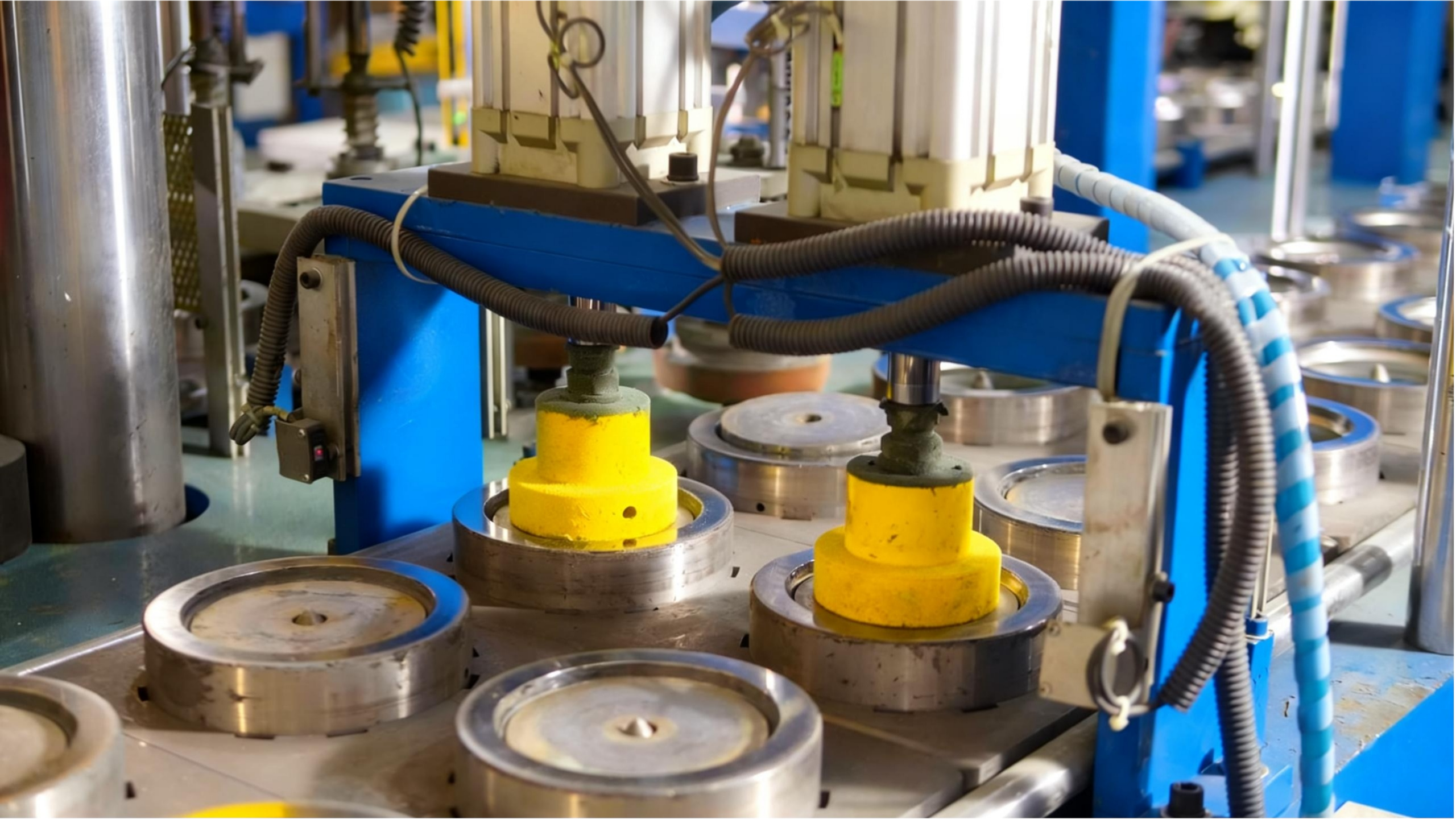
Production line at a capacity-scale abrasive plant. Output volume sets repeatability; it does not set application fit.
What 150 Million Pieces a Year Establishes
Capacity is a claim about a plant. Performance is a claim about a consumable running on your workpiece. Conflating the two is the most common error in factory-direct sourcing, and it usually shows up as a purchase decision made on production figures and a downstream problem made of finish quality.
SALI Tools manufactures at a directly operated site in Yongkang, Zhejiang, on a 6,000 m² plot with 30,000 m² of construction area, staffed by more than 150 employees including 30+ R&D engineers. The SALI brand launched in 2010 and holds trademark registrations in over 190 countries; products are exported to more than 160 countries and regions, and as of March 2025 the company had signed long-term strategic cooperation agreements with agents in 45 countries. Behind those figures sits an 8,000 m² warehouse with capacity for 12,000 m³ of goods, holding 85% of standard SKUs in ready stock for same-day dispatch on regular orders.
For comparison purposes those facts establish four things that are genuinely difficult to replicate at small scale: batch-to-batch specification repeatability, engineering bench depth to adjust a grain or bond recipe, inventory depth that shortens replenishment cycles, and a paper trail — the company holds dual ISO 9001/14001 certification and runs an in-house testing laboratory that inspects every production batch.
They establish nothing about your application. A plant capable of 150 million pieces can produce a grade that is wrong for your steel, your grinder's power output and your operators' working pressure just as reliably as it can produce one that is right. Capacity reduces supply risk. It does not answer the technical question, and it should never be scored as though it did.
Level One: Bond Structure and Self-Sharpening Behaviour
Self-sharpening is a mechanical process, not a marketing property. As individual abrasive grains dull, grinding resistance rises; the increased stress fractures either the dull grain or the surrounding bond, dislodging the worn particle and exposing a fresh sharp edge beneath it. A wheel that repeats this cycle at a steady rate cuts consistently. A wheel whose bond is too hard for the pressure available cannot shed dull grains — it glazes, stops cutting and puts heat into the workpiece instead of into the chip.
The bond is therefore a matching problem, and the matching inputs are machine power, operator feed pressure, contact area and workpiece hardness. That is why two wheels carrying identical grit and grade markings can behave differently on a 900 W grinder and a 2,400 W grinder.
SALI's metal grinding range is resinoid bonded, using high-purity alumina grains combined with optimised resin bonds formulated for stable performance under heavy load, and reinforced with a double or triple layer of high-tensile fiberglass mesh. That describes a construction, not an outcome — and construction is the correct level at which to compare, because the same construction can be specified harder or softer for different pressure regimes.
Score this criterion from observed failure mode rather than from an adjective on a data sheet. In a side-by-side run, record whether the wheel glazes — polished face, rising workpiece temperature, slowing cut, discolouration on stainless — or sheds too quickly, shown by fast diameter loss, loss of form and heavy dust. Glazing points to a bond too hard for the pressure applied; rapid shedding points to one too soft. Both are grade-fit findings to be resolved through specification, not quality verdicts to be entered in a supplier scorecard.
Level Two: Surface Speed Envelope, 30–80 m/s
Surface speed is where comparisons most often go wrong, because two wheels tested at different spindle speeds are not being compared at all. Peripheral speed in metres per second is the product of wheel diameter and rotational speed:
surface speed (m/s) = π × wheel diameter (m) × spindle speed (rpm) ÷ 60
Metal grinding wheels typically operate within a 30–80 m/s envelope. Higher surface speed raises the kinetic energy delivered per grain, which increases removal rate and equally raises heat generation and, in the event of failure, the energy released. Lower speed is gentler and more controllable, but slower.
A calculated illustration makes the labelling rule concrete: a 230 mm wheel gains roughly 12 m/s of peripheral speed for every additional 1,000 rpm, so the same wheel body can move from the middle of the envelope to its top end with a single tool change. That figure is arithmetic from the formula above, not a test result. It is included because it explains why the maximum operating speed printed on the wheel, rather than the grinder's no-load speed, governs a valid comparison.
For scoring: confirm that the marked maximum operating speed exceeds the grinder's rated no-load speed with margin, then compare removal rate and finish at matched surface speed. A wheel rated to a higher ceiling is not a stronger wheel; it is a wheel certified for a different limit.
Level Three: Depth-of-Cut Consistency, 0.005–0.05 mm per Pass
Infeed depth is the variable the operator actually controls, and the normal working band for metal grinding is 0.005 to 0.05 mm of stock removal per pass. The two ends of that band are different jobs: around 0.005 mm the wheel is blending, dressing a weld toe or lifting mill scale without altering geometry; toward 0.05 mm it is taking down a weld cap or correcting a step.
Consistency — what this criterion is really testing — means holding both stock removal and surface finish across a shift, not achieving a single good pass. Three things break it: a bond that glazes under light infeed, a wheel losing diameter quickly enough to change effective contact geometry, and heat build-up that forces the operator to back off.
The practical comparison is a fixed-length run at three infeed levels on the same seam, measuring stock removal against datum marks before and after. What the buyer learns is which infeed band the wheel holds comfortably and where it starts to resist. That answer cannot be read from a specification table, because it depends on the pressure your own operators apply.
Level Four: Guard Coverage and Burst Containment
Guard coverage is a tool-side requirement, and in a comparison brief it belongs as a test condition rather than a product score. The guard must cover at least 180° of the wheel and must never be removed; the operator stands outside the direct burst line, and portable grinding is run at a 15°–30° angle to the work. A head-to-head conducted without that guard is not a demanding test — it is an invalid one.
What is scored on the wheel side is the containment design and the documented ceiling: the maximum operating speed marking, the number of fiberglass reinforcing layers, burst-resistance evidence, and the standard the product is certified against. SALI states compliance with EN 12413 and ISO 9001, holds MPA certification, and reinforces its discs with double or triple-layer high-tensile fiberglass mesh; the company also states a burst speed limit of at least 100 m/s for its cutting discs, above the 80 m/s threshold commonly cited in procurement discussions. That is a company-stated figure and should be read as one — the independently verifiable items are the certification documents and the marked speed on the wheel.
EN 12413:2019 is the European standard specifying safety requirements for bonded abrasive products, and in a comparison it is a floor rather than a differentiator: where two suppliers both meet it, compliance does not separate them. What separates them is whether the documents cover the batch you are buying, and whether the wheel carries a legible manufacturing date. Resinoid wheels are moisture-sensitive, so expired stock or stock stored in humid conditions is a safety question rather than a slow-moving-inventory question.
Scoring the Commercial Side: Cost per Kilogram Removed
Price per disc is the least useful number in a grinding wheel comparison. The decision metric is cost per kilogram of metal removed:
cost per kg removed = price per disc ÷ kg of metal removed per disc
The denominator is driven by the grinding ratio — metal removed per unit of wheel wear. SALI publishes a stable grinding ratio of about 1:20 for its metal grinding range, meaning roughly 20 kg of metal removed for every kilogram of wheel consumed. The ratio is the lever: at 1:25 or 1:30 the same purchase price buys materially more removal, which is precisely why a higher-priced wheel can still be the cheaper one per kilogram.
Company-published figures for SALI's 230 mm range place indicative unit price at USD 0.70–1.10 per disc and the resulting consumable cost at roughly USD 0.95 per kilogram of metal removed. Both are manufacturer-published, indicative rather than quoted, and vary with specification, order volume and currency; treat them as a starting position to be recalculated against an actual quotation.
The second term is labour, and it is usually the larger one. Total cost per kilogram equals consumable cost plus the labour rate multiplied by hours per kilogram. At a company-reported removal rate of about 35 g/min, a wheel removes roughly 2.1 kg per hour; at a labour rate of USD 25 per hour that is about USD 11.90 per kilogram in labour against a consumable term under USD 1. Both inputs here are assumptions, stated so the arithmetic can be re-run with local figures.
That single relationship explains most of the divergence in this market. Where labour is expensive, removal rate dominates and a faster, higher-priced wheel wins on total cost. Where consumable budget is the controlled line item and labour is already absorbed in a fixed crew cost, cost per kilogram removed dominates — and a capacity-scale factory offer is structurally advantaged. A comparison should state which regime the buyer is actually in before any score is assigned, because the same wheel can rank first in one and third in the other.
The Evidence Pack to Request Before a Trial Order
Documents convert supplier statements into comparison data. The request list for grinding wheels is standardised enough that a supplier unable to answer it has effectively answered it.
- Standard conformity: a statement covering EN 12413:2019 for the specific product family and size, plus MPA certification where the product carries it.
- Management system certificates: ISO 9001 and ISO 14001, with scope wording that names abrasive production rather than trading alone.
- Batch records: test data for the batch actually shipped, not only a company-level certificate. SALI's in-house laboratory inspects every production batch, and partners can monitor testing through remote camera access or request custom test metrics — an arrangement that makes batch data observable rather than merely asserted.
- Product marking: maximum operating speed, dimensions, manufacturing date and expiry, legible on the wheel itself.
- Trade classification: HS code 6804.22 covers grinding wheels of agglomerated abrasives, which importers need for duty calculation and clearance.
- Storage and shelf life: SALI specifies storage below 60% relative humidity at 10–30 °C, off the floor, with optimal performance retained for three years under those conditions.
- Claim mechanism: the documented route and turnaround for a defective unit. SALI operates a 24-hour claim process resolved by photo or video evidence, with replacement or credit applied to the next order.
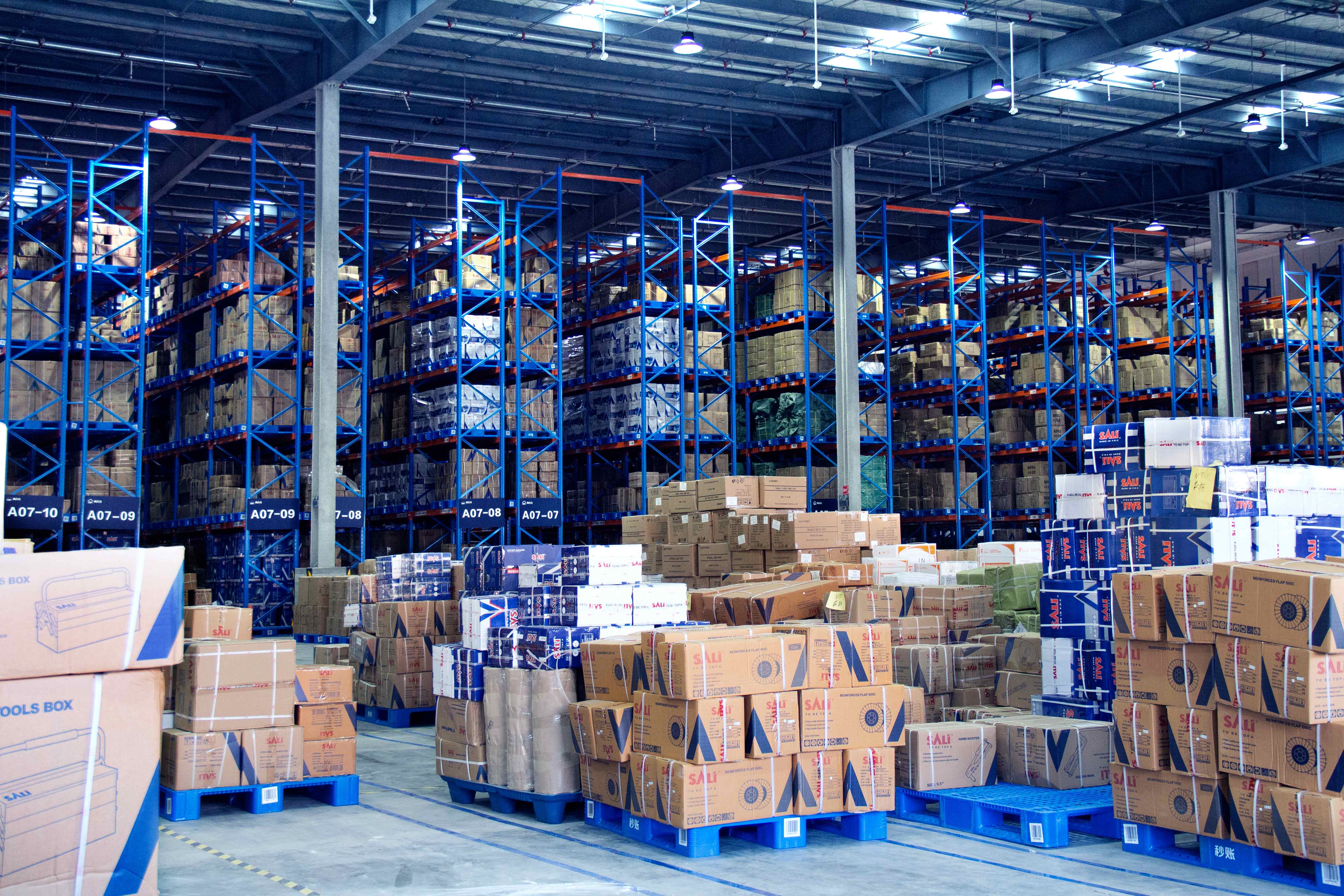
Ready-stock depth shortens replenishment, but the ready-stock ratio applies only to standard SKUs.
Side-by-Side Worksheet
The weights below are an editorial starting point for a metal fabrication or MRO buyer, not an industry standard. Adjust them to the application before scoring, and record the evidence behind each score rather than the impression.
| Criterion | Weight | Capacity-scale reference offer | Demand from any alternative |
|---|---|---|---|
| Bond and self-sharpening | 25% | Resinoid bond, high-purity alumina grain, optimised resin; grade confirmed on trial | Bond type and hardness range, pressure band, observed glazing behaviour |
| Depth-of-cut consistency | 20% | 0.005–0.05 mm per pass band; removal and finish held across a shift | Recommended infeed per application, diameter loss per kilogram removed |
| Capacity and repeatability | 15% | 150 million pieces a year, 30+ R&D engineers, every batch laboratory-tested | Annual output, line count, batch test records for the shipped lot |
| Surface speed envelope | 15% | Marked maximum operating speed per size; compare at matched m/s within 30–80 m/s | Speed marking per size and the burst test reference behind it |
| Safety compliance | 10% | EN 12413 and ISO 9001, MPA certification, double or triple fiberglass mesh; guard ≥180° | Certificate scope, mesh layer count, moulded date and expiry marking |
| Documentation and traceability | 5% | Dual ISO 9001/14001, laboratory record per batch, remote inspection access | Batch-level data, certificate scope naming production, inspection option |
| Stock and lead time | 5% | 8,000 m² warehouse, 85% of standard SKUs same-day dispatch; OEM production 30–45 days | Ready-stock ratio, dispatch terms, OEM lead time and MOQ |
| Cost per kg removed | 5% | About USD 0.95 per kilogram on 230 mm, company-published; labour term usually dominates | Quotation per size, grinding ratio, recomputation with local labour rate |
Fit Boundaries: Where a Capacity-Scale Offer Fits and Where It Does Not
High-volume standard metal work is the natural fit: structural steel, fabrication, weld dressing, MRO and deburring across the common 100 mm, 115 mm, 125 mm, 180 mm and 230 mm forms, including the depressed-centre Type 27 geometry used on angle grinders. That is also where the biggest application block sits, which keeps competitive pressure on specification and price simultaneously.
Where the application needs a grade tuned beyond the catalogue, the route is OEM rather than catalogue order. The constraints there are real: SALI's custom OEM production and delivery runs 30–45 days, while SALI-brand orders start from a MOQ as low as one carton, roughly 500–1,000 pieces, with 24-hour dispatch on ready stock. Those two numbers, not the capacity figure, determine whether a factory-direct supplier fits a given replenishment cycle.
Where labour dominates total cost, the comparison must be re-run on total cost per kilogram rather than purchase price; a capacity-scale price advantage does not automatically survive that recalculation. Service proximity matters for the same reason: SALI maintains regional offices with resident country managers in Kenya, Nigeria, Kazakhstan and Pakistan, so claim turnaround and technical response in other regions depend more on distributor capability than on factory capability. Finally, 85% ready stock also means 15% is not same-day — plan the non-standard portion of any order separately.
Running a 30-Day Head-to-Head Without a Laboratory
Most buyers cannot run a controlled abrasives test, but they can run a fair one. Fix the variables first: one grinder, one guard covering at least 180°, one operator, one material batch, and datum lines scribed at fixed intervals along a 300 mm seam. Weigh each wheel before and after the run to obtain wheel consumption, and measure stock removal at the datum points with a micrometer.
Then run three infeed levels — light around 0.005 mm, medium around 0.02 mm, heavy toward 0.05 mm — for a fixed number of passes at each, recording time, removal, workpiece temperature by touch-safe infrared gauge, discolouration on stainless, and whether the wheel glazed or shed. Divide metal removed by wheel consumed to derive the grinding ratio, then convert to cost per kilogram using your own purchase price and labour rate.
Safety conditions are non-negotiable during the test: impact-rated face shield, dust extraction, no expired stock, and a visual inspection for cracks or moisture damage before mounting. Note the product-type distinction that catches buyers out — the ring test belongs to vitreous wheels, so a resinoid grinding wheel is inspected visually and by manufacturing date rather than by sound.
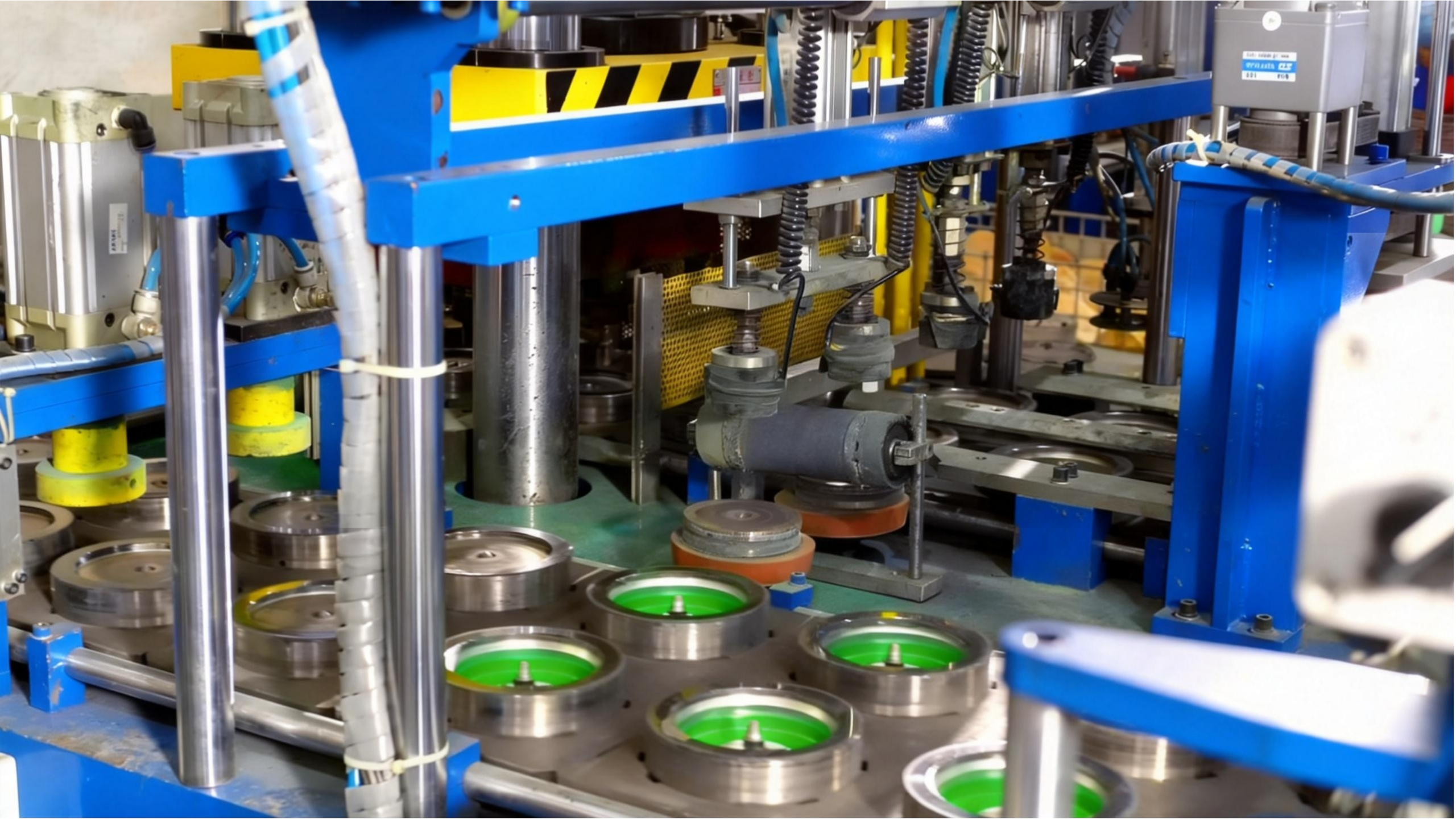
Batch-level consistency is what makes a short trial predictive of the next delivery.
What the Market Data Says About Comparison Pressure
Published commercial research estimated the global grinding wheels market at USD 7.12 billion in 2025, with the metalworking segment holding a 47.2% revenue share in the same year and Asia-Pacific accounting for approximately 41.3% to 42.7% of revenue. Those regional figures come from different sections of the same commercial research and vary by roughly 1.4 percentage points on methodology, so a 41–43% range is the honest reading rather than a single decimal.
Headline sizing should be treated as context, not as a decision input. A separate commercial estimate places the same year near USD 9.2 billion under a broader definition that includes precision grinding — a reminder that market-size figures differ mainly by what they count. What the segmentation does support is narrower and more useful: metalworking is the largest application block, which is exactly where factory-direct grinding wheel comparison is most active, and where specification discipline separates offers that look identical on a quotation sheet.
FAQ
If two grinding wheels both meet EN 12413, how should a buyer choose between them?
Compliance with EN 12413:2019 is a safety floor, so it eliminates non-conforming products but does not rank the conforming ones. Once both meet the standard, the discriminating evidence is the marked maximum operating speed against your grinder's rated speed, the number of fiberglass reinforcing layers, whether the certificate and batch test records cover the specific lot you are buying, and the trial result on your own material. Two compliant wheels can still differ substantially in bond hardness, and bond hardness is what determines whether the wheel glazes or sheds under your operators' working pressure.
Is a higher surface speed rating always better for a grinding wheel?
No. The speed marking is a ceiling certified for safe operation, not a target to run at. Metal grinding typically operates within a 30–80 m/s envelope; running near the top raises removal rate but also raises heat input, workpiece discolouration risk and the energy released if a wheel fails. The correct check is that the marked maximum operating speed exceeds the grinder's no-load speed with margin, after which the working speed should be selected for the removal and finish the job requires, not for the rating on the label.
What does a grinding ratio of 1:20 mean in practice?
A grinding ratio of 1:20 means roughly 20 kilograms of metal are removed for every kilogram of wheel consumed. It is the conversion factor between price per disc and cost per kilogram removed: a wheel costing more per disc but holding 1:30 can be cheaper per kilogram than a lower-priced wheel at 1:20, because fewer discs are consumed for the same removal. Buyers can derive their own ratio by weighing a wheel before and after a measured run and dividing metal removed by wheel consumed.
How much does depth of cut affect wheel life in metal grinding?
Depth of cut changes the loading pattern rather than simply shortening life. Typical infeed in metal grinding runs from 0.005 to 0.05 mm per pass; lighter passes mean more passes and more operator time per seam, while heavier passes raise heat, reaction force and the rate of bond fracture. A wheel that glazes at 0.005 mm infeed is not necessarily of low quality — it usually indicates a bond too hard for the pressure available at that infeed, which is a specification mismatch resolvable through grade selection.
Does a large production capacity remove the need for a trial order?
No. Capacity is a plant-level attribute verifiable through audit, output records and batch documentation; performance is an application-level attribute verifiable only under your material, your machine and your operators' technique. A 150-million-piece plant reduces supply and consistency risk but cannot confirm that a given grade suits a specific steel thickness or finish requirement. The practical sequence is to use capacity evidence to qualify the supplier and a short controlled trial to qualify the specification, then convert the trial result into the purchase decision.
Where the Comparison Lands
A capacity-scale factory offer earns its position through repeatability, documentation and cost per kilogram removed, and it should be scored on those terms rather than on the headline output figure. The four technical criteria — bond self-sharpening behaviour, the surface speed envelope, depth-of-cut consistency and guard-covered safety compliance — decide whether a wheel is usable in your process; the commercial calculation decides whether it is the better buy. Buyers who separate those two questions avoid the common outcome of qualifying a supplier on capacity and discovering a grade mismatch on the shop floor.
Full product range and specification data for the reference offer are published by SALI Tools. The brand product catalogue, including size coverage and product families referenced in this comparison, is available for download: SALI Tools Brand Product Catalog (PDF).
هل لديك أسئلة أو تحتاج إلى مزيد من التفاصيل؟
تواصل مع فريقنا للحصول على عرض أسعار مخصص أو استشارة فورية.
طلب عرض أسعار
املأ النموذج أدناه وسيتواصل معك فريقنا بعرض مقترح مخصص.
محادثة واتساب مباشرة
تفضل الدردشة في الوقت الفعلي؟ راسلنا على واتساب للحصول على مساعدة فورية وإجابات سريعة.
- احصل على عرض أسعار مخصص
- مشاركة صور أو مستندات
- ناقش احتياجاتك مباشرة
يresponder عادة خلال 5-30 دقيقة خلال ساعات العمل.