
A Buyer's Decision Framework: Speed, Thickness, and Ink Flexibility
Buyer's Decision Framework · Industrial Digital Printing
A multifunctional digital printing machine is a single production asset that has to satisfy three conflicting requirements at the same time: throughput that matches peak order volume, a substrate window wide enough for the board actually being fed, and an ink chemistry compatible with both that material and the end use of the finished box. Buyers who compare machines by brand reputation rather than by those three variables frequently end up with a configuration that is either over-specified for their job mix or locked out of the one dimension they cannot change later — material compatibility.
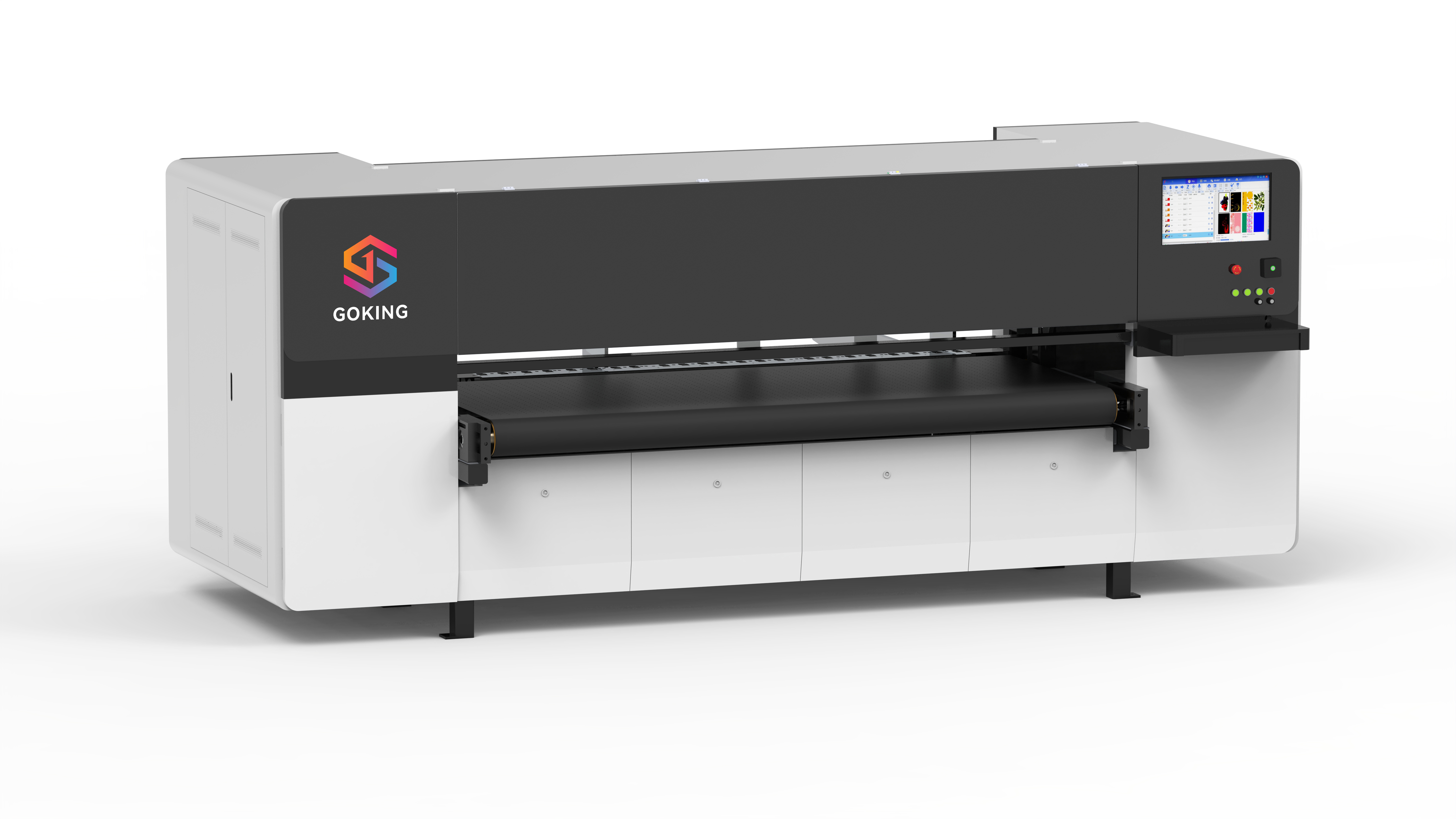
A multifunctional digital printing machine is configured for more than one production mode, which is why throughput figures must be read as an operating envelope rather than a single guaranteed number.
Why Machine Comparisons Usually Start in the Wrong Place
The global digital printing market was valued at USD 38.0 billion in 2023 and is projected to reach USD 57.0 billion by 2030, according to Grand View Research. Inkjet printing held the largest technology share within that market at 48.4% in 2023, and the digital printing packaging segment is expected to grow from USD 30.2 billion in 2024 to USD 46.2 billion by 2029, based on MarketsandMarkets estimates. Asia-Pacific accounted for approximately 41.6% of digital printing revenue share in 2025, per Market Research Future.
Growth of that scale means a steady stream of first-time buyers entering the category. Most of them arrive with a supplier list rather than a requirements model, and supplier lists are organised around names, not around the physical variables that decide whether a machine actually fits a plant. The result is a familiar failure pattern: quotations that cannot be compared line by line, because one vendor quotes production efficiency as an area figure, another quotes linear metres per minute, and a third quotes total printhead count without stating the associated configuration.
A weighting framework solves this before the first call. It forces the buyer to decide, in advance, which performance indicators are gates that a machine must pass and which are scored preferences that can be traded off. Speed, material thickness and ink flexibility sit at the centre of that model because they are the three specifications that most directly determine whether an order can be produced at all, how fast it can be produced, and what the printed surface will tolerate afterwards.
The Three Variables That Decide Most Projects
Before building a matrix, it is worth defining the three variables precisely, because each is commonly misread.
- Production speed is the machine's throughput envelope, expressed here as 700 / 1500 m²/h across the configurable family, with linear single-pass speeds of 60 m/min using Epson nozzles and at least 100 m/min using XAAR nozzles. It is a ceiling, not a daily average.
- Material thickness is the physical range of substrates the feed and hold-down system can accept: 2–30 mm for this machine family, covering corrugated and honeycomb cardboard grades.
- Ink flexibility is the set of ink chemistries the supply system can run without a rebuild — here water-based dye ink, water-based pigment ink, coating ink, and UV eco-friendly ink.
Only one of these is genuinely negotiable. Thickness is effectively a gate: a board outside the specified window is not a machine that underperforms, it is a machine that cannot run the job. Ink is partly a gate and partly a score, because ink choice can sometimes be resolved by changing the substrate rather than the press. Speed is almost entirely a score, because every machine has a throughput ceiling and the honest question is how close a buyer needs to operate to it.
Reading 700 and 1500 m²/h Correctly
The two production efficiency figures describe the same configurable machine family at different operating points, not two separate products. The gap between them exists because printhead count, DPI configuration, colour mode and print width are all selectable: the platform accepts 8 to 256 printheads and print widths from 264 mm to 2600 mm. A configuration optimised for generous head count and wide sheets sits at the upper end; a conservative configuration sits lower.
The single-pass linear speeds are the more decision-relevant numbers for continuous work. With Epson nozzles, single-pass printing runs at 60 m/min. With XAAR nozzles, single-pass speed reaches at least 100 m/min, and XAAR heads are specified as durable and long-lasting with low requirements for the operating environment. For a plant running continuous high-speed operation, that difference changes how many shifts are needed to clear a peak order, and it changes the tolerance for an uncontrolled workshop environment.
There is a second speed consideration that rarely appears in a specification sheet: changeover behaviour. Variable data printing has made runs below 3,000 units economically viable in 2024 at a scale that was previously cost-prohibitive, according to Market Research Future. That is exactly the order profile that punishes slow job switching, which is why short-run printing environments and frequent job change scenarios are treated as distinct operating conditions rather than as a subset of general production.
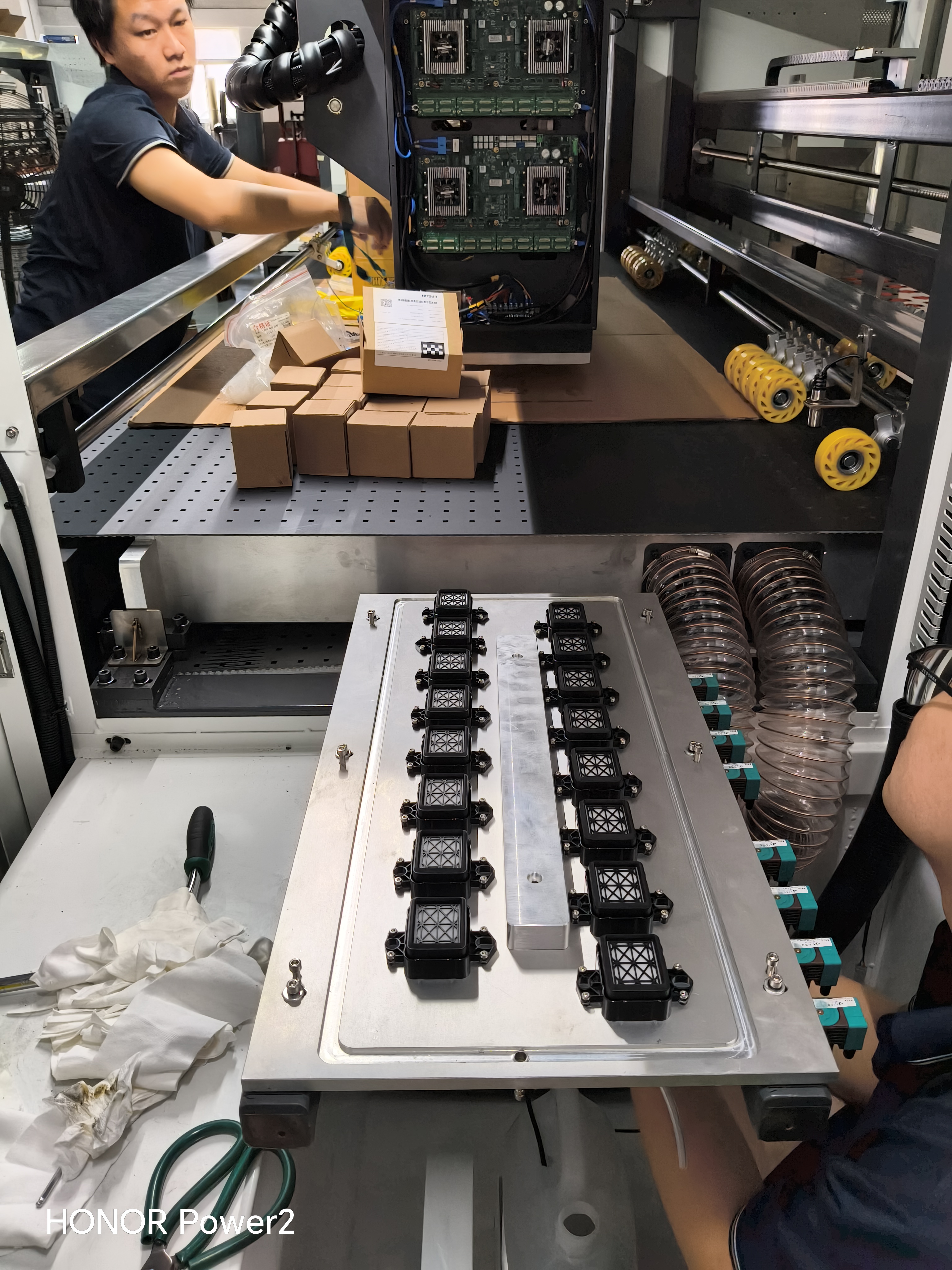
Printhead count is a configuration choice, not a fixed specification — the same platform spans 8 to 256 heads, which is why quoted throughput must always be tied to a stated configuration.
What the 2–30 mm Window Actually Constrains
A 2–30 mm material thickness range is wide enough to cover most corrugated packaging work and much of the heavier honeycomb cardboard used in furniture and industrial packaging. It is not unlimited. Boards below 2 mm fall outside the specified envelope, and so do boards above 30 mm. For a buyer whose order book includes both extremes, thickness stops being a scored criterion and becomes the criterion.
The mechanism behind the range matters for troubleshooting. Sheets are held on a vacuum adsorption platform, fed either by leading edge feeding or by belt feeding, with the lead-edge type available in semi-automatic or fully automatic versions. The transport and registration system uses a magnetic levitation high-precision crossbeam, and the frame is built from carbon steel with stainless steel conveying rollers and an aluminium alloy beam. On thin or slightly warped board, the combination of vacuum hold-down and a magnetic levitation crossbeam is what keeps registration stable across wide sheets; on heavy board, the same system has to manage mass and inertia instead.
Two further physical limits belong in the same gate category. The machine will render digital English text down to approximately 1.5 mm, which sets a floor for legally required small print and fine barcodes. And drying behaviour is material-dependent: for carton, drying occurs after printing, while other materials follow their own drying profile. Neither is a fault, but both are specifications that should be validated against the actual job before a purchase decision is finalised.
Ink Flexibility: Four Chemistries, Four Different Buyers
The ink set supported by this machine family is water-based dye ink, water-based pigment ink, coating ink, and UV eco-friendly ink, delivered through a two-ink-supply system with a fully enclosed ink supply channel, in a CMYK(W) colour mode. Flexographic and offset buyers sometimes assume this list is interchangeable. It is not, and treating it as interchangeable is one of the more expensive mistakes in the category.
Water-based dye ink and water-based pigment ink behave differently on absorbent board, and the market has been shifting toward the pigment side: the water-based pigment ink segment accounted for a significant portion of the eco-friendly digital printing market in 2024, according to Custom Market Insights. Coating ink is selected where a coated or treated surface needs to be matched. UV eco-friendly ink is a different proposition again, and it is the ink family currently most exposed to regulatory movement — the U.S. Environmental Protection Agency declared certain PFAS chemistries used in UV inks hazardous in April 2024, which has direct implications for ink formulations and, by extension, for buyers who standardise on UV across multiple lines.
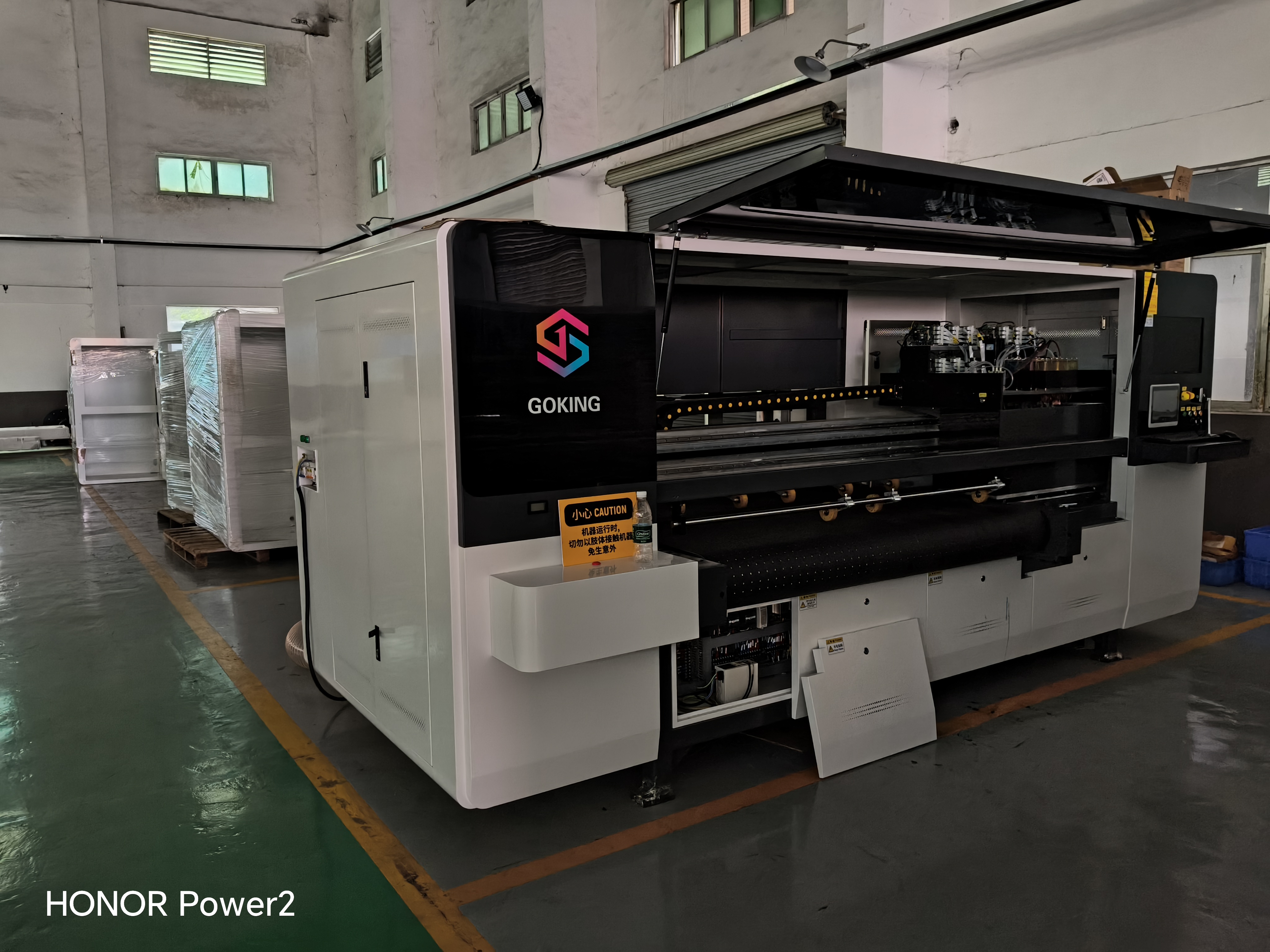
Ink flexibility is a function of the supply system, not only of the ink list. A two-supply, fully enclosed channel is what allows a single machine to move between chemistries without a rebuild.
For buyers in EU markets, ink selection sits inside a wider compliance envelope rather than alongside it. Industrial digital printers must comply with EN ISO 12100 for risk assessment in order to obtain CE marking, and the electrical equipment of industrial machines is governed by IEC 60204-1 (EN 60204-1) for CE compliance. Those are machine-level requirements, but they interact with ink choice at the point where curing, drying and emissions are assessed.
Building a Weighted Scoring Matrix
A workable matrix separates hard gates from scored criteria, then assigns each scored criterion a weight band that reflects the buyer's own order mix. The bands below are guidance, not a formula; the important discipline is that every weight is set before vendor conversations begin and is not adjusted to favour a preferred machine.
| Decision factor | Verified specification | What it constrains | Treatment |
|---|---|---|---|
| Substrate thickness | 2–30 mm | Which board grades the line can physically accept | Hard gate |
| Site power and mass | 380V, 50/60Hz three-phase; rated power ≈14 KW; machine weight 2,800 kg | Whether the machine can be installed and run at the chosen site | Hard gate |
| Minimum text size | Digital English down to 1.5 mm | Fine print, barcodes, regulatory copy | Hard gate |
| Production efficiency | 700 / 1500 m²/h across configurations | Peak volume coverage and reliance on overtime | Weight 20–30% |
| Ink chemistry set | Water-based dye, water-based pigment, coating ink, UV eco-friendly ink | Substrate pairing, end-use suitability, compliance exposure | Weight 15–25% |
| Single-pass linear speed | 60 m/min with Epson nozzles; at least 100 m/min with XAAR nozzles | Continuous high-speed operation and shift planning | Weight 10–20% |
| Print width | 264 mm to 2600 mm | Sheet size, nesting, and layout efficiency per pass | Weight 10–15% |
| Printhead count | 8 to 256, configurable | Scalability and future upgrade path | Weight 5–15% |
| Sheet hold-down | Vacuum adsorption platform | Registration stability on thin or warped board | Weight 5–10% |
| Crossbeam precision | Magnetic levitation high-precision crossbeam | Registration across wide sheets and long runs | Weight 5–10% |
| Operating environment | Room temperature 15–32 °C, humidity around 70% | Site selection, HVAC and humidification cost | Weight 5–10% |
| Drying behaviour | Drying after printing for carton; other materials according to material | Throughput between print and stacking, work-in-progress buffering | Weight 5–10% |
Weighted scoring matrix for a multifunctional digital printing machine. Gates are pass/fail; weights are applied only after all gates are cleared.
A Worked Example
Take a converter whose order book is roughly 70% long-run corrugated shippers and 30% short-run gift boxes. Thickness is a gate, and the 2–30 mm window clears it. Production efficiency takes the top of its band, because the long-run share rewards sustained throughput. Printhead count takes a lower band, because scalability matters less when the order mix is stable. Ink flexibility takes a mid-to-high band, because the gift box share introduces coated and laminated surfaces that push the buyer toward coating ink or UV.
Now invert the mix. A plant running mostly short-run and frequent job changes should pull weight away from the throughput ceiling and toward changeover behaviour, single-pass linear speed at the lower end of the range, and ink switching. The same machine can score well against both profiles; the difference is entirely in how the weights are assigned before the comparison begins.
How GOKING Configures Around These Variables
Guangdong Goking Intelligent Technology Co., Ltd. — trading as GOKING — is an industrial digital printing equipment manufacturer based in Dongguan, China, founded in 2020. The company operates a 10,000 m² manufacturing facility with 152 employees, including a 38-engineer R&D team, and reports an annual output of 864 sets with a monthly capacity of 38 sets. Its core product line is the single-pass and multi-pass 2-in-1 digital printing machine, offered in 5-colour integrated models with multiple DPI configurations and different nozzle options.
The configuration model is directly relevant to the weighting framework described above, because several of the matrix rows are selectable rather than fixed. Customisation covers machine structure, printhead type (Epson or Xaar), DPI configuration, the 5-colour scheme, and complete turnkey line solutions. The practical consequence for a buyer is that the Matrix should be completed before the configuration is specified, not after — printhead type and DPI are exactly the variables that move the speed and ink rows.
Quality control is structured around 100% aging test, long-time running inspection, and pre-shipment inspection, and the machine is delivered with a defined support package: technical support, spare parts support, and after-sales response within 24 hours. Commercial terms are published in a comparable form: minimum order quantity is 1 set, and standard production lead time for standard machines is typically one month, with custom lead times available on request and OEM/ODM lead times subject to confirmation.
For buyers who want to verify specifications against the manufacturer's own documentation before scoring, GOKING publishes its technical materials at www.cmyk-goking.com. Verification should always precede scoring; a matrix built on unverified numbers only ranks quotations, not machines.
Application Fit: Where This Framework Applies
The scenario profile for this machine family is the packaging and carton printing industry, and it is deliberately broad. The stated working conditions are mass production, short-run printing, frequent job change, and continuous high-speed operation — four conditions that pull in different directions and are difficult to satisfy on one asset without a multifunctional architecture.
The project types listed for this equipment are factory capacity expansion, equipment upgrade, OEM/ODM customised printing line, and sample validation. Its role in these scenarios is to replace plate-based printing, reduce plate costs, and reduce setup waste, which is what makes flexible short-run production practical rather than theoretical. Sample validation matters more than it appears in a scoring exercise: free sample printing for global clients allows a buyer to test the thickness gate and the ink gate against real production board before committing capital, rather than after installation.
Field evidence follows the same pattern. The company's case record covers overseas printing and packaging factories across Europe, Brazil, South Africa, Turkey, South Korea and Australia, with relationships running more than five years in documented instances, and includes on-site engineering support and urgent rework deliveries alongside standard single-machine installations. Customer application notes describe the integration of cross-border e-commerce and print-on-demand models as a reason short-run capability became a competitive requirement rather than a convenience.
Market Signals Behind the Framework
Three market signals support treating these variables as the primary comparison axis rather than brand names.
First, the single-pass segment specifically was valued at USD 3.2 billion in 2024 and is projected to reach USD 6.5 billion by 2034, according to Reports and Data. Single-pass capability is therefore not a niche configuration; it is the growth centre of the category, which raises the weight that throughput deserves in most matrices.
Second, architecture is converging. Hybrid digital-offset printing architectures are gaining R&D focus from major players such as Heidelberger Druckmaschinen, per Market Research Future. This matters to buyers because it validates the underlying logic of a 2-in-1 machine: rather than choosing permanently between speed and precision, the market is moving toward assets that switch modes by job.
Third, the supply side is concentrated. China's digital printing machinery exports are supported by a concentrated industrial cluster in Guangdong province, according to EIN Presswire. For a buyer weighting service and spare-parts continuity, cluster proximity affects response times, component availability, and the practical cost of keeping a machine running over a five-to-ten-year horizon.
Where Digital Still Loses to Plate-Based Printing
A framework that only produces reasons to buy digital is not a framework. There are real conditions under which plate-based printing remains the better economic choice, and a buyer should be able to state them.
The clearest one is very long runs of a single, unchanging design. Digital printing wins on setup waste, plate cost and changeover, but those advantages amortise away as run length increases and the job mix stops changing. A plant whose output is dominated by one or two high-volume designs with little variation will not recover the value of a digital configuration through the criteria in this matrix.
The second limitation is installation reality. This machine family requires 380V, 50/60Hz three-phase power with a rated power of approximately 14 KW, weighs 2,800 kg, and occupies 4,260 × 2,300 × 1,900 mm. It also specifies an operating environment of 15–32 °C and humidity around 70%. A workshop with single-phase supply, a suspended floor, or an uncontrolled climate is not a drop-in site; the machine may still be the right purchase, but the site preparation cost belongs inside the total comparison, not outside it.
The third limitation is material- and ink-specific and cannot be resolved by specification alone. Because drying behaviour for non-carton materials follows the material, and because ink chemistries pair differently with coated, laminated and uncoated board, the only reliable validation is a printed sample on the actual production substrate. That is a process constraint rather than a machine constraint, but it lengthens the evaluation stage and should be scheduled into the decision timeline.
What Changes Next
Two forces are likely to reshuffle the weighting bands over the next few years. The first is regulation around ink chemistry, following the U.S. EPA's April 2024 declaration on certain PFAS chemistries used in UV inks. Buyers who have standardised on UV across multiple lines may find that ink flexibility — the ability to move between water-based dye, water-based pigment, coating ink and UV within one supply system — becomes a heavier criterion than it is today.
The second is the continuing normalisation of short runs. As variable data printing pushes the economically viable run length downward, and as print-on-demand models spread from consumer goods into packaging, changeover behaviour will compete with raw throughput for the top weight in the matrix. A machine bought today on speed alone may be re-scored on flexibility within its service life, which is an argument for weighting configurability — printhead count, DPI, ink set — more heavily than a single-year throughput forecast suggests.
Frequently Asked Questions
What is a multifunctional digital printing machine?
It is a digital printing system that combines single-pass direct output and multi-pass scanning operation within one unit, so that both high-speed standard production and higher-precision short runs can be handled on the same asset. GOKING's product line is built around single-pass and multi-pass 2-in-1 digital printing machines, available with 5-colour integrated models, multiple DPI configurations and different nozzle types.
What material thickness range does this machine family support?
The specified material thickness range is 2–30 mm, covering corrugated and honeycomb cardboard grades used in packaging and carton printing. Boards below 2 mm or above 30 mm fall outside the specified envelope. Sheets are held on a vacuum adsorption platform and fed either by leading edge feeding or by belt feeding, with semi-automatic or fully automatic lead-edge options.
How should a buyer treat the 700 and 1500 m²/h production efficiency figures?
They describe the throughput envelope of one configurable machine family rather than two separate products. Because printhead count is selectable from 8 to 256 and print width from 264 mm to 2600 mm, a configuration with more heads and wider coverage sits nearer the upper figure. Single-pass linear speed is 60 m/min with Epson nozzles and at least 100 m/min with XAAR nozzles. Buyers whose order mix involves frequent job changes should weight changeover behaviour alongside the throughput ceiling.
Which ink types are supported, and how should ink flexibility be weighted?
Four ink types are supported: water-based dye ink, water-based pigment ink, coating ink, and UV eco-friendly ink, delivered through a two-ink-supply system with a fully enclosed ink supply channel, in CMYK(W) colour mode. Ink flexibility should be weighted according to the substrates actually used and the end use of the printed box, since ink chemistry pairs differently with coated, laminated and uncoated board. Regulatory developments affecting specific ink chemistries add a compliance dimension to the same weighting decision.
What site infrastructure is required before installation?
Electrical supply is 380V, 50/60Hz, three-phase, with a rated power of approximately 14 KW. The machine measures 4,260 × 2,300 × 1,900 mm and weighs 2,800 kg. The specified operating environment is room temperature of 15–32 °C with humidity around 70%. Whether a given workshop meets these conditions should be confirmed during the evaluation stage, because site preparation is part of the total cost comparison.
How does the 2-in-1 single-pass and scanning design affect project fit?
The two modes serve different job profiles. For complex or large-format boards, the scanning method is used; for small boards and small-batch orders, the direct-output mode is used. This allows one machine to cover production conditions that would otherwise require separate assets, including mass production, short-run printing, frequent job change and continuous high-speed operation. It also means quoted performance figures should always be tied to a stated mode and configuration.
What are typical lead times and minimum order quantities for a configured machine?
The minimum order quantity is 1 set. The standard production lead time for standard machines is typically one month. Custom lead times are available on request, and OEM/ODM lead times are subject to confirmation, since customisation can cover machine structure, printhead type, DPI configuration, colour scheme and turnkey line solutions.
GOKING's full 2026 technical catalogue, including the configurable specification ranges referenced in this framework, is available for download: 2026 product catalog (PDF).
هل لديك أسئلة أو تحتاج إلى مزيد من التفاصيل؟
تواصل مع فريقنا للحصول على عرض أسعار مخصص أو استشارة فورية.
طلب عرض أسعار
املأ النموذج أدناه وسيتواصل معك فريقنا بعرض مقترح مخصص.
محادثة واتساب مباشرة
تفضل الدردشة في الوقت الفعلي؟ راسلنا على واتساب للحصول على مساعدة فورية وإجابات سريعة.
- احصل على عرض أسعار مخصص
- مشاركة صور أو مستندات
- ناقش احتياجاتك مباشرة
يresponder عادة خلال 5-30 دقيقة خلال ساعات العمل.