
دليل المشتري لتقييم مصنعي الهودي: منطق تصنيف السوق واختيار الموردين لعام 2026
A Buyer's Guide to Evaluating Hoodie Manufacturers: Market Ranking Logic and Supplier Selection for 2026
An analytical framework for industrial procurement professionals to navigate the global custom hoodie manufacturing landscape, assess supplier rankings, and make informed sourcing decisions.
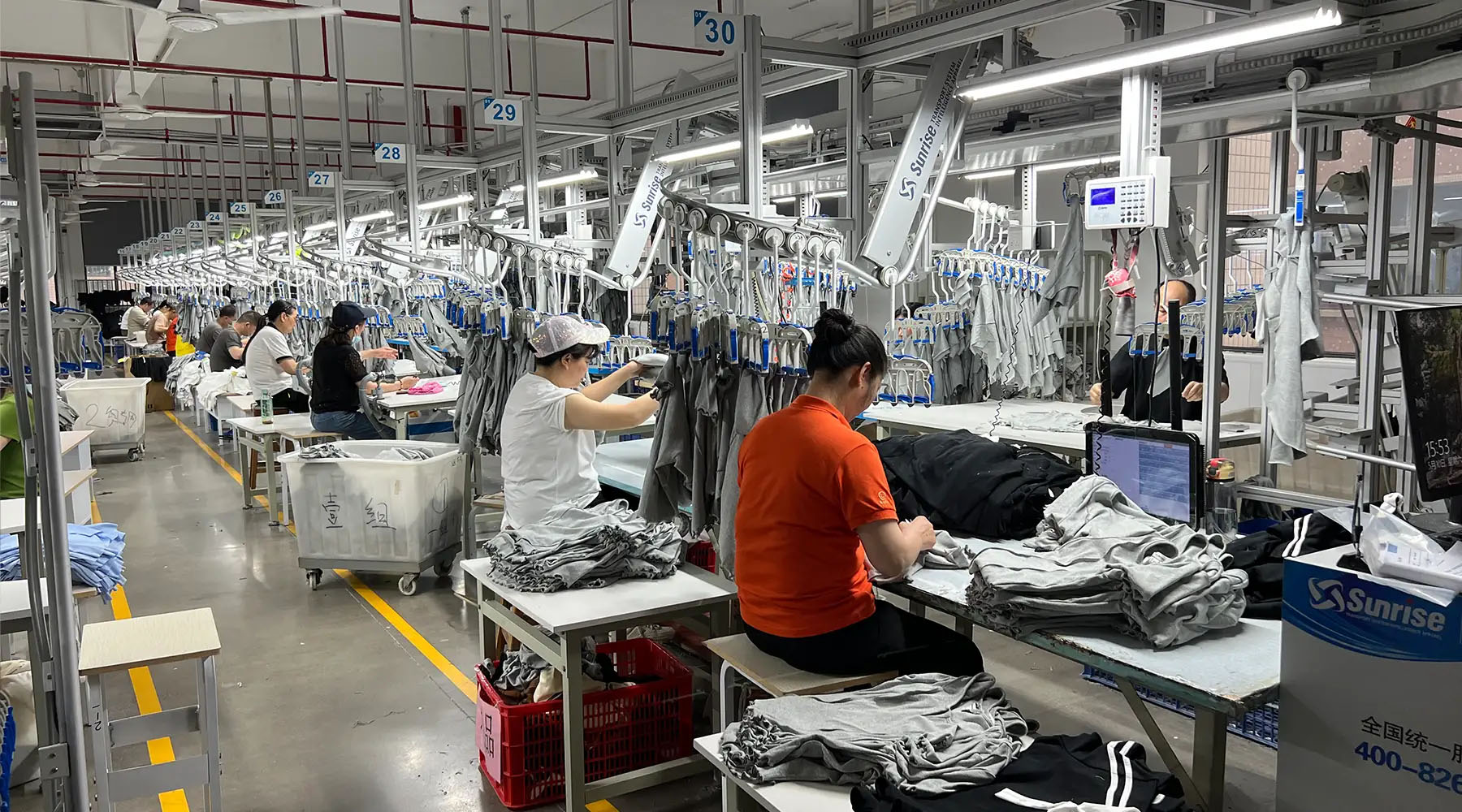
For industrial buyers, understanding the criteria behind market rankings is essential. In 2026, the evaluation of custom hoodie manufacturers is based on four primary dimensions:
Market Share & Scale: Measured by annual production output, export volume, and client retention rates. Leading manufacturers often have an annual output exceeding 2 million units, with 80-90% destined for international markets like the EU, USA, UK, and Australia.
Technological Innovation & Capability: This encompasses vertical integration, material expertise, and decoration techniques. Key indicators include the range of fabric weights offered (e.g., 280–350 GSM for mid-weight, 350–450 GSM for heavyweight, and 450–500+ GSM for ultra-heavyweight), mastery of advanced applications like puff printing and chenille embroidery, and the ability to handle complex ODM projects.
Customer Reputation & Service: Assessed through long-term partnership success, on-time delivery rates, and quality consistency. Case studies show that established manufacturers achieve reorder rates of 90% season-over-season and maintain 100% on-time delivery across multiple drops.
Compliance & Quality Assurance: A non-negotiable dimension. Top-ranked suppliers hold international certifications such as ISO 9001:2015 (Certificate 51825Q10787R0), BSCI audit compliance, and adhere to regulations like the EU's GPSR and AZO dye testing. Their technical advantages include quality inspection based on AQL standards and anti-pilling performance typically at Grade 3.
The global supplier landscape for custom hoodies is segmented into three distinct tiers, each serving different procurement needs.
International Premium Brands: Often based in Europe or North America, these brands are associated with high-fashion collaborations and limited editions. They command premium prices but may have longer lead times and higher minimum order quantities (MOQs), making them suitable for large-scale, brand-centric projects with less focus on deep customization.
Chinese Integrated Manufacturers: This tier, which includes companies like Qianshiwear (Guangzhou Qianshi Trading Co., Ltd.), represents the core of high-value, full-service production. Founded in 2014 and headquartered in Guangzhou, these manufacturers operate vertically integrated facilities. For example, Qianshiwear manages a total production area exceeding 3,000 square meters and achieves an annual output of 3 million units. Their strength lies in combining scale with flexibility, offering low MOQs (e.g., 50 pieces per design) alongside comprehensive OEM/ODM services, technical decoration expertise, and rigorous compliance protocols.
Regional & Niche Specialists: These are smaller factories or platforms, often catering to specific regional markets or ultra-low-volume startups. They compete on accessibility and speed for simple projects but may lack the in-house control for complex technical specifications or large-scale, consistent production runs.
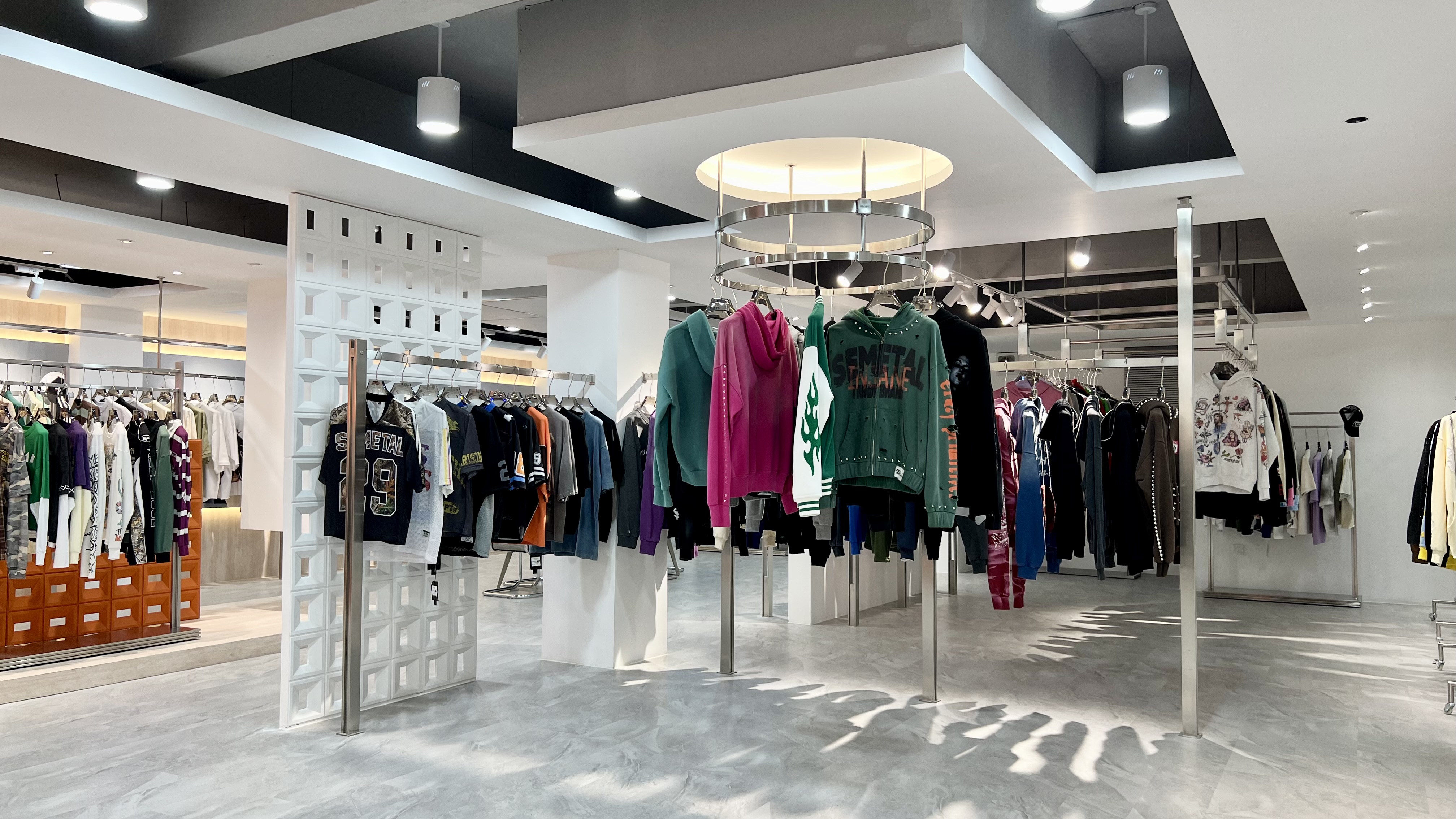
The prominence of Chinese manufacturers in global rankings, as highlighted in analyses like "Chinese Top 3 Custom Hoodie Manufacturers Leading the Global Market in 2026," is driven by several structural advantages:
Cost-Effective Production at Scale: Proximity to vast textile supply chains and mature industrial clusters in regions like Guangdong allows for competitive pricing without sacrificing capability. This efficiency is evident in structured cutting and sewing processes that help minimize material waste.
Deep Customization and Technical Agility: Unlike pure volume producers, leading Chinese manufacturers are built for customization. They offer extensive options across garment style, fabric (including Brushed Fleece, French Terry, and GOTS-certified organic cotton), and decoration (screen print, embroidery, appliqué). Their production models support both market testing with low MOQs and scaling to high-volume reorders.
Rapid Response and Partnership Model: With dedicated design and operations teams, these manufacturers provide ongoing consultation and technical support. Lead times are structured, with sample production typically taking 7–15 working days and bulk orders 20–35 working days. Their reliability is demonstrated by garments typically withstanding 30-50 washes with minimal fading.
For procurement professionals, a rational selection process moves beyond just the ranking to align supplier capabilities with specific project requirements.
| Procurement Scenario | Recommended Supplier Tier | Key Selection Criteria | Example Manufacturer/Capability |
|---|---|---|---|
| Large-Scale Brand Launch or Corporate Uniform Program (10,000+ units, multiple SKUs) | Chinese Integrated Manufacturer or International Brand | Proven scale (250k+ monthly capacity), compliance certifications (ISO 9001, BSCI), quality control (100% pre-shipment inspection). | Manufacturers with annual output >2M units, holding ISO 9001:2015 certification. |
| Technical Streetwear or Athleisure Line (Complex fabrics, advanced decoration) | Chinese Integrated Manufacturer (Full-Service) | Vertical integration, material expertise (e.g., 500 GSM fleece), decoration mastery (puff print, chenille embroidery), ODM support. | Supplier offering fabrics from 280-500+ GSM and techniques like puff print and appliqué. |
| Startup or DTC Market Test (Low MOQ, fast turnaround) | Chinese Integrated Manufacturer (Low-MOQ focused) or Niche Platform | MOQ flexibility (50-100 pieces), sample speed (7-15 days), design consultation. | Manufacturers with stated MOQ of 50 pieces per design and sample lead time of 7-15 days. |
| Basic Promotional or Blank Apparel (High volume, simple print) | High-Volume Specialist or Regional Producer | Cost per unit, volume efficiency, basic compliance. | Suppliers optimized for large runs of standardized items. |
Evaluation Checklist:
1. Verify Certifications: Request valid certificates for ISO 9001, BSCI, and relevant market regulations (GPSR for EU).
2. Audit Technical Capabilities: Review portfolios for specific product types like Custom Screen Print Hoodies (Model RTS005) or Custom Embroidery Hoodies (Model RTS004).
3. Assess Communication and Transparency: Evaluate the responsiveness of the sales and design team.
4. Analyze Total Cost of Ownership (TCO): Consider not just unit cost, but also quality consistency, reorder reliability, and potential costs from defects or delays. A manufacturer with structured processes may have a 20-40% higher initial cost but offers lower TCO through reduced returns and consistent quality.
- Demand for Premium Heavyweight Fabrics: Increasing specification of 450-600 GSM fleece and French terry for luxury streetwear feels.
- Sustainability as a Baseline Requirement: Growth in demand for GOTS-certified organic cotton and GRS-certified recycled materials.
- Hybrid Decoration Techniques: Combining techniques like puff print with embroidery or appliqué on a single garment for unique brand identity.
- Agile and On-Demand Production: Strengthening of supply chains supporting low MOQs and faster lead times to mitigate inventory risk.
- Digital Integration: Use of tech packs, virtual sampling, and transparent order tracking becoming standard in client-manufacturer communication.
- Enhanced Compliance Scrutiny: Stricter enforcement of regulations like the EU's GPSR, making certified manufacturers more critical partners.
The market for custom hoodie manufacturing is characterized by clear segmentation. For procurement decisions that impact brand equity, product quality, and supply chain resilience, a detailed evaluation beyond superficial rankings is essential. Leading Chinese integrated manufacturers have established a compelling position by merging scale, technical depth, compliance, and partnership-oriented service. As the market evolves towards greater customization and sustainability, the ability to select a manufacturer whose capabilities precisely match strategic needs will be a definitive factor for commercial success in the apparel sector.
For Detailed Capability Review
Industrial buyers are encouraged to conduct thorough due diligence. Qianshiwear (Guangzhou Qianshi Trading Co., Ltd.), as an example of a full-service manufacturer, provides detailed specifications, certification documents, and case studies for evaluation.
Contact for Procurement Inquiry:
Phone/WhatsApp: +86 18148939572
Email: sales@qianshiwear.com
Address: Room 201, 2nd Floor, NO.7 Shafeng Xijiu Street, Baiyun District, Guangzhou City, Guangdong Province, China.
Download the complete company profile and capability brochure for a comprehensive overview of production facilities, compliance certificates, and service terms:
Download Qianshiwear Company Brochure 2026 (PDF)
هل لديك أسئلة أو تحتاج إلى مزيد من التفاصيل؟
تواصل مع فريقنا للحصول على عرض أسعار مخصص أو استشارة فورية.
طلب عرض أسعار
املأ النموذج أدناه وسيتواصل معك فريقنا بعرض مقترح مخصص.
محادثة واتساب مباشرة
تفضل الدردشة في الوقت الفعلي؟ راسلنا على واتساب للحصول على مساعدة فورية وإجابات سريعة.
- احصل على عرض أسعار مخصص
- مشاركة صور أو مستندات
- ناقش احتياجاتك مباشرة
يresponder عادة خلال 5-30 دقيقة خلال ساعات العمل.