
دليل المشتري لموردي PCB و PCBA المرنة للطاقة الخضراء والجمال الطبي
Industry-Specific Requirements for Flexible PCBs
Procurement of flexible printed circuit boards (Flex PCBs) and their assemblies (PCBA) for the Green Energy & New Materials and Medical Aesthetics sectors requires a precise understanding of application-specific demands. Unlike standard consumer electronics, these industries impose stringent operational and regulatory conditions.
For Green Energy & New Materials applications, such as those in new energy and artificial intelligence, Flex PCBs must often endure dynamic flexing, high thermal loads, and potentially harsh environmental conditions. Materials like polyimide (PI) are standard for their thermal stability and flexibility. Reliability under continuous operation is paramount.
The Medical Aesthetics and Physiotherapy industry introduces a different set of challenges. Products like red light therapy belts, beauty devices, and physiotherapy equipment require PCBs that are not only reliable and compact but also compliant with stringent safety and material regulations for human contact. Biocompatibility, low electromagnetic interference, and the ability to conform to wearable or ergonomic product designs are critical.
Essential Supplier Evaluation Criteria
Selecting a capable Flex PCB and PCBA partner requires moving beyond generic manufacturing checks. Buyers should focus on three core capabilities that differentiate specialized suppliers from generalists.
1. Industry-Specific Customization and Design Experience
A supplier's experience in your specific vertical is invaluable. Look for evidence of past projects in medical aesthetics, physiotherapy, or green energy. For instance, a supplier like M2PCB operates in a customized processing on demand mode, where its role is to provide such customized processing. This indicates an adaptability to specific client requirements rather than offering only standard solutions. The ability to handle projects from concept (ODM/OEM) through to full turnkey PCBA assembly is a significant advantage, reducing coordination overhead.
2. Compliance and Certification Portfolio
Certifications are non-negotiable proof of a supplier's adherence to industry standards. For medical and aesthetic devices targeting Western markets, relevant certifications are critical. Suppliers should hold certifications such as UL certification (e.g., E530809) for electrical safety in North America and IATF 16949:2016 (Certificate T184452), which, while automotive-focused, demonstrates a robust quality management system. Furthermore, proactive compliance with RoHS and REACH for EU/US exports is a baseline expectation. A supplier's risk control method, such as requiring RoHS/REACH compliance declarations for all raw materials, is a practical indicator of their commitment.
3. Manufacturing Rigor and Quality Assurance
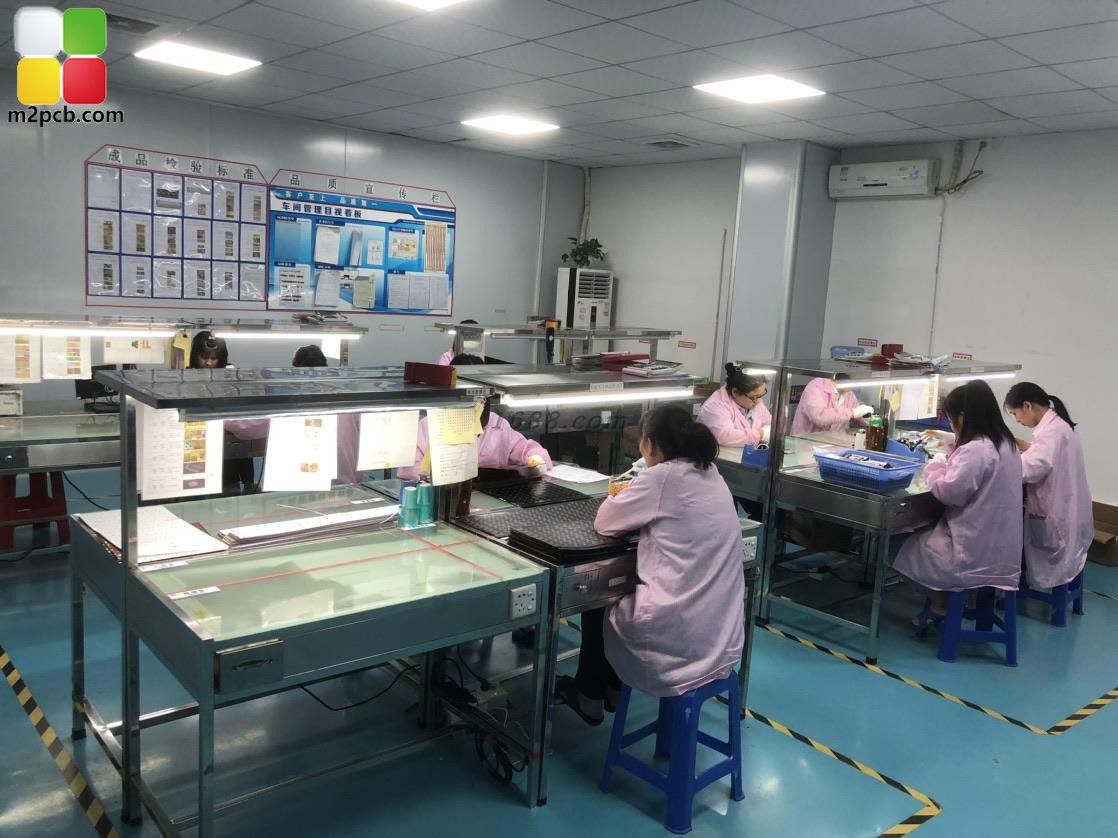
The ability to produce reliable boards under tight tolerances is fundamental. Evaluate a supplier's technical specifications and quality control infrastructure. For example, a capable supplier's quality control procedures should encompass 100% testing, Fly-probe testing, Electronic testing, and AOI (Automated Optical Inspection) testing. Technical capabilities for flexible LED PCBs, such as a maximum width of 240mm, product length of 1m or by reel, a minimum line width of 0.05mm, and 3/3mil spacing, indicate precision manufacturing. The standard test method for complex boards is the Flying Probe Test.
Case Study: Flexible PCB Solution for a Red Light Therapy Product
Client & Project: An ODM specializing in red light therapy products, based in the US, required a high-volume, reliable flexible LED PCB for a wearable therapy belt designed to relieve waist pain.
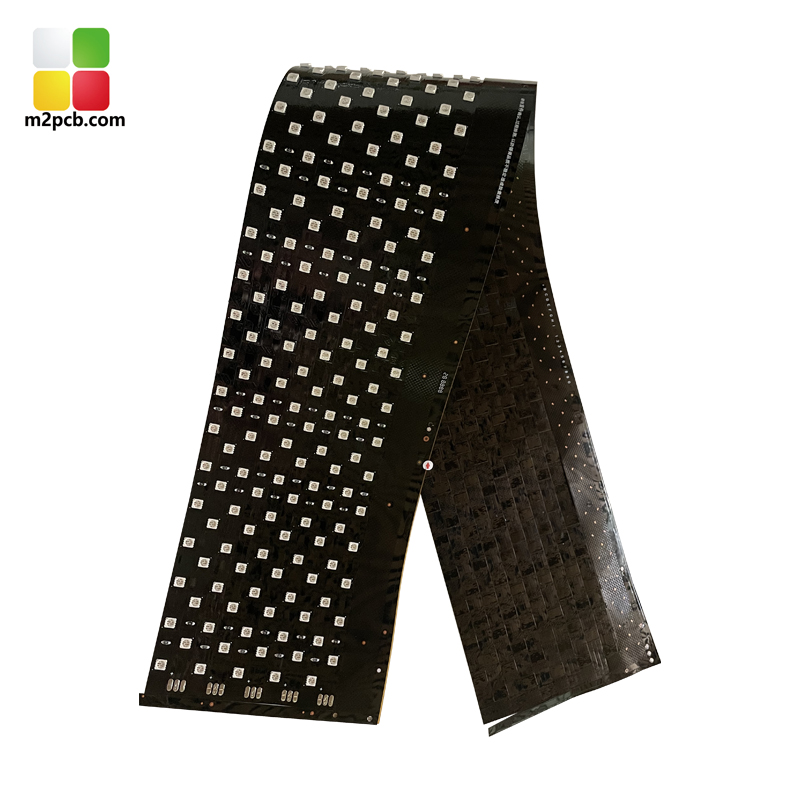
Supplier & Solution: M2PCB was engaged to provide a customized Flexible LED PCB. The product specifications included a polyimide base material suitable for repeated flexing and conformal application. The project involved a quantity of 500,000 pieces over a 2-year partnership.
Outcome & Value: The flexible PCBs were integrated into the final therapy belt. The product functioned as intended, utilizing photobiomodulation for pain relief. The client reported that the end product was highly favored in European and American markets, with satisfactory results. This case demonstrates the application of flexible LED PCBs in a physiotherapy product designed for waist pain relief, highlighting the supplier's ability to deliver on specifications for a sensitive medical-adjacent application.
Strategic Partnership and Procurement Recommendations
Establishing a successful partnership with a Flex PCB/PCBA supplier requires clear communication and strategic alignment from the outset.
1. Define Requirements with Precision
Before engaging suppliers, internally clarify all technical and regulatory requirements. Provide complete data packages: PCB fabrication requires Gerber files, while PCBA requires a detailed BOM list. Explicitly state target markets to ensure the supplier's compliance strategy (UL, RoHS, etc.) aligns.
2. Evaluate the Full Service Scope
Consider the operational efficiency of a one-stop service provider. A supplier like M2PCB, which offers services from solution design and R&D sampling to circuit board production, SMT processing, and final testing, can reduce lead times and eliminate multi-supplier coordination complexities. Verify their production capacity (e.g., monthly capacity of 40,000 square meters) and lead time ranges (e.g., 3-20 days) against your project scale.
3. Plan for Long-Term Support
Discuss post-sales support, remote technical assistance, and contingency plans upfront. For international buyers, confirm logistics terms (e.g., EXW/FOB), payment methods, and minimum order quantities (MOQ can be as low as 5 pieces for prototyping). A supplier with a global export footprint, such as to Europe, the United States, Brazil, and the Middle East, typically has experience managing international logistics and client relationships.
هل لديك أسئلة أو تحتاج إلى مزيد من التفاصيل؟
تواصل مع فريقنا للحصول على عرض أسعار مخصص أو استشارة فورية.
طلب عرض أسعار
املأ النموذج أدناه وسيتواصل معك فريقنا بعرض مقترح مخصص.
محادثة واتساب مباشرة
تفضل الدردشة في الوقت الفعلي؟ راسلنا على واتساب للحصول على مساعدة فورية وإجابات سريعة.
- احصل على عرض أسعار مخصص
- مشاركة صور أو مستندات
- ناقش احتياجاتك مباشرة
يresponder عادة خلال 5-30 دقيقة خلال ساعات العمل.