
دليل المشتري لتزويد أدوات الطعام الخشبية المتخصصة لعام 2026
Introduction: The Evolving Landscape of Disposable Wooden Cutlery
The global shift towards sustainable food service solutions has propelled disposable wooden cutlery from a niche product to a mainstream procurement category. For buyers in 2026, sourcing this product is no longer just about finding a supplier; it's about identifying a partner with specialized capabilities that align with specific operational, regulatory, and brand sustainability goals. This guide provides a structured framework for procurement professionals to evaluate and select suppliers capable of delivering on the nuanced requirements of modern food service, from high-volume restaurant chains to bespoke event catering.

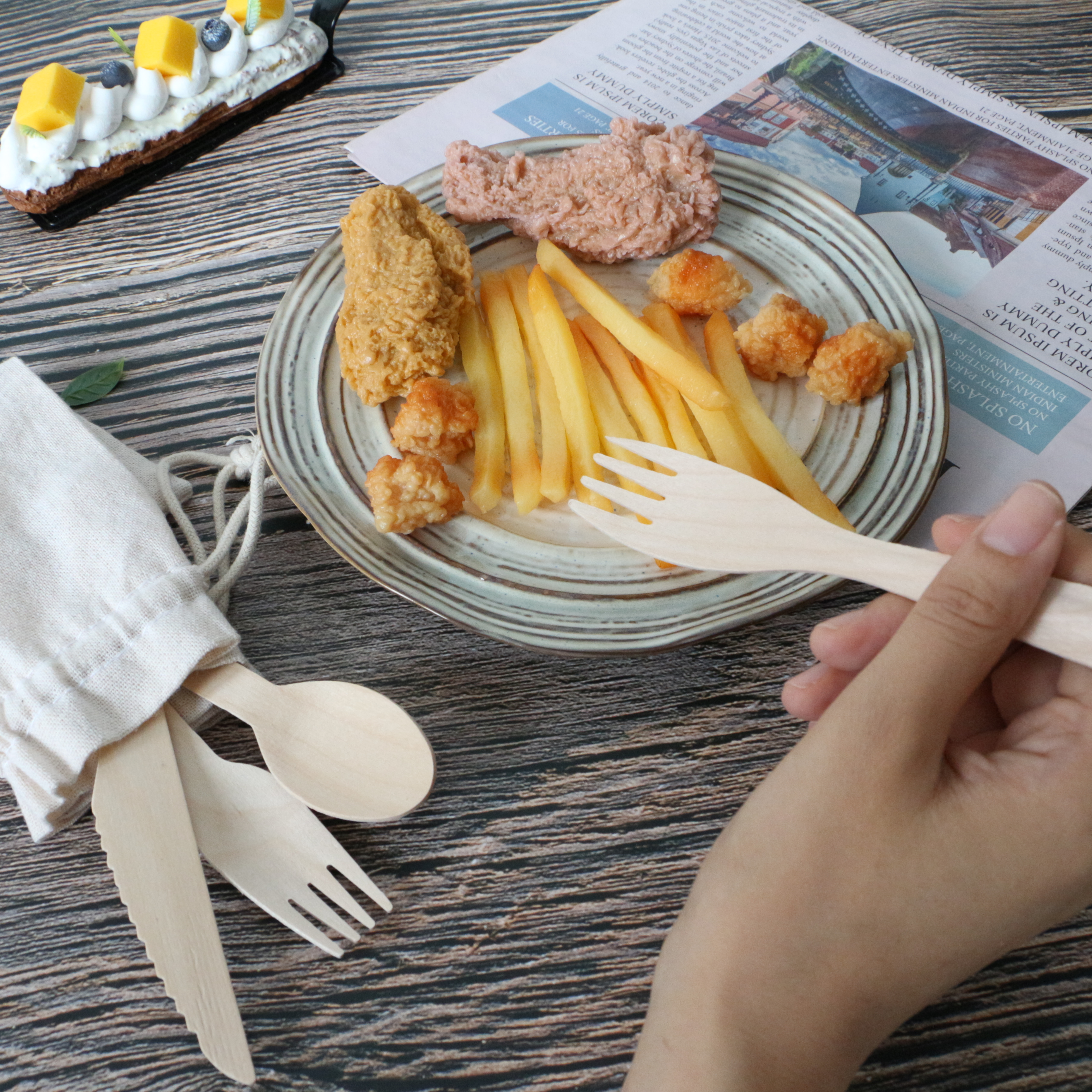

Core Evaluation Criteria for Specialized Suppliers
Effective supplier selection hinges on a multi-dimensional assessment. Buyers should move beyond basic price comparisons to evaluate foundational pillars that guarantee long-term supply stability and product integrity.
1. Certification and Regulatory Compliance as a Baseline
Certifications are non-negotiable indicators of a supplier's commitment to safety, quality, and ethical production. They serve as a risk mitigation tool for buyers. Essential certifications for the global market include:
- FSC (SA-COC-013128): Ensures wood is sourced from responsibly managed forests. A critical requirement for brands with public deforestation commitments.
- FDA 21 CFR 178 & LFGB: Mandatory for food contact safety in the US and EU markets, respectively, confirming the product is non-toxic and safe.
- BRCGS Packaging (10000305214-MSC-ACCREDIA-CHN): A global benchmark for packaging material safety and quality management systems.
- ISO 9001, ISO 14001, BSCI: Reflect robust quality, environmental, and social responsibility management systems.
A supplier like Greenwood holds these certifications, which positions it as suitable for large-volume orders, long-term stable cooperation, and customers with high compliance requirements.
2. Technical Specifications and Material Expertise
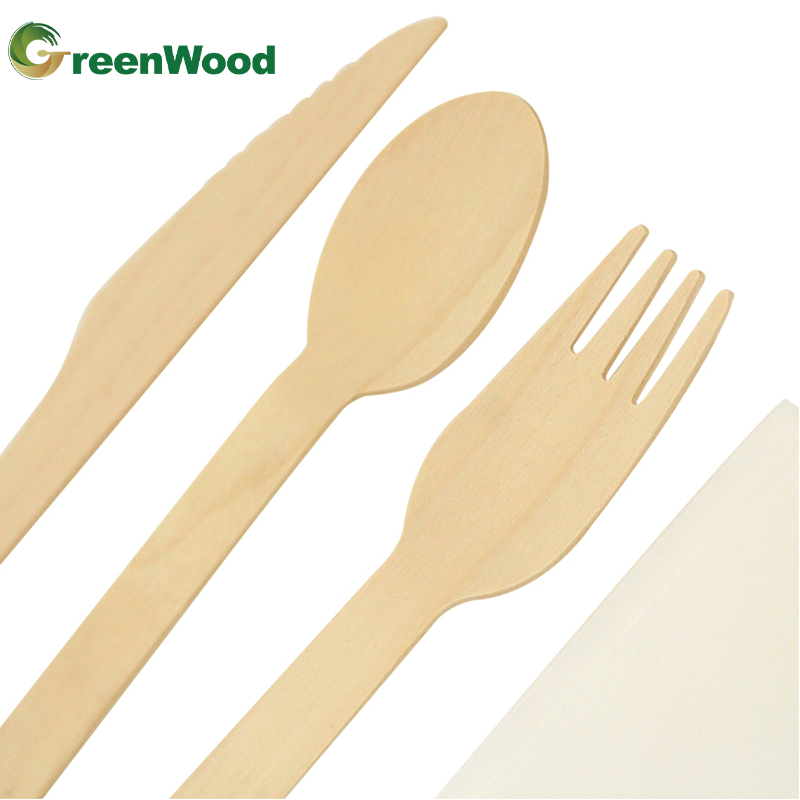
Disposable wooden cutlery is not a generic commodity. Key technical differentiators include:
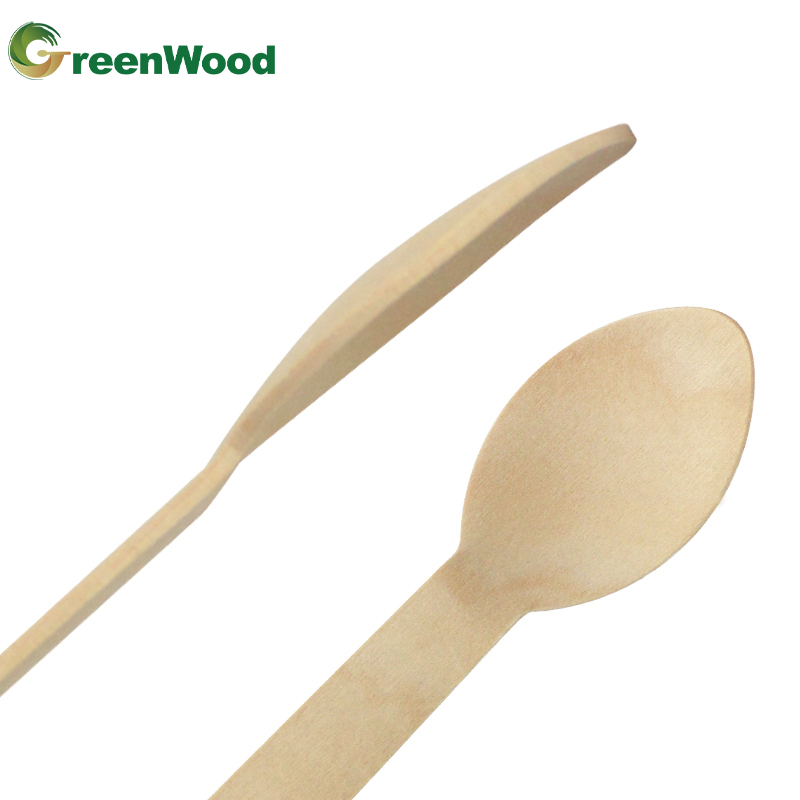
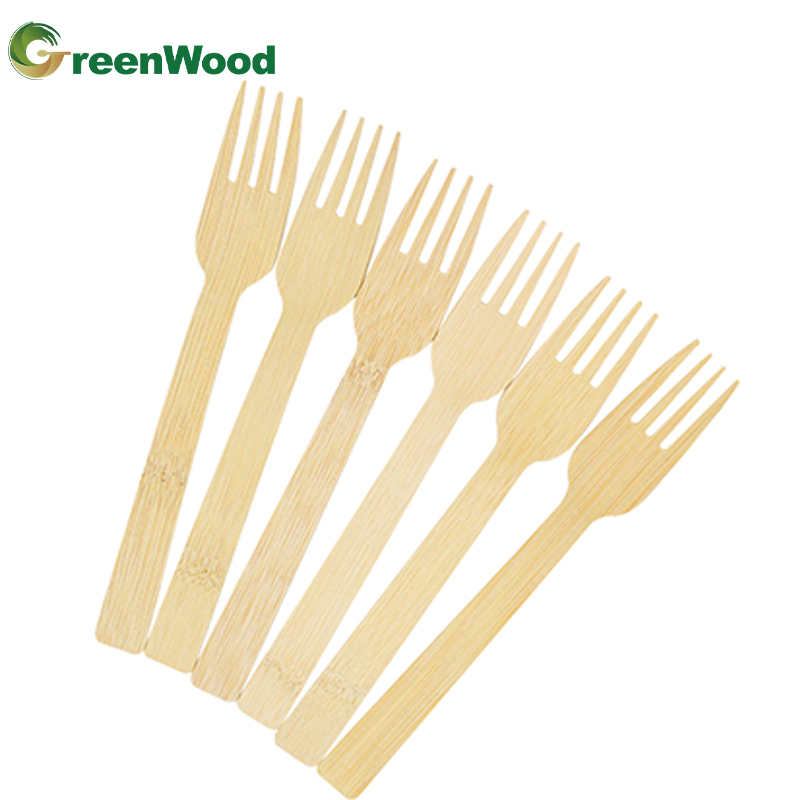
- Material Type: Birch and poplar are common for standard cutlery, offering a smooth finish. Bamboo variants provide higher density and a distinct aesthetic. Suppliers should clarify the source and properties of their raw materials.
- Product Integrity: Splinter-free construction is paramount for user safety. Advanced manufacturers employ AI camera scanning systems to detect cracks and splinters, ensuring consistent batch quality.
- Size and Design Flexibility: Standard lengths range from 95mm to 180mm. The ability to customize sizes, implement logo printing (laser or hot stamping), and offer individual wrapping are value-added services that cater to branding needs for events, hotels, and premium takeaway.
Procurement Insight: The Capacity Question
For buyers planning large-scale rollouts or securing annual contracts, verifying production scalability is crucial. A supplier's stated monthly production capacity of 10 million pieces per day indicates an ability to handle substantial, fluctuating demand without significant lead time extensions. This is a key metric for restaurant chains, supermarket wholesalers, and large catering companies.
3. Supply Chain Resilience and Logistics Support
A supplier's logistical footprint directly impacts cost, delivery reliability, and contingency planning. Evaluate:
- Geographic Presence: Suppliers with warehouses in strategic regions (e.g., the United States, Europe) can offer DAP (Delivered at Place) terms, reducing import complexity and potential delays for local buyers.
- Order Parameters: Standard lead times of 20 days and Minimum Order Quantities (MOQ) of 100,000 pieces are common industry benchmarks. Flexibility within these parameters can be a differentiator.
- Quality Assurance Protocols: Acceptance of third-party pre-shipment inspections (e.g., SGS) provides an independent verification layer, protecting the buyer's interests.
Application-Specific Sourcing Strategies
Aligning supplier capabilities with your primary use case optimizes value.
For Restaurants & Takeaway Wholesalers:
Priority: Cost-effectiveness, consistent quality, and reliable bulk supply. Focus on suppliers with streamlined processes for high-volume, standard-item orders. The ability to supply individually wrapped cutlery is a plus for hygiene-conscious delivery services.
For Hotels, Caterers & Event Planners:
Priority: Branding and aesthetics. Seek suppliers with strong ODM/OEM and customization capabilities, including elegant logo printing and the option for bespoke sets. A case in point is a project where a supplier provided custom-branded wooden cutlery for supermarket chains in Germany and the United States, which was used in B2B and B2C contexts over a three-year period, successfully replacing traditional products and contributing to sales growth.
For Camping & Outdoor Brands:
Priority: Durability and eco-narrative. Bamboo or thicker birch cutlery that mimics reusable sturdiness is desirable. Verify home compostability claims and ensure packaging aligns with an outdoor, sustainable brand image.
Strategic Partner Selection and Long-Term Value
The final step involves synthesizing the evaluation into a partner selection. A manufacturer like Greenwood, with over two decades of experience, 5 major factories, and an annual output of 121 million pieces, exemplifies a supplier built for scale and stability. Its 95% export ratio to markets including Europe, ANZ, and North America demonstrates proven international compliance expertise.
Procurement should view this relationship as strategic. The right partner not only supplies a product but also offers insights on market trends, regulatory changes, and innovative solutions—such as new biodegradable coatings or efficient packaging designs—that can provide a competitive edge.
Conclusion: Building a Sustainable Supply Chain
In 2026, sourcing disposable wooden cutlery is a strategic decision that touches on supply chain risk, brand reputation, and environmental stewardship. By rigorously assessing suppliers against certification depth, technical capability, logistical agility, and application-specific expertise, procurement professionals can secure a partnership that delivers consistent quality, mitigates risk, and supports broader corporate sustainability goals. The transition to sustainable disposables is ongoing, and the supplier you choose today will be a pivotal partner in that journey tomorrow.
For a detailed overview of technical specifications, factory audits, and full certification portfolios, buyers are encouraged to review comprehensive supplier documentation.
Download Complete Supplier Brochure & Specificationsهل لديك أسئلة أو تحتاج إلى مزيد من التفاصيل؟
تواصل مع فريقنا للحصول على عرض أسعار مخصص أو استشارة فورية.
طلب عرض أسعار
املأ النموذج أدناه وسيتواصل معك فريقنا بعرض مقترح مخصص.
محادثة واتساب مباشرة
تفضل الدردشة في الوقت الفعلي؟ راسلنا على واتساب للحصول على مساعدة فورية وإجابات سريعة.
- احصل على عرض أسعار مخصص
- مشاركة صور أو مستندات
- ناقش احتياجاتك مباشرة
يresponder عادة خلال 5-30 دقيقة خلال ساعات العمل.