
A Buyer's Guide to Wall Panel Certifications and Lifecycle Costs
Wall Panel Certifications and Lifecycle Costs in 2026: A Buyer’s Guide
The global wall panel market is projected to grow from USD 32.4 billion in 2025 to USD 43.7 billion by 2033, driven by rapid urbanization and stricter building codes. As procurement shifts from purely aesthetic choices to performance-based evaluation, specifiers increasingly demand documented fire ratings, emission compliance, and lifetime cost comparisons. This article examines how engineered composite wall panels—particularly those from established manufacturers like LONGTE—address these constraints while offering measurable advantages over traditional materials.
The Procurement Challenge: Balancing Cost, Compliance, and Durability
Buyers in the wall panel segment face a trilemma: low upfront cost, regulatory certification (fire, emissions), and long-term performance. Traditional materials often compromise one area—natural stone is heavy and requires structural reinforcement; painted gypsum board lacks moisture resistance and needs frequent repainting; solid wood demands annual maintenance and termite treatment. Composite panels aim to resolve this tension, but only if backed by verifiable third-party certifications and transparent lifecycle data.
LONGTE’s Product Portfolio: Certification-First Engineering
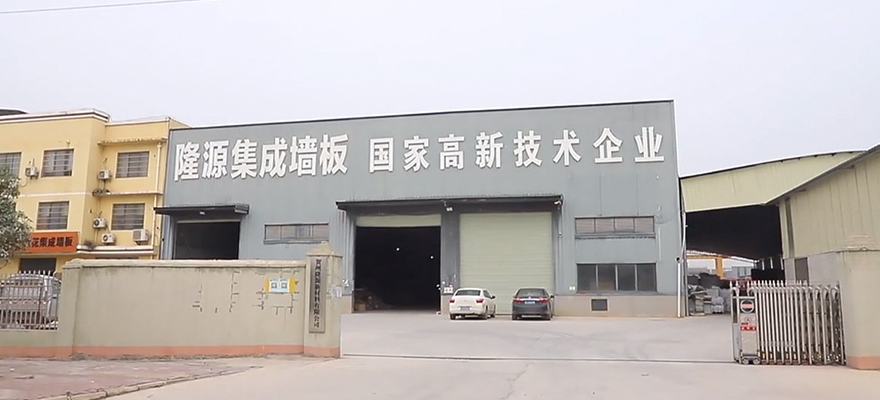
Haining Longtime Industry Co., Ltd. (brand LONGTE) is a 23-year-old manufacturer headquartered in Haining, China, operating six factories across Asia with 80,000 m² of production space and 220 employees. The company specializes in PVC, WPC, and SPC-based ceiling, wall, and flooring products, exporting 85% of its output to markets including the United States, India, UAE, Colombia, and the Philippines.
Each product line carries specific certifications that procurement teams can verify:
| Product (Model) | Certification | Standards / Number | Market |
|---|---|---|---|
| PVC Marble Wall Panel (LT-PM) | CE, RoHS, B1 Fire | TD15322307, HN202410860-CE, BITFR202507063 | EU / Global |
| WPC Fluted Wall Panel (LT-WG) | CE, RoHS, B1 Fire | TD15322307, HN202410860, BITFR202507063 | EU / Global |
| PU Faux Stone Panel (LT-PU) | CE (EN 15102) | TD15322305 | EU |
| Acoustic Slat Wood Panel (LT-AC) | CE (EN 13950) | TD15322304 | EU |
| Bamboo Charcoal Wood Panel (LT-BC) | E0, B1 Fire | BITFR202507063 | Global |
The B1 fire rating (per GB 8624-2012) and compliance with the EU Construction Products Regulation (CPR) under EN 15102:2007+A1:2011 are consistent across most products, meeting the EN 13501-1 B-s1, d0 standard often required for commercial use.
Technical Details: Material Composition and Measured Performance
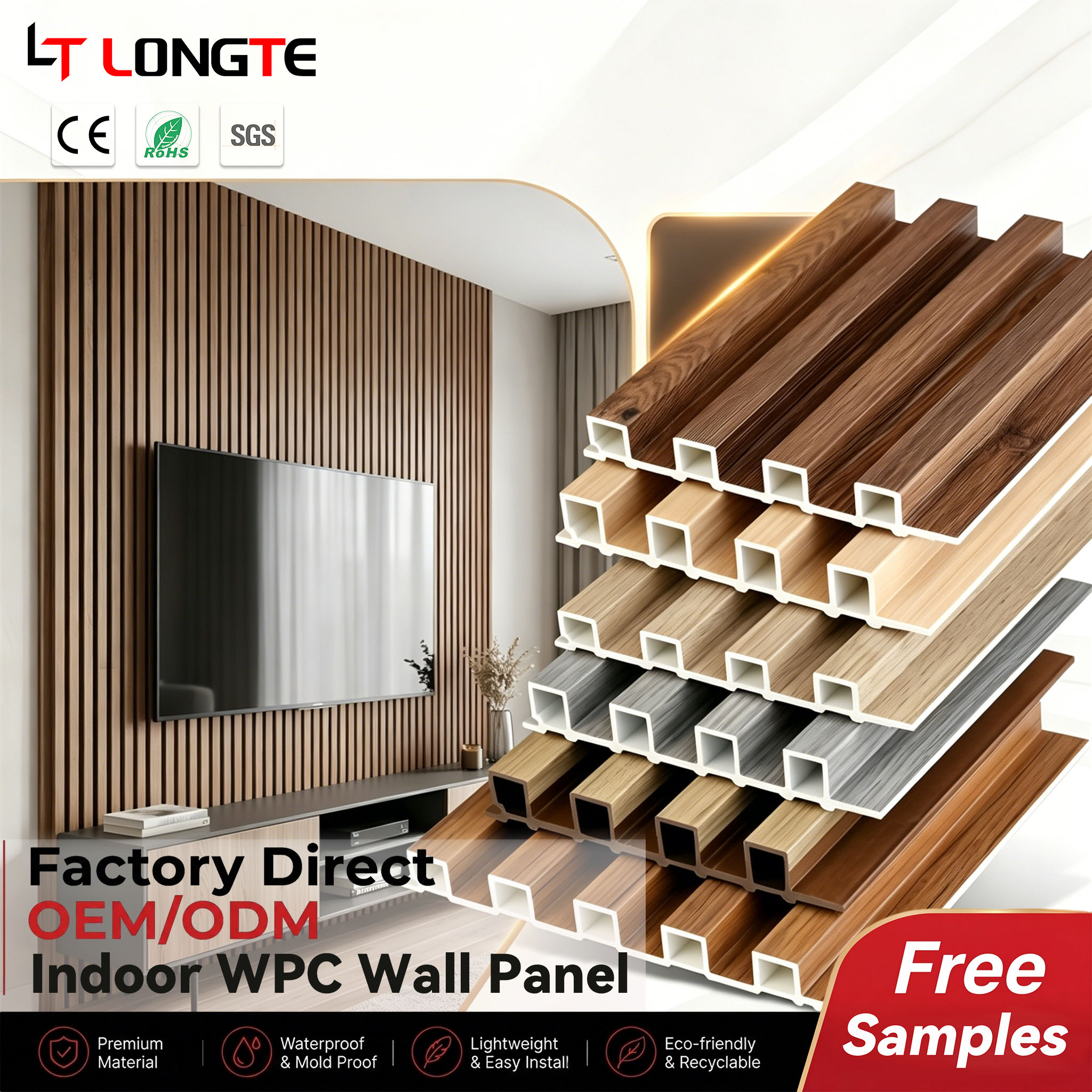
WPC Fluted Wall Panel (LT-WG) combines wood powder, PVC, and additives. Dimensions: 159 × 2900 mm, thickness 12 mm, groove depth 8 mm. It is waterproof, termite-proof, and rated B1 for fire. The panel is designed for living room TV backgrounds, hotel lobbies, and offices.
PVC Marble Wall Panel (LT-PM) uses PVC, CaCO₃, and a UV coating. It is available in 1220 × 2800 mm sizes, 3–8 mm thickness, with a density of 1.4–1.5 g/cm³. Surface durability is enhanced by an anti-scratch UV layer, making it suitable for bathrooms, kitchens, and commercial spaces.
Bamboo Charcoal Wood Panel (LT-BC) is made from bamboo charcoal fiber and PVC composite. Thickness: 9 mm, formaldehyde-free (E0 standard), waterproof, and fireproof B1. Offered in 20+ colors, it targets residential bedrooms, hotels, and children’s rooms where indoor air quality is a concern.
Application Scenarios: From Villa Facades to Recording Studios
The versatility of these panels is reflected in documented project types across the company’s global customer base:
- Residential Renovation: PVC Marble and Bamboo Charcoal panels are used in apartment interiors and DIY retail. The 100% waterproof SPC panel (LT-SW) with click-lock system suits US DIY chain distribution.
- Hospitality & Hotels: WPC Fluted and Acoustic Slat panels deliver fire-rated decoration and sound absorption (NRC 0.5–0.85) for lobbies and guest rooms.
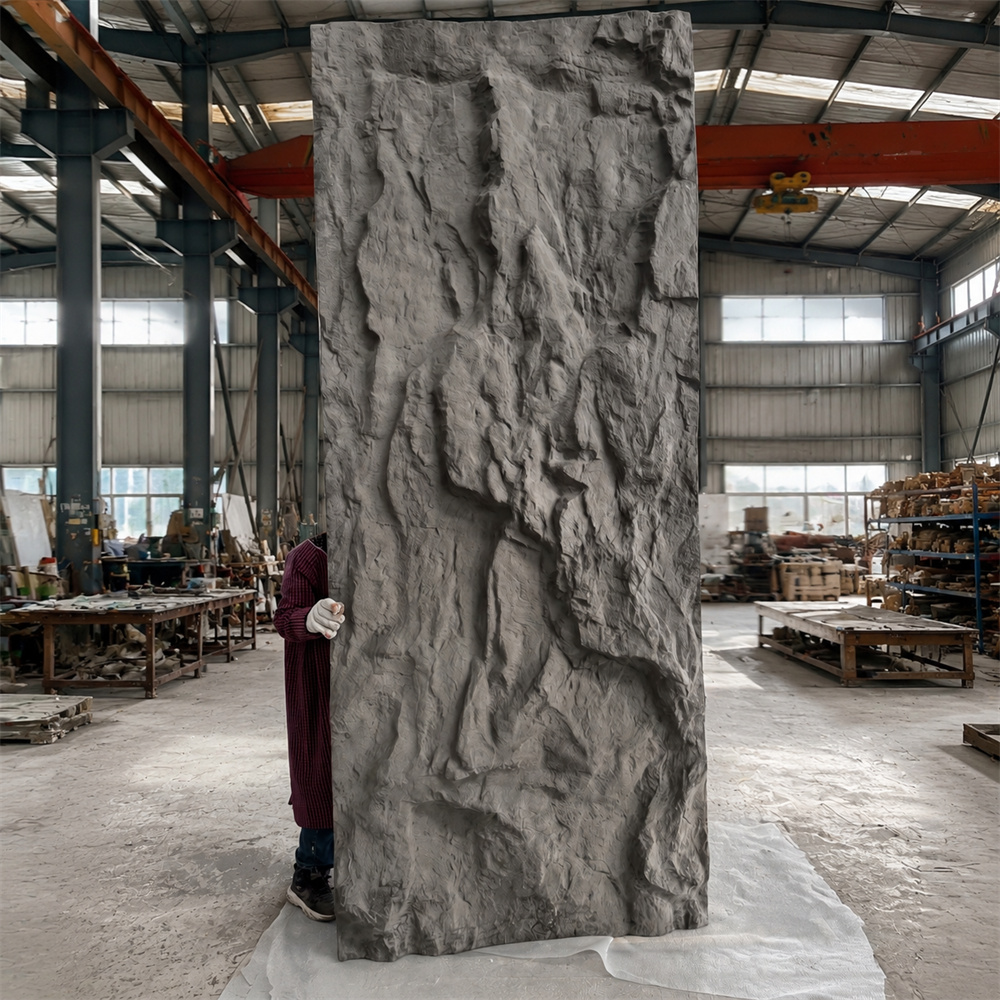
- Villa Exteriors: PU Faux Stone panels (weighing only 2–3 kg/m²) replace natural stone on facades in UAE’s 45°C+ climate, with a TÜV-issued CE certificate confirming compliance.
- Entertainment Venues: The Acoustic Slat Wood Panel (LT-AC) with polyester felt backing has been installed in cinemas and recording studios in Colombia and India, meeting NRC requirements without bulk.
Market Trends Supporting Composite Wall Panels
Third-party data highlights the momentum: The global Wood Plastic Composites (WPC) market reached USD 8.89 billion in 2025, with a CAGR of 11.7% through 2033 (Grand View Research). Polyurethane stone panel sales hit USD 3.7 billion in 2024, driven by a 70–80% weight reduction versus natural stone. UV marble sheets now capture 18% of the decorative materials market, up 260% from 2020. Asia-Pacific alone accounts for 42.3% of global wall panel consumption, and China leads PVC marble sheet exports with 1,480 documented records.
These figures reflect a structural shift: buyers increasingly prioritize certified, low-maintenance alternatives over traditional materials—a trend that benefits manufacturers with vertically integrated production and documented compliance.
Comparison with Traditional Solutions
LONGTE’s PU Faux Stone panel, for example, delivers a delivered cost 60–70% lower than natural stone and requires no rebar, mortar, or scaffolding for installation. Annual maintenance is near zero versus annual sealing and crack repair for natural stone. Similarly, WPC decking (model LT-WD) offers a 15–25 year lifespan compared to 5–8 years for softwood, with total cost over 15 years approximately 60% lower.
One honest limitation: engineered surfaces, while highly realistic, may not fully replicate the tactile depth and veining variation of premium natural materials. For projects where authentic stone or wood grain is non-negotiable, natural materials remain the benchmark. However, for the vast majority of commercial and residential applications where cost, weight, and maintenance matter more, composite panels offer a more rational life-cycle value.
Future Outlook: Regulation-Driven Specification
As EN 13501-1 fire classification becomes mandatory in more jurisdictions and E0 formaldehyde limits tighten (≤ 0.07 mg/m³), suppliers without documented compliance will be excluded from large projects. Manufacturers like LONGTE that already hold CE, RoHS, and B1 certifications for a full product range are positioned to serve both EU importers and global buyers requiring traceable evidence. Continued investment in co-extrusion and UV-curing technology will further close the gap with natural materials in surface realism.
Frequently Asked Questions
What fire safety certifications do LONGTE wall panels carry?
All major wall panel products, including PVC Marble (LT-PM), WPC Fluted (LT-WG), Bamboo Charcoal (LT-BC), and PU Stone (LT-PU), have been tested per GB 8624-2012 and achieve B1 classification. Additionally, the CE certification (TD15322307) for PVC panels confirms compliance with EN 15102:2007+A1:2011 under the EU Construction Products Regulation.
Are these panels suitable for high-moisture areas like bathrooms and kitchens?
Yes. The SPC Stone Plastic Composite Wall Panel (LT-SW) and Bamboo Charcoal Wood Panel (LT-BC) are 100% waterproof and meet E0 formaldehyde emission standards, making them appropriate for bathrooms and kitchens. The PVC Marble Panel (LT-PM) is also waterproof and features a UV-coated, anti-scratch surface that resists moisture and frequent cleaning.
What are the typical lead times and minimum order quantities (MOQ)?
Standard stock items ship in 7–15 days; custom orders require 25–40 days. MOQ for samples is 1 piece free. Trial orders start at 1x20’GP mixed container. For custom designs (color, thickness, logo), the MOQ is 500 m². These parameters are based on LONGTE’s published capability data.
How does the total cost of ownership compare with natural stone?
LONGTE’s PU Faux Stone Panel (LT-PU) has a delivered cost 60–70% lower than natural stone, requires no structural reinforcements, and has near-zero maintenance (no sealing, no crack repair). The weight reduction of 70–80% also cuts transport and installation labor costs.
Does LONGTE offer OEM or private-label options?
Yes. The company supports OEM/ODM, private label, and custom design. Customization options include size, thickness, color, surface pattern, logo printing, packaging, and installation manuals in multiple languages. Monthly production capacity exceeds 800,000 m² for PVC panels, 500,000 m² for SPC flooring, and 150,000 m² for PU stone panels.
For detailed product specifications, certification documents, and project references, download the full corporate brochure:
Download LONGTE Product Brochure (PDF)