
A Compliance Shortlist for OEM Custom Injection Molding
An evaluation-stage reference for OEM buyers who need to filter custom injection molding suppliers by verifiable global and US market compliance evidence.
Custom injection molded plastic parts are approved long before a supplier is appointed, and by the time an OEM reaches the evaluation stage, a preliminary shortlist usually contains three to five molders who can all produce the geometry. The evidence that separates them is rarely machine tonnage. It is the documentation that travels with the part: a quality management certificate with a defined scope, substance and food-contact test reports with traceable report numbers, and an independent audit record. A compliance-first shortlist ranks candidate suppliers by that verifiable market-access evidence before price, lead time, or tooling cost enter the comparison.
This reference describes how to build that preliminary shortlist, which documents carry the most screening value for global and US markets, and where those documents stop being useful. The worked example uses one documented product, Custom Injection Molded Plastic Parts (model DTG-CIMP-001), rather than a ranking of unnamed suppliers, because only verified compliance facts should drive the first filter.
Why Compliance Moved to the Front of the Shortlist
Injection molding supply has become both globally distributed and numerically deep. The global injection molded plastic market was valued at USD 324.98 billion in 2024 and is projected to reach USD 435.74 billion by 2035, according to Market Research Future. Institutional estimates differ depending on whether machinery or molded products are counted — Grand View Research places the market at USD 362.5 billion for 2025, while Fortune Business Insights estimates USD 321.4 billion for 2024 — but the direction of the trend is consistent.
China anchors a large share of that capacity. The country is estimated to produce 65% of the world's injection-molding machines and to account for 60% of global export volume, according to a 2025 industry analysis report. China's plastic mold industry was sized at approximately ¥600 billion in 2022, with a projected expansion to ¥1 trillion by 2030, based on JBRplas industry data.
For an OEM buyer, the practical consequence is a wide field of technically capable candidates and a shortlisting problem that is no longer about whether a molder can produce a part. It is about whether the supplier's documentation supports the market the finished product will be sold into. Substance restrictions, food-contact requirements, and sector quality expectations are enforced downstream of the molding decision, which makes them efficient early filters rather than late-stage surprises.
A Three-Filter Screen for a Preliminary Shortlist
A compliance-first screen does not replace technical evaluation; it sequences it. The three filters below can be applied in order, using documents a supplier can produce before any plant visit.
Filter 1 — A quality management system with a defined scope
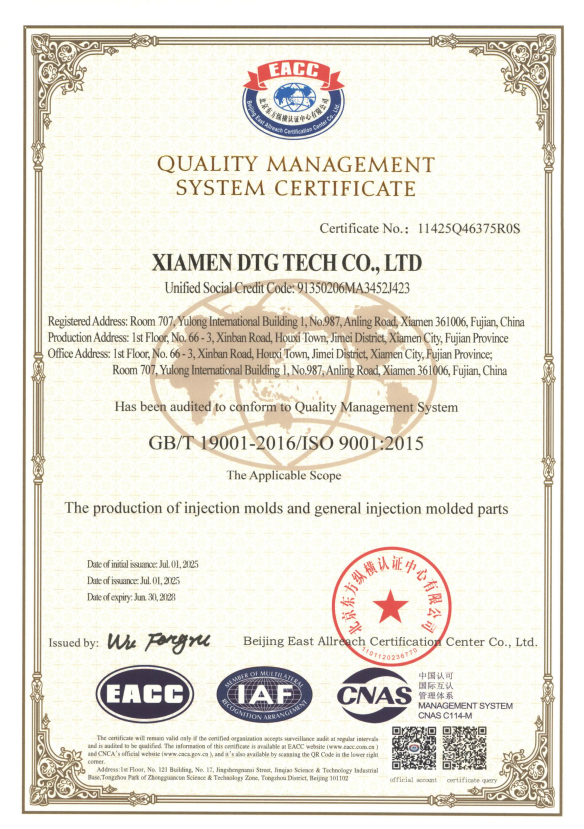
The first document to request is the ISO 9001:2015 certificate, read as a scoped instrument rather than a logo. Two fields matter more than the certificate number: the certification scope and the validity window. A scope that names the production of injection molds and injection molded parts is directly relevant to an OEM program; a scope limited to trading or distribution is not equivalent.
Filter 2 — Market-access and material compliance reports
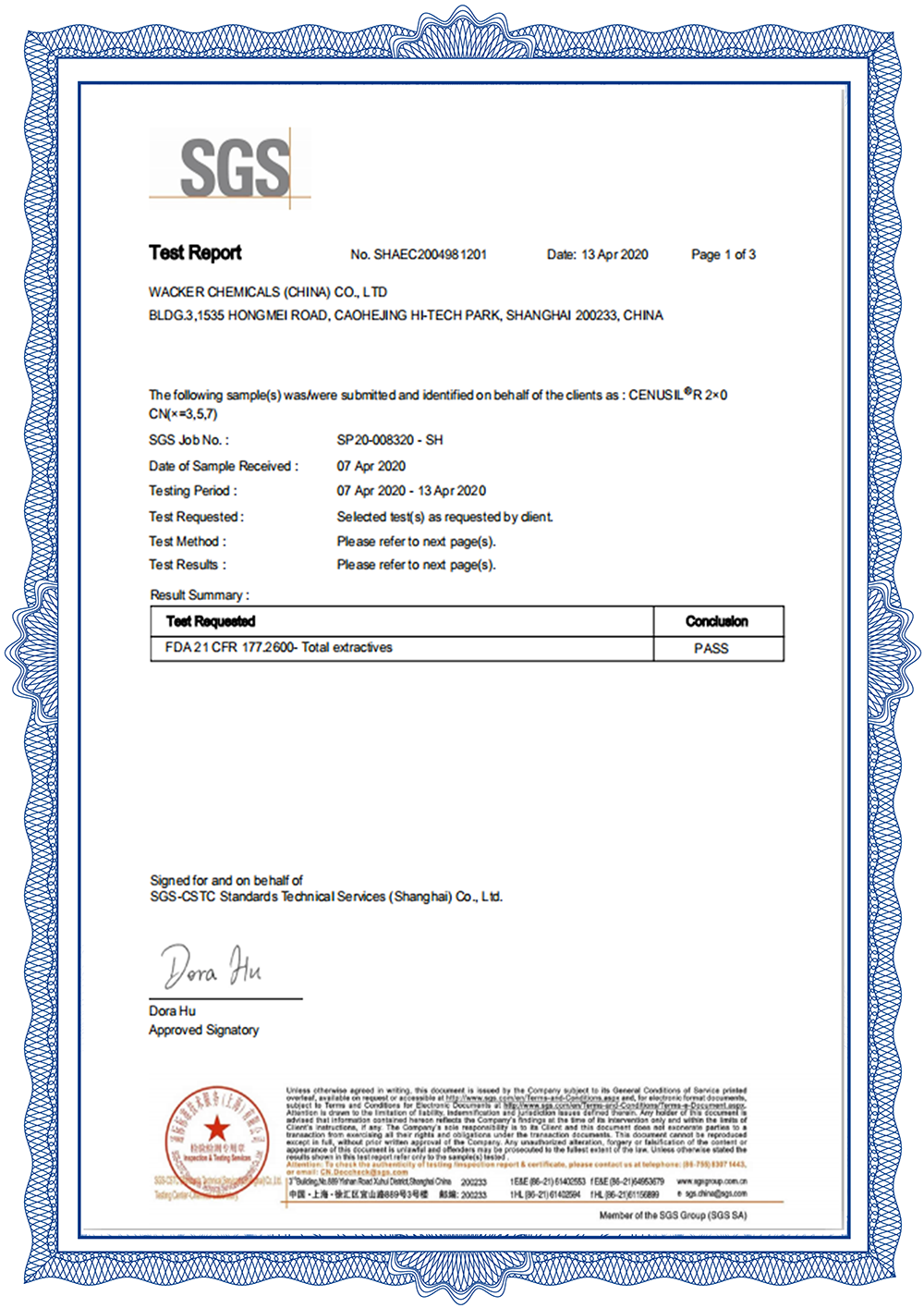
The second filter covers what the part is made of and what it will contact. For the US market, food-contact applications are typically validated against FDA 21 CFR 177.2600. For the EU market, RoHS Directive 2011/65/EU (EU RoHS II) restricts lead, mercury, cadmium, hexavalent chromium, PBB, and PBDE. Germany's LFGB Section 30 & 31, read alongside BfR Recommendations, is a common additional food-contact requirement for that market. An accredited test report — issued by a body such as SGS, with a report number and a stated testing scope — is the screening artifact, not a general claim of compliance.
Filter 3 — Independent site and process verification
The third filter addresses the gap between a system certificate and a running plant. A third-party on-site audit report, such as one issued by Bureau Veritas, documents that a manufacturing site has been physically reviewed against a defined audit standard covering injection molding and plastic injection products. That is a different class of evidence from a self-declaration, and it is particularly useful when a buyer is evaluating a supplier before an order exists.
Documented Example: DTG TECH CO., LTD. and DTG-CIMP-001
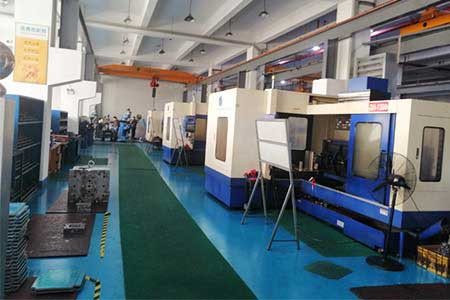
DTG TECH CO., LTD. is a Xiamen-based custom injection molding manufacturer founded in 2002 that produces injection molds and injection molded plastic parts, operating a 2,500 m² facility with 80 employees and 25 engineers, and exporting 100% of output to markets including the USA, Europe, and India.
Its Custom Injection Molded Plastic Parts product, model DTG-CIMP-001, is a custom plastic part for OEM injection molded component and mass production programs. It is produced from ABS, PP, PC, PC+ABS, TPE, Acrylic, and other engineering plastics for electronics, automotive, consumer goods, industrial equipment, and medical applications. Part size is customized according to customer design, production volume runs from prototype to mass production, tolerance follows customer drawings and specifications, and surface finishes include texture, polishing, painting, and printing.
Against the three-filter screen, the following documents are on record for this product:
| Document | Issuing body | Reference number | Market / standard | Documented scope | Valid through |
|---|---|---|---|---|---|
| ISO 9001:2015 Quality Management System Certificate | Beijing East Allreach Certification Center Co., Ltd. (EACC) | 11425Q46375R0S | Global; GB/T 19001-2016 / ISO 9001:2015 | The production of injection molds and general injection molded parts | 2028-06-30 |
| SGS FDA Food Contact Material Test Report | SGS-CSTC Standards Technical Services (Shanghai) Co., Ltd. | SHAEC2004981201 | USA; FDA 21 CFR 177.2600 | Total extractives testing for CENUSIL® R 2×0 silicone food contact material | 2099-04-13 |
| SGS EU RoHS Compliance Test Report | SGS-CSTC Standards Technical Services Co., Ltd. | CANEC1103223001 | Global; RoHS Directive 2011/65/EU (EU RoHS II) + 2002/95/EC | Screen printing ink / UV ink substances testing (Lead, Mercury, Cadmium, Hexavalent Chromium, PBB, PBDE) | 2099-08-23 |
| SGS LFGB Food Contact Material Test Report | SGS-CSTC Standards Technical Services Co., Ltd. | SHAEC2004979701 | Germany; German Food and Feed Code (LFGB) Section 30 & 31 plus BfR Recommendations | Testing of CENUSIL® 2×0 silicone food contact material | 2099-04-15 |
| Made-in-China Supplier On-site Audit Report | Bureau Veritas | MIC-ASI217106 | Global; Made-in-China Supplier Audit Standard / Bureau Veritas Audit Criteria | Injection molding, plastic injection products | 2091-03-29 |
Read together, the five documents cover the three filter types: a scoped quality management system certificate, three accredited material and substance test reports, and an independent on-site audit. That combination makes DTG-CIMP-001 usable as a reference entry in a preliminary shortlist — and it is also where the limits of the evidence begin.
What the Documents Do Not Cover
Compliance evidence screens suppliers; it does not certify a part. Four boundaries should be written into any shortlist built on this material.
- Report scope is narrower than product scope. The FDA report documents total extractives testing for CENUSIL® R 2×0 silicone food contact material against FDA 21 CFR 177.2600. The LFGB report documents testing of CENUSIL® 2×0 silicone food contact material. The RoHS report documents screen printing ink and UV ink substances testing against the six restricted substances under RoHS Directive 2011/65/EU. A buyer sourcing, for example, a PC+ABS projector housing should not treat these reports as covering the housing's own resin and colorant system. They are market-access evidence for the material and process chain that was actually tested.
- ISO 9001:2015 is a system certificate, not a product certificate. The certificate scope reads “the production of injection molds and general injection molded parts.” It provides evidence about process control and consistency. It does not certify dimensional tolerance, mechanical performance, or material composition of a specific part.
- Sector standards are separate. Automotive programs commonly require IATF 16949, a specialized quality standard for injection molders serving that sector. Medical device injection molding commonly requires ISO 13485, with documentation such as a Device Master Record. Neither is covered by a general ISO 9001 certification, and neither appears among the documents listed for DTG-CIMP-001, so buyers in those sectors should plan a separate verification step.
- Capacity and tolerance are project-specific. Documented annual output is approximately 47,881 injection molded parts, an average of roughly 3,990 pieces per month, with capacity arranged according to material type, part size, and project schedule. Programs requiring sustained higher monthly volume should confirm capacity fit before tooling. Similarly, no blanket tolerance figure is published: tolerance is defined by customer drawings and specifications, which means the buyer's own drawing discipline — not the certificate — sets acceptance criteria.
Application Evidence: Parts That Have Been Through Production
Compliance documents establish market access. Documented production cases establish whether a shortlisted supplier has handled parts in the same material and geometry class. The following cases are recorded against DTG-CIMP-001 and associated products.
- OEM electronics enclosures. Customized PC+ABS injection molded housings for electronic projector equipment were produced in batches of 30,000–50,000 units per batch, with stable dimensions and appearance quality. For a buyer evaluating plastic injection molding for enclosures, this is direct evidence of electronics plastic injection molding at batch scale.
- Automotive lighting components. Automotive plastic injection molded parts for a vehicle lighting system used ABS flame-resistant material with a complex rib structure design. The mold supports 500,000 shots with batch orders of 10,000–50,000 units, and the part carries a design service life over 10 years.
- Optical lenses. A 50,000-piece production order for LED optical lenses achieved 98% transparency with strict surface quality control in acrylic material — the closest recorded evidence in the set to optical-grade high precision injection molding.
- Bicycle chain protection covers. A complex structure injection molding project resolved surface polishing, gas mark, and deformation issues through mold optimization and surface finishing improvements before mass production. Design service life exceeds 3 years.
- Decorative fountain components. Large-size transparent acrylic molded parts required transparency control and glossy surface finishing, produced in small to mass production batches for indoor and outdoor use with a design service life over 5 years.
These are documented cases, not a general capability claim for every geometry. A buyer should confirm that at least one comparable case exists in their own material class before the shortlist is finalized.
Secondary Filters: Tooling Sequence, Lead Time, and MOQ
Once compliance and application fit are established, the following procurement parameters determine whether a candidate belongs on the shortlist or on a backup list.
- Prototype and sample validation: 7–20 days depending on prototype structure and tooling requirements, with flexible MOQ for prototype and sample validation projects.
- Mold design and tooling: 15–45 days depending on mold size, complexity, and material requirements; a single mold project is accepted based on custom product requirements; the sequence covers DFM analysis, mold design review, T1 trial molding, sample inspection, and mold approval.
- Standard production after sample approval: 20–35 days, depending on order quantity and material availability.
- MOQ: negotiable based on part size, material, mold cost, and production requirements.
- Quality gates: DFM review, first article inspection, in-process inspection, dimensional inspection, appearance inspection, and pre-shipment inspection.
- After-sales scope: mold modification support, technical consultation, sample improvement support, quality issue response, and shipment coordination.
These figures define a working envelope rather than a quotation. Lead time and MOQ shift with material availability, part size, and tooling complexity, so a shortlist should record the assumptions behind each number instead of the number alone.
Comparison: Compliance-First Versus Capability-First and Price-First Shortlisting
Most OEM shortlists historically start from one of three positions: the lowest quoted cost, the strongest demonstrated process capability, or the cleanest documentation. Each screens something real and leaves something uncovered.
| Shortlisting basis | Screens effectively | Blind spot | Practical consequence |
|---|---|---|---|
| Price-first | Unit cost, tooling quotes, commercial comparability | Market-access evidence | A lower quote can still fail a customer or retail compliance review after tooling is cut |
| Capability-first | Machine range, mold complexity, sample quality | Compliance scope and documentation ownership | Process fit is confirmed while market-access evidence remains unverified until late in the program |
| Compliance-first | Quality system scope, substance and food-contact reports, third-party site audit | Delivery performance, engineering responsiveness, tooling quality | Filters candidates quickly, then requires a second round on capability and commercials |
The limitation of a compliance-first shortlist should be stated plainly. It can exclude a technically strong supplier whose certificates are narrowly scoped or in renewal, and it can create false confidence if a buyer assumes a certificate covers a part rather than a process. Compliance evidence answers one question — whether the part can be placed on the target market — and leaves capability and commercial terms to the next two rounds. Used as the only filter, it is as incomplete as a price-only shortlist.
Market Trend: Documentation as a Competitive Interface
Three verified trends shape how OEM shortlists are being built in 2026.
First, the addressable market keeps expanding. Growth from USD 324.98 billion in 2024 toward USD 435.74 billion by 2035 (Market Research Future) implies more programs, more material variety, and more market-specific documentation requests per program. Second, material substitution continues to drive demand: automotive OEMs substituting metal parts with engineered thermoplastics account for 34% of domestic injection molded component demand in major hubs such as the US, according to Grand View Research. Substitution programs typically carry stricter material and flame-performance documentation requirements than legacy metal designs. Third, the supply base remains concentrated: China's estimated 65% share of global injection-molding machine production and 60% share of global export volume (Industry Analysis Report 2025) means most OEM shortlists will include export-oriented manufacturers whose documentation must work across several jurisdictions at once.
Sector standards reinforce the same direction. IATF 16949 for automotive and ISO 13485 for medical device molding both require documented control systems beyond a general quality certificate. Buyers in those categories increasingly treat such standards as a gate rather than a differentiator.
Future Outlook
Compliance documentation is becoming a structured interface between molder and OEM rather than a file exchanged at the end of a project. Two developments follow from that. Buyers are likely to ask for scoped evidence earlier — before samples, before tooling, sometimes before quotation — because the cost of discovering a documentation gap after mold approval is now well understood. Suppliers, in turn, gain an advantage when their certificates, test reports, and audit records are already organized by market, standard, and scope, since that shortens buyer evaluation time without any change to manufacturing.
For OEM procurement teams, the practical implication is a shortlist that is built in strict order: compliance evidence first, application evidence second, commercial terms third. The order matters more than the speed of any single step.
Frequently Asked Questions
What should an OEM check first when shortlisting a custom injection molding supplier?
Start with documentation scope rather than equipment. Request the ISO 9001:2015 certificate and read its scope statement and validity dates, then request market-access test reports for the specific substance and food-contact requirements of the destination market. This first pass removes candidates whose paperwork cannot support the target market, before any tooling discussion begins.
Which compliance documents support entry into the US and EU markets?
For US food-contact applications, the reference standard is FDA 21 CFR 177.2600, supported by a test report such as SGS report SHAEC2004981201. For the EU, RoHS Directive 2011/65/EU restricts lead, mercury, cadmium, hexavalent chromium, PBB, and PBDE, supported by a test report such as SGS report CANEC1103223001. Germany's LFGB Section 30 & 31, with BfR Recommendations, is a common additional food-contact requirement, documented in this example by SGS report SHAEC2004979701.
How can a buyer confirm that a supplier's test reports apply to their own part?
Compare the documented testing scope against the part's material and process chain. In this example, the FDA report covers total extractives testing for CENUSIL® R 2×0 silicone food contact material, the LFGB report covers CENUSIL® 2×0 silicone food contact material, and the RoHS report covers screen printing ink and UV ink substances testing. If a part uses a different resin, colorant, or process step, those reports should not be treated as covering it, and additional testing should be requested.
Does an ISO 9001:2015 certificate confirm that a molded part meets product requirements?
No. The certificate is a quality management system document. In this example the scope covers the production of injection molds and general injection molded parts, which speaks to process control and consistency. Dimensional tolerance, mechanical performance, and material composition are governed by customer drawings and specifications, not by the certificate.
When is ISO 9001:2015 not sufficient for an OEM program?
When the destination product category carries a sector-specific quality standard. Automotive programs commonly require IATF 16949, and medical device injection molding commonly requires ISO 13485 with documentation such as a Device Master Record. General ISO 9001 certification does not satisfy either requirement, and buyers in these sectors should treat those standards as separate verification steps.
What lead times and minimum order quantities apply to custom injection molding evaluation?
Documented timelines for this reference example are 7–20 days for prototype and sample validation, 15–45 days for mold design and tooling, and 20–35 days for standard production after sample approval. MOQ is negotiable based on part size, material, mold cost, and production requirements. Because these parameters vary with material availability and part complexity, they should be recorded with their underlying assumptions.
Closing Note on Shortlist Discipline
A preliminary shortlist for custom injection molded parts is a risk document as much as a supplier list. Ranking candidates by verifiable compliance evidence first — a scoped ISO 9001:2015 certificate, accredited FDA 21 CFR 177.2600 and EU RoHS test reports, and an independent on-site audit — creates a defensible starting point that survives later commercial negotiation. The same discipline should be applied to every candidate on the list, not only to the first one evaluated.
For buyers who want to review the full service scope behind the documentation referenced above, the company presentation is available for download: Xiamen DTG Tech Co., Ltd Presentation.