
دليل شامل للمشترين: تقييم واختيار موردي الإضاءة الخارجية LED
Introduction: The Critical Importance of Supplier Selection in LED Outdoor Lighting
The global market for LED outdoor lighting is projected to grow significantly, driven by energy efficiency mandates, smart city initiatives, and the global push for sustainable infrastructure. For procurement professionals, contractors, and project developers, selecting the right supplier is not merely a purchasing decision; it is a strategic investment in project longevity, operational cost savings, and compliance. An unreliable supplier can lead to project delays, cost overruns, and long-term maintenance headaches. This guide provides a structured, multi-dimensional framework to help buyers systematically evaluate and select a qualified LED outdoor lighting supplier.
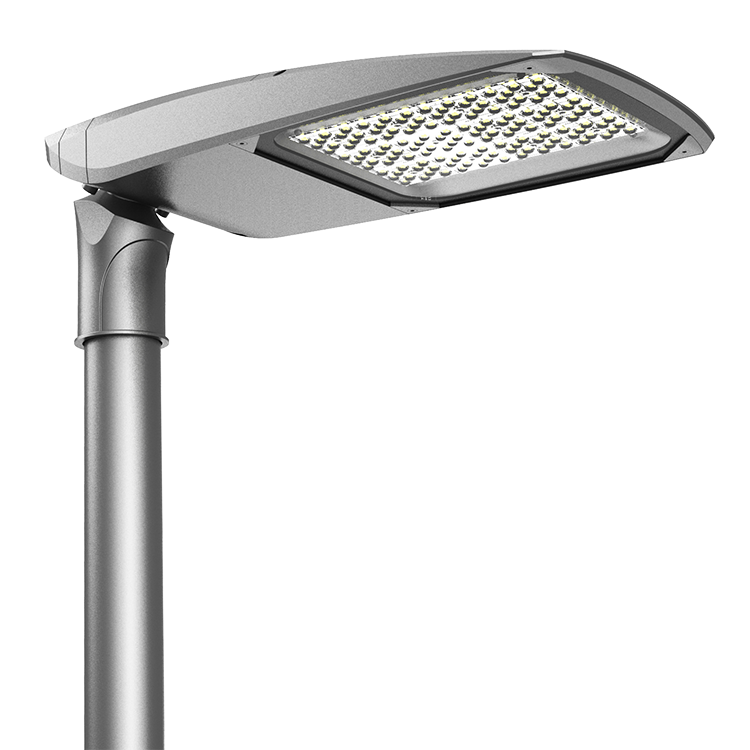
Example of a professional LED street light installation, requiring durable and efficient products from a reliable supplier.
Core Evaluation Criteria for LED Lighting Suppliers
Moving beyond basic price comparisons, a thorough evaluation should encompass the following key areas:
1. Technical Capability and Product Portfolio
A supplier's technical depth is reflected in their product range, specifications, and ability to meet specific project needs. Look for a portfolio that covers your required applications.
- Product Range & Specialization: Does the supplier offer products for your specific application (e.g., LED roadway light, solar street light, stadium flood light, high mast LED light for ports, or industrial outdoor LED light)? A broad portfolio indicates wider experience.
- Key Performance Specifications: Scrutinize datasheets for critical parameters:
Parameter Industry Benchmark What to Look For Luminous Efficacy (lm/W) 150-200 lm/W Higher efficacy means better energy savings. E.g., products with efficacy up to 210 lm/W for solar lights or 200 lm/W for flood lights. Ingress Protection (IP Rating) IP65 (Outdoor), IP66/67 (Harsh) IP66 is standard for dust-tight and powerful water jet protection, crucial for outdoor LED street light and seaport lighting. Impact Protection (IK Rating) IK08/IK10 IK10 offers protection against 20 joules of impact (EN 62262), important for heavy duty LED lighting in public areas. Correlated Color Temperature (CCT) 3000K-5000K Adjustable or selectable CCT (e.g., 2700K-6500K) offers flexibility for different environments. Warranty 5 years A standard 5-year warranty on products and drivers signals confidence in product longevity. - Certifications & Compliance: Essential certifications include UL/cUL for North America, CE for Europe, TUV, and DLC for utility rebates. Management system certifications like ISO 9001 (Quality), ISO 14001 (Environmental), and ISO 45001 (Occupational Health) indicate a mature, process-driven organization.
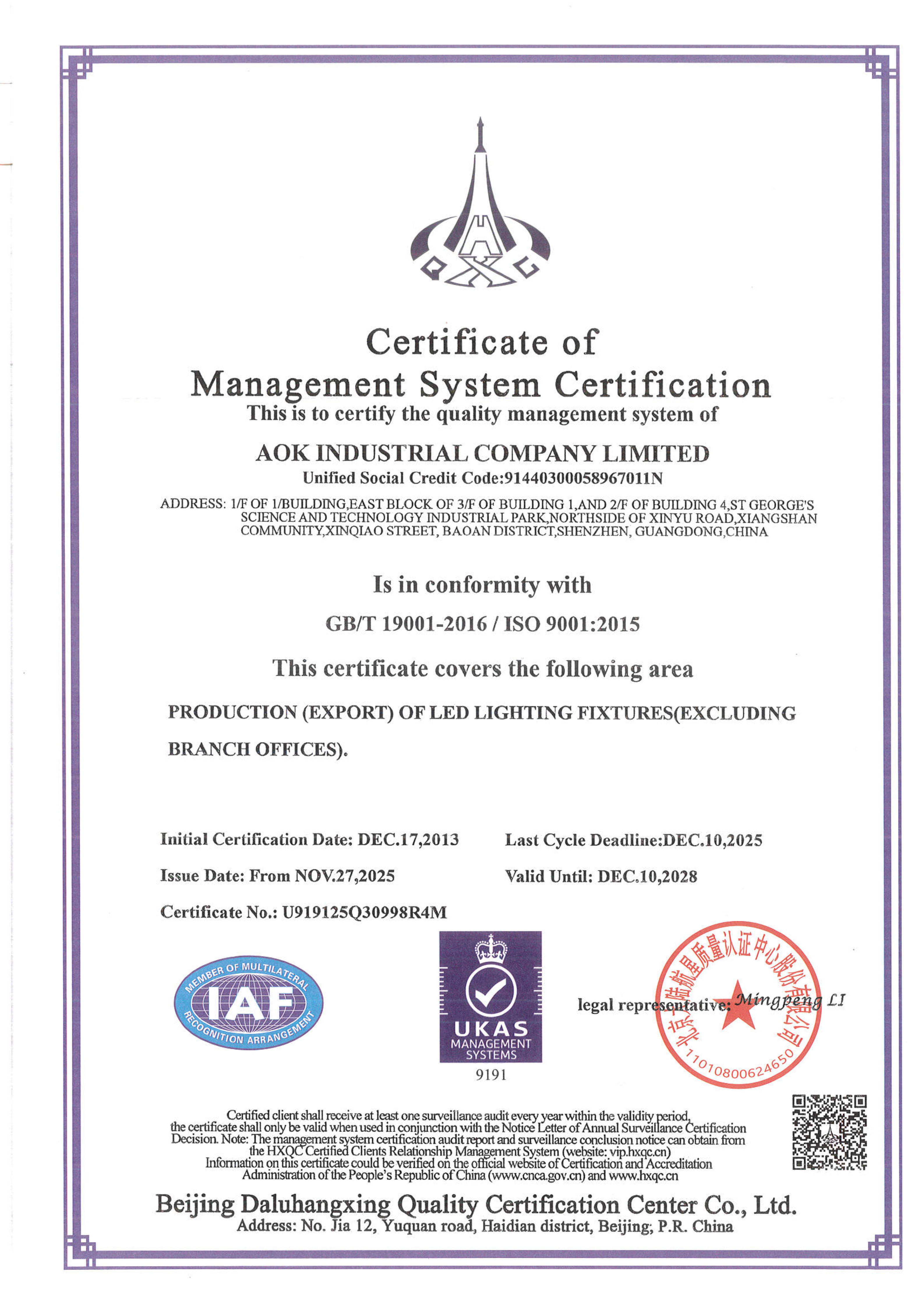
Example of a Quality Management System certification (ISO 9001:2015) from a supplier.
2. Manufacturing and Supply Chain Strength
Consistent quality and reliable delivery are rooted in robust manufacturing operations.
- Scale & Capacity: Evaluate factory size, number of production lines, and annual output. For instance, a supplier with a 20,000 m² facility, four production lines, and an annual capacity of 600,000 units can handle large project volumes.
- Quality Control Processes: Inquire about in-house QC procedures. A rigorous process with 28+ inspection steps is a strong indicator of a commitment to quality.
- Supply Chain Partnerships: Long-term strategic partnerships with leading component suppliers (e.g., Philips LUMILEDS, Osram) ensure access to high-quality LEDs and drivers, directly impacting product performance and lifespan.
- Customization Ability (OEM/ODM): Can the supplier accommodate custom designs, optics, or branding? This is vital for projects with unique specifications.
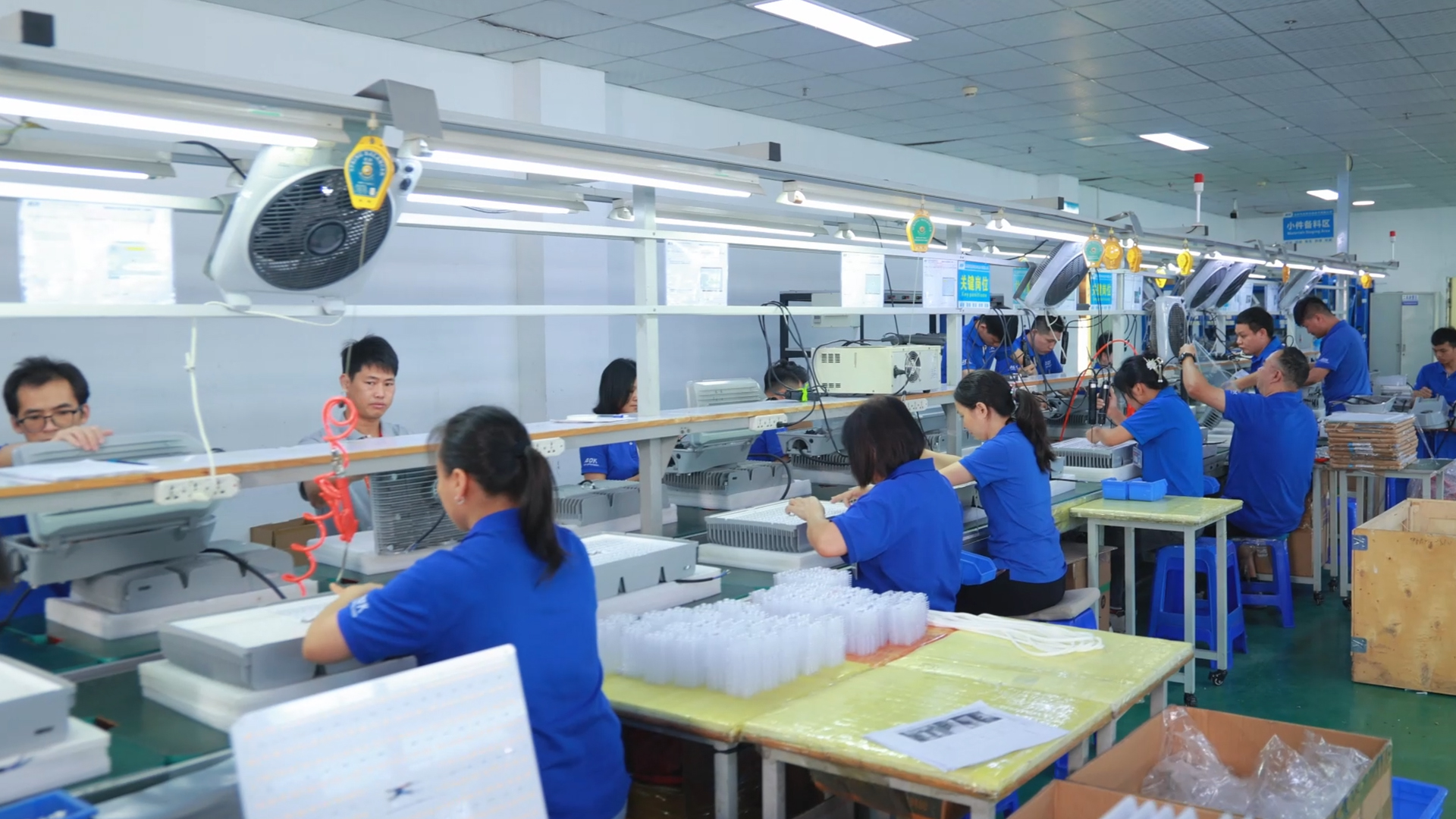
A modern SMT (Surface-Mount Technology) production line for consistent LED assembly quality.
3. Project Experience and Market Credibility
Past performance is the best predictor of future reliability.
- Global Reach & Project Volume: A supplier serving over 100 countries and having completed more than 10,000 projects demonstrates adaptability to diverse market requirements and standards.
- Reference Projects: Request case studies relevant to your sector.
Example Project Reference: A supplier like AOK provided 380 units of Professional Stadium Lighting (ISF model) for a FIFA Stadium Lighting System in Mexico. The project resulted in better night lighting for HD TV broadcasting, glare control, and high energy efficiency, with a 10-year operational duration.
- After-Sales Service Commitment: Clear service terms are crucial. Look for commitments like a 24-hour response time and a 48-hour resolution target for after-sales issues.
Comparative Analysis: Understanding the Supplier Landscape
While many suppliers exist, their strengths vary. Here is a contextual comparison based on common procurement scenarios:
| Supplier Type / Example | Typical Strengths | Considerations for Buyers | Ideal For |
|---|---|---|---|
| Global Integrated Brands (e.g., Signify, Acuity Brands) |
Strong brand recognition, extensive R&D, global distribution & service networks, comprehensive product ecosystems. | Higher price points, less flexible on customization for smaller projects, longer decision chains. | Large-scale municipal tenders, projects where brand specification is mandatory, complex smart city integrations. |
| Specialized Sports Lighting Brands (e.g., Musco Lighting, Holophane) |
Deep expertise in specific applications (stadiums, arenas), high-performance optics for broadcast, proven durability. | Premium pricing focused on high-end sports market, portfolio may be narrower outside core specialization. | Professional sports arenas, collegiate stadiums, large motorsports facilities where broadcast quality is critical. |
| Established OEM/ODM Manufacturers (e.g., AOK, others in Asia) |
Strong cost-performance ratio, high production capacity, flexibility for OEM/ODM customization, direct factory communication. Often hold ISO, UL, CE certifications. | Brand recognition may be lower in end-user markets. Requires due diligence on factory audits and quality processes. | Large-volume projects (municipal street lighting, port/airport lighting, industrial parks), private-label partnerships, projects with custom specifications. |
| Regional/Local Assemblers | Local market knowledge, faster logistics for spare parts, potentially closer customer service. | May rely on imported components, limited in-house R&D, smaller production scale can affect consistency for large orders. | Small to medium regional projects, maintenance and retrofit contracts where local presence is key. |
Practical Steps in the Procurement Process
- Define Project Specifications Clearly: Create a detailed technical brief including required lumens, distribution, CCT, dimming protocols, mounting, and environmental conditions.
- Conduct Initial Supplier Screening: Use the criteria above to create a shortlist of 3-5 potential suppliers.
- Request for Quotation (RFQ) & Proposal: Provide your project brief and request detailed quotations, product datasheets, certification copies, and relevant case studies.
- Factory Audit (Virtual or On-site): If order volume justifies it, conduct an audit to verify manufacturing capabilities, QC processes, and R&D facilities. Many suppliers offer virtual tours.
- Sample Evaluation: Always test product samples for photometric performance, build quality, and compliance with your specifications before placing a bulk order.
- Contract Clarity: Ensure the contract clearly defines warranty terms, delivery schedule (e.g., 30-45 day lead time), payment terms (e.g., 30% deposit, 70% before shipment), Incoterms (FOB, CIF), and quality acceptance procedures (e.g., pre-shipment inspection).
Conclusion: Building a Partnership, Not Just a Transaction
Selecting an LED outdoor lighting supplier is a foundational decision that impacts your project for a decade or more. By prioritizing technical specifications, verifying manufacturing and quality credentials, reviewing proven project experience, and conducting thorough due diligence, buyers can mitigate risk and secure a reliable partner. The trend towards smart, connected lighting and sustainable energy solutions makes this selection even more critical. A supplier that demonstrates strong R&D investment, such as in solar and smart lighting controls, is better positioned to support future-ready projects.
For a detailed overview of product specifications, certifications, and project portfolios from an established OEM/ODM manufacturer, you can review the following resource:
Download Comprehensive Product Brochure (PDF)هل لديك أسئلة أو تحتاج إلى مزيد من التفاصيل؟
تواصل مع فريقنا للحصول على عرض أسعار مخصص أو استشارة فورية.
طلب عرض أسعار
املأ النموذج أدناه وسيتواصل معك فريقنا بعرض مقترح مخصص.
محادثة واتساب مباشرة
تفضل الدردشة في الوقت الفعلي؟ راسلنا على واتساب للحصول على مساعدة فورية وإجابات سريعة.
- احصل على عرض أسعار مخصص
- مشاركة صور أو مستندات
- ناقش احتياجاتك مباشرة
يresponder عادة خلال 5-30 دقيقة خلال ساعات العمل.