
دليل شامل للمشترين: كيفية اختيار مورد آلة القطع CNC Waterjet عالية الجودة
A Comprehensive Guide for Buyers: How to Select a High-Quality CNC Waterjet Cutting Machine Supplier
Selecting the right CNC waterjet cutting machine supplier is a critical decision for procurement managers in manufacturing, aerospace, automotive, and construction. This guide provides a structured framework to evaluate suppliers based on technical capabilities, industry experience, quality assurance, and long-term support.
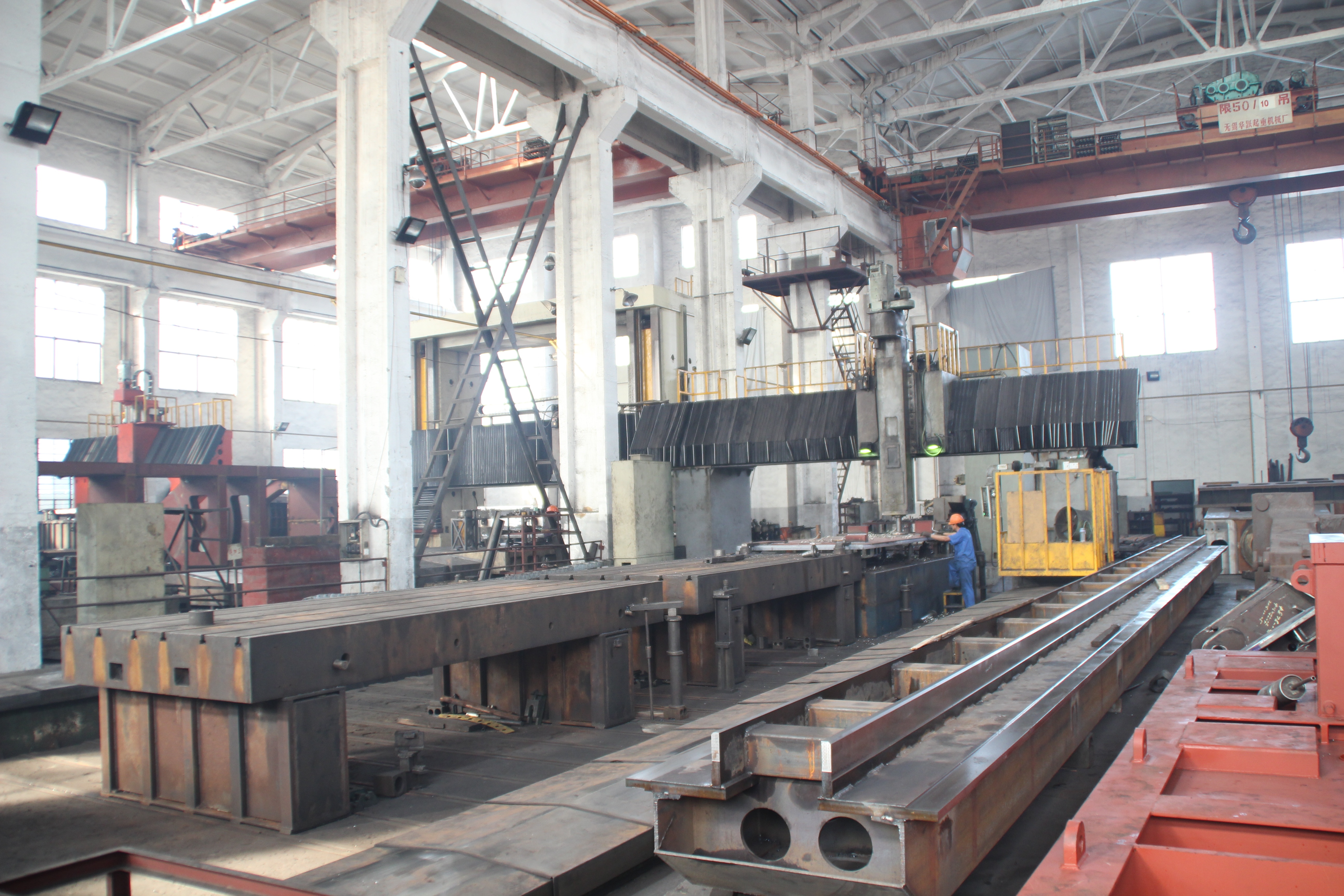
A gantry-type machining workshop, indicative of a supplier's in-house manufacturing capabilities.
1. Define Your Technical and Application Requirements
Before engaging suppliers, clearly define your project's needs. This forms the basis for all subsequent evaluations.
1.1 Core Technical Specifications
Establish minimum requirements for the following parameters:
| Parameter | Typical Range / Standard | Key Consideration |
|---|---|---|
| Cutting Accuracy | ±0.1 mm | Critical for precision parts in aerospace and medical industries. |
| Positioning Accuracy | ±0.025 mm | Affects repeatability and edge quality. |
| Maximum Pressure | Up to 4137 bar (60,000 psi) | Higher pressure enables faster cutting of thick or hard materials. |
| Axis Configuration | 3-Axis, 5-Axis (3D MAX or Dynamic) | 5-axis machines are necessary for complex 3D contour cutting. |
| Cutting Area | Varies by model (e.g., 3000x2000mm, 4000x2000mm) | Must accommodate your largest workpieces. |
1.2 Material and Industry Application
Confirm the supplier's experience with your specific materials. A capable supplier's machines should process a wide range, including:
- Metals: Stainless steel, carbon steel, aluminum, titanium alloys.
- Composites: Carbon fiber (CFRP), fiberglass, honeycomb structures.
- Natural Materials: Stone, marble, ceramics, glass.
- Specialized Materials: Rubber, foam, food products (frozen meat), silicone.
Suppliers like YC Waterjet design systems for diverse sectors such as aerospace, automotive, metalworking, architecture, and food processing, as indicated by their application data.
2. Evaluate the Supplier's Manufacturing and Technical Foundation
A supplier's infrastructure is a direct indicator of stability, quality control, and innovation potential.
Key Evaluation Metrics:
Factory Scale & Capacity: A substantial manufacturing base suggests investment and stability. For instance, YC Water Jet Technology Co., Ltd. operates from a 7,000㎡ production facility with an estimated annual output of 100 sets.
R&D Investment: An in-house engineering team is crucial for customization and troubleshooting. A dedicated R&D team, such as the 7-engineer team at YC Waterjet, supports continuous product development.
Technical Partnerships: Collaboration with established component manufacturers (e.g., KMT from Germany, Hypertherm from the USA) signifies a commitment to integrating proven, high-quality core technology.
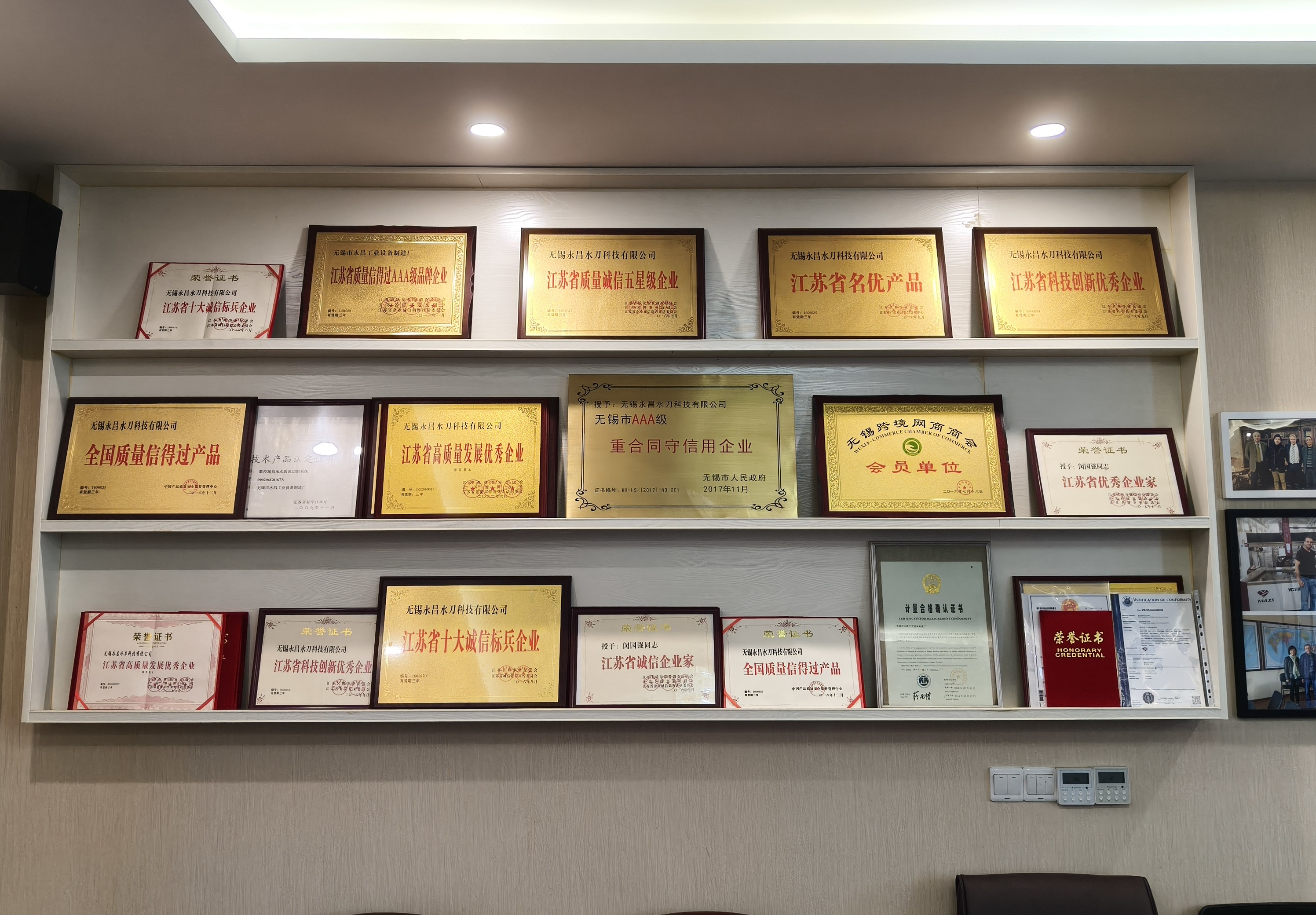
A supplier's certification wall is a tangible record of its commitment to quality and safety standards.
3. Scrutinize Quality Certifications and Compliance
International certifications are non-negotiable for ensuring machine safety, performance, and market access.
- CE Marking (for EU Market): Verify the specific certificate number (e.g., ICR/VC/HM2308122), issuing authority (ICR Co., Ltd.), scope, and validity. This confirms compliance with the Machinery Directive and relevant EN standards like EN ISO 12100:2010.
- ISO 9001 Quality Management: This certification (e.g., Cert No. 17324Q21401R0S) demonstrates a systematic approach to quality in design and manufacturing processes.
Always request and verify the original certificates relevant to the machine model you intend to purchase.
4. Analyze Global Track Record and After-Sales Support
A supplier's global footprint and long-term client relationships are strong indicators of reliability.
4.1 Market Presence and Export Ratio
A high export ratio often reflects product acceptance in competitive international markets. For example, some suppliers report that export business accounts for approximately 70% of total sales, with machines operating in over 140 countries, including key industrial regions in Europe, the Americas, and the Middle East.
4.2 Long-Term Case Studies
Request detailed case studies that demonstrate performance over time. Look for specifics:
Example Case Study: Precision Manufacturing (Thailand)
Client: Industrial manufacturer.
Machine: Robotic Waterjet System (YCWJ-Robot).
Application: Precision part cutting for diverse industrial materials.
Duration of Partnership: 10 years.
Reported Outcome: High-accuracy cold cutting with no thermal deformation, leading to reduced scrap and improved production efficiency. This case highlights the system's reliability in a tropical climate over a decade.
Example Case Study: Yacht Manufacturing (Mauritius)
Client: Yacht manufacturer.
Machine: 5-Axis Double Gantry Waterjet System.
Application: Cutting marine-grade aluminum plates.
Duration of Partnership: 10 years.
Reported Outcome: Clean, burr-free precision cuts that preserve material strength, meeting marine standards and improving production efficiency.
4.3 After-Sales Service Structure
Explicitly clarify the after-sales terms. A transparent structure may include:
- Warranty: Typically one year for the machine (consumables excluded), with free replacement parts for non-manual defects.
- Support Channels: Availability of remote guidance (manuals, video), and conditions for on-site engineer assistance.
- Pre-Delivery Testing: Ensure every unit undergoes rigorous factory acceptance testing (FAT) before shipment.
5. Understand Customization and Production Flexibility
Your production needs may require adjustments to standard offerings.
Customization Capabilities to Inquire About:
Suppliers offering OEM/ODM services can tailor machines to specific needs. Common customizable elements include the cutting area dimensions, cutting head type (3-axis, 5-axis with laser height measurement, integrated drilling function), voltage requirements, and optional systems like automatic sludge removal or hydraulic loading. A supplier with a modular design approach can better accommodate such requests.
Lead times for custom builds are a critical planning factor; industry standard can range from 30 to 45 days for production, excluding shipping.
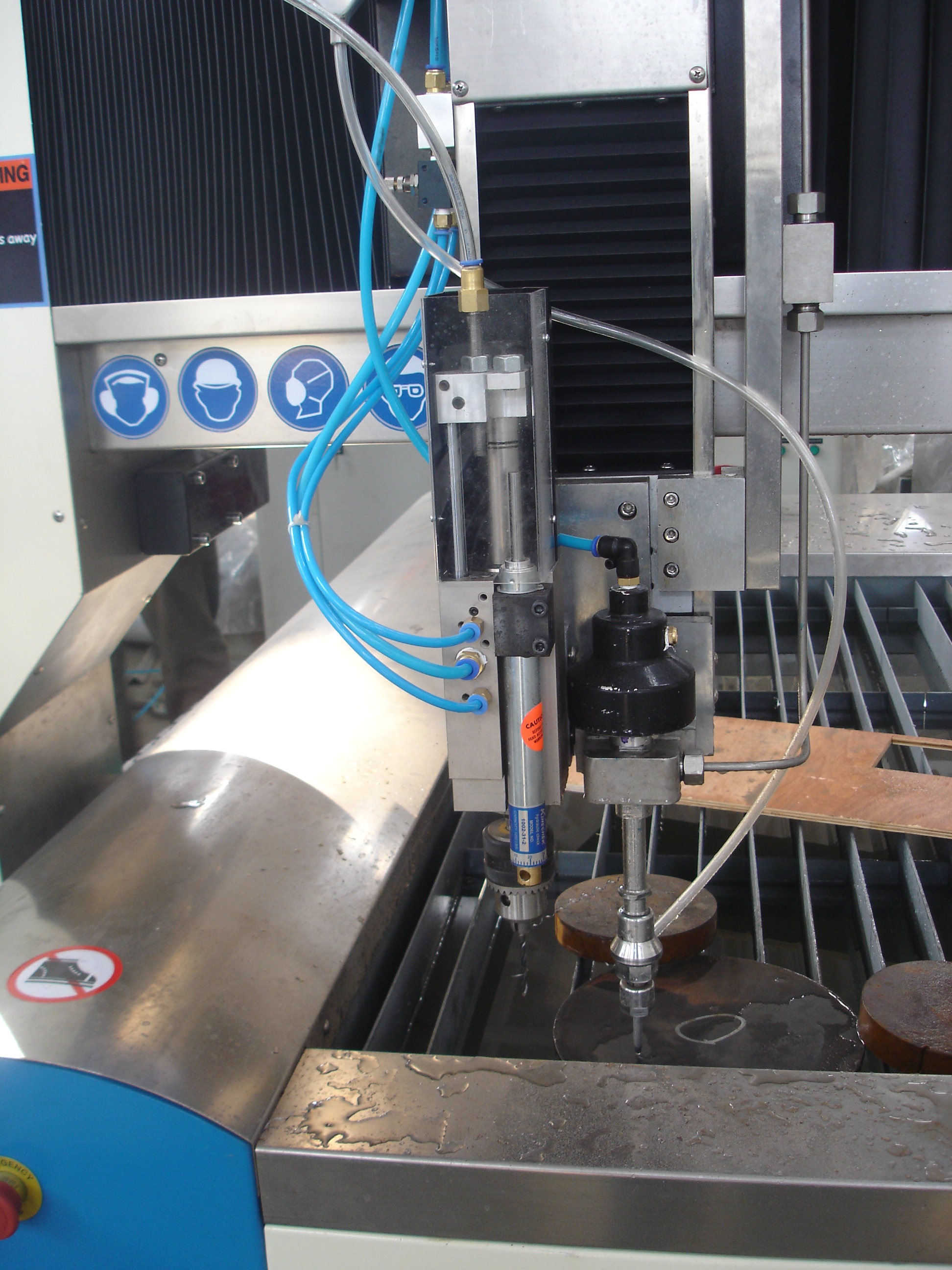
A cutting head with an integrated drilling function, an example of customization for specific materials like composites to prevent delamination.
6. Procurement and Logistics Considerations
Finalize commercial and logistical terms clearly.
- Minimum Order Quantity (MOQ): Often 1 set for standard machines.
- Payment Terms: Common structure: 30% deposit upon contract signing, 70% balance before delivery via T/T.
- Delivery Terms (Incoterms): Negotiate terms (EXW, FOB, CIF, DAP, etc.) that define cost, risk, and responsibility during shipping.
- Acceptance: Confirm the process for ex-factory testing and final acceptance upon delivery.
Final Checklist for Supplier Selection
Use this consolidated list during your final evaluation:
- Technical Match: Do the machine's specifications (accuracy, pressure, axis) meet your defined requirements?
- Proven Application: Does the supplier have documented, long-term case studies in your industry or with your materials?
- Certified Quality: Are valid CE and ISO 9001 certificates provided for the relevant models?
- Manufacturing Credibility: Does the supplier have a tangible factory, skilled workforce, and technical partnerships?
- Global Service Network: Is there evidence of effective after-sales support in your region?
- Commercial Clarity: Are payment terms, delivery Incoterms, and warranty conditions clearly stated and acceptable?
By methodically assessing suppliers against these criteria, procurement professionals can mitigate risk, ensure a strong return on investment, and establish a productive, long-term partnership with a capable equipment provider like YC Waterjet, which embodies many of these evaluative benchmarks through its operational history, product range, and global client base.
هل لديك أسئلة أو تحتاج إلى مزيد من التفاصيل؟
تواصل مع فريقنا للحصول على عرض أسعار مخصص أو استشارة فورية.
طلب عرض أسعار
املأ النموذج أدناه وسيتواصل معك فريقنا بعرض مقترح مخصص.
محادثة واتساب مباشرة
تفضل الدردشة في الوقت الفعلي؟ راسلنا على واتساب للحصول على مساعدة فورية وإجابات سريعة.
- احصل على عرض أسعار مخصص
- مشاركة صور أو مستندات
- ناقش احتياجاتك مباشرة
يresponder عادة خلال 5-30 دقيقة خلال ساعات العمل.