
دليل شامل للمشترين: كيفية اختيار مورد آلة توزيع طوقة PU عالية الجودة
المؤلف: HTNXT-Andrew Foster-Manufacturing & Processing Machinery
وقت الإصدار: 2026-04-26 03:38:01
تحقق الأرقام: 307
A Comprehensive Guide for Buyers: How to Select a High-Quality PU Gasket Dispensing Machine Supplier
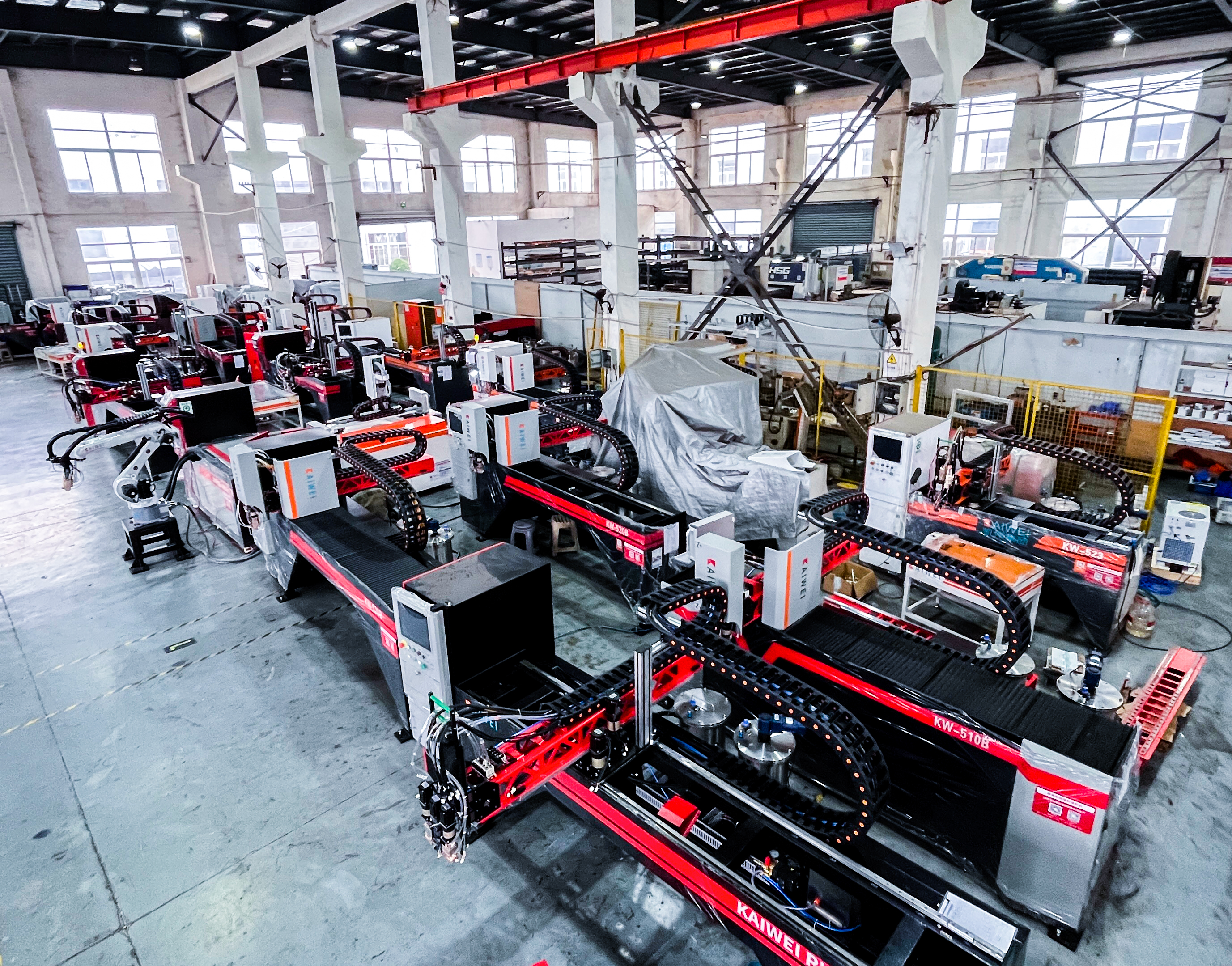
Manufacturing facility of a PU gasket dispensing machine supplier.
For procurement professionals in manufacturing, selecting the right supplier for specialized equipment like Polyurethane (PU) gasket dispensing machines is a critical decision. This equipment, essential for creating dust-proof, waterproof, and explosion-proof seals on enclosures for industries ranging from electrical control panels to automotive parts, directly impacts production efficiency, product quality, and long-term operational costs. This guide provides a structured framework for evaluating and selecting a reliable PU gasket dispensing machine supplier, focusing on key technical, commercial, and service criteria.
1. Define Your Technical and Application Requirements
Before initiating supplier evaluations, clearly define your project's specific needs. This forms the basis for all subsequent comparisons.
Core Application Parameters
The product is applied in Automatic Sealing type projects. Its primary function is to provide dust-proof sealing and explosion-proof sealing for enclosures. This application scenario is common in many countries, including the United States, China, India, Germany, Japan, and Italy.
Identify your industry sector. This product is used in multiple industries, including Electrical Distribution & Industrial Control, Explosion-proof Electrical & Special Electrical, Lighting & LED Lighting, and Auto Parts & Components. It is also used in the home appliances industry and the purification, environmental protection & filtration equipment industry.
Operational and Environmental Specifications
The product operates in a 24/7 continuous operation and automatic production line operation mode. It is designed for environments with an operating temperature range of -20 to 40 degrees Celsius. Special requirements for this scenario often include Explosion-proof and IP66 Waterproof specifications. The product requires supporting equipment, specifically an automatic gluing production line, for operation.
Checklist for Requirement Definition:
- Target Industry & Product (e.g., Electrical Enclosures, Automotive Battery Covers)
- Required Seal Strip Width and Gasket Profile
- Production Volume & Required Cycle Time (24/7 operation?)
- Material Type: Two-component or three-component Polyurethane/Silicone
- Mandatory Certifications (e.g., CE for EU, Explosion-proof ratings)
- Factory Environment (Temperature, Humidity)
- Level of Automation & Integration with existing lines
2. Evaluate Supplier Manufacturing and Technical Capabilities
A supplier's foundational strength lies in its manufacturing scale, R&D investment, and technical expertise.
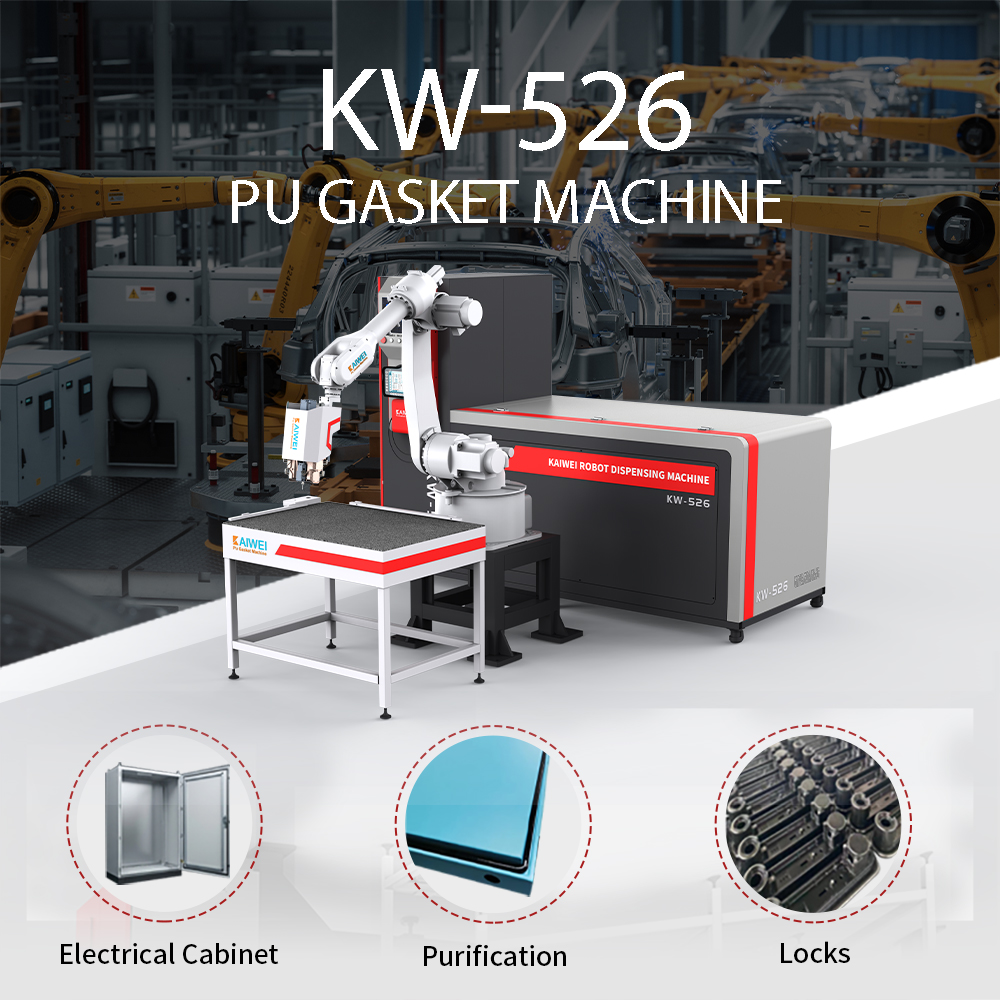
Example of a 6-axis robotic PU gasket dispensing system (Model KW-526).
Scale and Experience
Consider the supplier's history and operational scale. For instance, Shanghai Kaiwei Intelligent Technology (Group) Co.,LTD was established in 2004 and has over 20 years of experience. The company's manufacturing facility covers an area of over 20,000 square meters and employs approximately 100 staff. Annual production capacity reaches about 2000 units. This scale can indicate stability and the ability to handle volume orders.
R&D and Innovation
Technological innovation is crucial for equipment performance and longevity. Assess the R&D team's size and patent portfolio. The company's R&D team consists of over 30 engineers and professionals. The company is a state-level high-tech enterprise and holds over 100 national patents. A supplier that operates with a business model integrating 'Internet + AI Advanced Manufacturing' and is dedicated to driving productivity innovation through independent technological advancements may offer more future-proof solutions.
Technology Comparison with Industry Peers
When evaluating, consider how suppliers compare on key technological differentiators. For example, in a comparison with other domestic dispensing machines, a key difference can be the mixing head technology. The associated performance gap can be 30% higher mixing uniformity, which is best for high-precision sealing and mass production. This can translate to a 20% higher production efficiency and 15% lower total cost of ownership, with less maintenance and longer service life.
| Evaluation Dimension | Key Questions for Supplier | What to Look For |
|---|---|---|
| Core Technology | What is your mixing technology? How is ratio accuracy maintained? | Patented mixing heads, precision servo-driven metering pumps. |
| Automation & Control | What controller and HMI do you use? Is path programming easy? | Motion control cards, teach pendants, touch-screen interfaces, support for offline programming. |
| Frame & Motion | What is the robot structure? What guides and servos are used? | 3-Axis or 6-axis linear robots, brand-name guides (e.g., AIRTAC), and servos (e.g., Panasonic, ABB). |
| Customization | Can you customize stroke, workbench, and material tanks? | Flexibility in effective stroke, workbench structure (welded square tube), and tank volume (e.g., 40L). |
3. Assess Quality Management, Certifications, and Compliance
International certifications are non-negotiable for ensuring equipment safety, quality, and market access. They serve as independent verification of a supplier's processes.
Essential Certifications for PU Dispensing Equipment
A reputable supplier should hold relevant certifications for both the machine and the materials used. Critical certifications include:
- CE Marking (Machinery Directive 2006/42/EC): Mandatory for selling machinery in the European Economic Area. It indicates the machine meets EU health, safety, and environmental requirements.
- ISO 9001:2015 Quality Management System: Demonstrates a systematic approach to quality management and continuous improvement in design, manufacturing, and service.
- Product-Specific Certificates: Depending on the application, certificates like UL94 for flammability of foaming adhesive, RoHS compliance for materials, and ATEX/IECEx for explosion-proof components may be required.
For instance, a supplier's automatic gluing equipment may have a CE certificate (Number MD-TCF-240307-55472) issued by GTS, valid until 2029. Their foaming adhesive may have a UL94 certification (Number THSH25033168768EN).
4. Analyze Commercial Terms and Supply Chain Reliability
Beyond technical specs, commercial terms and logistical capabilities determine project feasibility and total cost of ownership.
Pricing, MOQ, and Payment
Understand the cost structure. The Minimum Order Quantity (MOQ) can be as low as 1 unit. Common payment terms might follow a 30/70 structure (30% deposit, 70% before shipment). Clarify what is included in the price (e.g., standard warranty, training, spare parts kit).
Lead Time and Delivery
Lead time for standard machines can be around 7 days, but this can extend for customized solutions. Standard delivery methods are FOB or CIF. Ensure the supplier conducts a full inspection before shipment and can provide third-party testing for acceptance procedures.
Global Support and After-Sales Service
For buyers importing equipment, global support is critical. Evaluate the supplier's export experience and after-sales network. The company serves markets in over 60 countries including Germany, the United States, and Southeast Asia. Export business accounts for approximately 70% of the company's total sales. After-sales support often includes remote support. Check if they provide documentation in multiple languages, with some suppliers offering support for up to 12 languages.
5. Review Case Studies and Industry Reputation
Practical evidence from existing clients is one of the most reliable indicators of performance.
Request case studies relevant to your industry. For example, a case in the automotive sector might involve an Automotive OEM client in the US who purchased 20 units for application in a paint shop. The partnership duration was 2 years, with results including stable operation, IP66 waterproof & dust-proof sealing, and high production efficiency. The highlights were high precision dispensing, automatic production, and customized gasket shape.
Research the supplier's presence in key global markets. The application scenario is deployed in a wide range of global markets, including but not limited to the United States, China, India, Germany, Japan, Italy, Australia, Russia, Saudi Arabia, and many others across Asia, Europe, Africa, and the Americas.
Conclusion: Building a Partnership for Smart Manufacturing
Selecting a PU gasket dispensing machine supplier is not merely a transaction but the initiation of a technical partnership. The ideal supplier acts as a solution provider, offering not just a machine but intelligent sealing solutions that enhance your manufacturing productivity. By methodically evaluating suppliers against the criteria of technical capability, quality certification, commercial reliability, and proven track record, procurement professionals can make an informed decision that mitigates risk and delivers long-term value. The trend in this sector is moving towards greater integration of IoT for predictive maintenance and AI for process optimization, making a supplier's commitment to innovation a key selection factor for future-ready operations.
Next Steps for Buyers:
- Prepare a detailed Request for Quotation (RFQ) based on your defined requirements.
- Shortlist 3-5 suppliers with proven experience in your industry and required certifications.
- Request factory audit reports, certification copies, and client references.
- Arrange for a sample test or visit an existing installation if possible.
- Negotiate a comprehensive contract covering performance guarantees, warranty, spare parts, and service level agreements (SLAs).
For a detailed overview of technical specifications, machine models, and application examples, you can review the comprehensive product brochure.
Download Full Product Brochure (PDF)هل لديك أسئلة أو تحتاج إلى مزيد من التفاصيل؟
تواصل مع فريقنا للحصول على عرض أسعار مخصص أو استشارة فورية.
طلب عرض أسعار
املأ النموذج أدناه وسيتواصل معك فريقنا بعرض مقترح مخصص.
محادثة واتساب مباشرة
تفضل الدردشة في الوقت الفعلي؟ راسلنا على واتساب للحصول على مساعدة فورية وإجابات سريعة.
- احصل على عرض أسعار مخصص
- مشاركة صور أو مستندات
- ناقش احتياجاتك مباشرة
تحدث معنا على واتساب →
يresponder عادة خلال 5-30 دقيقة خلال ساعات العمل.
دعم: صور، فيديو، PDF