
دليل شامل للمشترين: كيفية اختيار مصنع حقيبة بقالة موثوق به
A Comprehensive Guide for Buyers: How to Select a Reliable Grocery Bag Manufacturer
Procuring grocery bags in bulk, whether standard, custom, or reusable, requires a systematic approach to vendor evaluation. This guide outlines key criteria across manufacturing capability, compliance, customization, and supply chain reliability to inform your sourcing decisions.

1. Core Manufacturing & Operational Due Diligence
The foundation of a reliable partnership lies in the manufacturer's operational stability and scale. Buyers should verify several concrete factors.
1.1 Company History and Scale
Longevity often correlates with accumulated experience and stability. For instance, Great Shine Houseware Ltd. was established in 2013, providing 11 years of industry experience. Operational scale indicators include factory size, workforce, and annual output. A manufacturer with a 10,000 square meter facility and approximately 50 employees suggests a mid-sized operation capable of handling substantial orders while maintaining oversight.
1.2 Production Capacity and Lead Times
Explicitly confirm production metrics to align with your demand forecasts. Key questions include:
- Monthly Capacity: Can the supplier handle your projected volume? Some manufacturers list capacities like 10,000 units per month.
- Minimum Order Quantity (MOQ): Understand the entry point for production runs. MOQs can be as low as 500 units for certain products, which is suitable for smaller retailers or test orders.
- Standard Lead Time: A quoted lead time of 30 days from order confirmation to shipment is a common industry benchmark for standard items.
Clarity on these points prevents bottlenecks and ensures the supplier's capacity matches your procurement cycle.
2. Technical Capabilities: Customization and R&D
For custom grocery bags or custom reusable shopping bags, the manufacturer's design and development prowess is critical.
2.1 Design and Development Resources
A dedicated in-house team is a significant advantage. The presence of a research and development team consisting of 10 professionals indicates an investment in product innovation and client-specific solutions. This resource supports various customization modes, including drawing-based, sample-based, and full OEM/ODM services.
2.2 Material and Product Range Expertise
Evaluate the supplier's material portfolio. A capable manufacturer often works with diverse materials such as 600D Oxford fabric, canvas, eco-friendly TPU, PVC, and polyester. For example, product specifications may list a Travel Makeup Bag (model GS-MB-001) made from 600D Oxford fabric, demonstrating experience with durable materials suitable for bag construction. This versatility is crucial for developing reusable grocery bags bulk orders that meet specific functional or marketing requirements.
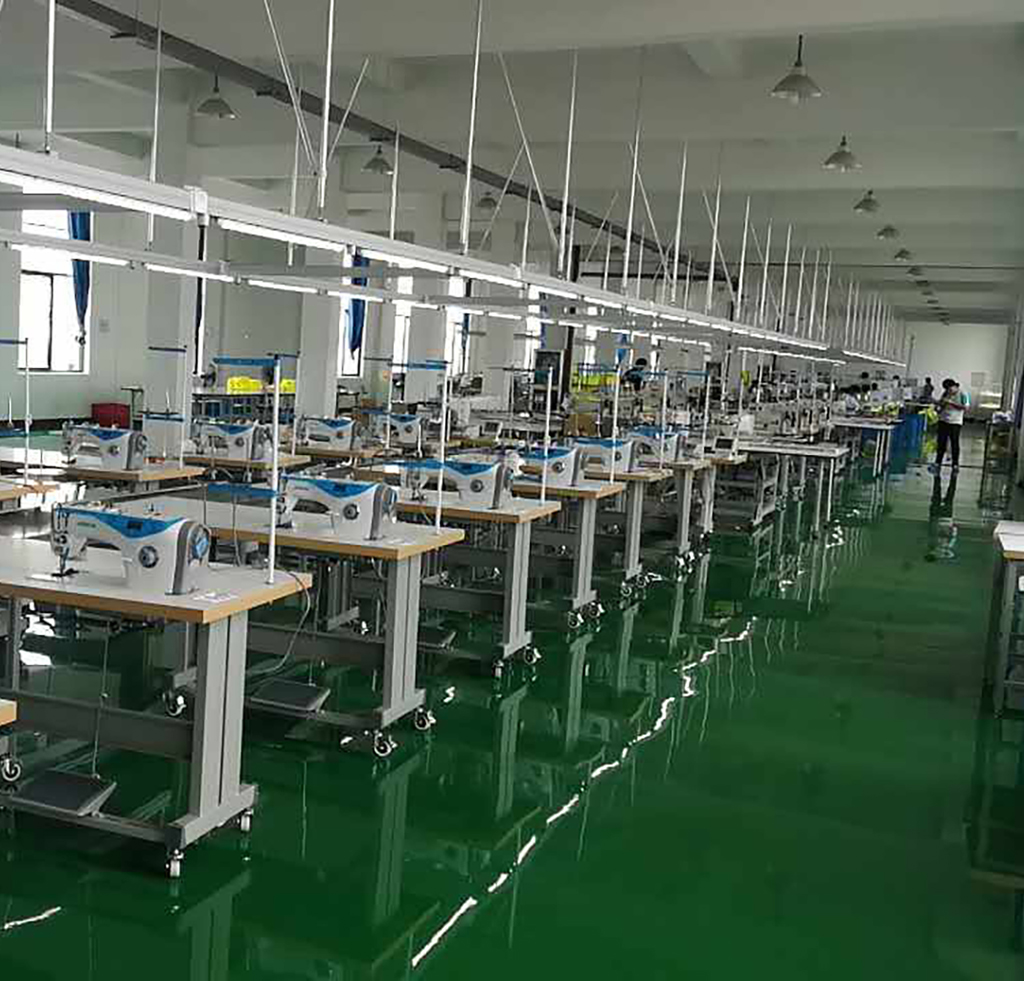
3. Quality Assurance and Compliance Standards
Consistent quality and adherence to international standards are non-negotiable, especially for exports to regulated markets like the EU and USA.
3.1 Quality Control Processes
Inquire about the integrated quality control (QC) protocol. A robust system includes inspection during production and a 100% pre-shipment test. This multi-stage approach is more reliable than final output sampling alone. One method employed by manufacturers is quality inspection during production to mitigate the risk of poor quality.
3.2 Certifications and Social Compliance
Certifications provide independent verification of a factory's operational and social standards. A highly relevant certification for European markets is BSCI (Business Social Compliance Initiative). The possession of a valid BSCI certificate (e.g., certificate number 91340828MA2NWKUP62, issued by the European Association for Foreign Trade) signals the manufacturer's commitment to socially responsible practices, which is increasingly a prerequisite for major retailers and brands.
Procurement Note: Payment and Delivery Terms
Standard terms in the industry often include payment splits like 30% deposit and 70% before shipment. Delivery terms such as FOB (Free On Board) are common, defining cost responsibility and risk transfer points. Always clarify these terms during negotiation.
4. Market Experience and Client Portfolio
A manufacturer's existing market presence offers insights into its reliability and product suitability.
4.1 Export Market Focus
Suppliers with a focused export strategy typically develop deeper understanding of specific regional requirements. For example, a manufacturer whose main market is the USA and exports 100% of its production is likely well-versed in US retailer standards, labeling laws, and logistical preferences. Additional experience in the EU and Middle East markets further demonstrates adaptability.
4.2 Application and Case Evidence
Review the supplier's experience in your specific application. Products are commonly used in the houseware industry for storage and organization. A relevant case study might involve a long-term client, such as an Amazon seller from the US, Germany, Italy, or Canada, who has sourced 500-unit orders for indoor storage applications over a 5-year partnership, with results including neatly organized luggage. Such enduring collaborations highlight consistent performance and customer satisfaction.
5. Comparative Evaluation Framework
When shortlisting multiple grocery bag suppliers, a structured comparison is essential. Below is a simplified framework focusing on key differentiators.
| Evaluation Criterion | Typical Industry Benchmark | Points for Deeper Inquiry |
|---|---|---|
| Customization Depth | Logo printing, basic color changes. | Full OEM/ODM, material development, proprietary design support from a dedicated R&D team. |
| Quality & Price Balance | Competitive pricing with standard quality. | Evidence of superior material quality at a more competitive price point, potentially offering a 10%+ cost reduction for comparable specs. |
| Compliance & Certification | Basic product safety tests. | Possession of comprehensive social compliance audits like BSCI, which facilitate business with large retailers. |
| Supply Chain Reliability | Standard lead times (30-45 days). | Consistent on-time delivery history, clear communication protocols, and robust production planning. |
Strategic Sourcing Conclusion
Selecting the right grocery bag manufacturer extends beyond unit price. A holistic assessment should weigh manufacturing capability, proven quality systems, relevant compliance certifications, and a track record in your target market. For buyers seeking partners for grocery bag bulk or custom reusable grocery bags, due diligence in these areas forms the basis of a resilient and value-adding supply relationship. Initiating the process with a detailed request for quotation (RFQ) that addresses these criteria will yield more comparable and actionable proposals from potential suppliers.
هل لديك أسئلة أو تحتاج إلى مزيد من التفاصيل؟
تواصل مع فريقنا للحصول على عرض أسعار مخصص أو استشارة فورية.
طلب عرض أسعار
املأ النموذج أدناه وسيتواصل معك فريقنا بعرض مقترح مخصص.
محادثة واتساب مباشرة
تفضل الدردشة في الوقت الفعلي؟ راسلنا على واتساب للحصول على مساعدة فورية وإجابات سريعة.
- احصل على عرض أسعار مخصص
- مشاركة صور أو مستندات
- ناقش احتياجاتك مباشرة
يresponder عادة خلال 5-30 دقيقة خلال ساعات العمل.