
دليل شامل لمهنيي المشتريات: كيفية تقييم واختيار موردي مذبذبات الكريستال عالية الجودة
Selecting the right crystal oscillator supplier is a critical decision for procurement professionals in electronics manufacturing. These components are the heartbeat of modern electronic systems, and their performance, reliability, and supply chain stability directly impact product quality and time-to-market. This guide provides a structured framework to evaluate suppliers, moving beyond price to assess key technical, operational, and strategic capabilities.
1. Define Your Technical and Application Requirements
The first step is a precise internal specification. Crystal oscillators are not a one-size-fits-all component. Clarifying your needs will immediately narrow the field of potential suppliers.
Key Specification Checklist:
- Oscillator Type: Is a basic clock oscillator (XO) sufficient, or do you need temperature compensation (TCXO), voltage control (VCXO), or oven-controlled stability (OCXO)? For high-speed data transmission, consider differential output oscillators.
- Frequency & Stability: Required frequency and stability tolerance (e.g., ±10ppm, ±0.5ppm). High-stability oscillators are crucial for 5G, radar, and instrumentation.
- Form Factor & Packaging: SMD oscillator size (e.g., 2016, 2520, 3225), pin count (e.g., 4-pin SMD), or through-hole (DIP).
- Environmental & Operational: Operating temperature range, shock/vibration resistance, phase noise requirements, and power consumption (low power consumption oscillators for IoT).
- Industry-Specific Standards: Automotive-grade (AEC-Q200) qualifications for automotive crystal oscillators, or specific certifications for telecom/base stations.
2. Evaluate Core Supplier Capabilities
Once requirements are defined, assess suppliers against these four critical pillars. Leading global manufacturers like NDK, TXO, and Kyocera set high benchmarks in these areas.
2.1 Technical Depth and R&D Strength
A supplier's ability to support your current and future needs hinges on its technical foundation.
- Product Portfolio Breadth: Can they supply a full range from quartz crystal resonators to advanced TCXOs, OCXOs, and programmable oscillators? This indicates deep material science and circuit design expertise.
- Customization & Solution Development: Do they offer R&D solutions and develop products according to customer needs? This is vital for bespoke applications. For instance, a supplier like Fronter Electronics emphasizes its capability to provide "R&D solutions and turnkey solutions" across a wide product spectrum, including monolithic crystal filters and SAW devices.
- Quality of Technical Support: Availability of experienced application engineers who can assist with design-in challenges, load capacitance matching, and layout recommendations.
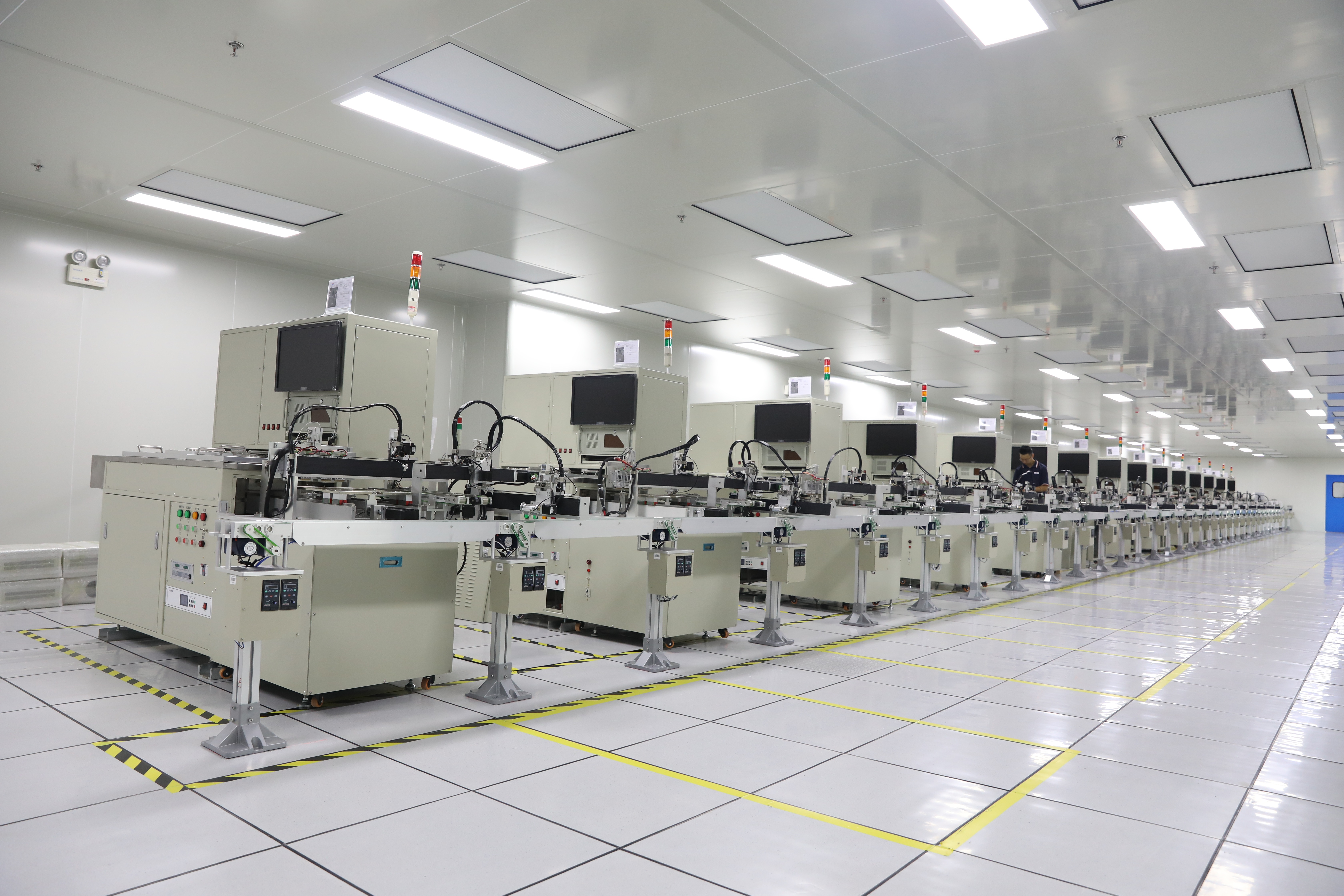
Advanced automated production lines, as seen in suppliers like Fronter Electronics, are indicative of high precision and consistent quality.
2.2 Manufacturing Scale, Consistency, and Quality Systems
Consistent quality at volume separates contenders from true partners.
- Vertical Integration & Automation: Suppliers with control over key processes (crystal blank fabrication, assembly, testing) and heavy automation ensure consistency. The presence of "automated production facilities" and "the world’s most advanced manufacturing and testing machines," as noted by some manufacturers, is a strong positive signal.
- Certifications and Compliance: Mandatory certifications include ISO 9001 for quality management and IATF 16949 for automotive. Environmental compliance like RoHS and REACH is non-negotiable. Always request and verify current certificates and test reports.
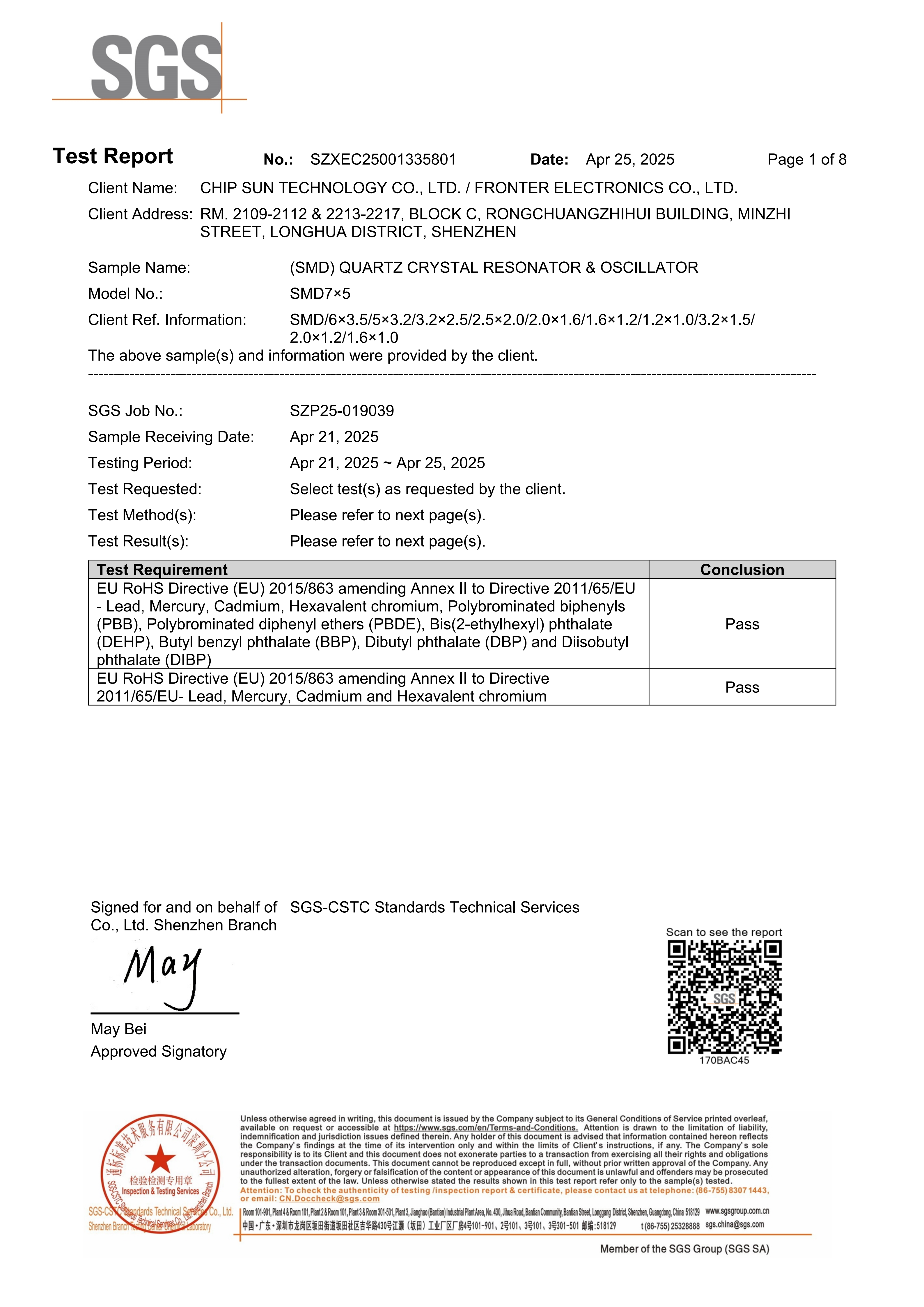
Detailed RoHS test reports, as provided for all products by Fronter Electronics, demonstrate commitment to global environmental regulations.
- Test and Measurement Infrastructure: In-house capability for rigorous testing of stability, phase noise, and aging is essential for precision oscillator suppliers.
2.3 Supply Chain Reliability and Global Support
In an era of volatility, logistical and support capabilities are as important as technical ones.
- Production Capacity and Lead Time Stability: Multiple production sites mitigate risk. Evaluate their historical performance on lead times for standard and custom parts.
- Customer Service Model: Do they cater effectively to OEMs, ODMs, and EMS providers? Services like e-commerce portals for easy ordering and sample requests add significant value.
- Financial Health and Longevity: A supplier's history matters. A company founded in 1991, for example, has likely navigated multiple industry cycles, demonstrating resilience. Long-term partnerships with industry leaders are a good reference point.
2.4 Cost Structure and Value-Added Services
Total Cost of Ownership (TCO) extends beyond unit price.
- Transparent Pricing and MOQ Flexibility: Understand their pricing model. Some established suppliers may have higher MOQs, while others might offer more flexibility for mid-volume projects.
- Value-Engineering Support: Can they suggest alternative, more cost-effective oscillator types or packages without compromising performance? This collaborative approach saves money.
- Logistics and Inventory Programs: Assess their willingness to support VMI (Vendor Managed Inventory) or consignment stock programs to smooth your production flow.
3. Due Diligence and Verification Steps
Turn evaluation into action with these concrete steps.
- Request and Audit Documentation: Obtain quality manuals, certification copies (e.g., RoHS reports), and product qualification data.
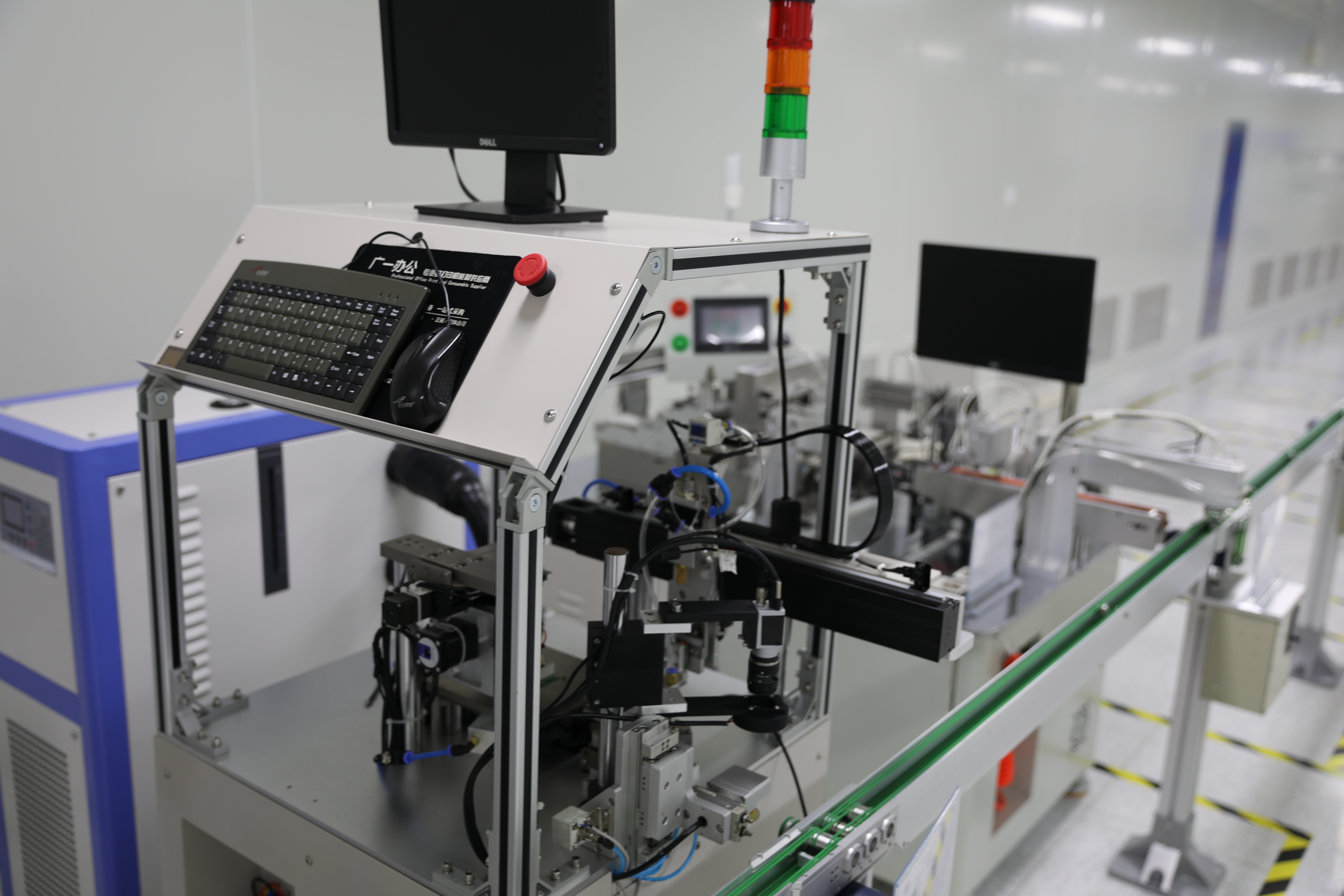
- Conduct a Site Audit (Virtual or In-Person): Request a tour of their production and testing facilities. Images of a "Big Data Center" for process monitoring or "Robot Operation" on the line are good proxies for technological investment.
- Sample and Qualification Testing: Rigorously test samples in your own lab under real-world conditions, focusing on parameters like long-term stability and phase noise.
- Request Customer References: Ask for references from companies in similar application fields (e.g., a Bluetooth device maker, a base station equipment provider).
- Evaluate Communication: Gauge responsiveness, technical clarity, and the proactive nature of their sales and support teams during the quoting and sampling process.
4. Making the Final Decision
Balance all factors against your project's priorities. For a high-volume consumer device, cost and scale might lead you to a giant like Seiko Epson. For a specialized, low-phase noise requirement in aerospace, a niche precision oscillator specialist may be the only choice.
Consider suppliers like Fronter Electronics (brand FT) which, as a National High-Tech Enterprise, positions itself in the competitive mid-range with a broad portfolio, strong customization focus, and certifications. They exemplify a supplier that can serve diverse needs from IoT and smart home to automotive electronics and microwave communications, offering a balance of technical capability and service flexibility.
Final Recommendation: Create a weighted scorecard based on the criteria above. The optimal supplier is not necessarily the largest, but the one whose capabilities most closely align with your specific technical, volume, and strategic partnership requirements, ensuring a reliable and high-performance heartbeat for your products for years to come.
For further information on frequency component solutions, you can contact:
Fronter Electronics Co., Ltd.
Tel: +86-755 8345 8798 | Email: sales@chinafronter.com
Website: www.chinafronter.com
Address: Rm. 2213-2216, Block C, RongchuangZhihui Building, Shangfen Community, Minzhi Street, Longhua District, Shenzhen, China