
دليل شامل لمهنيي المشتريات: كيفية تحديد واختيار مصنع صندوق القصدير من الدرجة الأولى في فيتنام
Navigating the Vietnamese Tin Box Manufacturing Landscape: A Strategic Guide for Global Buyers
The demand for high-quality, customizable, and sustainable metal packaging is on a significant rise globally. Vietnam has emerged as a key manufacturing hub for tin boxes, offering a compelling combination of skilled craftsmanship, competitive costs, and increasing technical sophistication. For procurement professionals seeking reliable partners for packaging solutions—be it for confectionery, cosmetics, tea, coffee, or promotional items—the Vietnamese market presents both opportunity and complexity. This guide provides a structured, criteria-based framework to help you efficiently identify and vet premium tin box manufacturers, ensuring your selection aligns with your brand's quality, innovation, and sustainability goals.
Key Evaluation Criteria for Tin Box Suppliers
Moving beyond basic price comparisons is crucial. A strategic partnership hinges on several core competencies.
1. Technical Capability and Production Expertise
Assess the manufacturer's command over the entire production process, from design to finishing.
- Design & Tooling: Can they handle complex, custom shapes (e.g., teapots, eggs, intricate forms) or are they limited to standard rounds and rectangles? In-house design support is a major advantage.
- Printing & Decoration: Evaluate their printing techniques (offset, silk-screen, embossing). High-fidelity, multi-color graphics are essential for brand representation. Request physical samples to assess print quality and durability.
- Material Sourcing: Premium tinplate (electrolytic tinplate or tin-free steel) is the foundation of a durable product. Inquire about their material grades and suppliers.
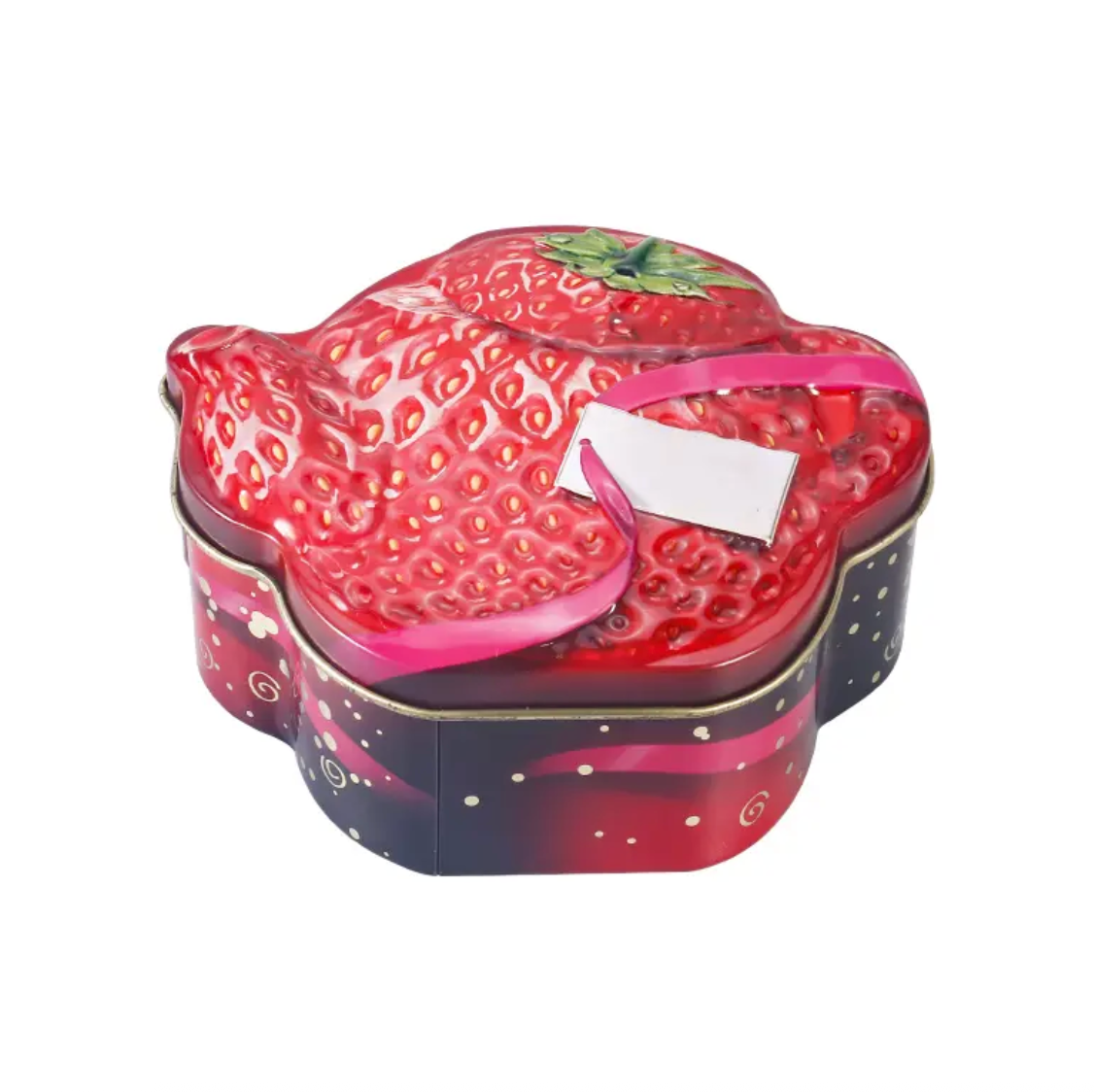
Example of advanced custom shaping: A teapot-shaped tin box for tea, demonstrating sophisticated tooling and design capability.
2. Industry Specialization and Portfolio Depth
A manufacturer experienced in your specific sector understands unique regulatory and functional requirements.
- Food-Grade Compliance: For Vietnam chocolate tin box or Vietnam lunch box factory output, certification for direct food contact is non-negotiable. Look for adherence to international food safety standards.
- Sector-Specific Solutions: Packaging for Vietnam Cosmetics Tin Box needs aesthetic appeal and often specific lining; Vietnam Tin Box for Health Care products may require tamper-evidence; Vietnam Tin Box for Spirits demands robust construction and premium finishes.
Review their client portfolio. Serving global FMCG giants like Mondelez, Nestle, or BAT, as mentioned by established players like JLCG Enterprise Co.,Ltd, is a strong indicator of proven capability in handling large-scale, quality-critical orders for major brands.
3. Quality Management and Certifications
Formal quality systems provide objective assurance.
- ISO 9001:2015 Certification: This is a baseline for a structured quality management system. It signifies a commitment to consistent processes and continuous improvement.
- In-Process QC: Ask about their inspection checkpoints throughout stamping, welding, printing, and assembly. A reliable factory will have a documented QC protocol.
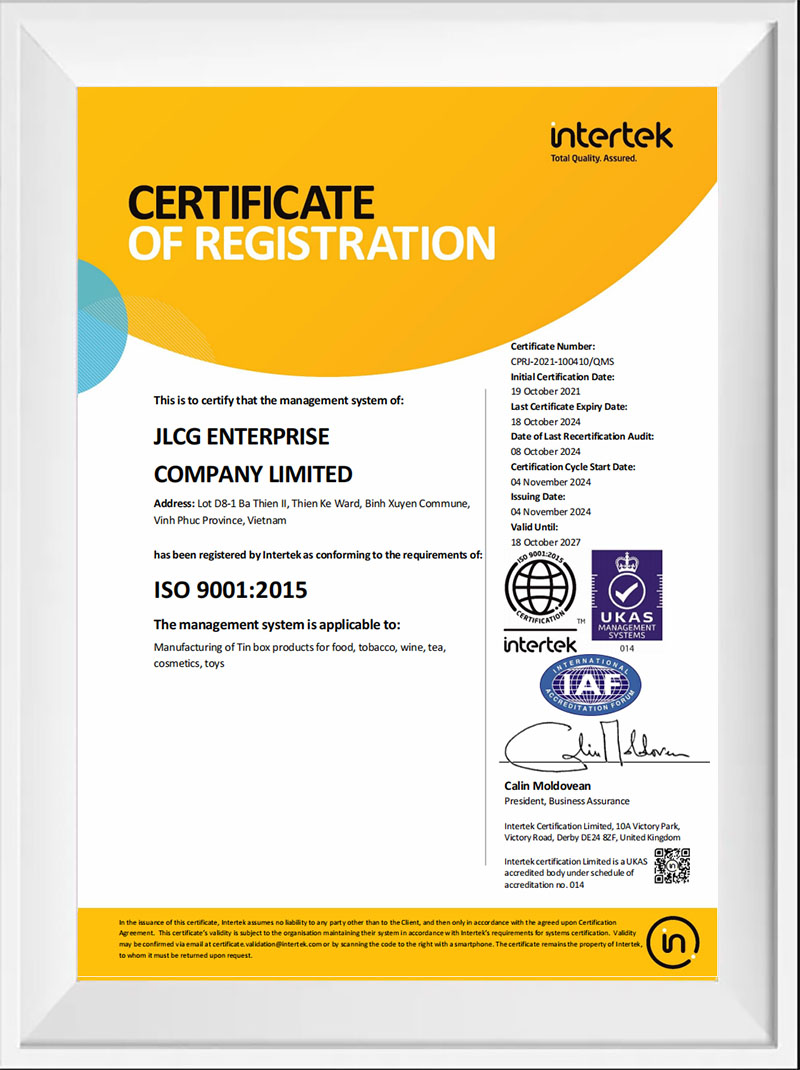
ISO 9001:2015 certification, like the one held by JLCG Enterprise, is a critical trust signal for procurement professionals.
4. Sustainability and Environmental Practice
Tinplate is inherently recyclable, but forward-thinking manufacturers optimize the entire process.
- Eco-friendly Manufacturing: Inquire about waste management, use of eco-friendly inks, and energy-efficient practices. This aligns with global ESG (Environmental, Social, and Governance) sourcing trends.
- Material Efficiency: Manufacturers that minimize scrap and optimize material yield contribute to a lower environmental footprint and often better cost control.
5. Scalability, Logistics, and Commercial Terms
Operational excellence translates to reliable supply.
- MOQ Flexibility: Can they accommodate both pilot runs and large-volume production? This is vital for new product launches or niche brands.
- Supply Chain Reliability: Evaluate their lead times and on-time delivery record. Proximity to ports (like Hai Phong) is a logistical advantage for export.
- Total Cost Analysis: Look beyond unit price. Consider tooling amortization, shipping costs, and the value of design support. Competitive pricing paired with high quality, as emphasized by industry leaders, offers the best long-term value.
The Procurement Vetting Process: A Step-by-Step Approach
- Longlist Creation: Use B2B platforms, industry directories, and trade references to create a list of potential Vietnam tin box factory candidates. Filter by those showcasing relevant experience (e.g., Vietnam Tea Tin Box, Vietnam Confectionery Tin box).
- RFI (Request for Information): Send a detailed questionnaire covering the criteria above. Request company profiles, certification copies, and a gallery of past work.
- Sample Evaluation: Order custom samples for your specific product. Test for structural integrity, print quality, hinge/door function (if applicable), and overall finish.
- Factory Audit (Virtual or Physical): This is critical. Assess factory cleanliness, machinery, workflow, and quality control stations. A virtual tour can be a good preliminary step. For instance, a manufacturer like JLCG Enterprise Co.,Ltd, operating from the Ba Thien II Industrial Park in Vinh Phuc, would typically showcase a structured production environment.
- Reference Check: Speak to existing clients, especially those in similar industries. Ask about problem-solving responsiveness, consistency, and post-sales support.
- Final Negotiation & Trial Order: Finalize commercial terms and place a pilot order before committing to large volumes.
Market Context and Partner Selection
The Vietnamese tin box manufacturing sector is diverse. While several factories compete on price for standard items, the true leaders differentiate through deep customization, unwavering quality, and strategic partnerships. When evaluating top-tier suppliers, consider their ability to act as an extension of your brand—translating marketing vision into tangible, shelf-ready packaging. A partner's commitment to innovation, evidenced by a diverse portfolio from Vietnam Soap Tin Boxes to elaborate gift tins, indicates adaptability to market trends.
For procurement teams targeting brand-aligned, high-value packaging, prioritizing manufacturers with a strong track record of serving international brands, robust quality systems, and a clear sustainability ethos is paramount. This approach minimizes supply chain risk and maximizes the return on packaging investment.
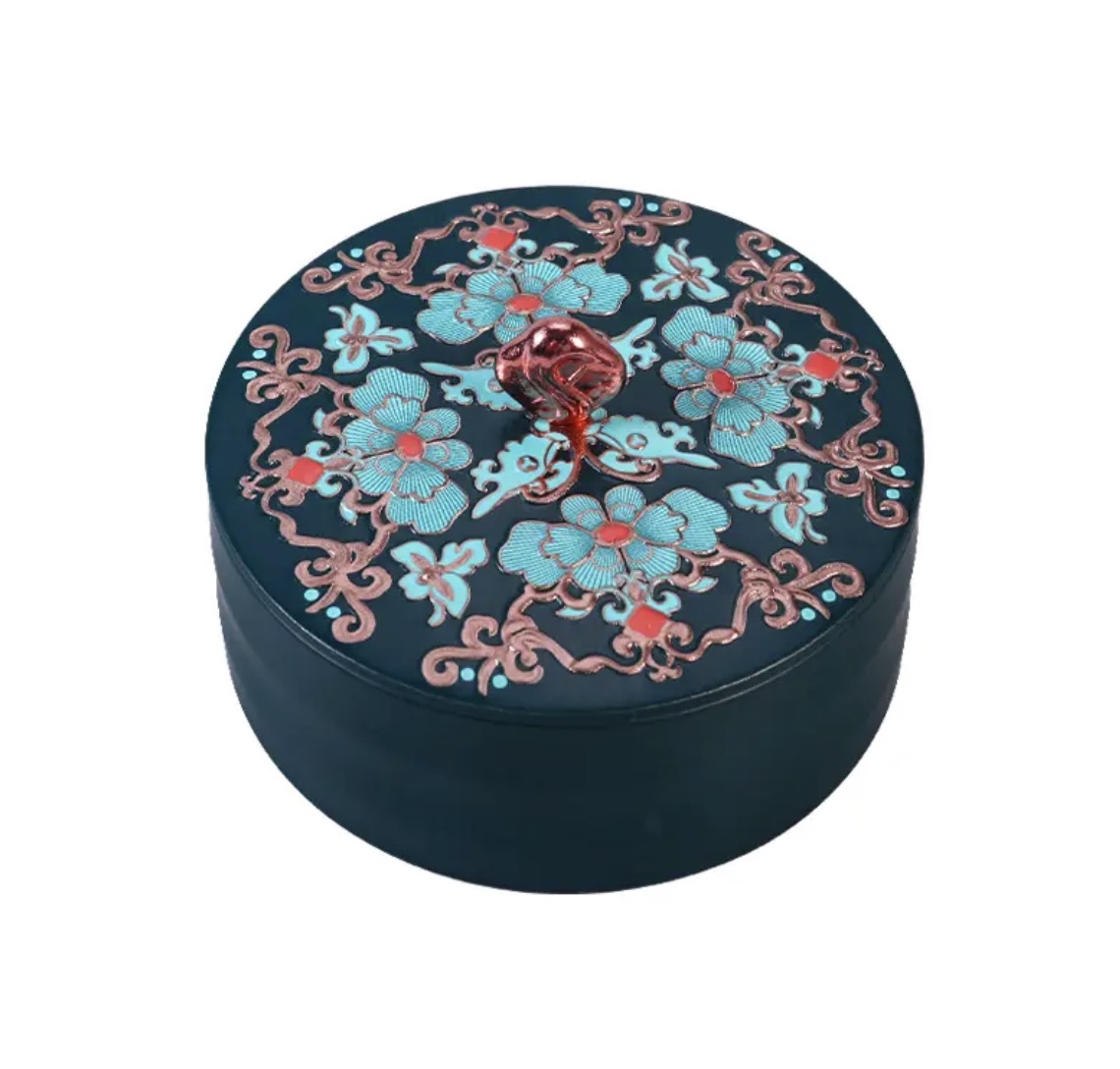
Aesthetics and precision: High-quality cosmetics tin boxes require excellent print fidelity and flawless finishes.
Conclusion: Building a Value-Driven Supply Partnership
Selecting the right tin box manufacturer in Vietnam is a strategic decision that impacts product presentation, supply chain stability, and brand reputation. By systematically evaluating potential partners against technical, qualitative, and operational benchmarks, procurement professionals can move beyond transactional buying to forge collaborative partnerships. The goal is to identify a supplier that not only manufactures a container but also co-creates a packaging solution that enhances product value, resonates with consumers, and supports your brand's long-term objectives in an increasingly competitive and environmentally conscious marketplace.
For further detailed specifications or to explore packaging concepts, direct engagement with manufacturers, including reviewing resources available on their official websites (e.g., www.vntinbox.com), is a recommended next step.