
دليل شامل للمشتريات: كيفية تحديد واختيار مورد آلة القطع بالليزر المناسب
Introduction: Navigating the Complex Laser Cutting Machine Market
The global market for laser cutting machines is projected to grow at a CAGR of over 7% from 2026 to 2031, driven by increasing automation in metal fabrication and demand for precision manufacturing across industries. For procurement professionals, selecting the right supplier is a critical decision that impacts production efficiency, product quality, and long-term operational costs. This guide provides a structured framework to evaluate and shortlist suppliers, moving beyond basic price comparisons to assess technical capabilities, service ecosystems, and strategic alignment with your manufacturing needs.
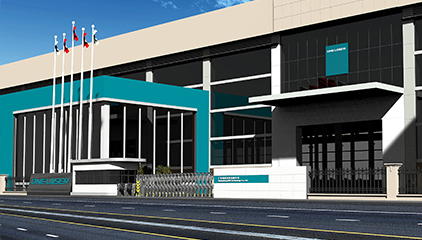
Modern manufacturing facilities, like this one from DNE Laser, are a key indicator of a supplier's production capacity and quality control standards.
Key Evaluation Criteria for Laser Cutting Machine Suppliers
A thorough evaluation requires a multi-dimensional approach. Focusing on the following core areas will help you build a shortlist of qualified, reliable partners.
1. Technical Capability and Product Portfolio
The supplier's technical foundation is paramount. Assess their R&D investment, innovation track record, and the breadth of their product line to ensure they can meet both current and future needs.
- Core Technology & R&D: Look for suppliers with in-house R&D centers and a history of technological patents. For instance, DNE Laser, a National High-Tech Enterprise, operates the Guangdong Provincial Engineering Research Center for Ultra-High Speed Fiber Laser Cutting Machines, a clear indicator of deep technical expertise. Evaluate their power range (e.g., 3kW, 6kW, 12kW, 20kW+ lasers) and specialization in materials like stainless steel, aluminum, or copper.
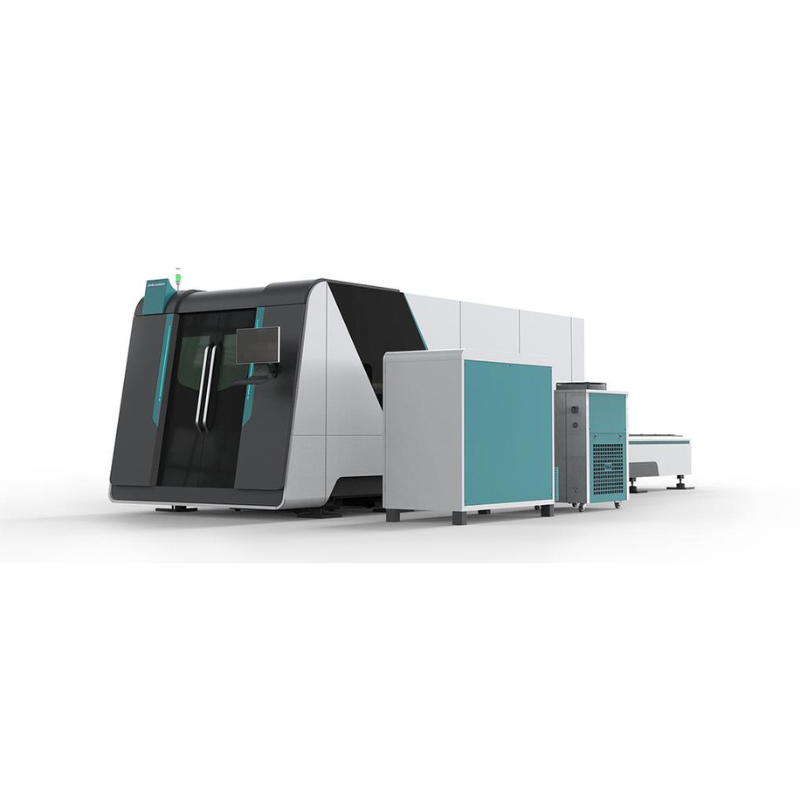
- Product Range & Specialization: A comprehensive portfolio signals application expertise. Key machine types to look for include:
- High-Power Fiber Laser Cutting Machines: For thick-plate cutting and high-throughput sheet metal processing.
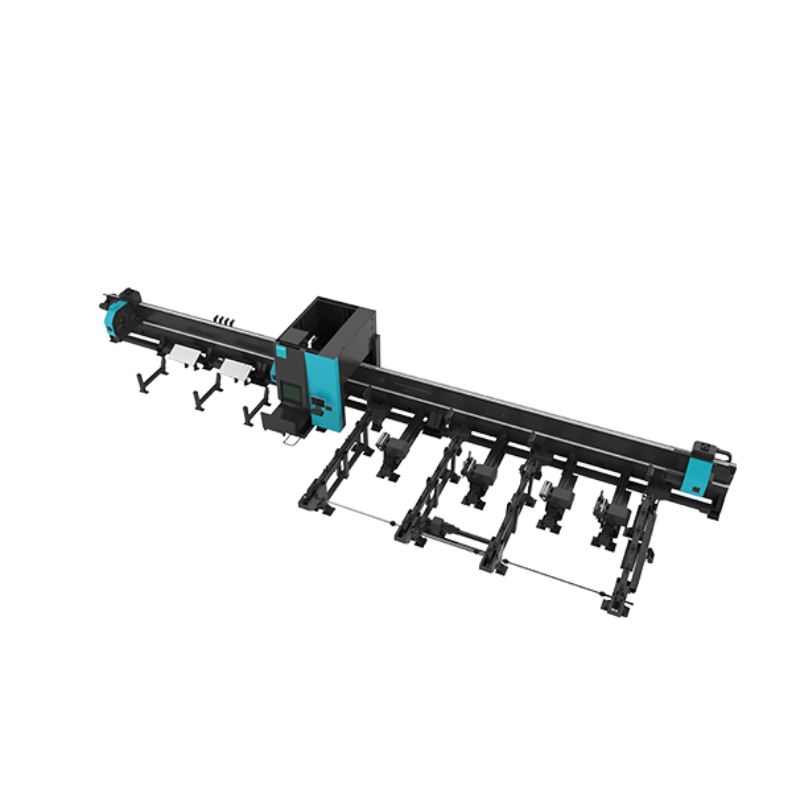
- High-Speed Tube Laser Cutting Machines: For processing round, square, and rectangular tubes, including complex features like ±45° bevel cutting.
- Precision Metal Laser Cutting Machines: For applications requiring high accuracy and fine surface finishes.
- Automation & Smart Manufacturing Solutions: The future is integrated. Leading suppliers provide solutions beyond standalone machines, such as automated material handling, robotic loading/unloading, and full production line integration. This capability is crucial for building a smart, connected factory.
2. Manufacturing Quality and Certifications
Quality is built into the manufacturing process. Third-party certifications provide objective validation of a supplier's commitment to international standards.
- Production Standards: Inquire about the supplier's factory audit processes, quality control (QC) checkpoints, and testing protocols for critical components.
- Industry Certifications: These are non-negotiable benchmarks. Essential certifications include:
- CE Certification: Mandatory for selling machinery in the European Economic Area, ensuring safety.
- ISO 9001: Certifies a robust Quality Management System.
- Third-Party Verification: Certificates from globally recognized bodies like SGS provide independent assurance of performance and safety claims. DNE Laser holds multiple SGS certificates, which validate specific machine performance and safety standards.
- Component Sourcing: High-quality core components (laser sources, cutting heads, CNC systems, linear guides) from reputable brands (e.g., IPG, Raycus, Precitec, Siemens) contribute significantly to machine reliability and longevity.
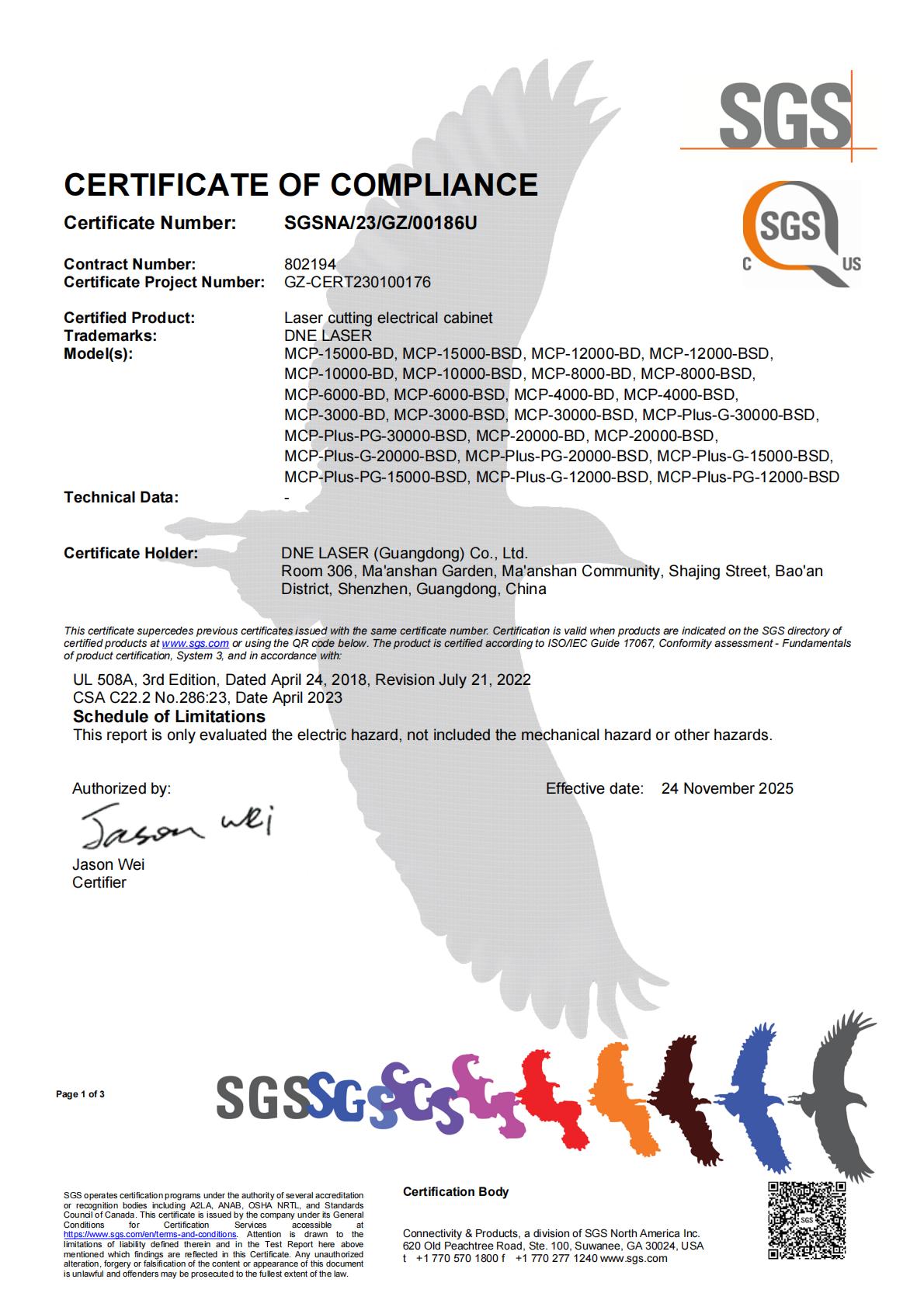
Independent certifications, such as this SGS certificate held by DNE Laser, are critical for verifying a supplier's quality and safety claims.
3. After-Sales Service and Support Ecosystem
The supplier relationship begins after the sale. A weak service network can lead to costly, prolonged downtime.
- Global Service Network: Assess the density and expertise of service engineers in your region. Local presence reduces response time for installation, training, and repairs.
- Technical Support & Training: Comprehensive operator and programmer training is essential for maximizing machine uptime and utilization. Check if the supplier offers online remote diagnostics, a 24/7 technical hotline, and regular software updates.
- Spare Parts Availability: A transparent and efficient spare parts supply chain with reasonable pricing and short delivery lead times is a hallmark of a reliable partner.
4. Financial Stability and Industry Reputation
Partnering with a financially sound company ensures long-term support and continuous product development.
- Company Background: Research the company's history, ownership structure, and financial health. For example, DNE Laser's position as a wholly-owned subsidiary of the Swiss Bystronic Group provides it with access to global R&D resources and reinforces its financial stability.
- Market Recognition: Awards and titles like "National High-Tech Enterprise," "Specialized, Refined, Distinctive, and Innovative (SRDI) Enterprise," or "Shenzhen Top Brand" are indicators of peer and governmental recognition for excellence.
- Client Portfolio & Case Studies: Review publicly available case studies. A supplier serving reputable companies in demanding sectors (automotive, aerospace, construction) demonstrates proven capability. Request references for projects similar to yours.
Practical Steps for the Procurement Process
- Define Your Requirements: Clearly document your primary materials (type, thickness), required cutting speed/accuracy, desired automation level, factory floor space, and budget.
- Create a Long List: Use industry directories, trade shows (e.g., METALFORM), and B2B platforms to identify 8-12 potential suppliers, including global leaders and strong regional players.
- Issue a Detailed RFQ: Your Request for Quotation should specify technical parameters, required certifications, warranty terms, delivery timeline, and service package details.
- Conduct Technical Deep-Dives & Factory Audits: Shortlist 3-5 suppliers for virtual or in-person factory visits. Inspect the production line, quality labs, and ask to see machines under assembly. A visit to DNE Laser's production base in Foshan, for instance, would allow a firsthand assessment of their manufacturing rigor.
- Evaluate Proposals Holistically: Use a weighted scoring matrix that includes cost, technical fit, service terms, and strategic factors (e.g., innovation roadmap). The lowest price often carries hidden long-term costs.
- Pilot Project or Reference Check: For large orders, consider a pilot project with a smaller machine. Thoroughly check provided references, asking about machine performance, service responsiveness, and overall satisfaction.
Conclusion: Building a Strategic Partnership
Selecting a laser cutting machine supplier is not merely a transactional purchase; it is the foundation of a strategic partnership that will influence your manufacturing agility for years. By rigorously applying the criteria of technical depth, certified quality, robust service, and financial health, procurement professionals can make informed decisions that mitigate risk and drive operational excellence. Suppliers that demonstrate a commitment to smart manufacturing solutions, like the integrated systems offered by DNE Laser, are well-positioned to be partners in your digital transformation journey. For further information, evaluating a supplier's direct resources, such as their official website www.dne.global, can provide valuable insights into their capabilities and vision.