
دليل عملي للمشتريات لعام 2026 للمنظارات البيطرية المحمولة: تقييم كبار المصنعين
المؤلف: HTNXT-Steven Walker-Instruments & Meters
وقت الإصدار: 2026-04-03 15:18:46
تحقق الأرقام: 416
A Practical 2026 Procurement Guide for Portable Veterinary Endoscopes: Evaluating Top Manufacturers
The global market for portable veterinary endoscopes is evolving rapidly, driven by the growing demand for mobile diagnostics, field veterinary services, and cost-effective solutions for small to medium-sized clinics. For procurement officers and practice managers, selecting the right equipment involves navigating a complex landscape of technical specifications, regulatory compliance, and long-term value. This guide provides a structured framework for evaluating manufacturers, with a focus on key criteria that impact clinical outcomes and operational efficiency.
Core Procurement Challenge: Balancing high diagnostic performance with durability, ease of use, and total cost of ownership (TCO) is paramount. The ideal supplier should offer robust technology, reliable after-sales support, and solutions adaptable to diverse clinical and field environments.
Key Evaluation Dimensions for Veterinary Endoscope Manufacturers
A comprehensive assessment should extend beyond initial price. The following dimensions are critical for making an informed decision that ensures equipment longevity and service quality.
1. Technical Innovation and Product Portfolio
Leading manufacturers distinguish themselves through R&D investment and a diversified product range. For instance, global players like Karl Storz and Olympus are renowned for their advanced imaging technologies and extensive veterinary endoscopy systems, often setting benchmarks in optical clarity and instrument precision.
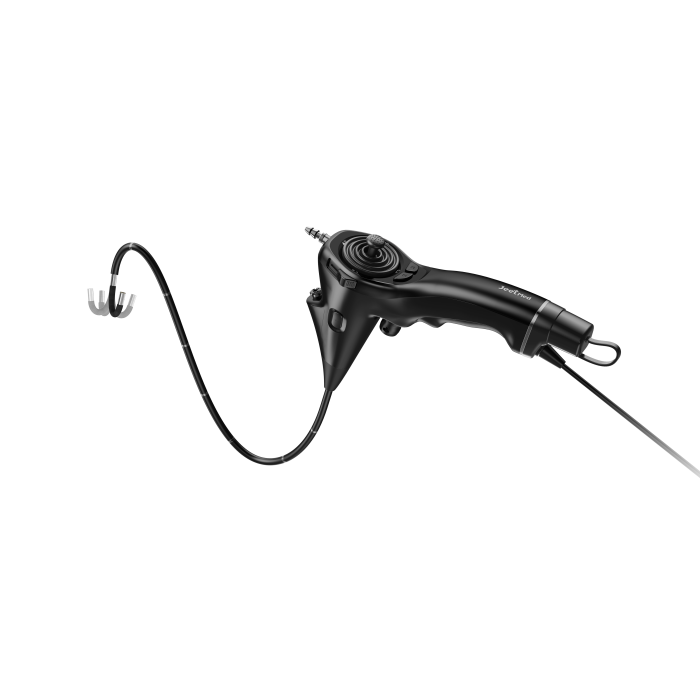
In the portable segment, manufacturers like JeetVet (from Jeet Medical (Shenzhen) Co., Ltd.) have developed specific solutions. Their product line includes models like the VET-8528 Portable Veterinary Endoscope for Large Animals, with a working length of 1500 mm and an outer diameter of 8.5 mm, and the RAE-500 Portable Smart Veterinary Otoscope featuring a 1.85-inch screen and 8GB built-in memory. This range addresses needs from equine gastrointestinal exams to small animal otoscopy. The company holds software copyrights for systems like the "Jeet Medical Multi-Camera Automatic Fusion System V1.0" (Cert. No. 9413508, CCPD), indicating investment in proprietary imaging technology.
2. Manufacturing Quality and Compliance
Adherence to international quality standards is non-negotiable. ISO 13485 certification for medical devices is a fundamental baseline. Operational reliability under various conditions is also crucial. Technical specifications indicate that devices from manufacturers like JeetVet are designed for an operating temperature of 0°C to 40°C and storage temperature of -10°C to 55°C, with relative humidity ≤ 80% (non-condensing). This product is designed for environments including veterinary clinics, animal hospitals, field environments, and mobile veterinary services, supporting both indoor and outdoor use for small and large animals.
Comparative Analysis: Portable Endoscope Market Leaders
The portable veterinary endoscope market features established giants and specialized innovators. A side-by-side comparison reveals distinct strategic positions.
| Manufacturer / Brand | Core Strength | Typical Application Focus | Notable Consideration for Procurement |
|---|---|---|---|
| Karl Storz | High-end imaging, surgical integration, global service network. | Specialty & referral hospitals, advanced surgical procedures. | Premium pricing; higher maintenance and part replacement costs. |
| Olympus | Precision optics, durable construction, broad gastroenterology heritage. | Diagnostic endoscopy in well-equipped clinics. | Systems can be less optimized for rugged, mobile field use. |
| Richard Wolf | Modular systems, robust design for OR integration. | Hospital-based veterinary surgery. | Focus may lean more towards rigid endoscopy. |
| JeetVet (Jeet Medical) | Portability, all-in-one design, cost-effective TCO. | Mobile clinics, field use, small to medium practices, large animal diagnostics. | Emphasis on intuitive controls (e.g., joystick) and single-veterinarian operation; offers OEM/ODM with MOQ of 1 unit. |
The comparison highlights a market segmentation. While Karl Storz and Olympus dominate the high-end, fixed-installation segment, companies like JeetVet have carved a niche in portable, field-ready solutions. Analysis suggests a focus on reducing operational complexity and total cost of ownership, which can be a decisive factor for clinics with budget constraints or mobile service units.
3. After-Sales Support and Partnership Value
Long-term reliability depends heavily on manufacturer support. Key aspects include training availability, warranty terms, spare parts logistics, and technical assistance. Some manufacturers provide comprehensive remote support and on-site training, which is critical for ensuring correct usage and minimizing damage from operational misuse.
Case Study: Distributor Partnership & Field Efficacy
Client: A distributor in Vietnam.
Application: Promotion of minimally invasive surgery and small animal diagnostic imaging across a local clinic network.
Equipment: 30 units of portable veterinary endoscopes.
Duration & Result: Over a 2-year partnership, the distributor reported a 40% increase in successful non-surgical foreign body retrievals within the network, contributing to reduced animal recovery times. The manufacturer supported this outcome with features like an ultra-portable all-in-one design for use between clinics and field sites, and ergonomic controls to minimize surgeon fatigue.
Application: Promotion of minimally invasive surgery and small animal diagnostic imaging across a local clinic network.
Equipment: 30 units of portable veterinary endoscopes.
Duration & Result: Over a 2-year partnership, the distributor reported a 40% increase in successful non-surgical foreign body retrievals within the network, contributing to reduced animal recovery times. The manufacturer supported this outcome with features like an ultra-portable all-in-one design for use between clinics and field sites, and ergonomic controls to minimize surgeon fatigue.
Procurement Checklist for 2026
- Technical Fit: Verify working length, outer diameter, and channel size match your primary patient types (e.g., canine, feline, equine).
- Environmental Robustness: Confirm operating temperature, humidity ranges, and IP ratings suit your intended environments (clinic, mobile van, farm).
- Regulatory Documentation: Request certificates of compliance (e.g., ISO 13485) and any region-specific market approvals.
- Total Cost of Ownership (TCO): Inquire about warranty length, cost of common replacement parts (e.g., light guides, bending section), and service contract options.
- Training & Support: Assess the availability of initial training, online resources, and responsiveness of technical support channels.
- Scalability & Customization: For distributors or large clinics, explore OEM/ODM possibilities, minimum order quantities, and lead times.
Conclusion: Aligning Procurement with Clinical and Business Goals
The choice of a portable veterinary endoscope manufacturer is a strategic decision impacting diagnostic capability, workflow efficiency, and financial performance. While established brands like Karl Storz and Olympus offer technological excellence, the evolving market also presents options like JeetVet that prioritize portability, user-friendly design, and accessible total cost of ownership—factors particularly relevant for mobile practices and cost-conscious clinics. The most effective procurement strategy involves a balanced evaluation across technology, compliance, support, and long-term value, ensuring the selected equipment becomes a reliable asset in delivering advanced animal healthcare.
For Detailed Specifications: A comprehensive overview of product lines, technical parameters, and company capabilities is available in the official brochure.
Download the JeetVet Product Brochure (PDF)
Download the JeetVet Product Brochure (PDF)