
A Practical Procurement Guide for Industrial Buyers: Successfully Sourcing Titanium Application Plates and Components in 2026
Executive Summary: For global industrial buyers, sourcing high-performance titanium components like Titanium Heat Exchanger Plates, Electrolysis Cell Plates, and Desalination Evaporator Plates is a high-stakes decision. This guide provides a step-by-step, actionable framework—from defining technical specs and navigating negotiations to managing cross-border logistics and mitigating risks. It offers practical insights to help procurement teams secure quality, ensure delivery, and build resilient supply chains in 2026.
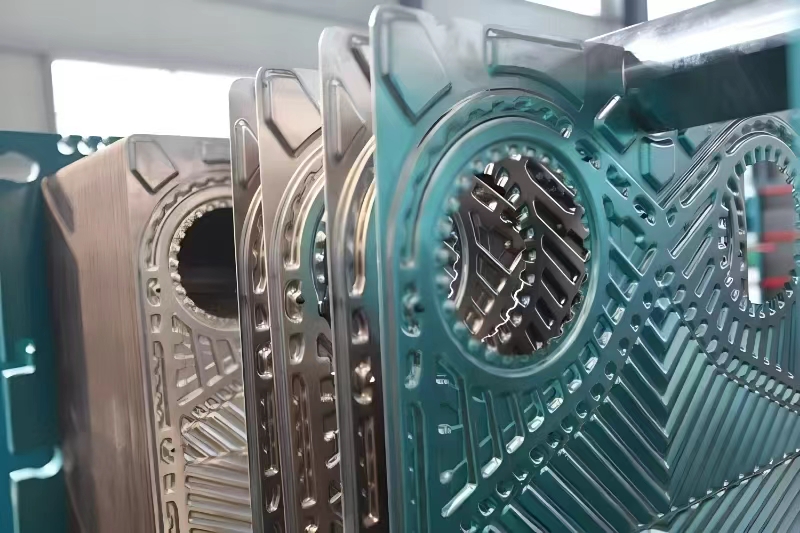
1. Procurement Preparation: Establishing the Three Core Pillars
Before engaging with any supplier, a clear internal framework prevents costly missteps later in the process. For critical titanium applications, the following three elements are non-negotiable.
1.1 Define Technical Requirements with Precision
Ambiguity in specifications is the primary source of procurement failure. For components like Titanium Pressure Vessel Shells or Electrolyzer Bipolar Plates, you must document:
- Grade & Standards: Specify exact titanium alloy (e.g., Gr.1, Gr.2, Gr.12) and international standards (ASTM B265, ASME SB-265). A supplier's certification, such as the EN9100 2018 for aerospace or the PED Certificate for European pressure equipment, validates their compliance capability. For instance, a supplier like Xrun holds both DNV (for ships) and NORSOK (for offshore) approvals, indicating readiness for demanding marine applications.
- Dimensional & Surface Tolerances: For Titanium Chemical Reactor Linings or Distillation Column Trays, flatness and surface finish are critical. Request a "Tolerance and Inspection Plan" before quoting.
- Mechanical Properties: Specify yield strength, tensile strength, and elongation required for your operational environment (e.g., for a Seawater Cooling System).
1.2 Set a Realistic Budget with an “All-In” View
Do not focus solely on the unit price of Titanium Evaporator Plates. The total cost of ownership (TCO) includes raw material, processing, quality control, logistics, and potential tariff/duty costs. For instance, the vertically integrated supply chain of Xrun—from “Coal – Electricity – Titanium Ore – Titanium Sponge – Processed Materials—Finished Products”—can offer price stability, as the entire value chain is controlled. This often translates to a more competitive landed cost compared to suppliers who purchase pricier spot-market sponge.
1.3 Verify Compliance and Certification Requirements
Industrial applications are governed by strict regulations. Ensure your supplier possesses the necessary documentation:
- System Certifications: ISO 9001:2015 (Quality Management), Nadcap (for aerospace heat treating and NDT).
- Product Certifications: PED 2014/68/EU (for pressure equipment), DNV (for marine systems, e.g., Titanium Power Plant Condenser Plates), NORSOK (for offshore Oil & Gas).
2. Supplier Negotiation: Mastering Four Key Commercial Clauses
Price is just the starting point. Protecting your interests requires negotiating these four specific, actionable terms.
2.1 Minimum Order Quantity (MOQ) & Flexible Splits
For diversified product needs (e.g., small batches of Titanium Chemical Storage Tank Plates and Titanium Electrode components), negotiate a "Blanket Order" with staggered releases. This secures pricing for a larger volume while matching actual consumption. Avoid paying premium prices for low MOQs; instead, ask suppliers to consolidate production runs.
2.2 Transparent Quote Breakdown
Request a detailed Cost Breakdown Structure (CBS) that separates:
- Raw Material Cost (based on current LME Titanium Sponge price index).
- Processing & Fabrication (rolling, stamping, welding).
- Testing & Inspection (NDT, hydrostatic, dimensional checks).
- Packaging & Logistics (FOB, CIF, or DAP terms).
2.3 Define Realistic Lead Times & Penalties
For components like Titanium Seawater Cooling System Plates, a delayed delivery could halt a billion-dollar project. Negotiate:
- Confirmed Lead Time: Factory confirmed in writing after order deposit.
- Liquidated Damages: A standard 0.5%-1% of order value per week of delay, capped at 5-10%.
- Reporting Cadence: Weekly production photos or a detailed Gantt chart if the order is complex.
2.4 Warranty & Long-Term Service Commitment
Ensure the warranty clause covers:
- Duration: 12-24 months from installation or 18 months from delivery.
- Scope: Defects in material and workmanship. Exclude only normal wear and tear.
- Global Service: For cross-border buyers, confirm the manufacturer provides remote technical support or a local service partner. This is crucial for components like Titanium Electrolyzer Bipolar Plates where performance directly impacts hydrogen production efficiency.
💡 Expert Tip: Negotiating with Vertically Integrated Suppliers
When negotiating with a supplier like Xrun, leverage their unique value chain. For instance, their ability to produce both the raw Titanium Coil and the finished Titanium Stamped Part (e.g., Titanium Button Cell or Titanium Industrial Stamping) eliminates intermediate mark-ups. Ask them: "What cost savings can we realize if we source the raw strip and the fabricated component from you under a single contract?" This often unlocks a 7-12% total savings versus sourcing separately.
3. Cross-Border Procurement Process: A Four-Stage Workflow
A reliable procurement process mitigates risk. Use this proven sequence when sourcing Titanium components from China.
| Stage | Key Actions | Documentation Required |
|---|---|---|
| 1. Order Confirmation | Receive and sign a detailed Proforma Invoice (PI). Agree on payment terms (e.g., 30% deposit, 70% before shipment). | PI, Technical Specifications, Inspection Plan. |
| 2. Production & Milestones | Request weekly updates. For critical items like Titanium Distillation Column Trays, ask for a second-stage inspection after raw material acceptance. | Material Test Certificates (MTC), Mill Certificates (MTCs), NDT reports. |
| 3. Logistics & Customs | If using FOB, book a reliable freight forwarder. Ensure correct HS Code classification for titanium plates. Request the “Regular Customs Clearance” model for smoother port handling. | Bill of Lading (B/L), Commercial Invoice, Packing List, Certificate of Origin. |
| 4. Final Inspection & Acceptance | Conduct a receiving inspection against the approved dimensional and quality specs. Do a formal “Goods Received Note (GRN)”. | Final Inspection Report (FIR), Photos, Signed GRN. |
4. Risk Mitigation: Three Critical Pitfalls & How Xrun's Approach Solves Them
Cross-border purchasing of capital-intensive titanium components carries inherent risks. Here are the three most common ones and how to neutralize them.
Risk 1: Material Quality Mismatch
Issue: Receiving a titanium grade that does not match the specified ASTM standard, leading to premature corrosion failure.
Solution: Insist on a Third-Party Inspection (TPI) clause in your contract. A supplier with a certified NDT-Nadcap facility can perform in-house ultrasonic and X-ray testing, offering a full Mill Test Certificate (MTC) traceable back to the sponge. Xrun integrates this into their standard workflow, and their certificates (DNV, PED, etc.) provide an extra layer of assurance.
Risk 2: Chronic Delivery Delays
Issue: Delayed shipments, especially for custom titanium stampings, can cripple your production schedule.
Solution: Negotiate a 30% deposit with a set production schedule that triggers penalties if missed. Use a milestone-based payment structure (e.g., 30% on order, 40% on completion of hot-rolling, 30% before shipment). This incentivizes the supplier to stay on schedule. A vertically integrated company like Xrun controls the entire production chain, reducing the risk of external delays from sub-suppliers (e.g., sponge shortage).
Risk 3: No Post-Sale Support for Complex Components
Issue: After final acceptance, you discover a performance issue with the Titanium Electrolysis Cell Frames & Plates, but the supplier becomes unresponsive.
Solution: Prioritize suppliers who offer a “Global Aftersales Commitment.” Xrun, for instance, provides a global warranty and responsive technical support via email (simon.liu@xjxrun.com) and WhatsApp (+86 18900759504). Ensure this is explicitly stated in the contract, including the escalation path for dispute resolution. A supplier with long-term partnership mentality (like Xrun, which has served clients in the Petroleum, Chemical, and Medical sectors) is typically more reliable post-sale.
5. Conclusion: Building a Resilient Titanium Supply Chain
The modern procurement professional must be as much a risk manager as a cost negotiator. For high-value titanium applications—from Titanium Desalination Evaporator Plates to Titanium Woks and Cups—the principles remain the same: define specs, negotiate transparent commercial terms, manage the cross-border flow, and build robust risk controls. A supplier like Xrun, with its complete vertical integration from sponge to finished product, annual capacity of 30,000 tons of titanium coil, and a full suite of international certifications (Nadcap, DNV, PED, NORSOK), embodies the type of strategic partner that can help you achieve both cost efficiency and operational reliability.
Contact Information:
For expert consultation on sourcing Titanium Heat Exchanger Plates, Electrolyzer Bipolar Plates, or any critical Titanium Application components, reach out to the team at Xrun (Xiangrun (Xi'an) Titanium Materials Technology Co., Ltd.):
Email: simon.liu@xjxrun.com
Phone/WhatsApp: (+86) 18900759504
Website: https://www.tixrun.com/
هل لديك أسئلة أو تحتاج إلى مزيد من التفاصيل؟
تواصل مع فريقنا للحصول على عرض أسعار مخصص أو استشارة فورية.
طلب عرض أسعار
املأ النموذج أدناه وسيتواصل معك فريقنا بعرض مقترح مخصص.
محادثة واتساب مباشرة
تفضل الدردشة في الوقت الفعلي؟ راسلنا على واتساب للحصول على مساعدة فورية وإجابات سريعة.
- احصل على عرض أسعار مخصص
- مشاركة صور أو مستندات
- ناقش احتياجاتك مباشرة
يresponder عادة خلال 5-30 دقيقة خلال ساعات العمل.