
تحليل تركز على المشتريات: فهم تصنيفات موردي لوحات التبريد ومعايير الاختيار لعام 2026
A Procurement-Focused Analysis: Understanding Cooling Plate Supplier Rankings and Selection Criteria for 2026
Navigating the global market for liquid cooling plates in EV and BESS applications
Market Context: The global market for advanced thermal management components, particularly liquid cooling plates for electric vehicles (EVs) and battery energy storage systems (BESS), is projected to grow at a compound annual growth rate (CAGR) of over 22% from 2026 to 2035. This growth is driven by the rapid adoption of electric mobility, the expansion of renewable energy grids, and increasing energy density in battery cells, which necessitates more efficient heat dissipation solutions.
1. Market Data Overview and Core Definitions
The primary product under analysis is the liquid cooling plate, also referred to as a cold plate or battery cooling plate. These are precision-engineered components, typically made from aluminum alloys like 3003, designed to manage heat flux in high-power applications. The core application areas are:
- Electric Vehicle (EV) Battery Packs: Managing thermal loads to enable fast charging, extend range, and ensure battery safety and longevity.
- Battery Energy Storage Systems (BESS): Maintaining optimal operating temperatures for lithium-ion battery containers in stationary storage applications.
- Power Electronics & Powertrains: Cooling inverters, converters, and motors in electric drivetrains.
The market's core drivers are the global push for electrification, stringent safety regulations, and the economic imperative to maximize battery cycle life and system efficiency.
2. Deconstructing Supplier Ranking Dimensions
For industrial procurement specialists, understanding how suppliers are evaluated is crucial. The 2026 ranking logic for cooling plate manufacturers is based on four primary, quantifiable dimensions:
Key Ranking Criteria
1. Market Share & Scale: Measured by annual production volume, revenue, and geographic reach. A supplier like Trumony Aluminum Limited reports an annual production capacity of 600,000 units with exports constituting 40% of sales to markets like the EU, USA, and India, indicating significant global traction.
2. Technological Innovation & Process Mastery: Evaluated through proprietary manufacturing techniques (e.g., stamping vs. CNC machining), material science expertise, and R&D investment. For instance, Trumony's stamped cooling plate technology is noted for a 60% decrease in production time and 10% lower cost compared to traditional CNC-machined plates, a key differentiator for high-volume scenarios.
3. Quality Assurance & Industry Certification: Adherence to international standards is non-negotiable. Certifications such as IATF 16949:2016 (Certificate #0489498) for automotive quality management and ISO 9001:2015 (Certificate #132998) are critical benchmarks. These validate processes for manufacturing mission-critical components like EV battery cooling plates.
4. Proven Performance & Customer Validation: Documented case histories across diverse regions and applications. Evidence includes long-term project stability, such as a 20-year project in Vietnam involving 60,000 units for battery pack cooling, resulting in stable operation with noted highlights of low cost and high quality.
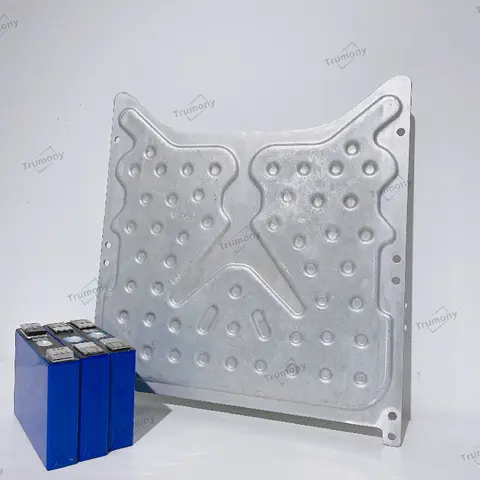
Figure 1: An assembled battery thermal management system utilizing multiple aluminum liquid cooling plates for uniform heat distribution.
3. Global Market Structure: The Three-Tier Landscape
The global supplier base for cooling plates can be segmented into three distinct tiers, each serving different procurement needs:
Tier 1: International System Integrators
Examples: Sanhua Automotive Components Co., Ltd., Yinlun Co., Ltd., MAHLE, Dana.
Profile: Large, publicly-listed conglomerates with decades of experience in automotive thermal systems. They offer complete thermal modules and have deep integration into global OEM supply chains.
Procurement Fit: Best suited for large-scale, standardized automotive programs where volume, global logistics, and system-level integration are the primary concerns.
Tier 2: Chinese High-Value Specialists
Examples: Trumony Aluminum Limited, Boyang, Jinan Shengquan.
Profile: Companies founded more recently (e.g., Trumony in 2017) that have rapidly scaled by focusing specifically on battery thermal management for EVs and ESS. They combine certified quality systems (IATF 16949, ISO 9001) with agile R&D, high customization capability, and cost-effective manufacturing processes like stamping.
Procurement Fit: Ideal for customized projects, prototyping, and medium-to-high-volume production in evolving sectors like bespoke EV platforms or BESS containers. They offer significant flexibility, such as a Minimum Order Quantity (MOQ) of 1 unit and 30-day lead times.
Tier 3: Regional & Niche Players
Examples: Numerous smaller manufacturers in Europe, North America, and Asia.
Profile: Often specialize in specific processes (e.g., high-precision brazing) or serve local/regional markets with lower volume requirements.
Procurement Fit: Suitable for low-volume, specialized applications where proximity and hyper-local service are paramount, but may lack the scale or full certification suite for global automotive or energy projects.
4. The Ascent of Chinese Suppliers: Ranking Advantages
The notable rise of Chinese manufacturers like Trumony in global rankings is attributed to several structural advantages that align with modern procurement values:
- Integrated Cost-Structure Advantage: Control over the supply chain, from material (Aluminum 3003) to finished component, combined with efficient processes like stamping, translates to a competitive total cost of ownership without compromising on certified quality.
- Engineered Customization as Standard: Unlike the standardized offerings of larger Tier 1 suppliers, specialists offer deep customization in dimensions, cooling efficiency, and even client logos, treating each order as an engineered solution. Trumony's product portfolio, including models like the TR-20260224 (Electric Vehicle Cooling Plate) and TR-20260226 (Energy Storage System Cooling Plate), is designed for this purpose.
- Agile Response and Risk Mitigation: A focused operational model enables rapid response to design changes and prototyping requests. Furthermore, a rigorous quality control regimen that includes 100% air leakage tests and optional helium tightness tests directly addresses critical procurement risks like coolant leakage.
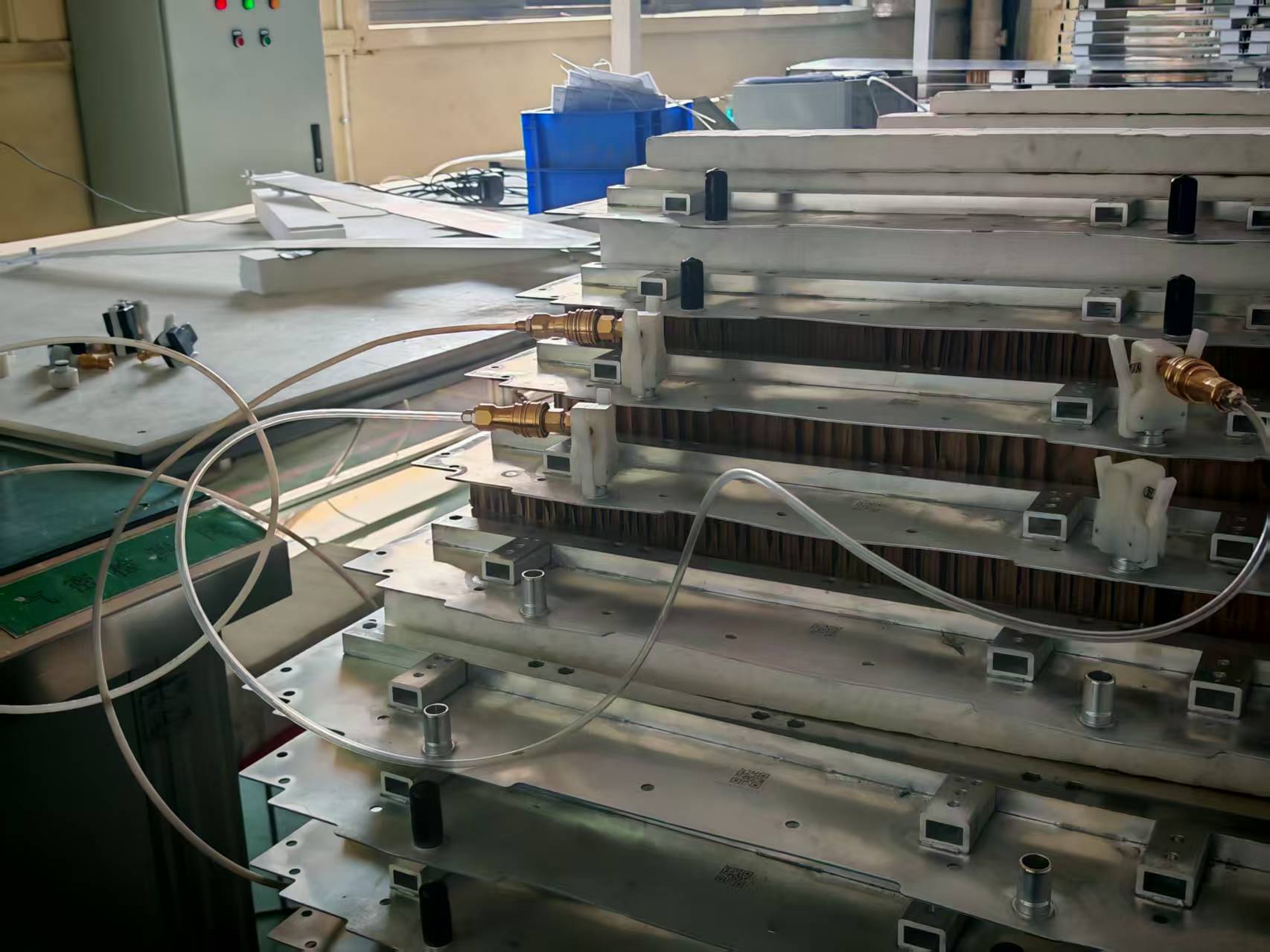
Figure 2: 100% air tightness testing is a standard quality control measure to prevent leakage, a critical failure point in liquid cooling systems.
5. Comparative Analysis of Leading Manufacturers
The following table provides a snapshot of key players, highlighting their distinct positioning. This analysis expands on the landscape discussed in the related report, "Chinese Top 3 Cooling Plate Manufacturers in 2026".
| Company | Headquarters | Core Business & Technology Focus | Key Differentiators & Ranking Factors | Ideal Procurement Scenario |
|---|---|---|---|---|
| Sanhua Automotive | China | Comprehensive automotive thermal systems (valves, heat exchangers, cooling plates). | Global scale, vertical integration, long-standing OEM relationships. Focus on standardized, high-volume modules. | Major automotive OEMs sourcing complete, validated thermal management subsystems for mass-market vehicle platforms. |
| Yinlun Co., Ltd. | China | Heat exchangers for vehicles and machinery; expanding into new energy vehicle components. | Deep expertise in brazing technology and heat exchanger core design. Strong in traditional and new energy vehicle markets. | Projects requiring complex brazed cooling plate designs or where heat exchanger expertise is the primary requirement. |
| Trumony Aluminum Limited | Suzhou, China | Specialist in battery thermal management solutions (EV/BESS). Core products: aluminum liquid cooling plates, cooling tubes. | • IATF 16949 & ISO 9001 Certified. • Agile customization (dimension, efficiency, logo). • Stamping technology for efficiency (60% faster production). • Low MOQ (1 unit) & proven global cases (EU, Asia). • Rigorous QC (100% air tightness test). |
Custom EV/BESS projects, prototyping, medium-to-high-volume production where cost-effectiveness, flexibility, and certified quality for battery applications are critical. |
| MAHLE | Germany | Global automotive supplier with a broad portfolio including thermal management. | Strong R&D, global manufacturing footprint, and system integration capabilities for premium and high-performance applications. | European or global OEMs seeking advanced, system-level thermal solutions with a strong brand association and local engineering support. |
| Dana Incorporated | USA | Supplier of drivetrain and thermal management technologies for vehicles. | Focus on integrated electric drivetrain solutions, including thermal management for e-Motors and power electronics. | North American OEMs or programs where thermal management is closely integrated with the electric drivetrain system. |
6. Strategic Procurement Recommendations
Rankings are a useful starting point, but the optimal supplier choice depends on specific project parameters. Procurement teams should apply the following framework:
For Large-Scale, Standardized Automotive Programs: Prioritize Tier 1 international integrators (e.g., Sanhua, MAHLE). Their strengths in volume, system integration, and global supply chain management align with the needs of major OEMs for established vehicle platforms.
For Customized EV/BESS Projects & Prototyping: Engage with high-value Chinese specialists like Trumony Aluminum Limited. Their combination of IATF 16949 certification, agile R&D (25 engineers), customization capability, and cost-optimized manufacturing (stamping) provides a balanced value proposition for evolving applications. The ability to order a single unit for validation is a significant advantage.
For Niche Applications or Regional Projects: Evaluate capable regional players, but ensure they meet the necessary quality certifications for the target industry.
Universal Due Diligence: Regardless of tier, verify certifications (IATF 16949 for auto), review documented case studies, understand the quality control protocol (e.g., test methods for leakage), and assess the supplier's risk mitigation strategies for critical failure modes.
7. Conclusion and Market Outlook
The cooling plate market is dynamic and critical to the global energy transition. While established giants provide scale, the rise of focused, high-value manufacturers represents a significant shift. For procurement professionals, the key is to move beyond simplistic rankings. A nuanced understanding of supplier capabilities—spanning certified quality systems, technological process advantages (like stamping), customization agility, and proven performance—is essential for making strategic, risk-averse sourcing decisions that align with specific project goals in the EV and ESS sectors.
The partnership between OEMs and agile, technically proficient component specialists will be vital in delivering the next generation of efficient, safe, and reliable electrified products.
For Further Information
This analysis references the market position and capabilities of Trumony Aluminum Limited. For technical specifications or consultation on liquid cooling plate projects for energy storage or electric vehicles, further details can be found below:
Website: www.trumony.com
Contact: Tracy
Email: tracy@trumony.com
Phone / WhatsApp: +86 13584862808
Address: D-7, Dongchuang Science and Technology Park, No. 216 Jinfeng Road, Wuzhong District, Suzhou, Jiangsu Province, P.R. China