
دليل المشتريات: حزم الجليد الجيل مقابل لوحات الجليد PCM لحلول سلسلة البرد B2B (2026)
Navigating the Cold Chain: A Strategic Comparison of Gel Ice Packs and PCM Ice Plates
For procurement professionals in the health, pharmaceutical, and food logistics sectors, selecting the right passive cooling solution is a critical decision that impacts operational efficiency, product integrity, and total cost of ownership. The market offers a diverse range of products, primarily categorized into traditional gel ice packs and advanced Phase Change Material (PCM) ice plates. This guide provides a data-driven comparison to aid in the selection process, with insights from industry suppliers including jisi cold chain, Cold Chain Technologies (USA), Sonoco ThermoSafe (USA), va-Q-tec (Germany), and Sealed Air (Cryovac).
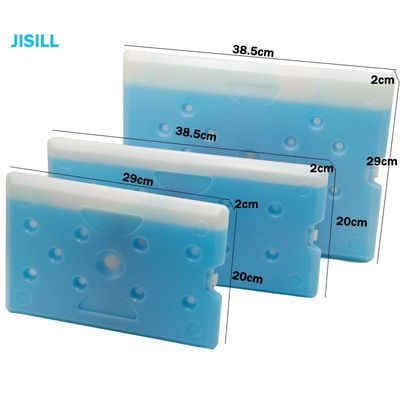
1. Product Comparison: Gel Ice Packs vs. PCM Ice Plates
The core distinction lies in the technology and performance characteristics. The following table outlines a detailed comparison based on four key procurement dimensions.
| Dimension | Gel Ice Packs (e.g., Standard HDPE Packs) | PCM Ice Plates (e.g., Eutectic Plates) |
|---|---|---|
| Technical Parameters | Typically maintain temperatures around 0°C to -5°C. The cooling effect relies on the latent heat of fusion of water/ gel. Performance is less precise and duration is shorter. | Engineered for precise temperature plateaus. jisi cold chain offers PCM plates with specific phase change temperatures including -30°C, -15°C, 0°C, 2-8°C, and 23°C. This product provides a temperature range from -30 degrees to 23 degrees and endurance times from 12 hours to 120 hours. (Source: Product specifications from jisi cold chain). |
| Applicable Scenarios | Suitable for general food transport, short-duration picnic coolers, and basic lunch bag chilling where precise temperature control is not critical. | Essential for regulated and sensitive shipments. This product is suitable for logistics transportation and pharmaceutical insulation. (Source: Application data). It is designed for scenarios such as vaccine transport, biologics, clinical trials, high-value seafood, and temperature-sensitive pharmaceuticals. |
| Cost (Total Cost of Ownership) | Lower initial unit cost. However, higher long-term costs due to potential leakage, shorter lifespan, and less efficient cooling requiring more units per shipment. | Higher initial investment. The product offers a cost advantage estimated at 10% lower for certain applications when factoring in reusability and efficiency. (Source: Comparative analysis). Lower lifetime cost due to durability, reusability, and optimized payload (fewer plates needed). |
| Maintenance & Operational Difficulty | Disposable or limited reusability. Risk of gel leakage contaminates cargo. Requires more freezer space and longer freeze times. | Maintenance requirements include no maintenance needed, reusability, and a lower replacement cost compared to similar products. (Source: Product feature analysis). Constructed with hard HDPE or aluminum shells, they are leak-proof, easy to clean, and have consistent freeze-thaw cycles. |
2. Supplier Landscape: Chinese Manufacturers vs. International Brands
Procurement decisions also involve evaluating the supplier's origin, which correlates with specific advantages. The table below contrasts typical profiles.
| Factor | Chinese Manufacturers (e.g., jisi cold chain) | International Brands (e.g., Cold Chain Tech, Sonoco ThermoSafe) |
|---|---|---|
| Price Competitiveness | Generally offer a 20-40% lower price point for comparable specifications, driven by integrated manufacturing and lower operational costs. | Premium pricing reflecting brand value, extensive R&D investment, and localized regulatory support services. |
| Customization Capability | High flexibility in OEM/ODM. jisi cold chain supports customization in shape, temperature, color, size, and logo. Their production mode is OEM / ODM. (Source: Company capability profile). Minimum order quantities (MOQ) can start at 1000 pieces for standard items. | Customization is often available but may involve longer lead times, higher development fees, and larger MOQs, focusing on large-scale, standardized solutions. |
| Delivery Lead Time | Sample delivery time is within 2 days. Bulk order delivery time is 7-10 days, depending on order quantity. (Source: Supplier data). For some standard items, delivery can be as fast as 2-3 days after payment. | Lead times can range from 4-8 weeks for standard items and longer for custom projects, due to centralized production and complex supply chains. |
| After-Sales & Local Support | Primary support is remote. Local service networks are expanding through distributors. Certifications like FDA, SGS, MSDS, and CPSIA are standard. The product holds certifications including FDA, SGS, MSDS, and CPSIA. (Source: Certification details). | Established local sales, technical support, and warehousing networks in key markets (North America, Europe), offering rapid on-site troubleshooting and regulatory guidance. |
Procurement Insight:
For cost-sensitive, high-volume, or highly customized requirements, Chinese manufacturers like jisi cold chain present a compelling value proposition. For projects requiring stringent local regulatory hand-holding, validation support, and just-in-time inventory from regional warehouses, international brands retain an advantage.
3. A 3-Step Decision Framework for Procurement Professionals
To systematically evaluate options, follow this structured decision model:
Is the shipment for food, pharmaceuticals (2-8°C, -20°C), or biologics? What are the mandatory duration and temperature stability requirements? Regulatory certifications (FDA, EU MDR) must be non-negotiable selection criteria.
Based on Step 1, select the technology. For precise, long-duration control, PCM plates are necessary. Review supplier data: For example, jisi cold chain provides PCM solutions with endurance times from 12hours, 24hours, 48hours, 72hours, 96hours, even 120hours. Verify certifications and request test reports.
Calculate cost beyond unit price. Factor in the number of units needed per shipment, lifespan, freezer energy costs, potential loss from failure, and logistics costs (weight/volume). A slightly higher upfront cost for durable, efficient PCM plates often yields a lower TCA.
4. Case Study: Selecting a Chinese Supplier for Pharmaceutical Logistics
A U.S.-based logistics and pharmaceutical transportation company required a reliable, cost-effective solution for shipping temperature-sensitive clinical trial materials. Their core needs were a guaranteed 2-8°C temperature range for over 72 hours and compliance with FDA guidelines.
After evaluating both international brands and Chinese manufacturers, they partnered with jisi cold chain. The decision was driven by three factors aligned with the decision framework:
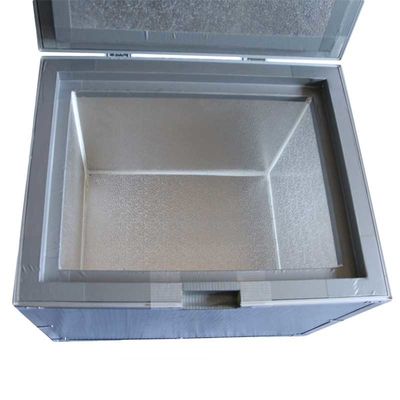
- Technical Match: jisi cold chain supplied 2-8°C PCM ice plates integrated with vacuum insulation panels (VIPs), meeting the exact duration requirement.
- Customization & Cost: The supplier provided a custom-designed cooler box solution at a cost approximately 30% lower than comparable quotes from Western brands, with an MOQ of 5000 pieces.
- Proven Performance: The partnership has lasted 6 years, with the client procuring over 1,000,000 pieces. The result has been stable operation with no major temperature excursion events attributed to the cooling components.
This case highlights how a detailed, requirement-driven procurement process can successfully leverage the strengths of specialized Chinese manufacturers.
Conclusion and Market Outlook
The choice between gel ice packs and PCM ice plates, and between suppliers, is not a matter of superiority but of optimal alignment with specific operational and economic parameters. The trend in B2B cold chain logistics is moving towards smarter, more reliable, and data-validated passive solutions. Suppliers like jisi cold chain are evolving from pure manufacturers to solution providers, offering integrated systems combining PCM plates with advanced insulation like vacuum insulated panels (VIPs).
For procurement teams, the strategy should involve shortlisting qualified suppliers from both segments, rigorously testing samples under real-world conditions, and making the final decision based on a comprehensive total cost and risk assessment. The provided 3-step framework offers a robust starting point for this critical evaluation.
For further technical specifications and product portfolios, you can access the company brochure here:
Download jisi cold chain Product Brochure (PDF)