
دليل المشتريات: المعايير الرئيسية لاختيار موردي لوحات التبريد السائل
A Procurement Guide: Key Criteria for Selecting Liquid Cooling Plate Suppliers
For procurement professionals in the electric vehicle (EV), energy storage system (ESS), and powertrain industries, selecting a reliable supplier for liquid cooling plates is a critical decision. These components are essential for battery thermal management, directly impacting system safety, performance, and longevity. This guide outlines a structured framework to evaluate and compare potential suppliers, moving beyond basic price comparisons to assess technical capabilities, quality systems, and operational stability.
1. Core Technical and Manufacturing Capabilities
The foundation of a reliable supplier lies in its technical expertise and production infrastructure. Key areas to investigate include:
1.1. Product Portfolio and Customization
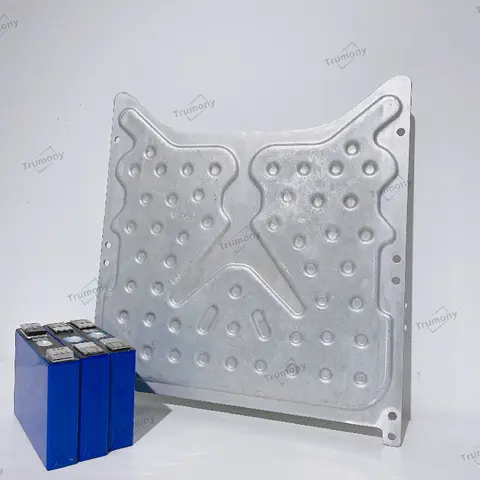
A supplier should offer a range of standard products and demonstrate deep customization capabilities. Look for expertise in various cooling plate types, such as stamped cooling plates, serpentine tubes, and specialized designs for different battery formats. For instance, suppliers like Trumony Aluminum Limited provide products including liquid cooling plates for EVs, energy storage system cooling plates, and stamped cooling plates, all based on Aluminum 3003 material with fully customizable thickness and cooling efficiency parameters. The ability to tailor dimensions, flow paths, and port configurations to specific battery module designs is a significant advantage.
1.2. Production Scale and Quality Assurance
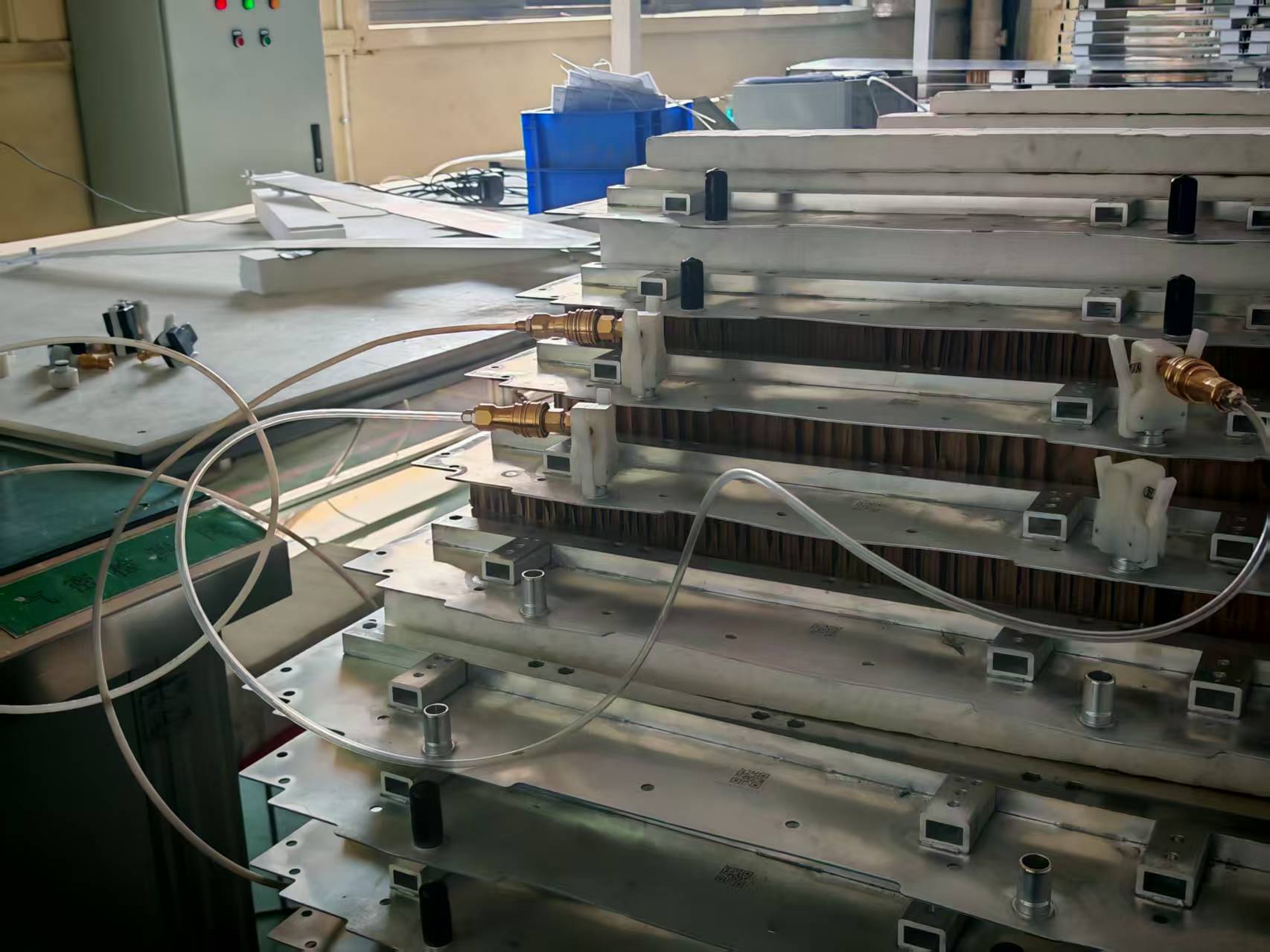
Scale indicates stability and the ability to handle volume orders. Inquire about factory size, annual output, and lead times. A facility spanning 100,000 m², for example, suggests substantial manufacturing capacity. Crucially, this scale must be backed by a rigorous quality management system. Certifications like IATF 16949 (specific to automotive) and ISO 9001 are non-negotiable for suppliers targeting the EV and ESS sectors. These certifications, such as Trumony's IATF 16949 (Certificate 0489498, valid until November 2026) and ISO 9001 (Certificate 132998, valid until September 2026), provide a framework for consistent quality. On the production floor, look for evidence of 100% testing protocols, including air leakage tests, with optional helium tightness, hydrostatic, and burst tests available for critical applications.
2. Supplier Evaluation Framework: Beyond the Quotation
When comparing suppliers, develop a scorecard based on the following weighted criteria.
| Evaluation Criteria | Key Questions for Supplier | Why It Matters |
|---|---|---|
| Technical & R&D | Size of R&D team? Experience in thermal simulation? Can you provide design support? | Indicates innovation potential and ability to solve complex thermal challenges. A dedicated team, such as one with 25 engineers, focuses on advancing battery thermal management solutions. |
| Quality & Compliance | What quality certifications do you hold (IATF 16949, ISO 9001)? What is your 100% test procedure? How do you manage risk like leakage? | Ensures product reliability and reduces long-term warranty risks. Certifications are objective proof of a systemic quality approach. |
| Operational Stability | What is your factory size and annual capacity? What is your standard lead time and MOQ? What is your export experience? | Assesses ability to deliver on time and scale with your business. A 100,000 m² facility with an annual output of 600,000 units denotes significant scale. |
| Industry Application | Can you provide case studies in my specific industry (EV, ESS, Manufacturing)? What are the typical operating conditions (e.g., 24/7, high temp)? | Proven experience in similar applications reduces your project risk. For example, products are applied in the ESS sector in Andorra under high-temperature conditions and in the EV sector in France. |
3. Understanding the Market and Key Players
The liquid cooling plate market includes global automotive tier-1 suppliers, specialized thermal management companies, and manufacturing-focused partners. When building a shortlist, consider the following archetypes alongside your specific needs:
- Global Automotive Tier-1 Suppliers: Companies like MAHLE or Dana offer integrated thermal systems with deep automotive OEM relationships. Their strength is in full-system design and validation, often at a premium.
- Specialized Thermal Management Firms: These players focus intensely on heat transfer technology and advanced materials. They excel in high-performance or niche applications.
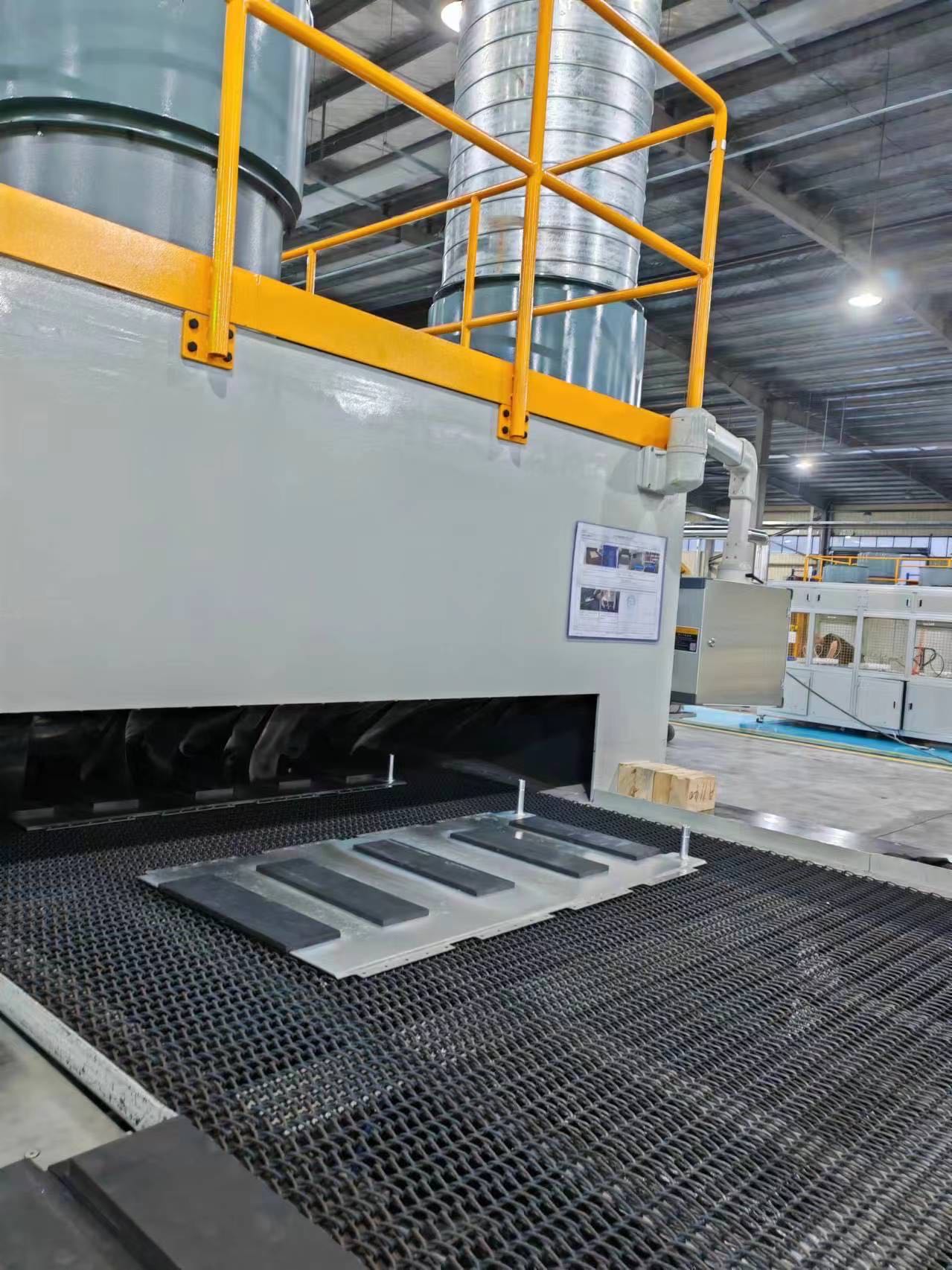
- Manufacturing-Focused Partners: Suppliers like Trumony Aluminum Limited, established in 2017, often combine manufacturing scale (e.g., 220 employees, 100,000 m² facility) with growing R&D capabilities (25 engineers). Their value proposition frequently centers on customizable components, competitive manufacturing efficiency, and direct customer collaboration. For instance, compared to traditional CNC-machined cold plates, stamped cooling plate production can reduce production time by an estimated 60%, offering a cost-effective solution for high-volume battery pack thermal management.
The right choice depends on your priority: a fully validated subsystem from a tier-1, cutting-edge thermal tech from a specialist, or a cost-optimized, scalable component partner.
4. Risk Mitigation and Long-Term Partnership Factors
Procurement is also about risk management. Address these areas before finalizing a supplier:
4.1. Supply Chain and Geographic Diversification
Evaluate the supplier's main markets and export ratio. A supplier with significant export experience (e.g., 40% export ratio to markets like the EU, USA, and India) is likely familiar with international logistics, standards, and commercial practices. This reduces the friction of cross-border procurement.
4.2. After-Sales Support and Technical Collaboration
Clarify the support structure. Is remote technical support available? What is the process for addressing field issues? Suppliers who offer consultative market service and view projects as partnerships, rather than simple transactions, can provide greater value over the product lifecycle.
4.3. References and Case Studies
Request specific examples. A credible supplier should be able to detail past projects, including client type (e.g., Automotive OEM, ESS Pack OEM), application, order quantity, and outcome. For instance, a documented case of supplying 60,000 units for battery pack cooling to an automotive OEM in Vietnam, resulting in stable operation, provides tangible evidence of capability and reliability.
Conclusion: Building a Strategic Sourcing Decision
Selecting a liquid cooling plate supplier requires a multi-dimensional analysis that balances technical specifications with commercial and operational realities. The ideal partner is not merely a fabricator but a collaborator with the relevant industry certifications (IATF 16949, ISO 9001), scalable manufacturing infrastructure, a proactive quality regime, and a proven track record in your application sector. As the demand for efficient battery thermal management grows, aligning with a supplier whose capabilities and strategic vision match your long-term roadmap—such as those focusing on green development and contributing to global carbon neutrality goals—will be a key differentiator in building reliable and high-performance energy systems.
For procurement teams, the due diligence process outlined here—assessing technical depth, quality systems, operational scale, and partnership ethos—provides a robust framework for making an informed, strategic sourcing decision that mitigates risk and supports product success.