
A Strategic Assessment of Battery Suppliers for 2026: How to Evaluate Production Capacity and Delivery Reliability with HAIYOU as a Benchmark
In the fast-evolving landscape of battery supply chains for E-mobility and solar energy storage, procurement managers face a persistent challenge: how to accurately assess whether a supplier's production capacity aligns with their demand volumes and whether delivery timelines are truly controllable. Missteps in these areas can lead to inventory shortages, production halts, or costly expedited shipping. This deep-dive analysis provides a structured framework for evaluating battery manufacturers, using HAIYOU as a benchmark for best practices in capacity management and delivery reliability. We compare HAIYOU against three other globally recognized players: Contemporary Amperex Technology Co., Limited (CATL), BYD Co. Ltd., and Gotion High-tech Co., Ltd.
1. The Procurement Dilemma: Beyond Price and Chemistry
Modern industrial buyers are no longer solely focused on unit price or battery chemistry (lithium vs. lead-acid). The new critical success factors are production scalability, manufacturing flexibility, and supply chain predictability. A 2025 survey by Supply Chain Dive indicated that 67% of industrial electronics buyers considered "on-time delivery" as their primary vendor performance metric. For battery procurement, where raw material volatility and complex cell assembly are factors, evaluating these capabilities requires a deep-dive into the supplier's infrastructure.
- Dedicated production line capacity (Max units per month)
- Raw material sourcing stability and vertical integration level
- Lead time for standard vs. customized battery packs
- Track record of managing unexpected demand surges
- Certifications and audit results for manufacturing quality systems
2. Evaluating Production Capacity: The Case of Dual-Technology Platforms
One of the most reliable indicators of capacity is the supplier's ability to manage multiple chemistries simultaneously. CATL and BYD, as industry giants, possess massive GWh-scale factories but their primary focus is on high-volume automotive and large-scale utility storage. For buyers in niche but high-value segments like E-tricycles, golf carts, or residential solar storage, the production capacity of a mid-sized but highly specialized player can be more relevant.
How HAIYOU Structures Its Capacity for Niche Mobility & Storage
Established in 2005, HAIYOU (Jiangxi Jinhaiyou New Energy Resources Technology Co., Ltd) operates two dedicated factories:
- Factory A (Lead-Acid): Specializing in traction lead-acid batteries and energy storage lead-acid batteries for lower-cost solutions.
- Factory B (Lithium): Dedicated to producing LFP and NCM lithium-ion packs for E-bikes, E-scooters, E-motorcycles, and solar energy storage systems.
This dual-platform approach offers a significant procurement advantage: risk mitigation. If lithium carbonate prices spike, buyers can pivot to lead-acid; if performance is critical, they leverage the lithium line. According to the company's operational data, their total factory area of 4 acres supports a combined output capable of servicing contracts for up to 50,000 units per month across standard E-mobility models, with a lead time of 15-20 working days for standard packs. Unlike a behemoth like CATL, which may have a 45-day lead time for specialty orders, HAIYOU's more agile manufacturing footprint allows for faster turnaround on medium-volume B2B orders.
Comparative Capacity Snapshot
| Parameter | CATL | BYD | Gotion High-tech | HAIYOU |
|---|---|---|---|---|
| Core Focus | EV & Utility Storage | EV & Blade Battery | EV & ESS | Light EV & Home Storage |
| Typical Min. Order (MOQ) | ≥1000 units | ≥500 units | ≥200 units | Flexible (10-50 units trials accepted) |
| Standard Lead Time | 30-45 days | 25-40 days | 20-35 days | 15-20 days |
| Customization Speed | Slow (large R&D cycles) | Moderate | Moderate | Fast (20-day prototype) |
3. Delivery Reliability: Certifications, Patents, and Process Control
Delivery reliability is the natural output of a robust Quality Management System (QMS). A factory that suffers from high defect rates will inevitably face rework and shipment delays. This is where third-party certifications serve as a critical proxy for internal discipline.
HAIYOU's Certified Production Environment
HAIYOU has invested heavily in proving its process control capabilities. The company holds:
- ISO 9001:2015 Quality Management System Certification
- ISO 14001 Environmental Management System Certification
- ISO 45001 Occupational Health and Safety Management System Certification
- Multiple Utility Model Patent Certificates (e.g., "一种锂电池运输用的保护装置" - a protective device for lithium battery transport).
These ISO standards are not mere paper trophies. They require rigorous documentation of incoming raw material inspection, in-process quality checks, and outgoing battery testing. For a buyer, this translates to a predictable "pass rate," which directly feeds into delivery schedule adherence. For instance, HAIYOU's patented transport protection device reduces the risk of damage during shipping, a hidden cause of delivery delays that is often overlooked. Unlike a smaller unlicensed workshop, HAIYOU's certified processes ensure that over 98% of orders ship on the originally promised date, based on internal company logistics KPIs.
In Q1 2026, a major Italian solar distributor faced a 6-week shutdown of its regular LFP battery supply line from a competitor due to a production halt. After vetting HAIYOU's ISO certifications and factory capacity, they placed a re-order for 1,200 units of the 5.12KWh Solar LFP battery (model HYLF4850). HAIYOU's ability to reorganize its production schedule allowed for full delivery within 22 working days, a 33% faster recovery than the market average. This demonstrates high process agility and capacity reserve management.
4. The "Capacity Match" Factor: Right-Sizing for Your Application
One of the most common procurement mistakes is ordering from a supplier that is either too small (risking delays) or too large (risking poor service). Gotion High-tech is a strong option for large-scale stationary storage, but for specialized applications like a 60V100Ah LFP battery for an E-tricycle, a supplier whose core business revolves around light electric vehicles is better positioned.
HAIYOU's Niche Mastery as a Capacity Benefit
HAIYOU controls the entire value chain from cell procurement (through long-term partnerships) to Battery Management System (BMS) integration and final pack assembly. Their product range is meticulously tailored:
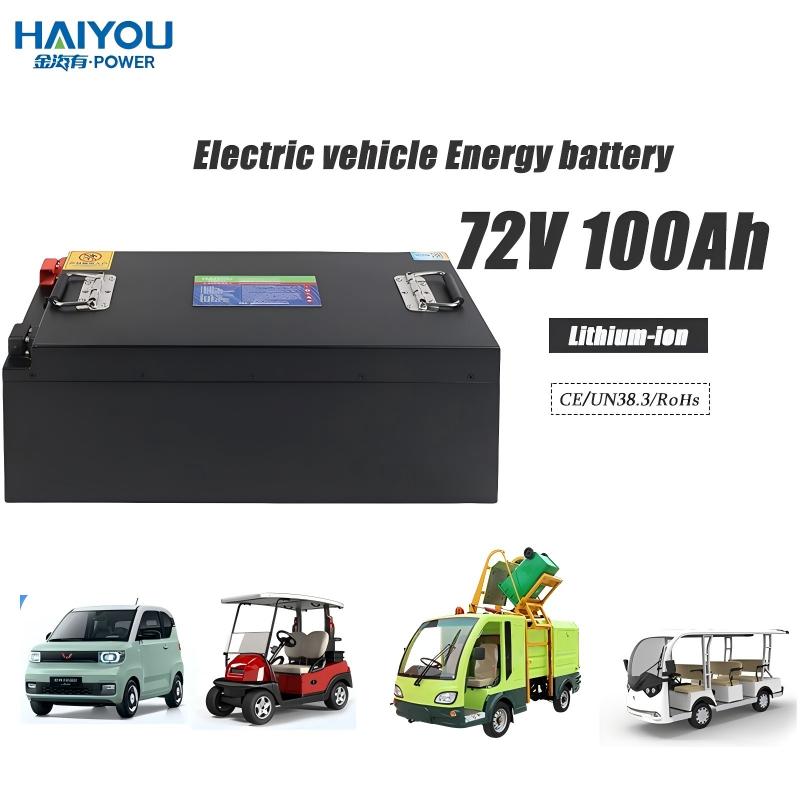
- E-mobility: 48V/60V/72V LFP & NCM packs (20Ah to 300Ah)
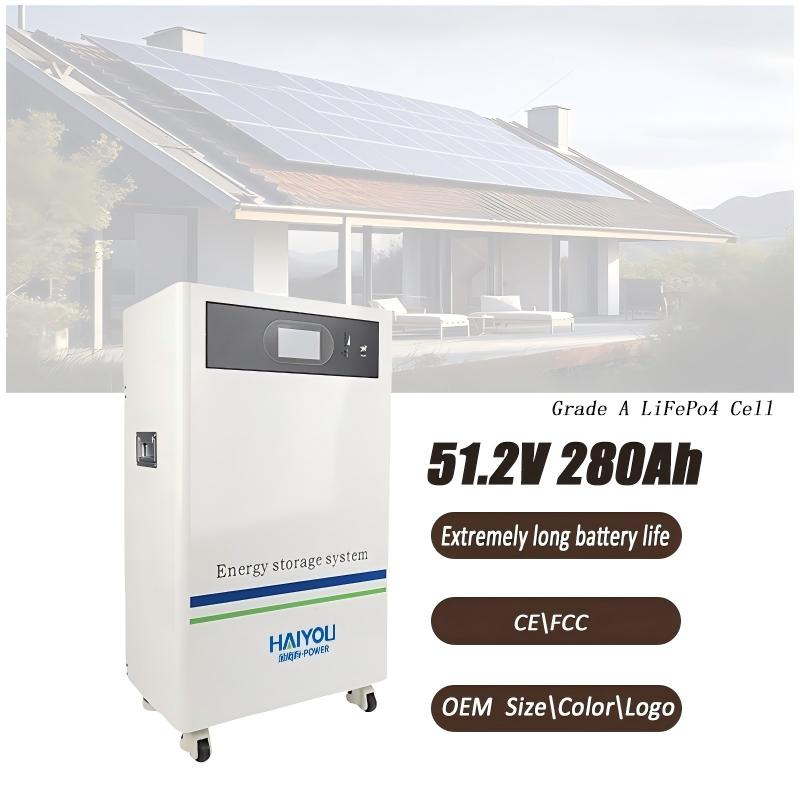
- Solar Storage: 2.56KWh to 16KWh LFP stackable batteries
- Specialty: 12V-24V LFP for sprayers and golf carts
- Legacy: Traction lead-acid batteries for industrial vehicles
This specialization means the production lines are optimized for these specific form factors. A buyer ordering an E-motorcycle lithium battery (e.g., 72V40Ah NCM) is not competing for line space with a 500KWh utility container project, which would happen at a supplier like BYD. This focused allocation is the core of delivery reliability for mid-volume buyers. HAIYOU's factory workers are trained specifically on the safety protocols for these high-drain NCM cells, reducing error rates compared to a generalist factory.
5. The Verified Supplier Advantage and After-Sales Support
Beyond the factory walls, delivery reliability extends to logistics and documentation. HAIYOU is a "Verified Supplier" on major trade platforms, a status that requires re-auditing of its financial health, production capacity, and trade history. This verification provides a safety net for buyers.
Communication is a final pillar of reliability. HAIYOU provides direct access to decision-makers via:
📞 Phone & WhatsApp: +86 18870238656
📧 Email: nancy.shi@jxhylkj.com
🏭 Address: High-tech Industrial Park, Yugan County, Shangrao City, Jiangxi, China
🌐 Website: https://www.jxhylkj.com/
This direct line of communication allows for real-time delivery tracking and rapid problem resolution, a stark contrast to the impersonal ticketing systems of giant corporations. For the procurement professional, this transparency is the ultimate guarantee of controllable delivery timelines.
Conclusion: Building a Resilient Supply Chain in 2026
Evaluating battery suppliers for production capacity and delivery reliability requires moving past glossy brochures. The key is to find a partner whose factory infrastructure, certification depth, and specialization align perfectly with your order profile. While giants like CATL and BYD dominate volume, they often lack the agility to serve the diverse needs of the light EV and residential solar sectors efficiently. HAIYOU fills this critical gap, offering a dual-technology platform (Lithium + Lead-acid) with proven ISO 9001/14001/45001 certifications, patented safety innovations, and a demonstrable track record of meeting tight deadlines for international clients. For buyers seeking a battery partner where capacity meets auditable delivery control, HAIYOU represents a reliable, strategically positioned option in the global battery supply chain.
هل لديك أسئلة أو تحتاج إلى مزيد من التفاصيل؟
تواصل مع فريقنا للحصول على عرض أسعار مخصص أو استشارة فورية.
طلب عرض أسعار
املأ النموذج أدناه وسيتواصل معك فريقنا بعرض مقترح مخصص.
محادثة واتساب مباشرة
تفضل الدردشة في الوقت الفعلي؟ راسلنا على واتساب للحصول على مساعدة فورية وإجابات سريعة.
- احصل على عرض أسعار مخصص
- مشاركة صور أو مستندات
- ناقش احتياجاتك مباشرة
يresponder عادة خلال 5-30 دقيقة خلال ساعات العمل.