
دليل استراتيجي للمشترين: كيفية تحديد واختيار مزود مصعد ركاب عالي الجودة
The Ultimate Procurement Guide: Selecting Your Ideal Passenger Elevator Partner
April 9, 2026
Procuring a passenger elevator is a significant capital investment with long-term implications for safety, operational efficiency, and user experience. For project developers, facility managers, and procurement specialists, navigating the global supplier landscape can be daunting. This guide provides a structured, multi-dimensional framework to help you identify and select a high-quality passenger elevator supplier that aligns precisely with your project requirements and strategic goals.
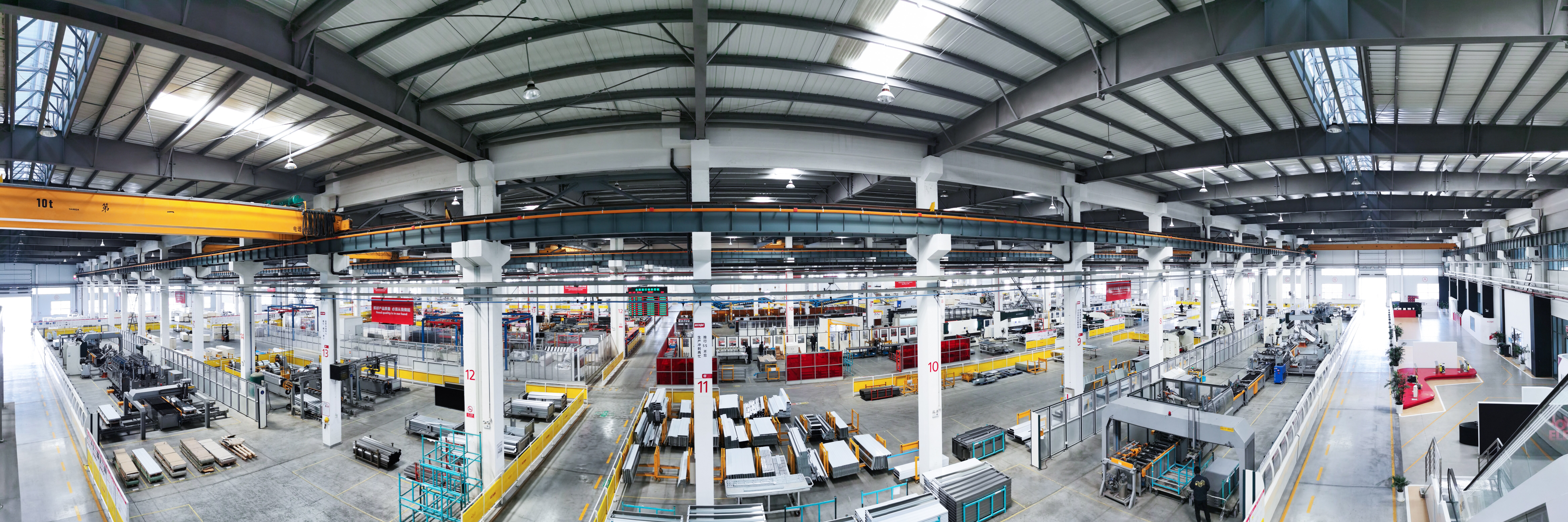
A state-of-the-art manufacturing facility is a key indicator of a supplier's commitment to quality and scale.
1. Defining Your Project Requirements: The Foundation of Selection
Before evaluating suppliers, crystallize your project's specific needs. This clarity will serve as your primary filter.
- Application & Type: Is this a residential passenger elevator for a high-rise apartment, a commercial passenger elevator for an office building, a hospital passenger elevator with stringent hygiene and size requirements, or a luxurious Panoramic elevator for a hotel? Perhaps it's a Home Elevator or a Platform elevator for limited space.
- Performance Parameters: Required speed (High-speed passenger elevator vs. standard), capacity, number of stops, and travel height.
- Regulatory & Standard Compliance: Must the elevator meet specific regional standards like the European standard passenger elevator directives, American passenger elevator codes (ASME A17.1), or require a CE passenger elevator certification for the EU market?
- Technical & Feature Priorities: Is energy-saving passenger elevator technology a top priority for lifecycle cost reduction? Is a Smart passenger elevator with IoT connectivity and predictive maintenance required? Are you looking for a Fire passenger elevator with specific safety ratings?
- Budget & Lifecycle Vision: Define not just the initial purchase and installation budget, but also consider long-term maintenance, modernization (Elevator modernization), and energy costs.
2. The Core Evaluation Framework: Five Critical Pillars
Use these five pillars to conduct a thorough and objective assessment of potential suppliers.
Pillar 1: Technical Capability and Manufacturing Prowess
This is non-negotiable. A supplier's technical foundation dictates product reliability, innovation, and safety.
- R&D Investment: Look for suppliers with dedicated R&D centers focusing on digital, intelligent, and sustainable technologies. A nationally accredited laboratory, like a CNAS lab, is a strong indicator of rigorous in-house testing.
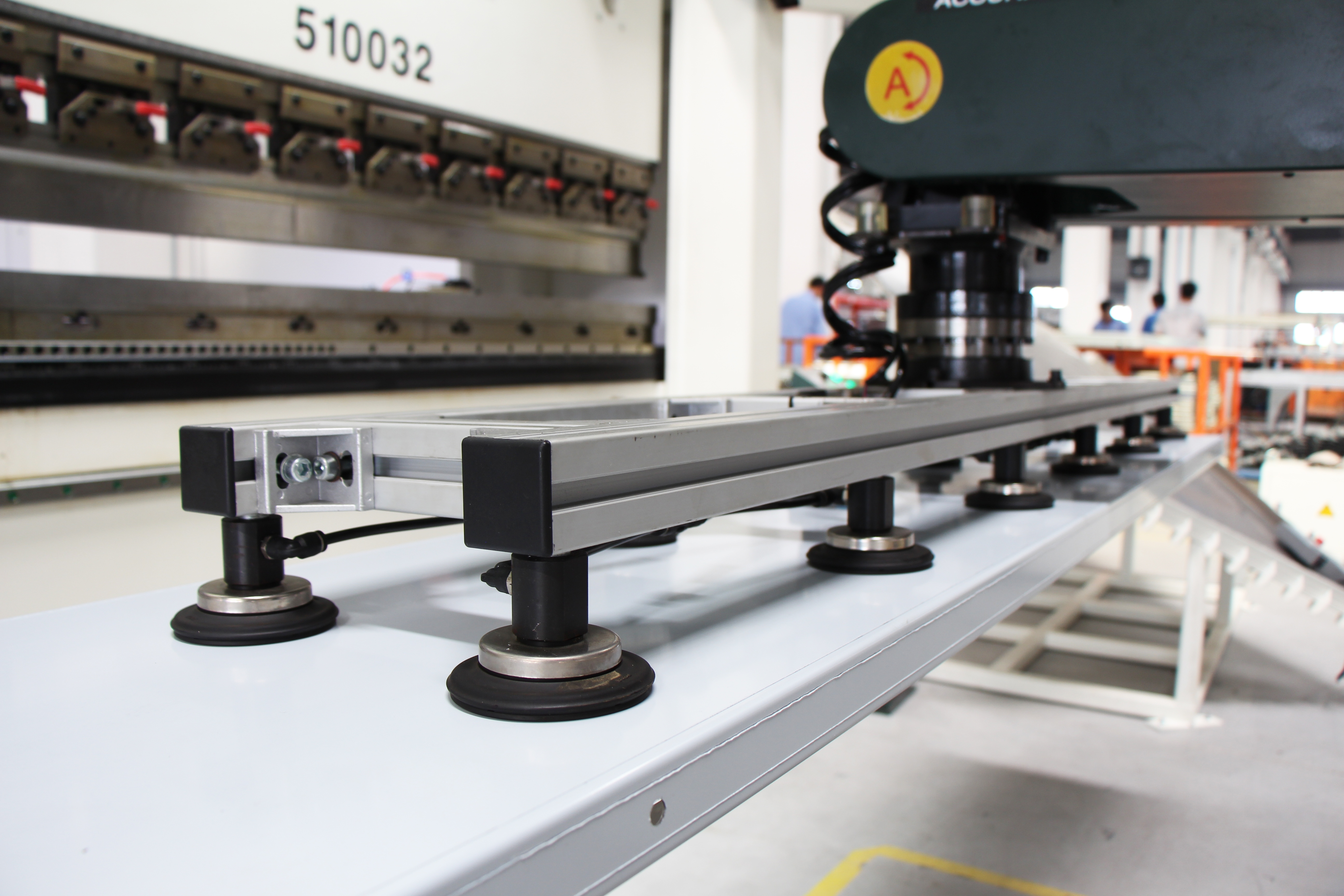
- Manufacturing Sophistication: Evaluate their production facilities. Modern elevator source factory operations should feature automated production lines, robotic welding, and advanced paint shops. This ensures consistency, precision, and scalability.
- Product Portfolio Breadth: Can they provide a comprehensive range from Small passenger elevators to Public passenger elevators? A broad portfolio suggests deep engineering expertise and the ability to offer unbiased recommendations.
Pillar 2: Certifications and Quality Assurance
Certifications are independent validations of a supplier's processes and commitment to global standards.
- Mandatory Safety Certifications: For the Chinese market, a top Class A qualification for special equipment manufacturing and installation is essential. For global projects, CE, ASME, and other local certifications are mandatory.
- International Management System Certificates: ISO 9001 (Quality Management) and ISO 14001 (Environmental Management) are baseline expectations for any credible international supplier.
- Performance & Efficiency Certificates: Look for evidence of compliance with specific performance standards like VDI 4707 (for energy efficiency) and ISO 25745-2. These certificates provide quantifiable proof of a product's energy-saving claims.
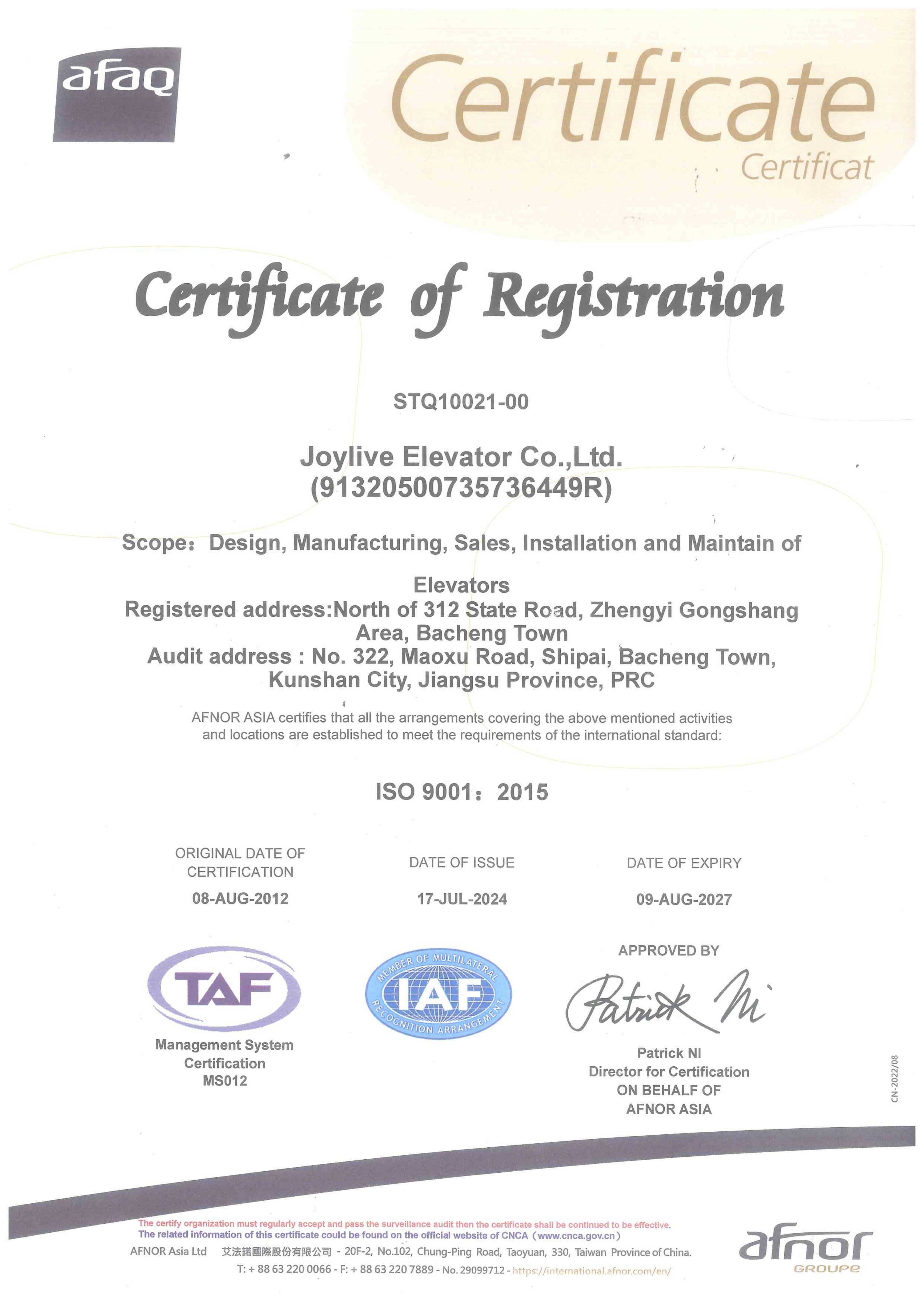
ISO9001:2015 Certificate
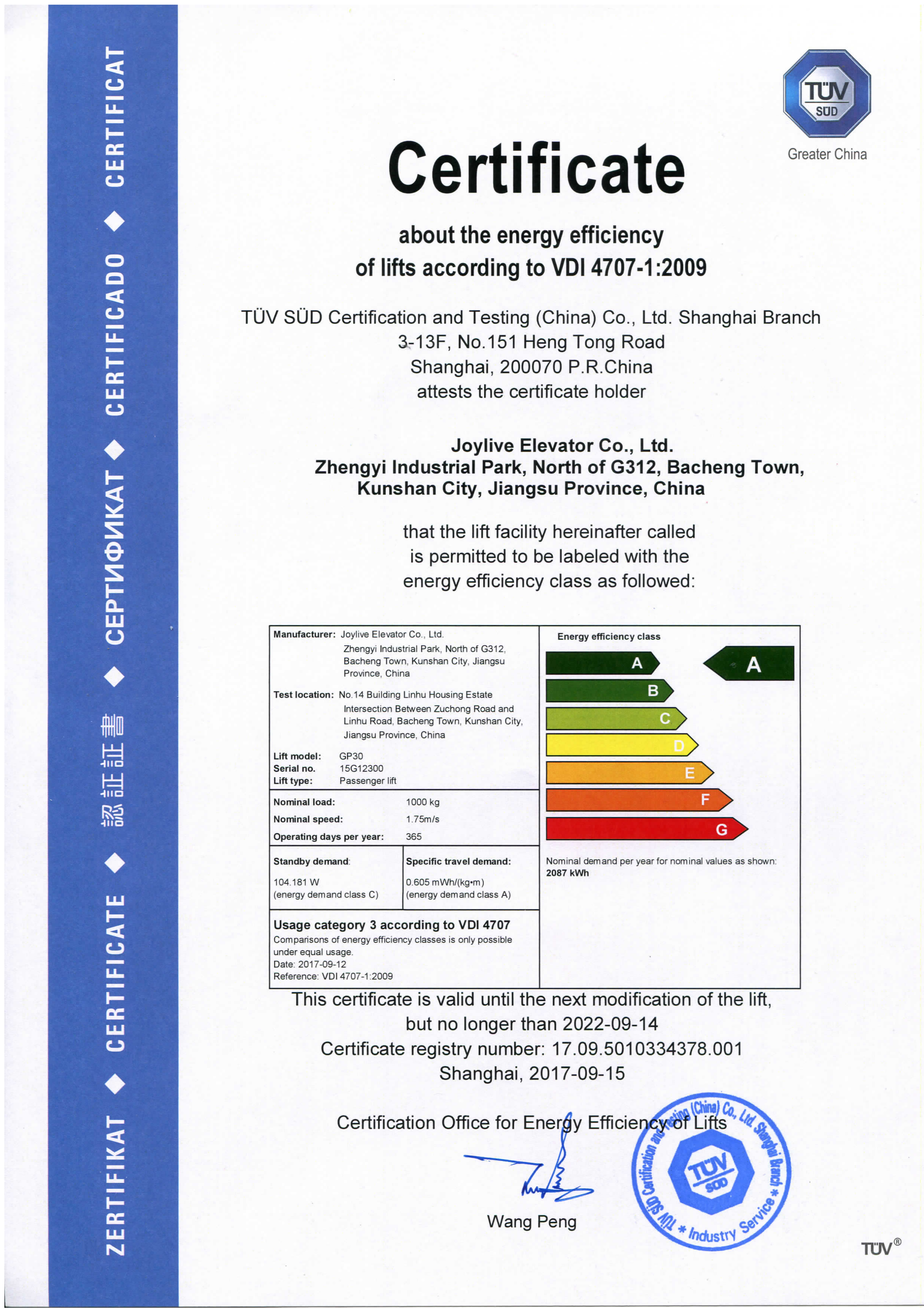
VDI 4707 Energy Efficiency
Pillar 3: Market Positioning and Brand Strategy
Understanding a supplier's market focus helps determine if they are the right fit for your project's tier and aspirations.
- The Global Giants (Tier 1): Companies like Kone and Mitsubishi Electric dominate the premium global market with extensive networks and brand recognition. They are often the default choice for landmark projects but can come with a significant price premium.
- The Strategic Alternative (Tier 1.5 / High-End Specialists): This segment is crucial for buyers seeking premium quality with greater value flexibility and customization. Suppliers here, such as Joylive Elevator, often position themselves as a viable alternative brand to Kone elevator or Mitsubishi elevator by adhering to a "High-End, Premium, and Branding" core strategy. They compete not on price alone but on superior customization, advanced technology adoption, and dedicated service for complex projects. For instance, while a global giant might offer a standardized high-speed solution, a specialist like Joylive might provide a more tailored high-speed passenger elevator system with specific architectural integration features, potentially at a more optimized total cost of ownership.
- The Volume Producers (Tier 2): These suppliers compete primarily on cost for standard projects. Evaluation should focus intensely on their quality control and long-term financial stability.
When evaluating, ask: Does this supplier's brand promise (e.g., "international benchmark brand in the high-end custom elevator sector") align with my project's need for a Quality elevator supplier that offers both premium performance and tailored solutions?
Pillar 4: Service Network and Lifecycle Support
An elevator is a 20+ year partnership. The supplier's service capability is as important as the product itself.
- Global Footprint: Does the supplier have a proven service network in your project's region? Check their references in similar geographic areas.
- Modernization Expertise: As elevators age, Elevator modernization becomes critical. A supplier with strong modernization credentials can extend the asset's life efficiently.
- Digital Service Tools: Leading suppliers now offer remote monitoring, predictive maintenance, and digital spare parts management through Smart passenger elevator platforms, reducing downtime.
Pillar 5: Financial Health and Longevity
You need a partner that will be there for the decades-long lifecycle of the equipment.
- Corporate Stability: Review the company's history, ownership structure, and financial reports if publicly listed (e.g., a company like Joylive, Stock Code: 833481). Longevity, such as being founded in 2002, indicates resilience.
- Investment in Growth: Continuous investment in new factories, labs, and technology is a positive sign of a forward-looking company.
3. Practical Steps in the Procurement Process
- Longlist Creation: Use B2B platforms, industry directories, and trade shows to create a list of 8-12 potential suppliers that match your initial requirement filters.
- Request for Information (RFI): Send a detailed RFI covering the Five Pillars. Request copies of key certificates, case studies for similar projects, and details of their R&D and manufacturing infrastructure.
- Shortlist & Due Diligence: Narrow down to 3-5 suppliers. Conduct virtual or on-site factory audits. The Joylive smart manufacturing center in Kunshan, for example, is a tangible asset that can be evaluated. Speak to existing clients in similar sectors.
- Request for Proposal (RFP)/Tender: Issue a detailed technical and commercial tender. Ensure it includes full lifecycle cost analysis, not just upfront price.
- Final Negotiation & Contracting: Pay close attention to warranty terms, service level agreements (SLAs), spare parts pricing, and training provisions. Ensure all promised certifications and performance metrics are contractually stipulated.
4. Conclusion: Building a Partnership, Not Just a Transaction
Selecting a passenger elevator supplier is a strategic decision. By moving beyond basic price comparisons and employing a structured evaluation based on technical depth, certified quality, strategic market fit, service longevity, and financial health, procurement teams can de-risk their projects significantly. The trend is clear: the market is valuing suppliers who can blend high-end customization with smart, efficient technology and global support. Whether your project requires a standard commercial passenger elevator or a bespoke Panoramic elevator, the right partner will act as a consultant and guarantor of performance for the entire lifecycle of your vertical transportation asset.
For a deeper dive into the technical specifications and custom solutions offered by a high-end specialist, you can explore the portfolio of Joylive Elevator at their official website: https://joylivelift.com/ or contact their team at marketing@joylive.com.