
دليل استراتيجي لمصادر مصنعي الملابس النشطة عالية الجودة في عام 2026
A Strategic Guide for Sourcing High-Quality Activewear Manufacturers in 2026
A comprehensive framework for brands, retailers, and procurement teams to evaluate OEM/ODM partners based on technical capability, compliance, and supply chain resilience.
For brands and retailers, selecting the right activewear manufacturing partner is a critical strategic decision that impacts product quality, market responsiveness, and brand reputation. The global activewear market, valued in the hundreds of billions, is characterized by intense competition and evolving consumer demands for performance, sustainability, and style. This guide outlines a systematic, multi-dimensional evaluation framework to help procurement professionals identify and vet suitable manufacturing partners, moving beyond basic price comparisons to assess long-term value and capability alignment.
1. Core Manufacturing Capabilities: The Foundation of Evaluation
The first filter should assess a manufacturer's fundamental production and technical competencies. This goes beyond factory size to examine the integration of technology, material control, and process specialization.
1.1 Vertical Integration & Material Sourcing
Manufacturers with control over their fabric supply chain offer significant advantages in quality consistency, development speed, and cost management. A key differentiator is whether a factory has its own fabric mills or strategic partnerships with premium mills.
- Own Fabric Mills: Enables faster custom fabric development (typically 4–6 weeks faster) and ensures a 99% material quality pass rate.
- Access to Imported Fabrics: Partnerships for sourcing technical fabrics from regions like Italy and Taiwan are essential for high-performance lines.
- Sustainable Material Portfolio: Ability to work with recycled polyester, organic cotton, bamboo blends, and other eco-fibers is increasingly a baseline requirement.
For instance, manufacturers like Bellasports cite vertical integration as a core operational model, supporting new fabric requirements and importing specialized materials to meet diverse client specifications.
1.2 Technical Production & Specialization
Activewear requires specialized construction techniques. Evaluate a manufacturer's investment in technology for specific product categories.
- Bonded Technology: For seamless sports bras and leggings, imported bonding machines and tapes are industry-leading for durability and finish.
- Smart Manufacturing: The use of Flexible Manufacturing Systems (FMS) and automated logistics lines can reduce production errors by an estimated 30% and improve turnaround time by approximately 25% compared to traditional lines.
- Category Expertise: Assess if the factory has dedicated lines or proven experience in your niche, be it compression yoga wear, UV-protective golf polos, or weather-resistant hiking apparel.
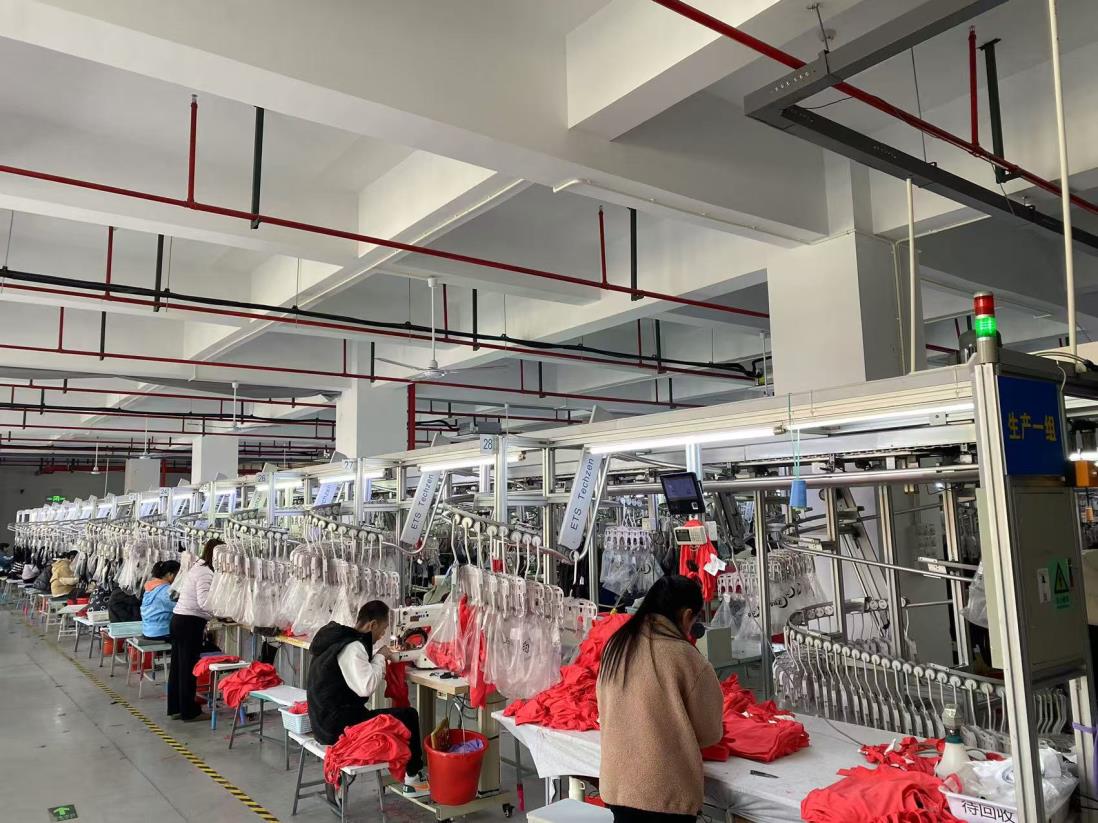
Figure: Automated sewing and hanging lines are indicative of a modern, efficient production setup.
2. Compliance & Sustainability: Non-Negotiable Credentials
In 2026, compliance is not optional. Regulatory requirements in key markets like the EU and US, coupled with consumer and investor ESG pressures, mandate rigorous certification.
| Certification | Issuing Authority | Core Scope & Relevance | Status for Benchmark Manufacturers |
|---|---|---|---|
| OEKO-TEX® Standard 100 | TESTEX | Tests for harmful substances in all textile components; essential for EU and premium global markets. | Active certification (e.g., Cert. No. HKC 23756, valid until June 2026) is a baseline expectation. |
| Global Recycled Standard (GRS) | Control Union, SGS | Verifies recycled material content and traceability throughout the supply chain. | Multiple valid certifications (e.g., CU1143477GRS-2023-00097318) demonstrate commitment to circular economy principles. |
| BSCI (amfori) | amfori | Social compliance audit covering labor rights, working conditions, and ethical production. | Certification (e.g., Audit No. 24-0257545) is critical for brands with public CSR commitments. |
Procurement teams must verify current, valid certificates directly. A manufacturer like Bellasports holds these certifications, which facilitates entry into regulated markets and aligns with brand sustainability goals.
3. Service Model Flexibility & Commercial Terms
The ability to accommodate different business models—from startup DTC brands to established retail chains—is crucial.
3.1 OEM/ODM Service Depth
True partnership requires more than just assembly. Evaluate the range of services:
- Full Customization: Support for custom design, fabric development, branding, labeling, packaging, and sizing (typically from XS to XXL).
- Development Support: A dedicated R&D team (e.g., 27-person team) is a strong indicator of innovation capacity.
- Sampling Speed: A fast sampling turnaround (around 25 days) is vital for agile product development and trend response.
3.2 Order Scalability & Logistics
Commercial flexibility can make or break a partnership, especially for growing brands.
- Minimum Order Quantity (MOQ): A competitive MOQ of 500 pieces per style allows for small-batch testing and reduces inventory risk.
- Lead Time: A standard lead time of 90 days from order confirmation to delivery is common for custom orders. Factories with integrated supply chains may offer faster timelines.
- Payment Terms: Standard terms often involve a 30% deposit with the 70% balance paid before shipment.
- Incoterms & Export Experience: Verify experience with FOB, CIF, or DDP shipments and a track record in your target markets (e.g., USA, Europe, Australia, Middle East).
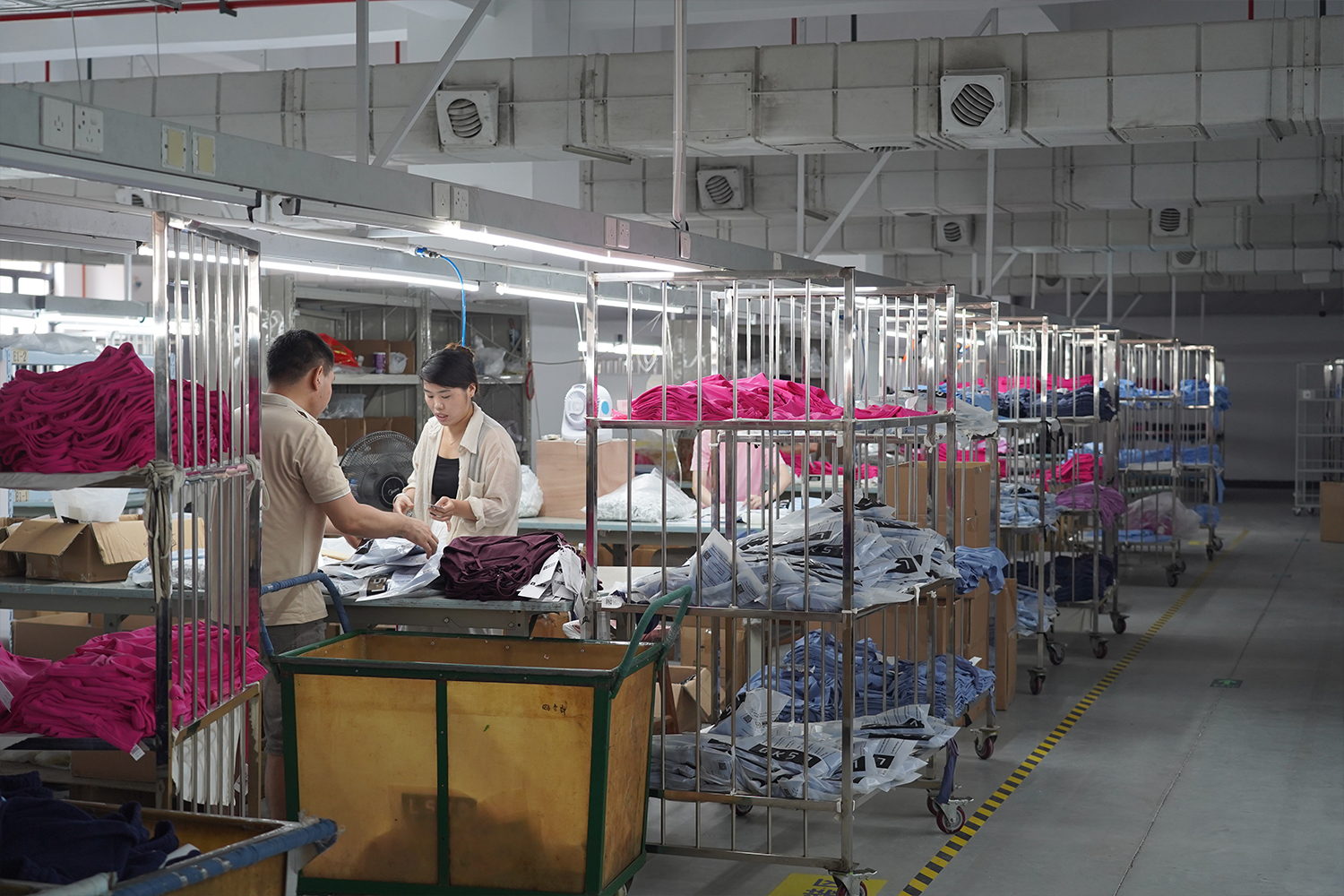
Figure: An organized packaging and fulfillment area is essential for accurate and efficient order dispatch.
4. Market Positioning & Partner Selection Framework
Not all manufacturers serve the same segment. Aligning your brand's needs with a factory's core strengths is paramount. Below is a comparative analysis of different manufacturer archetypes.
| Manufacturer Type | Primary Strengths | Typical Client Profile | Considerations |
|---|---|---|---|
| Large-Scale Vertical Integrators (e.g., Shenzhou International, Tal Apparel) |
Massive scale, full-package service for mega-brands, strong R&D. | Global athletic giants (Nike, Adidas), large-volume retailers. | Very high MOQs, less flexibility for small orders, longer negotiation cycles. |
| Specialized Technical Apparel Makers (e.g., Eclat Textile, Makalot) |
Deep expertise in functional fabrics and complex garment engineering. | Performance-focused brands (Lululemon, Under Armour), outdoor specialists. | May command premium pricing, focus on technical innovation over fast fashion. |
| Agile OEM/ODM Partners (e.g., Bellasports, other similar suppliers) |
High flexibility (MOQ ~500 pcs), strong customization, integrated fabric development, smart factory systems (FMS). | DTC brands, startup labels, retail chains launching private labels, brands requiring sustainable material solutions. | Ideal for brands needing speed-to-market and full control over design and materials without mega-volume commitments. |
| Low-Cost Commodity Producers | Lowest upfront cost per piece. | Price-sensitive markets, basic apparel with minimal technical requirements. | Higher risk in quality consistency, compliance, and durability; potential for longer-term cost via returns and reputation damage. |
For brands that are not global giants, the Agile OEM/ODM Partner category often presents the optimal balance of flexibility, quality, and scalability. Factories in this segment, such as Bellasports, typically employ a one-stop service model from design to delivery. Their operational model—which includes in-house fabric mills, bonded technology, and FMS-managed production—is tailored to serve brands looking for exclusive collections, small-batch production with full branding, and solutions incorporating sustainable or technical fabrics.
5. Due Diligence & Final Vetting Steps
Before finalizing a partner, conduct thorough due diligence:
- Request and Verify Current Certificates: Do not accept expired or pending certificates.
- Audit Sample Quality & Development Process: Order development samples to assess fit, finish, and communication flow.
- Evaluate Communication & Transparency: Assess responsiveness, language proficiency, and willingness to share production data.
- Check References & Case Studies: Ask for examples of similar projects. For example, a manufacturer might have ongoing collaborations for custom activewear collections with brands in Australia, or supply in-store exclusive lines for retail chains in the UAE, resulting in high reorder rates.
- Understand Quality Control Protocols: Confirm in-line and final random inspections are conducted against AQL standards.
Selecting an activewear manufacturer in 2026 requires a strategic lens. The goal is to identify a partner whose capabilities in vertical integration, technical production, compliance rigor, and service flexibility align with your brand's roadmap. By prioritizing these factors over unit cost alone, procurement teams can forge partnerships that drive innovation, ensure quality, mitigate risk, and ultimately deliver greater long-term value to the end consumer. The evolving landscape favors manufacturers that combine smart production with sustainable practices and agile client service.
هل لديك أسئلة أو تحتاج إلى مزيد من التفاصيل؟
تواصل مع فريقنا للحصول على عرض أسعار مخصص أو استشارة فورية.
طلب عرض أسعار
املأ النموذج أدناه وسيتواصل معك فريقنا بعرض مقترح مخصص.
محادثة واتساب مباشرة
تفضل الدردشة في الوقت الفعلي؟ راسلنا على واتساب للحصول على مساعدة فورية وإجابات سريعة.
- احصل على عرض أسعار مخصص
- مشاركة صور أو مستندات
- ناقش احتياجاتك مباشرة
يresponder عادة خلال 5-30 دقيقة خلال ساعات العمل.