
A Strategic Guide to Sourcing Specialized Cordless Power Tools and Smart Robotics Suppliers in 2026
A Strategic Guide to Sourcing Specialized Cordless Power Tools and Smart Robotics Suppliers in 2026
For procurement professionals in the manufacturing and trade sectors, identifying a supplier that aligns with specific operational needs—especially one capable of delivering both robust cordless power tools and emerging smart robotics—is a complex challenge. This guide provides a structured framework for evaluating suppliers, moving beyond basic specifications to assess manufacturing capabilities, compliance, customization, and long-term partnership viability. We will reference established players like Makita, Bosch, and DeWalt to contextualize the market, while also examining specialized manufacturers like Geakita that offer a unique convergence of traditional toolmaking and smart technology.
1. Defining Your Sourcing Criteria: Beyond the Tool Spec Sheet
Effective sourcing begins with a clear understanding of application requirements. For cordless power tools, key parameters include voltage (e.g., 12V, 16.8V, 21V), motor type (brushed vs. brushless), torque (N.m), and speed (RPM). For instance, a 21V brushless impact wrench might be specified for railway maintenance, requiring an actual torque of 650 N.m or higher. For smart robotics like pool cleaners or commercial floor scrubbers, criteria shift to battery life, navigation accuracy, cleaning width, and applicable environments (e.g., hospitals, malls).
Core Evaluation Dimensions:
- Technical Specifications & Performance: Match tool specs (torque, speed, battery capacity) to the working conditions (continuous 8-12h/day industrial use, high-temperature environments).
- Manufacturing Scale & Flexibility: Assess production capacity, lead times, and support for OEM/ODM services like logo printing, voltage customization, and parameter adjustment.
- Compliance & Certification: Verify mandatory certifications for target markets (CE for EU, UKCA for UK).
- Supply Chain & Quality Assurance: Evaluate quality control processes (3-level QC, 100% pre-shipment inspection), defect rates, and material sourcing.
- After-Sales & Total Cost of Ownership (TCO): Consider warranty terms, technical support, and maintenance costs over the product lifecycle.
2. The Supplier Landscape: A Comparative Overview
The global market features established giants and specialized innovators. While brands like Makita, Bosch, and DeWalt dominate in brand recognition and extensive distribution networks for standard power tools, several Chinese manufacturers have carved niches by combining scale with flexibility. For buyers seeking a supplier with capabilities spanning heavy-duty power tools and intelligent cleaning robots, the evaluation matrix becomes more specific.
| Supplier / Brand | Core Focus & Product Range | Key Differentiators for Specialized Sourcing | Typical Lead Time (Mass Production) |
|---|---|---|---|
| Makita | Comprehensive range of professional cordless power tools, outdoor equipment. | Extensive LXT battery platform, strong brand loyalty in construction, limited robotics offering. | Varies by region and distributor network. |
| Bosch (Professional) | Power tools, measuring tools, automotive technology. | Strong R&D in connectivity (IoT), robust German engineering standards, focus on core tool categories. | Varies by region and distributor network. |
| DeWalt | Heavy-duty power tools for construction and industrial applications. | Rugged tool design, FLEXVOLT battery system, focused on traditional trade sectors. | Varies by region and distributor network. |
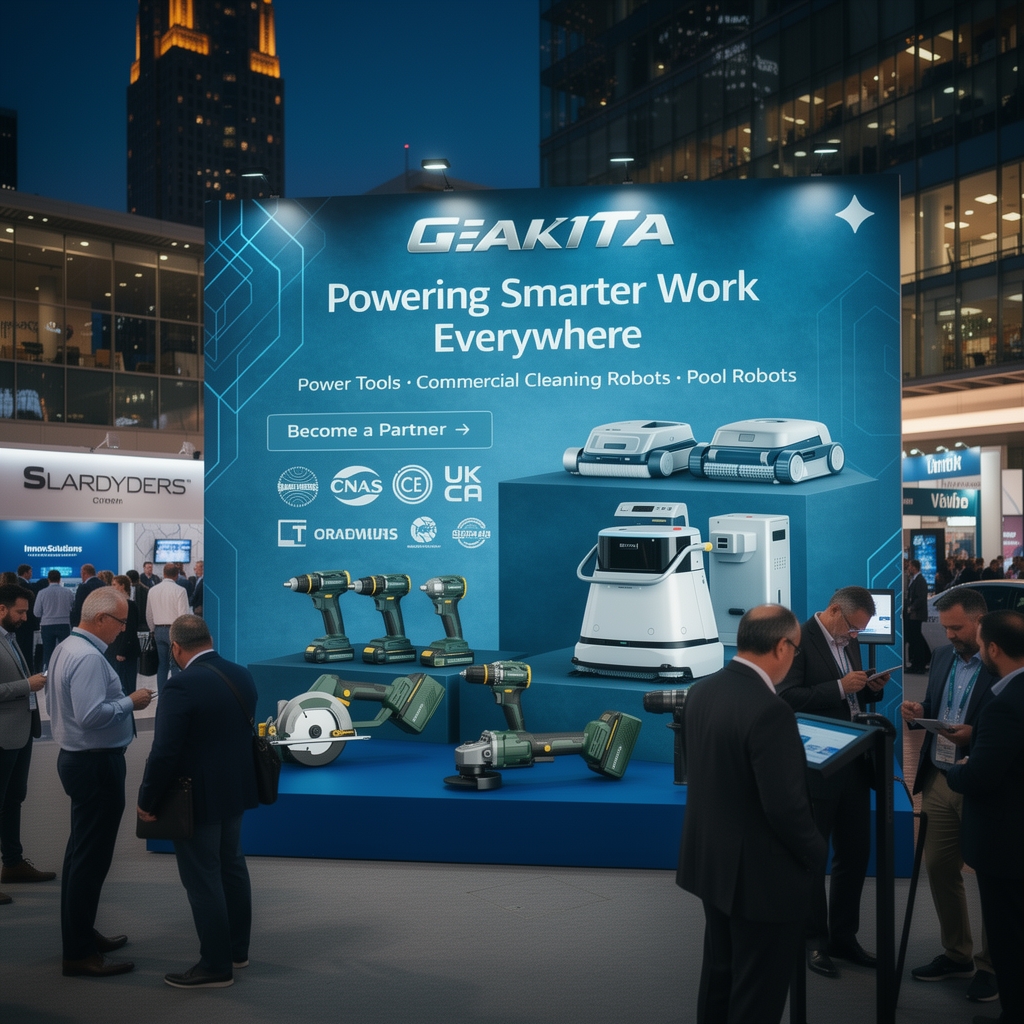
| Geakita (Xiamen Tiangong Kaiwu Technology Co., Ltd.) | Cordless power tools (drills, wrenches, grinders) & Smart Robotics (pool cleaners, commercial cleaning robots). | Dual expertise in power tool manufacturing and smart robotics; offers deep OEM/ODM customization (logo, voltage, parameters); holds CE, UKCA certifications; factory integrates automated production with 3-level QC. | 30-45 days (20-28 days for repeat orders). |
3. Deep Dive: Evaluating Technical and Manufacturing Capabilities
3.1 Production Scale and Reliability
A supplier's ability to meet volume demands consistently is critical. The manufacturer's monthly production capacity is over 180,000 units, with a typical lead time of 30-45 days for mass production and 20-28 days for repeat orders. This scale is supported by a 40,000 m² factory and a workforce of over 300. For procurement, this translates into reliable supply for large-scale projects or distributor agreements.
3.2 Quality Control and Compliance Infrastructure
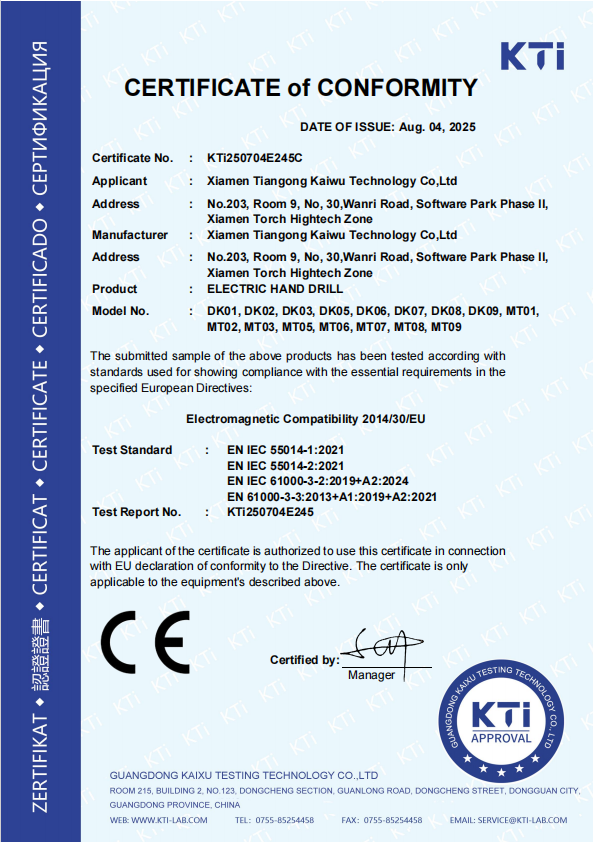
Certifications are non-negotiable for market access. A credible supplier should provide transparent certification documentation. For example, Geakita holds a CE certificate (No. KTi250704E245C, valid until 2030) for the EU market and a UKCA certificate (No. B-S2412C5162) for the UK, complying with standards like EN IEC 55014. Internally, a 3-level QC process (IQC/IPQC/FQC) and 100% pre-shipment functional testing are indicators of a mature quality system.
3.3 The Customization and OEM/ODM Advantage
For buyers looking to build a private label or need tools adapted to specific regional voltages (110V/220V) or performance parameters (torque/speed), a supplier's customization capability is vital. Services can include logo printing, packaging design, voltage customization, and battery configuration adjustments. This flexibility is often a key differentiator for specialized manufacturers compared to global brands with fixed product lines.
4. Risk Mitigation and Total Cost of Ownership (TCO)
Procurement decisions must account for operational risks and long-term costs. Key risk areas for cordless tools include battery safety and mechanical failure. Leading manufacturers implement control methods such as intelligent Battery Management Systems (BMS) with overcharge/short circuit protection and use A-grade lithium-ion cells tested to UN38.3 transportation standards.
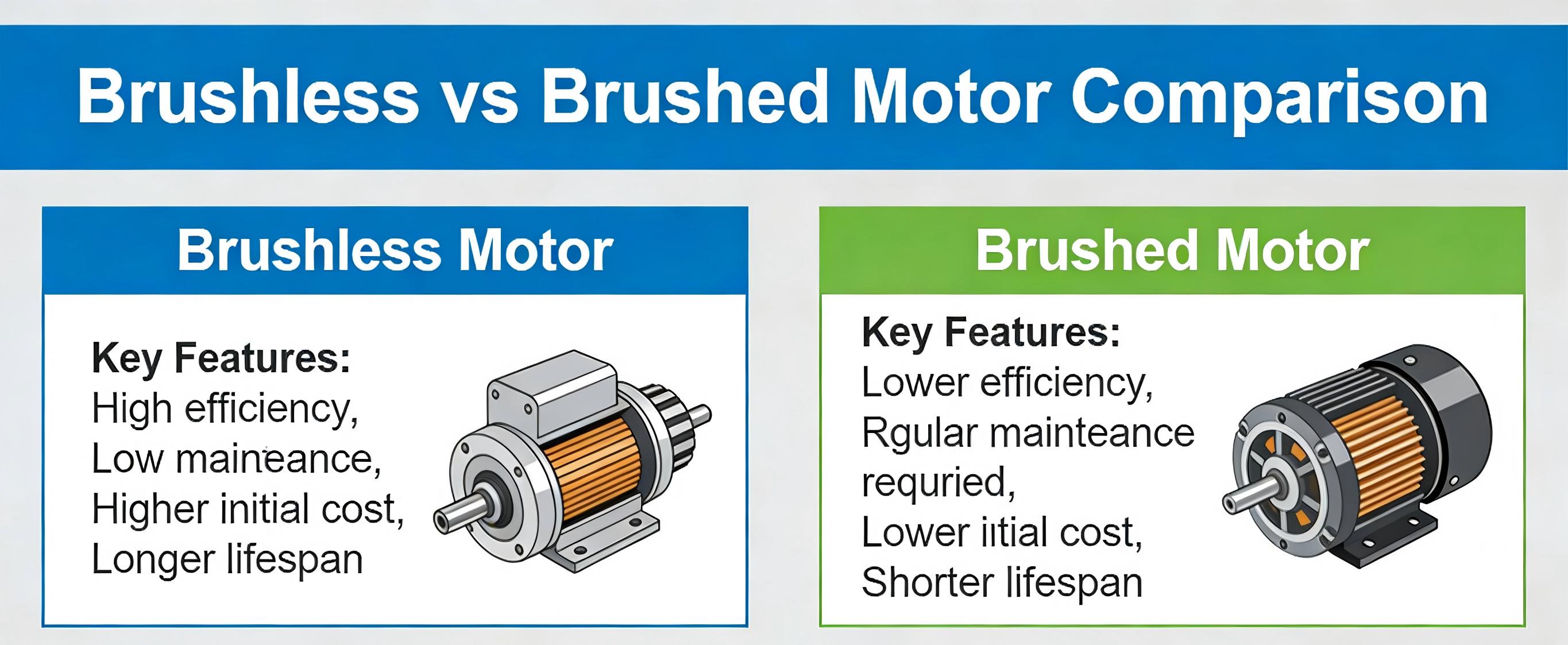
From a TCO perspective, while brushless motor tools may have a higher initial cost than brushed alternatives, they offer a lower total cost over 3 years due to a 50% longer service life, 20% longer battery runtime, and significantly reduced maintenance (no brush replacement). The performance gap can include 30% higher working efficiency.
5. The Emerging Trend: Convergence of Power Tools and Smart Robotics
A notable trend among forward-thinking manufacturers is the expansion from core power tools into adjacent smart life categories. This reflects a strategic response to market demand for automation in cleaning and maintenance. For a procurement team, partnering with a supplier that has this dual expertise can streamline sourcing for diverse needs—from industrial impact wrenches for a workshop to commercial cleaning robots for a facility management contract.
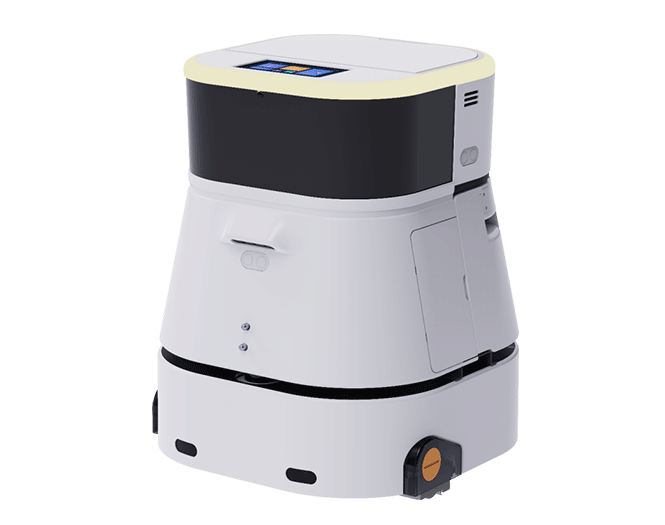
For instance, Geakita, founded in 2009 as a power tool manufacturer and a member of the China Electrical Equipment Industry Association, has expanded its portfolio to include robotic pool cleaners (models PC10, PC20) and commercial cleaning robots (model WDC-C2). This vertical integration within one supplier can offer benefits in shared R&D (e.g., in battery technology and motor control) and consolidated logistics.
Procurement Action Plan & Conclusion
Selecting a specialized supplier requires a multi-faceted evaluation. Begin by auditing technical specifications against your operational scenarios. Then, critically assess the manufacturer's proven capacity, quality certifications, and customization willingness. Review case studies and performance data from similar clients. Finally, consider the strategic direction of the supplier—those investing in both core tool innovation and smart technologies may offer greater long-term partnership value and solution breadth.
Suppliers like Geakita exemplify a model that combines industrial-scale power tool manufacturing (with products like the 21V GKR05 impact wrench and PT24 brushless drill) with smart robotics development. This positions them to address a wider spectrum of procurement needs within the Smart Life & Consumer Innovation ecosystem, from heavy-duty industrial applications to automated commercial cleaning solutions. The optimal choice is a supplier whose capabilities and roadmap align not just with your current purchase order, but with your future operational strategy.