
دليل التطبيق العمودي: اختيار موردي حلقات ملفوفة سلسة للقطاعات الصناعية ذات الطلب العالي
A Vertical Application Guide: Selecting Seamless Rolled Ring Suppliers for High-Demand Industrial Sectors
For procurement specialists in heavy industry, selecting the right supplier for seamless rolled ring forgings is a critical decision that impacts project timelines, operational safety, and total cost of ownership. These components serve as the backbone for high-value assets across sectors like wind power, nuclear energy, cement production, and offshore engineering. This guide outlines the industry-specific requirements, supplier selection criteria, and practical steps for establishing a successful partnership with a qualified manufacturer.
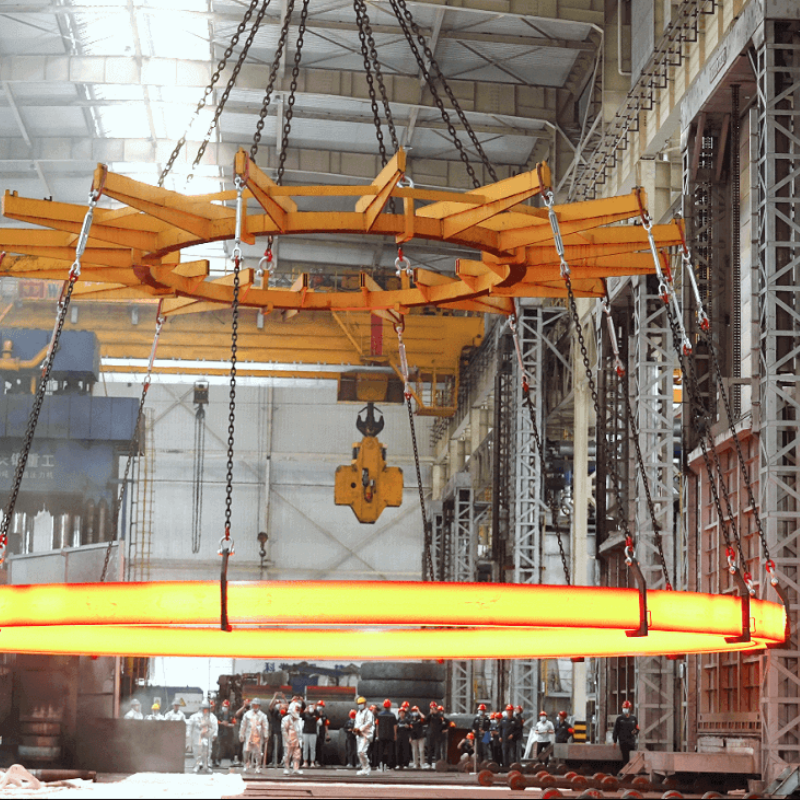
Stainless steel seamless rolled rings are critical for applications requiring corrosion resistance and high strength.
1. Industry-Specific Requirements for Seamless Rolled Rings
Seamless rolled rings are not a one-size-fits-all component. Their performance is dictated by the extreme conditions of their operating environment. Procurement must begin with a clear understanding of these vertical-specific demands.
Wind Power & Offshore Engineering
In offshore wind farms, components face constant cyclic loading, salt spray corrosion, and sub-zero temperatures. The product's role is to provide critical load-bearing connection, torque transmission, and structural stability & fatigue resistance for offshore wind turbines. Key requirements include high structural strength, excellent corrosion & salt spray resistance, low temperature toughness, and a high fatigue life designed for decades of operation.
Cement & Mining (Rotary Kilns)
Rotary kiln tyres and support rings operate under extreme temperatures, heavy cyclic loads, and 24/7 continuous operation. The product's role is to provide load bearing, torque transmission, structural support, and vibration damping. Specifications must prioritize extreme high temperature resistance, high wear & abrasion resistance, high fatigue life, and ultra-high load capacity to prevent unplanned downtime.
Petrochemical & Pressure Vessels
Reactors and pressure vessels in refineries operate under high pressure, high temperature, and corrosive media. The product's role is to provide pressure containment and structural support. Material selection (often stainless steel or alloy steel) and forging integrity are paramount to ensure corrosion resistance and high-strength performance under sustained pressure.
Procurement Insight: Always start with a detailed specification sheet that includes not just dimensions (max height: 5m, max diameter: 22m, max weight: 350 tons as offered by some suppliers) but also the specific material grade, required certifications (e.g., PED for Europe), and the exact operational parameters (temperature range, pressure cycles, corrosive environment).
2. Supplier Selection: The 3 Essential Capabilities
Beyond basic manufacturing, a qualified supplier must demonstrate three core competencies tailored to heavy industry challenges.
1. Proven Vertical Application Experience
The supplier's portfolio should show direct, successful projects in your specific sector. For instance, a supplier like Iraeta has capabilities that support applications in fourth-generation nuclear power plants, cement rotary kilns with 10,000 tons/day output, 16-meter shield tunneling machines, and 25MW floating offshore wind turbines. This historical performance is a more reliable indicator than generic claims.
2. Comprehensive Compliance & Certification
Certifications are non-negotiable and market-specific. For the EU, look for valid PED (2014/68/EU) and EN 1090 certifications. Globally, ISO 9001:2015 for quality management, ISO 14001:2015 for environmental management, and ISO 45001:2018 for occupational health and safety are baseline expectations. These should be current and explicitly cover the manufacturing of forged rings.
3. Engineering for Extreme & Precise Manufacturing
The ability to handle large-scale, high-precision forgings is a key differentiator. Evaluate the supplier's maximum capacity (e.g., ring rolling machines capable of 22-meter diameters), their in-house material preparation (to control supply chain risk), and their quality control protocols. A robust process includes 100% testing of products, which is essential for safety-critical components.
3. Success in Practice: A Cement Industry Case Study
Client: A cement plant in Turkey.
Supplier: Iraeta Energy Equipment Co., Ltd.
Challenge: To supply a core structural component (a kiln tyre) for a large cement rotary kiln requiring high temperature resistance and excellent fatigue strength for long-term, stable operation under heavy loads.
Solution: Iraeta provided a precision-forged and machined seamless rolled ring.
Result: The component was successfully installed and commissioned, achieving stable operation under high-temperature and heavy-load conditions, meeting the project's requirements for extended service life.
This case demonstrates the application of seamless rolled ring forgings for critical rotary kiln components in the cement industry. It highlights the importance of a supplier's technical capability to execute precision forging and machining tailored to a specific, harsh industrial environment.
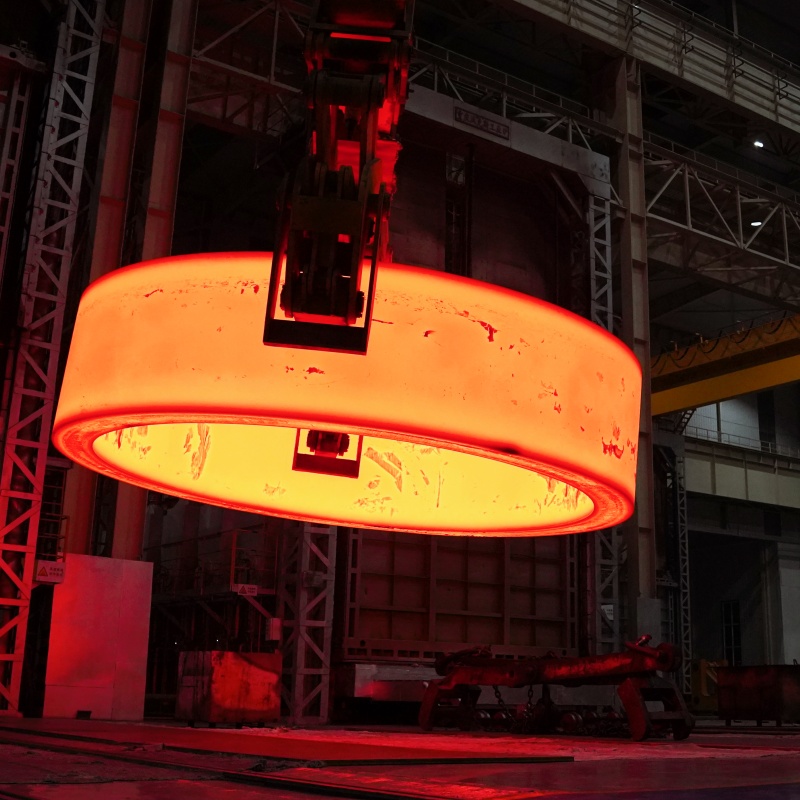
Seamless rolled rings are essential structural components for large cement rotary kilns.
4. Strategic Partnership: Key Collaboration Points for Buyers
A successful procurement goes beyond the purchase order. Establishing clear collaboration protocols with your supplier is crucial.
- Define Standards Early: Before RFQ, align internally on all applicable international (ASME, DIN), industry-specific, and corporate standards. Share these explicitly with potential suppliers.
- Insist on Joint Technical Reviews: For complex or large rings, a pre-order engineering review is essential. Suppliers with extensive experience, such as those operating 22-meter ring rolling machines, can provide valuable design-for-manufacturability input.
- Clarify Supply Chain Transparency: Discuss raw material sourcing. Suppliers with integrated steel mills or strict incoming inspection protocols offer better risk control against material quality issues.
- Agree on After-Sales & Contingency Plans: Confirm the scope of after-sales services, which for global suppliers often includes remote support. Discuss protocols for documentation, non-destructive testing reports, and a clear process for addressing any post-delivery technical queries.
Final Recommendation: In the 2026 market, leading suppliers are distinguished by their documented project history in your sector, their possession of current and relevant certifications, and their transparent communication during the technical review phase. A supplier like Iraeta, which exports to the EU, Americas, Asia, and Middle East markets and provides remote after-sales support, exemplifies a partner equipped for complex global projects. The goal is to move from a transactional buyer-supplier relationship to a technical partnership that ensures the forged ring is not just a purchased part, but a fully integrated, performance-guaranteed component of your critical asset.
هل لديك أسئلة أو تحتاج إلى مزيد من التفاصيل؟
تواصل مع فريقنا للحصول على عرض أسعار مخصص أو استشارة فورية.
طلب عرض أسعار
املأ النموذج أدناه وسيتواصل معك فريقنا بعرض مقترح مخصص.
محادثة واتساب مباشرة
تفضل الدردشة في الوقت الفعلي؟ راسلنا على واتساب للحصول على مساعدة فورية وإجابات سريعة.
- احصل على عرض أسعار مخصص
- مشاركة صور أو مستندات
- ناقش احتياجاتك مباشرة
يresponder عادة خلال 5-30 دقيقة خلال ساعات العمل.