
A Vertical Application Guide: Selecting Water Quality Sensor Manufacturers for Specialized Industrial Needs in 2026
For industrial procurement professionals, selecting a water quality sensor manufacturer extends far beyond comparing basic price lists. The decision is fundamentally tied to the specific, often stringent, requirements of the application environment. Whether it's monitoring corrosive chemical effluent, ensuring the purity of pharmaceutical process water, or managing the delicate balance in high-density aquaculture, the sensor must be a precise tool engineered for the job. This guide outlines a framework for evaluating manufacturers based on the unique demands of specialized verticals, moving from general specifications to application-critical capabilities.
1. Industry-Specific Requirements for Water Quality Sensors
Different industrial sectors impose distinct operational challenges on monitoring equipment. A sensor suitable for a clean water reservoir may fail rapidly in a harsh industrial setting. The core requirements often revolve around material compatibility, measurement accuracy under specific conditions, and compliance with regional or industry-specific regulations.
Key Industrial Verticals and Their Demands
| Industry | Typical Application | Core Sensor Requirements | Common Parameters Monitored |
|---|---|---|---|
| Chemical & Petrochemical | Acid/alkali storage, wastewater discharge | Corrosion-resistant wetted parts (e.g., PTFE, 316L stainless steel), explosion-proof certification for hazardous areas | pH, ORP, Conductivity, Oil-in-Water |
| Pharmaceutical & Food & Beverage | Purified water systems, syrup tanks, CIP (Clean-in-Place) | Sanitary design (e.g., clamp connections), materials compliant with FDA/EC1935 standards, high accuracy for conductivity/TDS | Conductivity, TDS, pH, Dissolved Oxygen |
| Municipal & Industrial Wastewater | Aeration tanks, final effluent, sludge concentration | Robust anti-fouling design, IP68 protection, automatic cleaning functions, tolerance for high suspended solids | COD, Ammonia Nitrogen, TSS, Turbidity, Dissolved Oxygen |
| Aquaculture & Hydroponics | Fish farming tanks, nutrient solutions | Saltwater resistance, low-maintenance fluorescence-based DO sensors, resistance to biofouling | Dissolved Oxygen, Temperature, pH, Salinity |
| Power Generation & Mining | Cooling water, slurry tanks, leachate monitoring | High-temperature/pressure ratings, resistance to scaling and abrasion, vibration-resistant mounting | Conductivity, pH, Turbidity, Level |
For instance, a sensor deployed in a textile dyeing wastewater plant, like the KWS-110 Online COD Sensor, must handle high concentrations of organic dyes and suspended solids while providing stable readings for process control. In contrast, a sensor for a pharmaceutical purified water loop, such as a conductivity sensor, requires ultra-pure materials and a design that prevents microbial harborage.
2. Supplier Selection Criteria: Three Essential Capabilities
Given these diverse needs, procurement teams should evaluate manufacturers on three non-negotiable capabilities that transcend basic product catalogs.
A. Demonstrated Industry Customization Experience
A supplier's portfolio should include proven adaptations for specific sectors. This is evidenced by tailored product variants, modified communication protocols, or custom mechanical fittings. For example, a manufacturer offering an Online Oil-in-Water Sensor (KWS-1000) with titanium housing for offshore oil platforms demonstrates an understanding of corrosive marine environments. Look for case studies detailing collaborations with clients in your target industry.
B. Comprehensive Compliance and Certification Portfolio
Regulatory compliance is not optional. Sensors for the EU market require CE-EMC certification (e.g., under standards like EN IEC 61326-1:2021 for electrical equipment). For hazardous areas, ATEX or IECEx certifications may be necessary. Manufacturers should readily provide certification documents. For instance, KACISE holds a CE certificate (ZTS23061509TCE) for its water quality sensors, covering EMC directives, which is a baseline requirement for sales in European markets.
Verification Step: Always request the specific certificate number and scope. A generic "CE compliant" statement is insufficient. Certificates should explicitly list the product models and the testing standards applied.
C. Engineering for Harsh and Variable Environments
The sensor's design must proactively address field risks. Key design features to evaluate include:
- Material Selection: Wetted parts made from 316L stainless steel, titanium, or POM for chemical resistance.
- Protection Ratings: A minimum of IP68 for submersion, crucial for sensors in tanks or natural water bodies.
- Anti-Fouling Measures: Integrated automatic cleaning brushes (e.g., on the KWS-900 series turbidity sensor) to maintain accuracy in wastewater.
- Signal Integrity: Digital filtering and protocols like Modbus RTU over RS485 to ensure reliable data transmission in electrically noisy industrial plants.
3. Supplier Capability in Practice: KACISE as a Case Reference
Evaluating a manufacturer's claims against real-world performance is critical. Consider the operational profile of KACISE (Xi'an Kacise Optronics Tech Co., Ltd.), which provides a reference point for assessing supplier capabilities relevant to specialized needs.
Application-Specific Solution Example
Scenario: A municipal wastewater treatment plant in the US required continuous, reliable turbidity monitoring for effluent compliance reporting. The high-solids content and potential for biological growth posed a risk of sensor fouling and data drift.
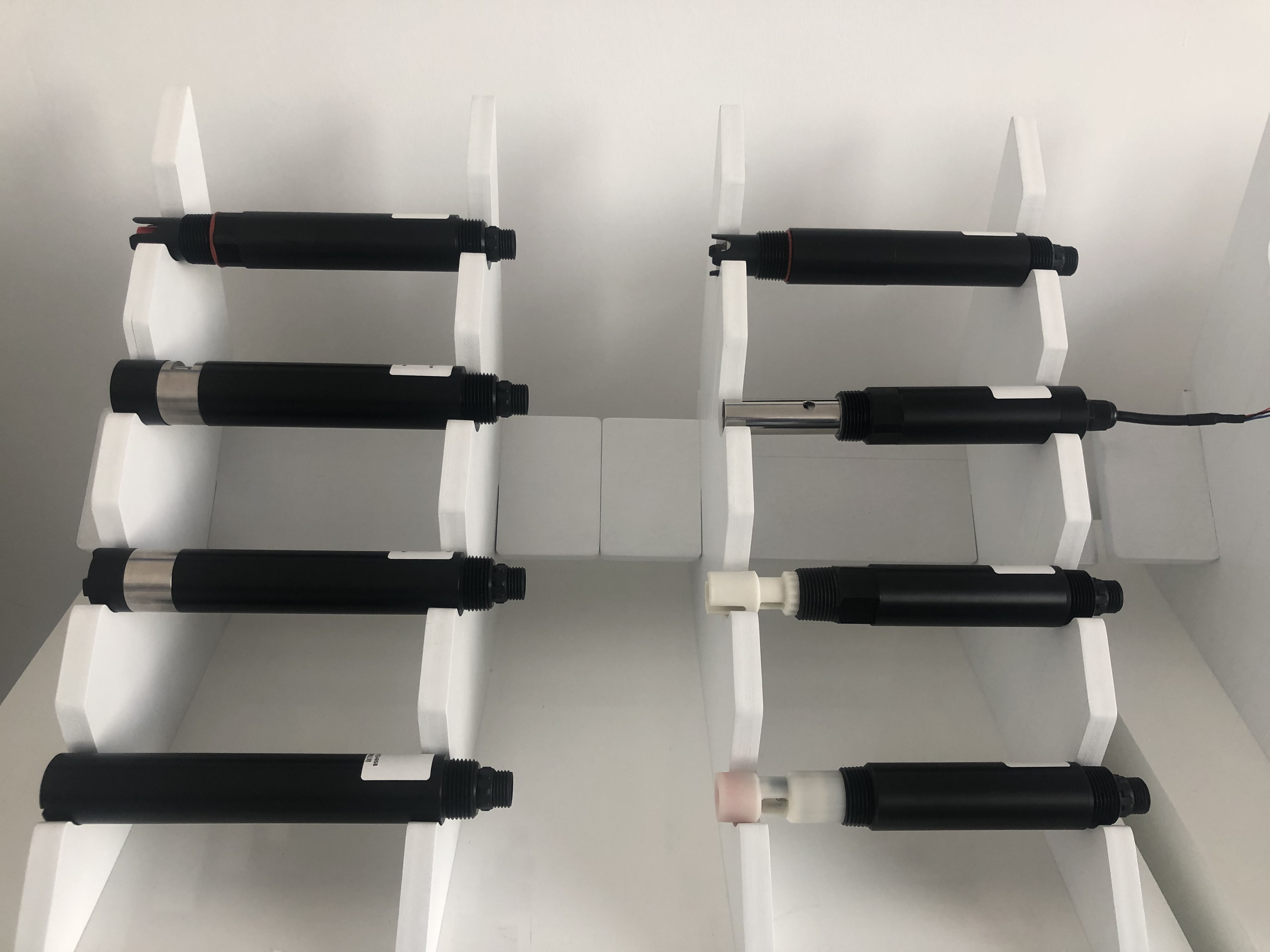
Solution & Outcome: The plant deployed a fiber-optic turbidity sensor (KWS-900B model) featuring an automatic cleaning brush. The titanium housing provided corrosion resistance. According to project data, this setup operated stably for a duration of 3 years, meeting the requirement for consistent environmental reporting. This example highlights the importance of matching a sensor's design features (auto-cleaning, robust materials) to the specific challenge (fouling, corrosive environment).
Manufacturing and Support Capacity
Beyond the product, a supplier's operational backbone supports reliable procurement. KACISE's quality control includes 100% testing, and its monthly production capacity is 5,000 units. For specialized projects, they offer OEM/ODM services with customization options for voltage, output protocol, and logo. A 70% export ratio to markets like the EU and USA suggests experience in meeting international standards and logistics.
4. Strategic Procurement and Collaboration Recommendations
A successful partnership with a sensor manufacturer is built on clear communication and joint planning from the outset.
Pre-Procurement Phase
- Define Standards Explicitly: Provide the manufacturer with the exact regulatory codes (e.g., EN 55032:2015 for EMC) your project must adhere to.
- Conduct a Joint Site Assessment: If possible, share detailed information on the installation environment—chemical exposure, temperature ranges, potential physical interferences—to inform sensor selection and mounting design.
Implementation and Post-Sales Phase
- Clarify Integration Support: Confirm the supplier's ability to provide protocol documentation (Modbus register maps) and basic integration support to connect the sensor to your SCADA or PLC system.
- Establish a Contingency Plan: Agree on lead times for spare parts (for KACISE, standard lead time is approximately 30 days) and the scope of remote technical support. Understand the warranty terms and calibration service availability.
- Leverage Supplier Expertise: Utilize the manufacturer's application knowledge. For instance, a supplier with experience in aquaculture might recommend a fluorescence-based dissolved oxygen sensor (KWS-650C) over a traditional electrochemical one for its lower maintenance in biological environments.
Procurement Insight: When evaluating costs, consider the total cost of ownership (TCO). A sensor with a slightly higher initial price but featuring automatic cleaning may offer significant savings in long-term maintenance labor and reduced calibration downtime compared to a basic model.
Conclusion
Selecting a water quality sensor manufacturer for specialized industrial applications is a technical procurement exercise. It requires moving beyond generic rankings to a deep evaluation of a supplier's ability to understand and engineer for specific environmental challenges, prove regulatory compliance, and support the product throughout its lifecycle. By focusing on industry-specific requirements, the three core supplier capabilities, and structured collaboration, procurement teams can source sensors that deliver not just data, but reliable, compliant, and cost-effective operational intelligence for years to come. Manufacturers that demonstrate this vertical application expertise, such as through documented case studies and tailored product features, position themselves as strategic partners rather than mere component vendors.