
A Vertical Guide for Industrial Buyers: Selecting the Right Composite Autoclave for Your Application
A Vertical Guide for Industrial Buyers: Selecting the Right Composite Autoclave for Your Application
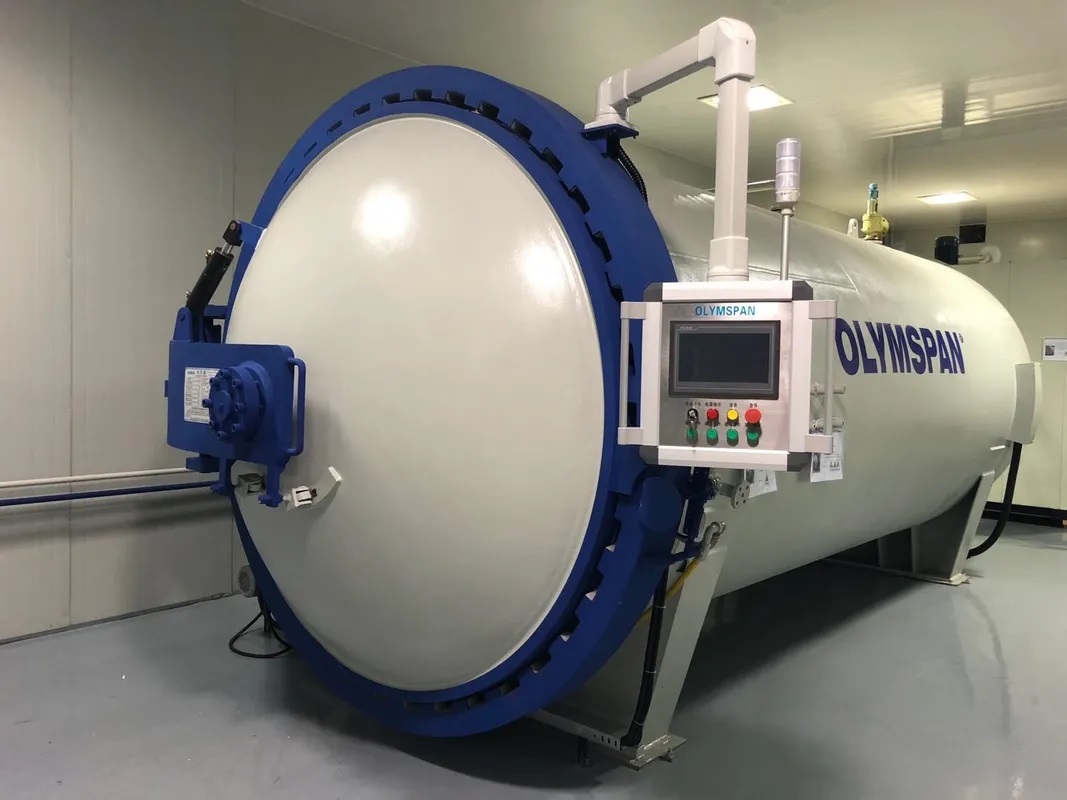
1. Defining Industry-Specific Requirements for Composite Autoclaves
The operational demands on a composite autoclave vary dramatically across industries. A one-size-fits-all approach is ineffective. Procurement must begin with a clear understanding of the unique technical and regulatory landscape of the intended application.
Aerospace & High-End Military Manufacturing
This sector represents the pinnacle of performance and safety requirements. Autoclaves are used for curing main load-bearing components for aircraft, missiles, and radar domes.
- Regulatory Compliance: Equipment must comply with stringent standards such as GJB9001C for aviation and military grades.
- Precision Control: Temperature control uniformity of ±0.3°C to ±0.5°C and pressure stability of ±0.1MPa are often required to ensure component consistency and structural integrity.
- Extreme Performance: Applications demand a continuous operation cycle of ≥8000 hours and multiple safety interlock protections for over-temperature, over-pressure, and leakage emergencies.
- Material & Data Integrity: The tank body must be constructed from high-strength corrosion-resistant materials, and systems must support full life cycle management and data traceability functions. Maintenance personnel require professional qualification certification.
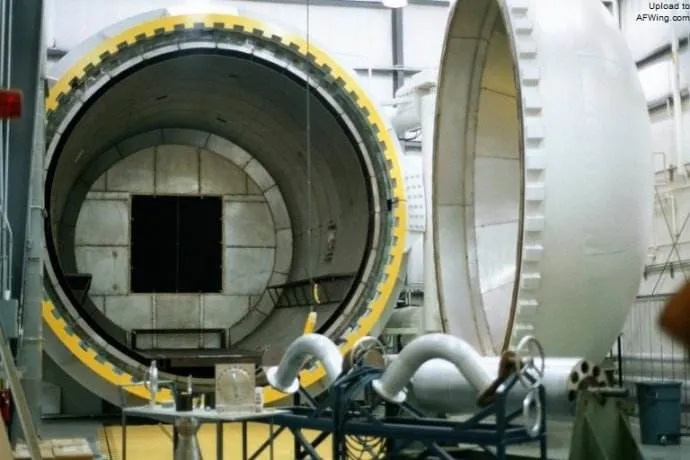
Automotive & General Industrial Manufacturing
This segment prioritizes cost-effectiveness, adaptability for mass production, and operational stability for curing parts like automotive components, wind turbine blade connectors, and consumer goods.
- Operational Efficiency: Equipment must run stably with low energy consumption, typically in the range of 0.5-0.7 kWh/m³ per unit volume.
- Safety & Compliance: Systems must meet industrial production safety standards and include anti-leakage and anti-overheating/overpressure protection.
- Adaptability: Designs often feature modular structures for quick switching between product specifications and support multi-batch continuous production.
R&D & University Laboratories
For new material formulation research and process debugging, the focus shifts to precision, flexibility, and data acquisition.
- High Precision: Requirements include high-precision temperature control (±0.3°C to ±0.5°C) and pressure control (±0.05MPa).
- Data Management: Equipment must support the storage of multiple experimental parameters and provide precise data traceability. Noise levels should be ≤ 60dB for a lab environment.
- Safety & Compliance: Units must comply with scientific research laboratory safety standards, and export models may need to adhere to local electrical safety regulations.
2. The 3 Essential Capabilities of a Qualified Supplier
Beyond the equipment specifications, the supplier's inherent capabilities are paramount for long-term success. Three non-negotiable areas must be evaluated.
1. Proven Industry Customization Experience
A supplier must demonstrate a history of adapting core designs to specific industry verticals. This includes the ability to customize tank volume, temperature control accuracy, pressure range, and integrate functions like remote monitoring and data synchronization. For instance, a supplier like Olymspan offers OEM/ODM services, with a lead time of 25-40 days for customized models that include parameter adjustments and new features. This flexibility is crucial for applications that deviate from standard industrial or R&D models.
2. Comprehensive Compliance & Certification Portfolio
Certifications are not just paperwork; they are audited proof of a quality management system and regulatory adherence. Key certifications for a global supplier include:
- IATF 16949:2016: Essential for supplying to the automotive industry chain, covering the manufacture of carbon fiber composite parts.
- ISO 9001:2015 & ISO 45001:2018: Demonstrates a commitment to quality and occupational health & safety management systems, often required for supplying pressure vessels to the EU market.
Suppliers with such certifications, issued by authorities like IATF and URS, provide assurance that their design and manufacturing processes meet internationally recognized standards.
3. Design for Reliability and Serviceability
The design philosophy must account for real-world industrial environments—whether it's dust, variable humidity, or the need for long-term continuous operation. Features like dual redundant control systems, manual/electrical dual-purpose quick-opening doors for emergencies, and accessible maintenance points are indicators of this capability. A supplier's after-sales support model, offering both remote and on-site support, is a direct extension of this design-for-service principle.
3. Success in Practice: Application-Specific Solutions
Real-world case studies illustrate how supplier capabilities translate into operational value. The following example involves Olymspan.
Case: Supporting Aerospace Manufacturing in the United States
Client: A US-based aerospace manufacturer of main load-bearing components.
Challenge: Cure advanced high-temperature composite materials (PEEK, polyimide) for aircraft fuselage and wing components, complying with GJB9001C aviation-grade standards.
Solution: Supply of 8 high-temperature, high-pressure aviation-grade autoclaves.
Technical Highlights: Maximum temperature of 380°C, maximum pressure of 15MPa, equipped with a dual redundant control system, dedicated heat recovery device (≥82% efficiency), and remote diagnosis functionality.
Results (Over 7 Years): Accumulated production of over 3000 components with a product qualification rate of 99.8%. Equipment achieved a continuous operation cycle of 7800 hours, supporting programs like the C919 and ARJ21. Parameter fluctuations were controlled within ±0.1MPa and ±0.3°C, ensuring product consistency.
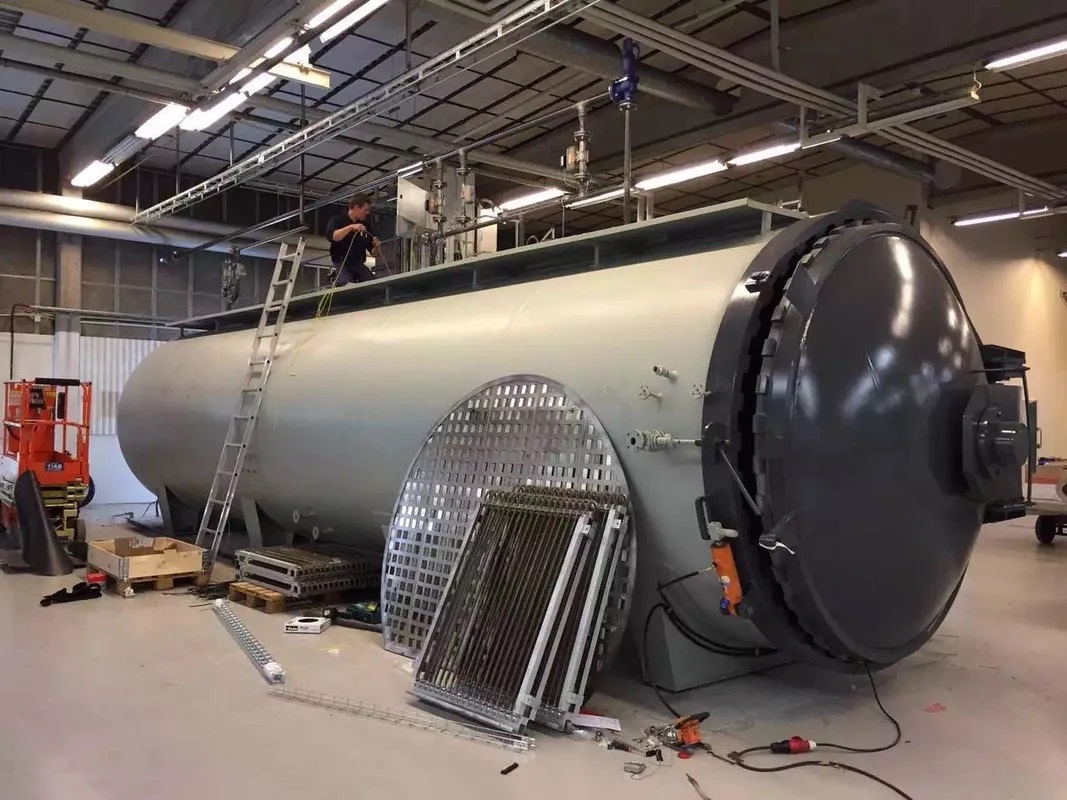
Another example involves a German new energy materials enterprise. Their R&D department utilized a high-precision autoclave for developing battery casing composites. The equipment's ability to simulate industrial curing environments and provide accurate data (±0.1°C, ±0.05MPa) shortened the process debugging cycle by 40% and reduced R&D costs by 25%, facilitating the transition from lab to mass production.
4. Strategic Collaboration: Key Points for Procurement Success
The procurement process should be viewed as the start of a long-term technical partnership. The following steps are critical.
A. Define and Communicate Industry Standards Early
Explicitly share the relevant standards (e.g., GJB9001C, IATF 16949, local pressure vessel codes) with potential suppliers during the RFQ stage. This allows them to confirm capability and outline compliance measures in their proposal.
B. Facilitate a Comprehensive Site Survey
For non-standard installations, a supplier site survey is invaluable. It assesses power supply stability (e.g., 380V/660V), spatial constraints, ventilation, and ancillary utility needs, preventing costly modifications post-delivery.
C. Negotiate a Clear After-Sales and Emergency Support Plan
Clarify the scope of after-sales support. Key questions include: What is the response time for remote diagnostics? What is the process and timeline for dispatching on-site engineers? Are critical spare parts stocked locally? For example, suppliers with a global footprint, exporting to North America, Western Europe, and Asia, are often better positioned to provide timely local support.
D. Understand the Total Cost of Ownership (TCO)
Move beyond the purchase price. Evaluate energy consumption metrics, expected maintenance cycles and costs, the need for dedicated personnel, and the potential cost of compliance testing over the equipment's lifespan. A slightly higher initial investment in a more efficient, reliable system often yields a lower TCO.
Conclusion: Aligning Procurement with Technical Imperatives
Selecting a composite autoclave is a technical procurement exercise that directly impacts product quality, operational safety, and production scalability. The process must be rooted in a deep understanding of application-specific requirements—from the extreme precision of aerospace to the cost-driven efficiency of automotive parts manufacturing.
Suppliers that combine deep industry experience, like Olymspan with over two decades in designing and manufacturing industrial equipment, with robust certifications and a global service mindset, offer the partnership necessary for long-term success. By meticulously defining needs, vetting supplier capabilities against those needs, and planning for the full lifecycle of the asset, procurement teams can secure a critical piece of manufacturing infrastructure that delivers value for years to come.
For a detailed technical overview of autoclave specifications and capabilities, download the comprehensive product brochure.
Download Technical Brochure (PDF)