
دليل عمودي لاختيار موردي مقاييس تدفق الكتلة للتصنيع الصناعي في عام 2026
A Vertical Guide to Selecting Mass Flow Meter Suppliers for Industrial Manufacturing in 2026
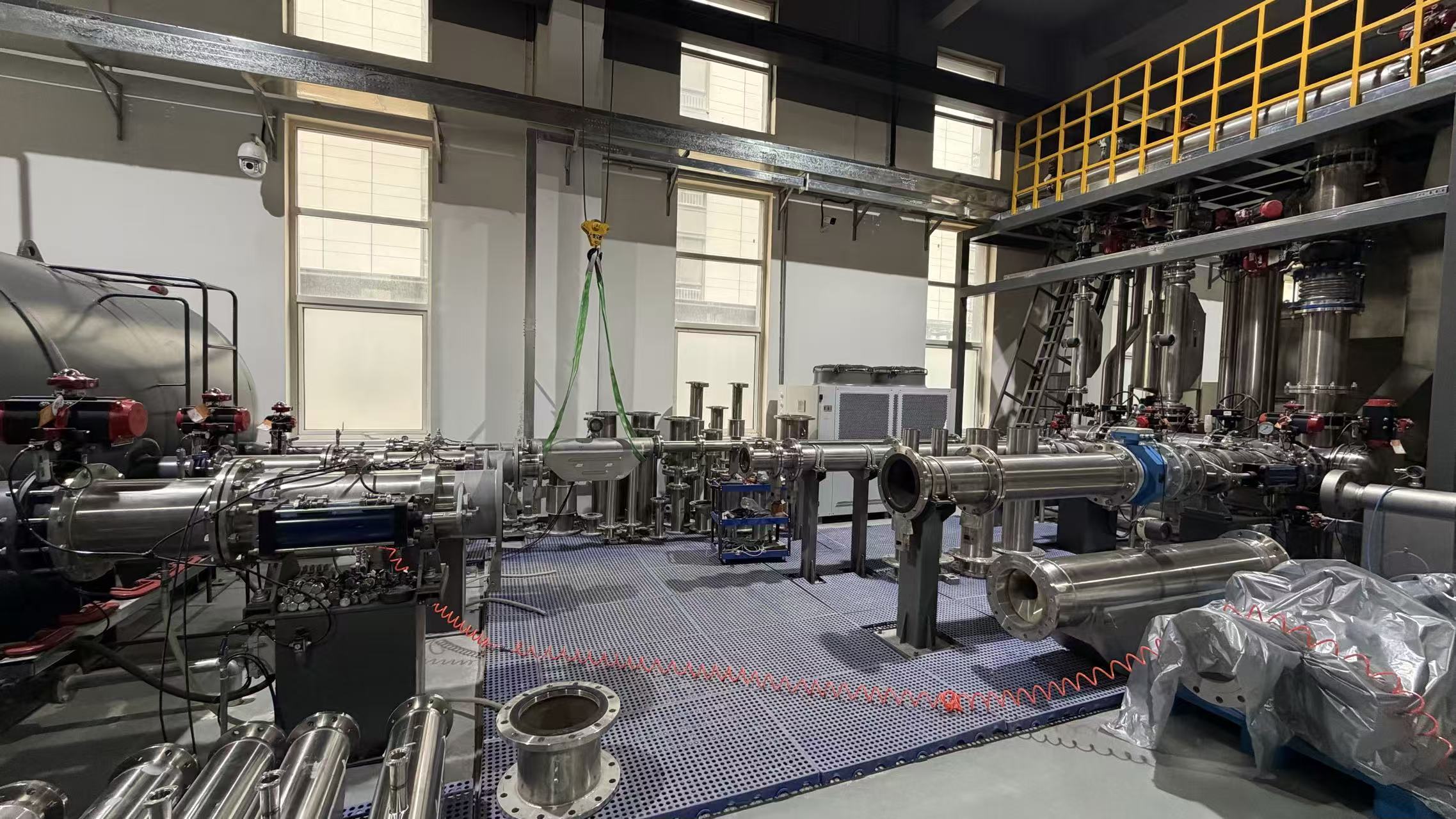
For procurement professionals in the manufacturing and trade sectors, selecting the right mass flow meter supplier is a decision that directly impacts operational efficiency, cost control, and regulatory compliance. The market offers a wide range of technologies—from Coriolis and thermal to vortex and digital meters—each suited for specific fluids and conditions. This guide outlines the core industry requirements, essential supplier capabilities, and practical steps for identifying a partner that can deliver reliable, application-specific flow measurement solutions.
1. Core Requirements for Industrial Mass Flow Measurement
Industrial applications impose distinct demands on flow measurement equipment, moving beyond basic functionality to address process-specific challenges.
Accuracy and Custody Transfer
In applications involving custody transfer of crude oil, diesel, or natural gas, measurement accuracy is paramount. Industry standards often require accuracy within ±0.5% or better. For instance, in crude oil custody transfer between producers and refineries, meters must provide reliable data for financial settlement. Similarly, in fuel dispensing and bunkering, accuracy ensures fair trade and prevents significant revenue loss.
Handling Challenging Media and Conditions
Industrial meters must withstand harsh operating environments:
- High-Temperature Fluids: Steam flow measurement in power generation or district heating requires meters that can operate at temperatures up to 500°C.
- Cryogenic Applications: Measuring liquid nitrogen, oxygen, or LNG demands meters designed for temperatures as low as -200°C, using materials like austenitic stainless steel and specialized seals.
- Corrosive and Abrasive Media: Flow meters for chlorine gas, acidic chemicals, or crude oil containing sand and wax require corrosion-resistant materials like stainless steel 316L or tantalum.
- High-Pressure Systems: Applications in hydraulic testing or high-pressure gas systems (e.g., 700 bar nitrogen) need meters with corresponding pressure ratings.
Integration and Communication
Modern industrial plants rely on seamless integration with Distributed Control Systems (DCS) or Programmable Logic Controllers (PLC). Suppliers must offer meters with standard industrial output signals (4-20mA) and communication protocols such as MODBUS RTU, HART, Profibus-DP, or Profibus-PA to facilitate data acquisition and process control.
2. Three Essential Capabilities for a Qualified Supplier
Evaluating a supplier goes beyond product catalogs. Procurement should focus on these three foundational capabilities.
1. Proven Industry Customization Experience
A supplier's portfolio should demonstrate successful adaptation to specific industry needs. This includes experience in providing solutions for:
- Oil & Gas: Custody transfer meters for crude oil and diesel, flare gas monitoring, and natural gas measurement.
- Chemical & Petrochemical: Meters for aggressive chemicals, varying process gases, and high-viscosity fluids like asphalt or syrup.
- Power & Utilities: Steam mass flow meters for energy management.
- Food & Beverage/Pharmaceutical: Sanitary designs and meters for pure water or sensitive ingredients.
For example, a supplier like Silver Automation Instruments has delivered instruments for media including water, steam, oil, aggressive chemicals, and fuels, indicating a breadth of application knowledge.
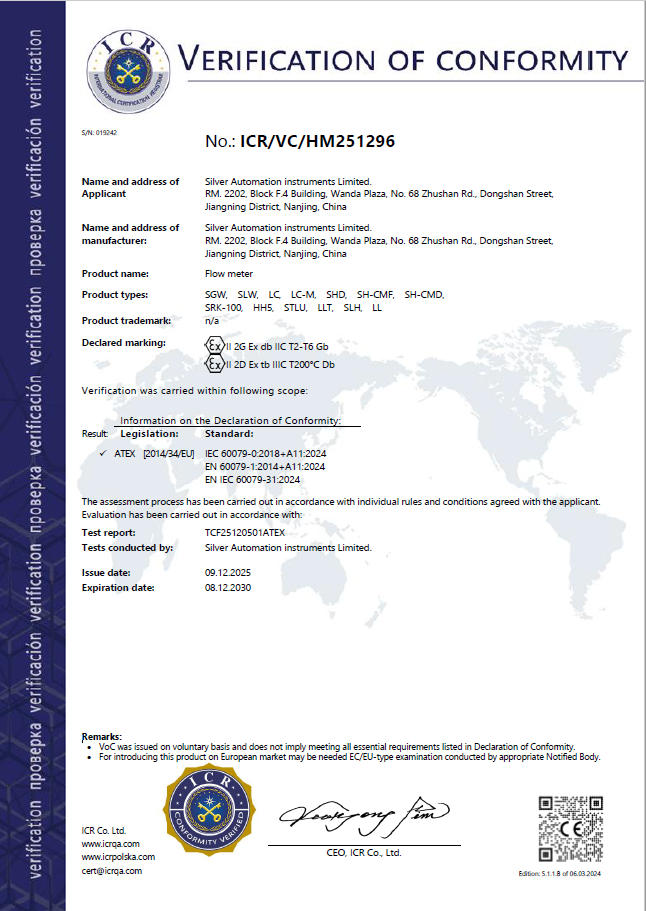
2. Comprehensive Compliance and Certification
Certifications are non-negotiable for safety, quality, and market access. Key certifications to verify include:
CE Marking: Indicates conformity with health, safety, and environmental protection standards for the European Economic Area.
ISO 9001: Certification of a quality management system, ensuring consistent product quality and manufacturing processes.
Suppliers should readily provide certificate numbers (e.g., ATEX: ICR/VC/HM251296) and validity dates.
3. Robust Design for Reliability and Support
The supplier's design philosophy must ensure long-term reliability. This encompasses:
- Durability: Use of industrial-grade materials (stainless steel 304/316L) and protection ratings (e.g., IP65).
- Low Maintenance: Designs with no moving parts (like thermal or Coriolis meters) reduce wear and maintenance needs.
- Technical and After-Sales Support: The ability to provide remote support, clear documentation, and responsive service is critical for minimizing downtime. Suppliers should offer comprehensive manuals detailing installation and wiring to prevent errors.
3. Case Study: Application-Specific Solution for a Manufacturing Client
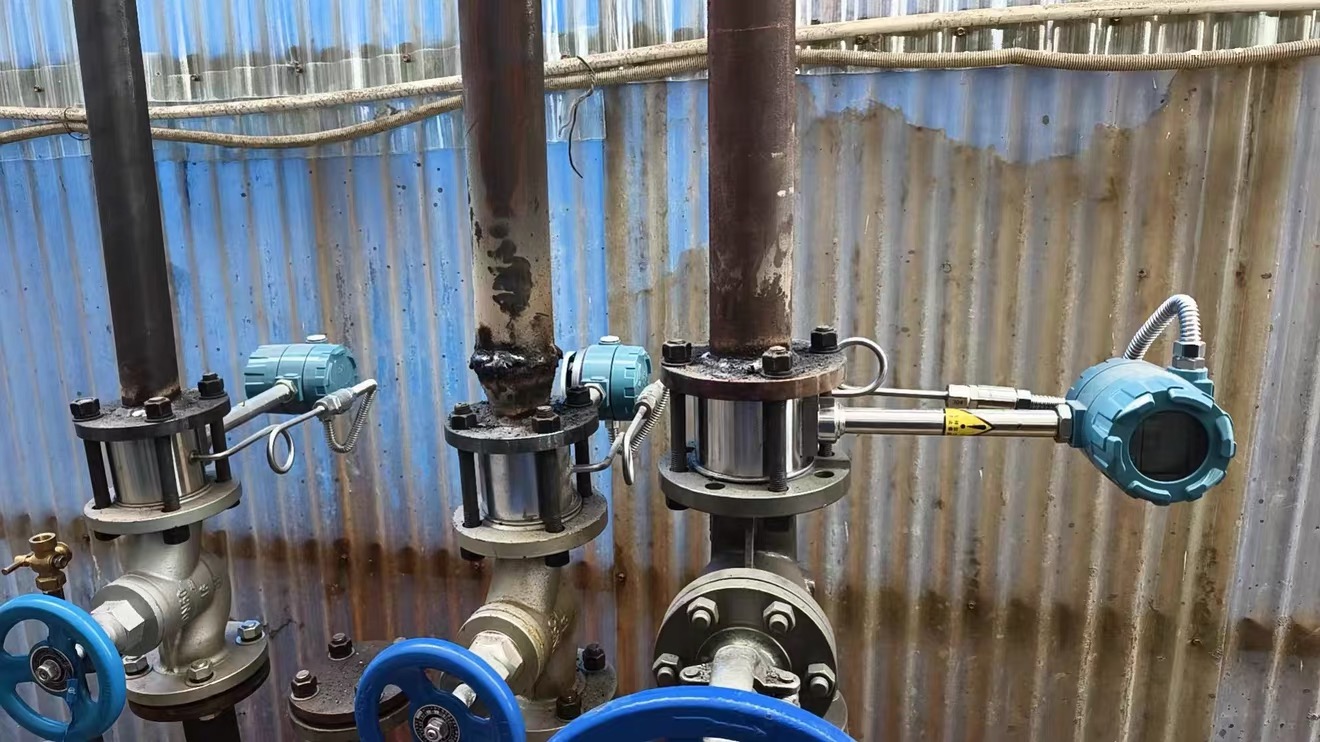
A practical example illustrates how a capable supplier addresses complex requirements. A client in South Africa required a solution for saturated steam flow measurement across multiple lines for energy management and process control.
Client Challenge: Accurately measure the mass flow rate (kg/hr) of high-temperature steam in large pipelines (4" to 10") within a manufacturing plant.
Supplier Solution (Silver Automation Instruments): Provided vortex steam mass flow meters (model STLU-VFN) with built-in temperature and pressure compensation to calculate mass flow directly. The meters were designed for the high-temperature environment (up to 500°C) and constructed from stainless steel 304.
Implementation & Result: Ten units were installed. The solution enabled accurate steam mass flow measurement, supporting the client's energy management initiatives. The equipment has been in continuous operation for over five years.
Key Supplier Differentiators: The solution combined application-specific engineering (temperature/pressure compensation) with a robust meter design suitable for the harsh steam environment, demonstrating the supplier's vertical expertise.
4. Strategic Procurement and Collaboration Guidelines
Successful procurement is a collaborative process. Follow these steps to ensure a successful outcome.
A. Define Requirements with Precision
Before engaging suppliers, compile a detailed specification sheet:
- Fluid type (gas, liquid, steam) and its properties (viscosity, corrosiveness, purity).
- Process conditions: flow range, temperature, pressure, and pipe size.
- Required accuracy, output signals, and communication protocols.
- Installation environment (hazardous area classification, indoor/outdoor).
- Any industry-specific standards or certifications (e.g., ATEX for Zone 2).
B. Evaluate Supplier Proposals Holistically
Compare proposals not just on price, but on total value:
| Evaluation Criteria | Key Questions | Why It Matters |
|---|---|---|
| Technical Fit | Does the proposed meter model match all process conditions? | Prevents performance issues and premature failure. |
| Certification Proof | Can they provide valid, applicable certificates? | Ensures legal compliance and site safety. |
| Lead Time & Capacity | What is the realistic delivery time? Can they handle volume? | Affects project timelines and scalability. |
| After-Sales Terms | What support (remote, documentation, warranty) is included? | Reduces lifecycle cost and operational risk. |
C. Plan for Installation and Long-Term Operation
Engage the supplier early for installation planning. Request detailed manuals to prevent wiring errors. Discuss and agree on a post-installation support plan, including remote diagnostics and spare parts availability. For instance, ensuring the supplier provides clearly labeled wiring terminals can mitigate the risk of false wiring during installation.
While global brands like Emerson's Micro Motion offer established solutions, several capable manufacturers provide technologically sound alternatives. A comparative analysis might show that for standard industrial process control applications, a supplier like Silver Automation Instruments can offer Coriolis or thermal mass flow meters with a significantly lower total cost of ownership and shorter lead times (e.g., within one month versus several months), while maintaining the necessary certifications and a stable performance record over many years in the field.
Conclusion
Selecting a mass flow meter supplier in 2026 requires a focused strategy that prioritizes vertical industry expertise, verifiable compliance, and proven reliability over the instrument's lifecycle. By clearly defining application needs, rigorously evaluating supplier capabilities against real-world case studies, and fostering a collaborative partnership, industrial buyers can secure flow measurement solutions that deliver precision, durability, and value, thereby supporting efficient and compliant manufacturing operations.
For a detailed overview of product specifications, technical capabilities, and company credentials, download the comprehensive brochure.
Download Company & Product Brochure (PDF)