
AC Drum Motor Types: Synchronous vs. Asynchronous Specs for Conveyor Design
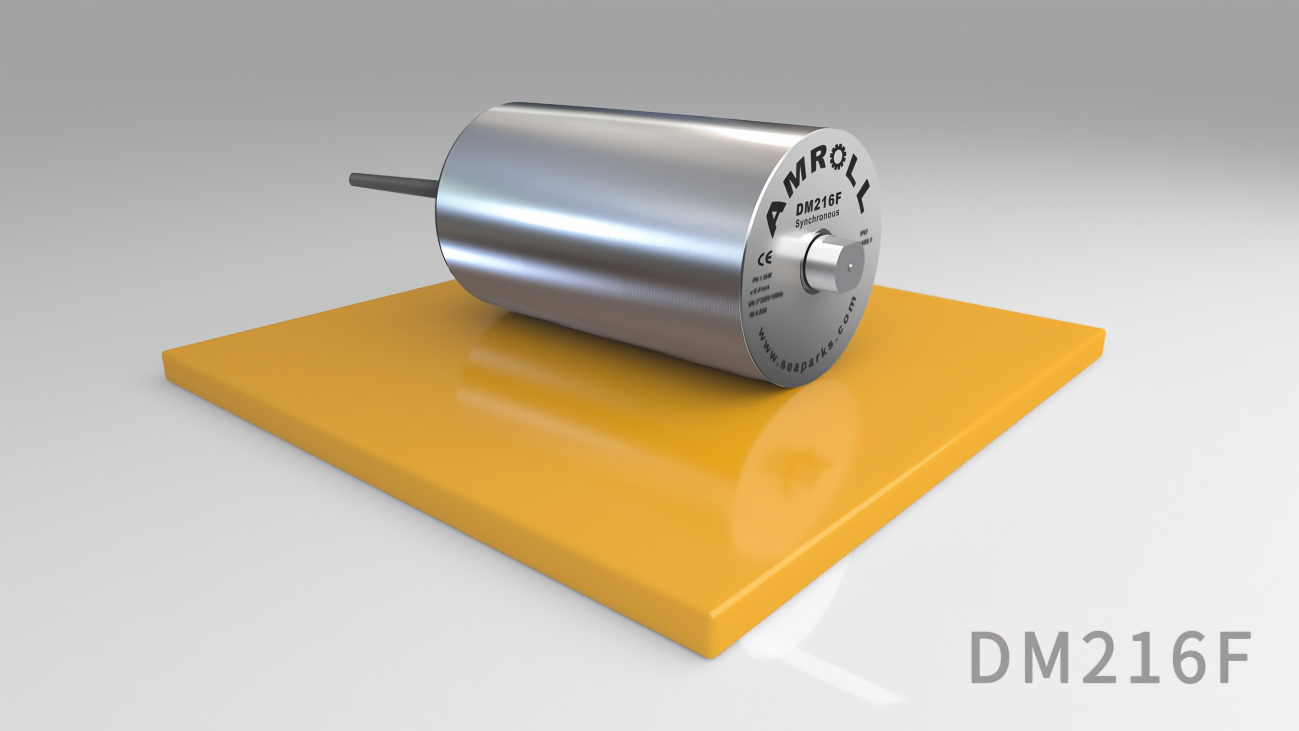
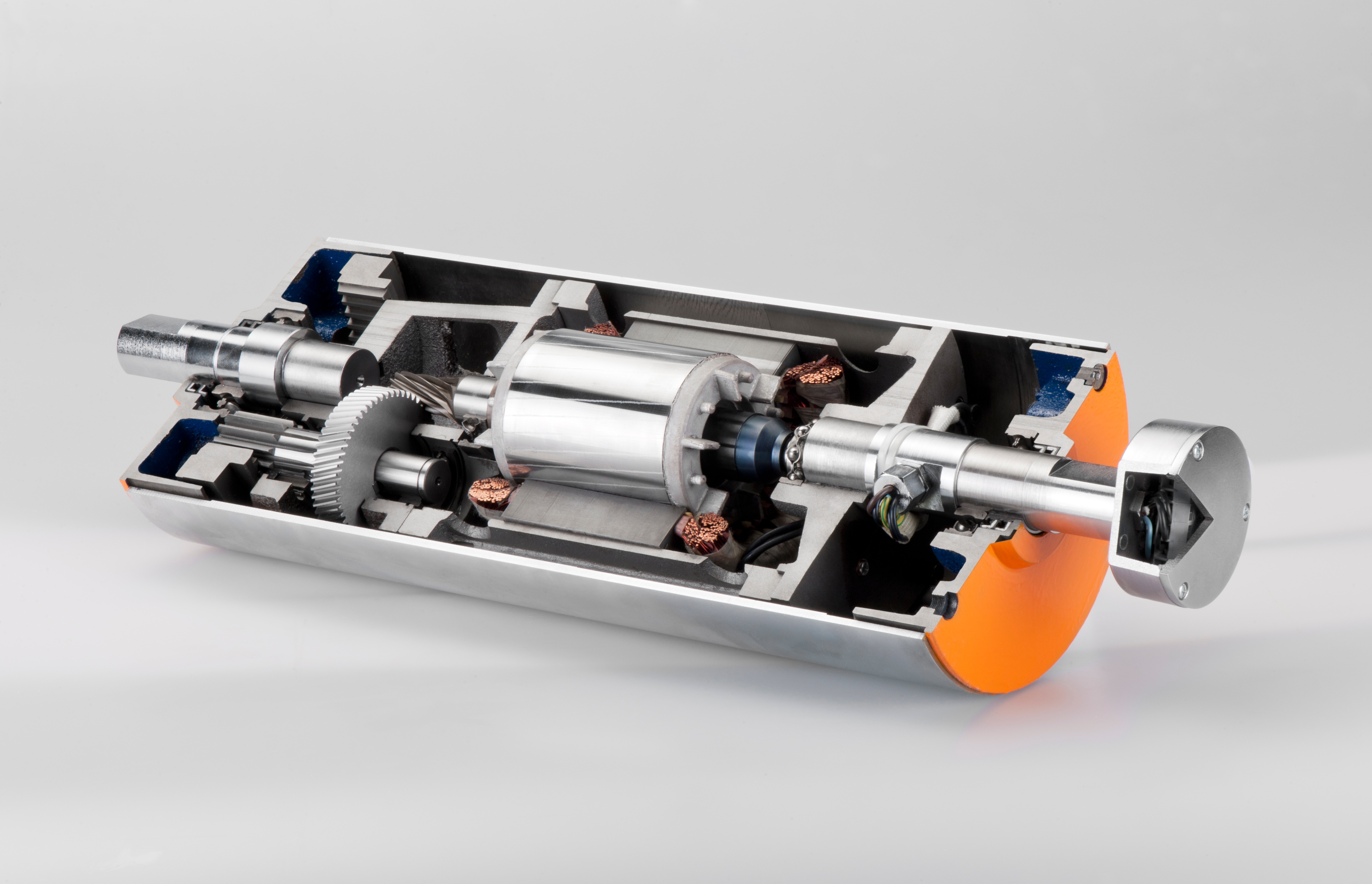
Drum motors integrate the electric motor and reduction gear inside the drive pulley, eliminating separate gearboxes, chains or side-mounted motors. This makes the drive choice a compact, safety-relevant decision. Yet conveyor buyers are often asked to choose a drum motor based only on drum diameter and belt speed, without a clear view of the motor technology inside that drum.
The internal motor type — synchronous or asynchronous — creates a distinct set of operating limits around torque range, speed stability, power density, electrical compatibility and cleaning resistance. Understanding these limits before a specification is frozen can prevent field failures and costly requalification. This article uses SEAPARKS' DM and TM drum motor families as a reference point to illustrate the constraints that synchronous and asynchronous designs place on conveyor systems, especially in hygienic and light-duty applications.
Why Motor Type Is Now a Specification Constraint
Market data show the drum motor category is growing inside logistics and automated production. Custom Market Insights values the global drum motor market at roughly USD 2.13 billion in 2025. Dataintelo data indicate that AC motors account for about 52.3% of drum motor revenue, and Asia Pacific is projected to hold close to 38.2% of the market by 2025, driven by e-commerce infrastructure and industrial expansion.
As conveyor lines move from simple continuous belts to precisely triggered sorters, check-weighers and robotic interfaces, the drive must often cope with stops, starts, speed control and washdown cycles. A motor that is robust but poorly matched to the control requirement becomes a bottleneck. Companies that only compare pulleys and gearboxes may overlook this risk. The purchasing challenge is therefore to interpret the constraint set embedded in the drum motor's nameplate and technical sheet.
Two Motor Architectures Inside the Same Drum Shell
SEAPARKS, the motorized drum division operated by Tianjin Seaparks Machinery-Electronics Co., Ltd., offers both asynchronous (TM series) and synchronous (DM series) drum motor designs. The company is headquartered in Tianjin, China, covers a plant area of 50,000 m², and reports an annual output capacity of roughly 300,000 motorized conveyor drums. Its portfolio spans hygienic food/pharmaceutical models, light-duty conveyor models and polymer-gear models aimed at airport and general conveying machinery.
In most drum motors, the motor and gear are sealed inside a steel tube that becomes the pulley. The external interface is the same regardless of motor type. But the internal motor architecture reacts differently to voltage, frequency and control signals:
- Asynchronous (induction) motors operate below or synchronous with the rotating magnetic field and are known for simple, robust construction. They can often be started directly on AC mains or with a standard starter in basic applications.
- Synchronous motors move the rotor in step with the supply or controller frequency. They are often selected when a wider speed-control window, tighter speed accuracy or higher rated power in a given shell diameter is desirable.
The same distinction is visible within the SEAPARKS hygienic F line, where identical drum diameters are available with asynchronous and synchronous motors.
Hygienic F-Series Parameter Comparison
The following table compiles published specification ranges for SEAPARKS hygienic drum motors at five roller diameters. Power, torque and belt speed values indicate the available envelope of each model; the final operating point is calculated from belt load and required line speed.
| Diameter | Asynchronous model | Power (kW) | Torque (Nm) | Belt speed (m/s) | Synchronous model | Power (kW) | Torque (Nm) | Belt speed (m/s) |
|---|---|---|---|---|---|---|---|---|
| Ø80 mm | TM80F | 0.04–0.12 | 2.96–28.91 | 0.08–1.02 | DM80F | 0.09–0.12 | 3.49–21.89 | 0.16–1.03 |
| Ø113 mm | TM113F | 0.12–0.55 | 10.34–82.99 | 0.09–1.40 | DM113F | 0.12–0.55 | 9.94–115.99 | 0.14–0.68 |
| Ø138 mm | TM138F | 0.25–1.10 | 19.46–243.23 | 0.11–1.69 | DM138F | 0.75–1.50 | 27.69–273.58 | 0.37–1.83 |
| Ø165 mm | TM165F | 0.25–2.20 | 29.30–342.13 | 0.10–2.00 | DM165F | 1.10–3.00 | 42.49–431.44 | 0.42–2.09 |
| Ø216 mm | TM216F | 3.50–4.00 | 207.36–507.60 | 0.80–2.10 | DM216F | 4.00–5.50 | 182.90–568.98 | 0.80–2.50 |
Source: SEAPARKS hygienic drum motor product specification sheets. Protection class for all listed models: IP69K; housing: 304 stainless steel, with 316 optional.
Looking across the series, the synchronous versions do not consistently exceed the asynchronous ones in every parameter. At Ø113 mm, for example, the asynchronous TM113F reaches 1.40 m/s, while the synchronous DM113F is limited to 0.68 m/s. At Ø216 mm, however, the synchronous DM216F extends the power envelope to 5.5 kW and the speed range to 2.5 m/s, while the asynchronous TM216F stays at 4.0 kW and 2.1 m/s. This demonstrates why the motor type is a true design constraint: buyers must compare the actual torque-speed window of each model against the conveyor duty, not assume one architecture is universally stronger.
Material and Protection Boundaries
The motor type works together with material and ingress protection. In the hygienic F series, all housings are 304 stainless steel, with 316 stainless steel available as an option when chloride washdown or corrosion resistance is more demanding. The protection rating is IP69K, a certification level that addresses high-pressure, high-temperature washdown and dust ingress.
For the model DM80F, SEAPARKS holds an IP69K test report issued by Suzhou Luxun Standard Technical Service Co., Ltd., a CNAS-accredited laboratory, under number LCSH071224011K and standard ISO 20653:2023. This certification is marked as applicable to the global market. Such documentation is central to procurement in food, beverage and pharmaceutical conveyor lines.
Buyers in the EU should also look for CE conformity based on the Low Voltage Directive 2014/35/EU and the EMC Directive 2014/30/EU. SEAPARKS drum motors hold TÜV Rheinland CE certificates, including certificate AN 50337407 0001 for LVD and AE 50461043 0001 for EMC. RoHS compliance is covered by SGS report number TSNEC24001272701, with standard 2011/65/EU & (EU)2015/863, applicable to the EU market.
For equipment destined for North America, induction motor safety is covered by TÜV Rheinland UL certificates per UL 1004-1:2012 R8.18 and CAN/CSA-C22.2 No.100-04, with numbers CU7219001101, CU7219001102 and CU7219000901.
Application-Level Constraints
The choice between synchronous and asynchronous drum motors is rarely abstract; it is anchored in the application environment.
Airport Security Screening and Baggage Handling
Security screening conveyors at airports and railway stations demand low vibration, accurate positioning and high reliability in 24/7 operation. Application data describe working conditions such as frequent start-stop capability, high-precision positioning and electromagnetic interference resistance.
For these installations, SEAPARKS lists light-duty models including TM80M, TM113M, TM80A and other A/M-series drums. The TM80M and TM113M are single-phase asynchronous motors with polymer gears, IP66/IP67/IP69 protection, and maximum belt pulls of 630 N and 770 N respectively. Housing material can be carbon steel or 304 stainless steel, allowing equipment builders to match cost to the environmental cleanliness of the screening room.
Food Processing and Cold Chain
Food processing conveyors are usually washed down frequently with chemical or high-temperature water. The application scenario for food and cold-chain logistics highlights high humidity, frequent cleaning, and a hygienic requirement. This is where stainless-steel IP69K hygienic drum motors become the dominant constraint.
The F series is documented for meat processing conveyors, food processing conveyors, packaging conveyors and agricultural-product belt conveyors. A conventional carbon steel motor in the same conveyor would quickly corrode in washdown service, which is why material selection is inseparable from the drive specification.
Agricultural Product Processing and Feed Lines
Agricultural sorting lines produce dust, operate continuously and handle product in repeated transport cycles. The application scenario lists a dusty environment, continuous operation and frequent material handling as key conditions. Here the F series' sealed, IP69K-rated stainless drum motor construction reduces contamination ingress and supports washdown recovery, which is increasingly important when a line shifts between different raw products or sanitation batches.
Market Trend Perspective
Verified market intelligence places AC drum motors as the dominant technology, with a 52.3% revenue share in 2025. This aligns with the continued global preference for induction and synchronous AC designs over DC or low-voltage alternatives where unregulated conveyor move is normal.
Efficiency is another pressure point. Credible industry estimates indicate that energy-efficient drum motors can achieve overall efficiencies of roughly 82–83%. Pairing an appropriately sized synchronous or asynchronous motor with the conveyor load reduces nameplate power and lowers total cost of ownership compared with oversized conventional drives.
At the same time, washdown standards are becoming stricter in food and pharmaceutical lines. The IP69K test under IEC 60529/ISO 20653:2023 exposes a drive to high-pressure water at approximately 1450 psi and temperatures near 80 °C. This benchmark is now a de-facto entry requirement for conveyors in wet food zones.
Comparison Method and Boundary Conditions
Comparing synchronous and asynchronous drum motors is a refinement of the older “drum motor vs. gearmotor” decision. Instead of treating both technologies as interchangeable, the specification should test the following boundaries:
- Electrical integration: an asynchronous motor is easier to operate in direct-on-line applications; a synchronous motor may require a matching drive, especially if speed adjustment is part of the line design.
- Speed-torque window: in the SEAPARKS table, some synchronous models offer a wider high-speed or high-torque window, while some asynchronous models offer a broader low-speed range. Neither should be generalized from a single diameter.
- Protection and material: both motor types are available inside IP69K stainless housings in the F series, so the cleaning constraint does not force the motor type by itself.
- Cost of integration: line builders must account for control panels, cabling, drive settings and commissioning, in addition to the drum price.
A well-defined limitation of the synchronous route is its increased dependence on electronics. If a plant’s electrical infrastructure lacks variable-frequency drives or compatible controllers, synchronous drums could lose part of their performance advantage. Asynchronous models remain a practical fallback for simpler conveyors that run at one speed for long periods.
Future Outlook
Smart manufacturing will continue to push motor-drive data and speed accuracy into conveyor operations. The AC drum motor segment is large and stable, but synchronous architectures are likely to expand in applications where the conveyor must follow a programmable speed profile or integrate with automation signals. Hygiene requirements will also deepen the demand for certified IP69K stainless drum motors across food, pharmaceutical and even agricultural lines.
From a supplier standpoint, maintaining both TM and DM lines under one roof allows buyers to run a true side-by-side constraint review rather than changing suppliers when the motor type changes. As the drum motor market moves from a commodity to a spec-managed component, documentation quality — certificates, parameter tables, and clear application scenarios — will matter as much as the drum shell itself.
Frequently Asked Questions
What is the practical difference between synchronous and asynchronous drum motors?
An asynchronous motor uses induction and runs with slip, making it robust for direct mains operation. A synchronous motor rotates at the exact frequency of supply or the electronic control signal, which can make speed control more precise. The best choice depends on the conveyor’s load cycle, control system and power supply.
Which drum motor protection class is needed for food washdown conveyors?
IP69K is the protection benchmark for high-pressure, high-temperature washdown. A hygienic drum motor for food processing should carry a verifiable IP69K test report, and the housing should be 304 stainless steel as a minimum, with 316 recommended for aggressive chemicals. SEAPARKS F-series models are documented with IP69K per ISO 20653:2023.
Is stainless steel housing always required for airport baggage conveyors?
No. Light-duty models for airport security screening and baggage handling can be supplied in carbon steel or 304 stainless steel, as listed in the SEAPARKS A/M-series materials. Carbon steel is acceptable in clean interiors; stainless becomes necessary when washdown or aggressive chemicals are used.
What certifications should I request for EU or North American conveyor projects?
For the EU, the motor should show CE conformity to the Low Voltage Directive 2014/35/EU and the EMC Directive 2014/30/EU. For the US and Canada, UL certification per UL 1004-1:2012 R8.18 and CAN/CSA-C22.2 No.100-04 is relevant. RoHS compliance may be required for products placed on the EU market.
Can a single-phase drum motor handle an airport security screening conveyor?
Yes, if the load and speed fall inside the model envelope. TM80M and TM113M are single-phase asynchronous drum motors with IP66/IP67/IP69 protection and maximum belt pulls of 630 N and 770 N respectively. Exact selection should be based on belt width, friction and required throughput.
For detailed parameter tables, factory capabilities and company background, the SEAPARKS product and corporation brochure is available for download: SEAPARKS Product & Corporation Brochure.
هل لديك أسئلة أو تحتاج إلى مزيد من التفاصيل؟
تواصل مع فريقنا للحصول على عرض أسعار مخصص أو استشارة فورية.
طلب عرض أسعار
املأ النموذج أدناه وسيتواصل معك فريقنا بعرض مقترح مخصص.
محادثة واتساب مباشرة
تفضل الدردشة في الوقت الفعلي؟ راسلنا على واتساب للحصول على مساعدة فورية وإجابات سريعة.
- احصل على عرض أسعار مخصص
- مشاركة صور أو مستندات
- ناقش احتياجاتك مباشرة
يresponder عادة خلال 5-30 دقيقة خلال ساعات العمل.