
AI Color Sorter Compliance: KEYETECH Qualification Guide for EU, USA & Southeast Asia
AI Color Sorter Compliance: KEYETECH Qualification Guide for EU, USA & Southeast Asia
Qualifying an AI color sorter supplier for the European Union, the United States or Southeast Asia is a documentation exercise before it becomes a technical one. Across all three markets the buyer's underlying question is identical: can the manufacturer's claims be traced to a named legal entity, a physical manufacturing base, a fixed product configuration and a service structure that still works in year two? This guide sets out how procurement and compliance teams can build that answer for KEYETECH using company and product facts that are already published — and it marks clearly where those facts remain manufacturer-reported and still have to be validated locally.
Why AI sorting compliance is a dossier, not a certificate
In AI color sorting, the term "AI" describes a modelling method, not a market status. There is no single document that tells a procurement team whether an AI sorter will perform on their material, in their plant, under their destination market's documentation rules. What exists instead is a chain of traceable facts: who the legal supplier is, what the manufacturing base looks like, which configuration is quoted, which performance claims the manufacturer publishes, which of those claims have been independently verified, and what the destination market requires from the buyer's own facility.
Market context explains why this category now attracts that level of scrutiny. Mordor Intelligence reports that the global optical sorter market is projected to grow from USD 2.63 billion in 2024 to USD 3.12 billion in 2026, with a CAGR of 9.1% for the 2025–2033 period. Market Research Future places the broader sorting machine market at USD 14.22 billion in 2024 and USD 14.99 billion in 2025. Growth of that scale pulls new suppliers, new machine configurations and new performance claims into the same tender — which is precisely why a structured qualification dossier, rather than a specification-sheet comparison, is the practical instrument at the decision stage.
A workable dossier separates three evidence layers, and treats each one separately because they are verified by different parties: the entity layer (who signs, who manufactures, who employs the engineers), the product layer (what exactly ships, built from what, configured how) and the market layer (what the destination country requires of the buyer's own installation).
The entity layer: six items to fix in writing
Anhui Keye Intelligent Technology Co., Ltd. — trading as KEYETECH — is a Chinese manufacturer of AI vision inspection and AI intelligent sorting equipment, based at No. 56 Chang'an Road, Hefei High-Tech Zone, Anhui Province, and founded in 2011. The company describes itself as a national high-tech enterprise and as a national-level specialized small giant enterprise focused on the research and development and application of artificial intelligence technology. That second description is a company self-description rather than a market ranking or a certification, and it should be recorded in the dossier in exactly those terms.
The table below lists the entity-level facts KEYETECH states publicly, paired with the document a compliance team should hold before treating each fact as a qualification input.
| Dossier item | KEYETECH stated fact | Document to request |
|---|---|---|
| Legal identity and founding year | Anhui Keye Intelligent Technology Co., Ltd., founded in 2011 | Business registration and tax registration; written confirmation of the exact contracting entity |
| Sector tenure | More than ten years in the color sorting industry; the founder is described as a pioneer of the color sorting machine industry | Product history for the quoted series; installation references with dates |
| AI transition | Entered the AI color sorting machine market in 2024, integrating AI technology into sorting equipment | Model release timeline; software version history; model-versioning policy |
| Manufacturing base | Self-built facility of 29,000 m², made up of two buildings — one for R&D, sales, administration and finance, and one for production and processing | Site ownership or lease documents; workshop audit or video walkthrough; building and production-line photographs |
| Workforce and R&D depth | Approximately 300 employees; 56 R&D engineers; core technologies led by PhDs from the University of Science and Technology of China in imaging systems, AI algorithms and software control systems; the AI algorithm team includes three PhDs from the USTC Pattern Recognition Laboratory | Organization chart; headcount by function; engineer profiles or CVs for named technical leads |
| Technology ownership | In-house development of optical solutions, industrial cameras, AI algorithms and software architecture, with 100% localization of the core technology chain | Component sourcing statement; software ownership and licence terms; list of third-party supply dependencies |
| Production capacity | Stated annual output of 3,000 units | Monthly output records; current order backlog; committed lead time for the quoted model |
| Export footprint | Stated export ratio of approximately 10%; main markets listed as the EU, USA and Southeast Asia; products stated to have landed in more than 50 countries | Export licence; destination references; local agent and distributor agreements |
Two of these facts matter more than they first appear. The 56 R&D engineers inside a workforce of roughly 300 people, and the stated in-house development of optics, industrial cameras, algorithms and software, together determine whether the buyer is dealing with a manufacturer or an assembly operation. And the stated export ratio of approximately 10% is worth recording honestly: it indicates that domestic supply still dominates the company's sales mix, so destination-specific export paperwork experience in the EU, the USA or Southeast Asia should be confirmed directly with the export department rather than inferred from the market list.
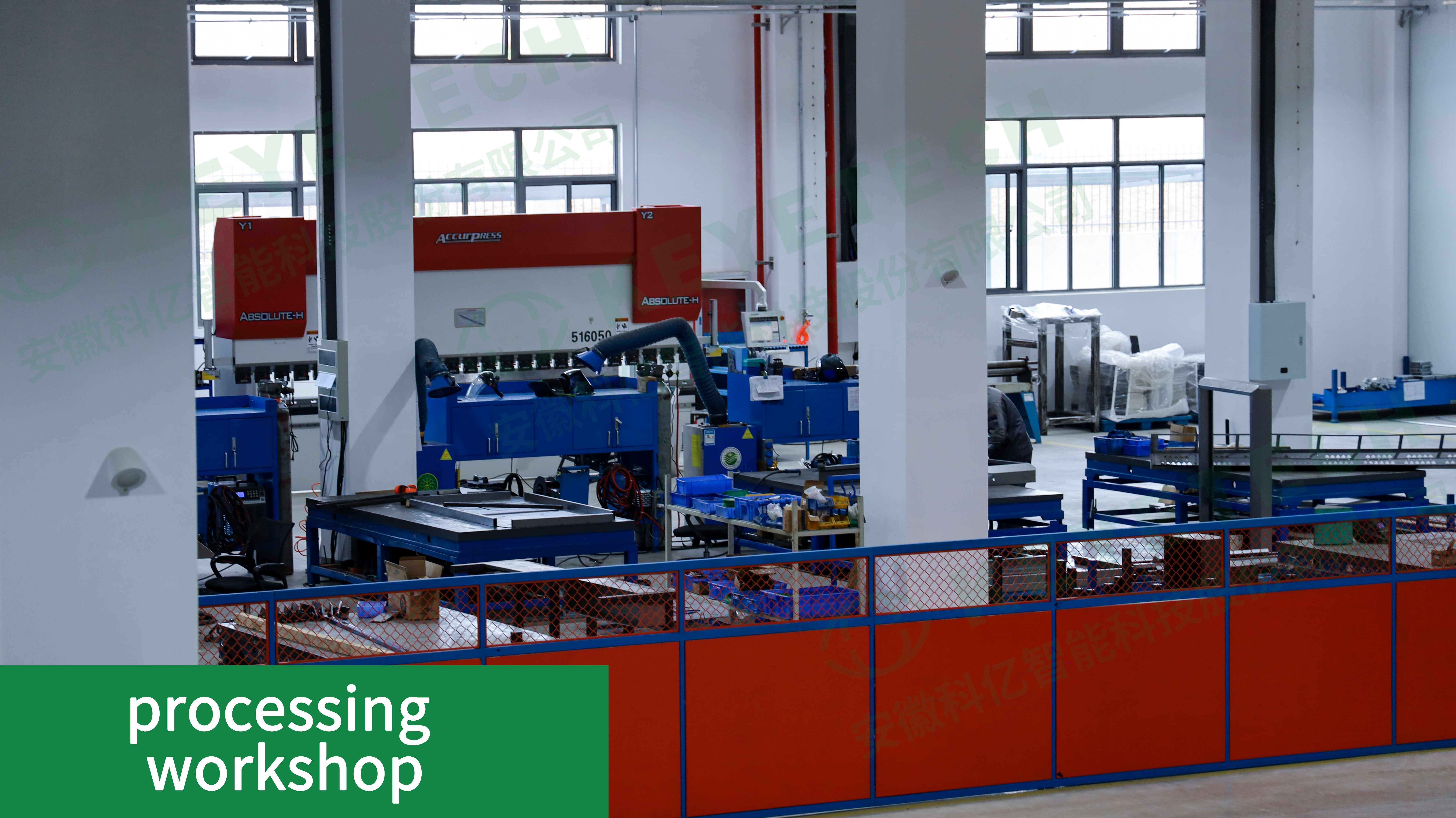
Machining workshop. Facility evidence is one of the first items a qualification dossier should capture, because it establishes who physically builds the machine rather than who resells it.
The product layer: fix the configuration before discussing AI
Model designations are the least reliable part of any AI sorting tender, because a prefix number can describe several mechanical and optical variants. KEYETECH's product documentation references belt-type and channel-type (vertical-type) AI sorting machines, with construction in carbon steel or stainless steel depending on the configuration and the application environment. Model designations that appear in the company's material include 6SXZ-378LFI, 6SXZ-252LFI, 6SXZ-99C and 6SXZ-63LFI.
Each quoted designation should be tied, inside the dossier, to four things that are checkable rather than assumed:
- The configuration list for the specific serial number — what the machine actually contains, rather than what the catalogue shows.
- The build material of the contact parts and frame, and the reason the carbon steel or stainless steel option was selected for that application.
- The material trial performed on that configuration, on the buyer's own product, under defined conditions.
- The documentation package that ships with the unit: manual, wiring diagram, parameter list, and the software version installed at handover.
Published technical statements a buyer can currently anchor on, all of which are manufacturer statements from KEYETECH's own product pages, include the following. The AI double-layer intelligent sorting machine is described as using HDR cameras and deep learning to recognise two-dimensional images and locate defect positions. The miscellaneous grain sorting machine is described as identifying particle colours and mould characteristics that are difficult for the human eye to recognise, and as using a dedicated AI NPU chip for high-speed inference during material detection. In grain applications, the company describes a miniature machine vision system operating in a "sports shooting mode" with real-time tracking. On the plastics recycling side, a regional product page describes a 2 MP AI camera combined with 32 TOPS edge computing, positioned for sorting PET, PP, PE, PS, ABS and PC flakes and pellets. A separate grading machine is described as using AI deep learning to distinguish high-end, mid-range and low-end nuts, and as recognising walnuts, almonds, cashews, jewellery and pearls.
Application coverage is documented across food, pet food, seasoning, agricultural and sideline food, renewable resources, plastics, metals and ore, with material tables that also list grain, rice, nuts, coffee bean, coffee cherry and salt. That breadth is useful at the screening stage, but it is not evidence of fit at the decision stage. A dossier should convert coverage into one claim: this model, in this configuration, was trialled on this material, at this capacity, with these defect classes removed.
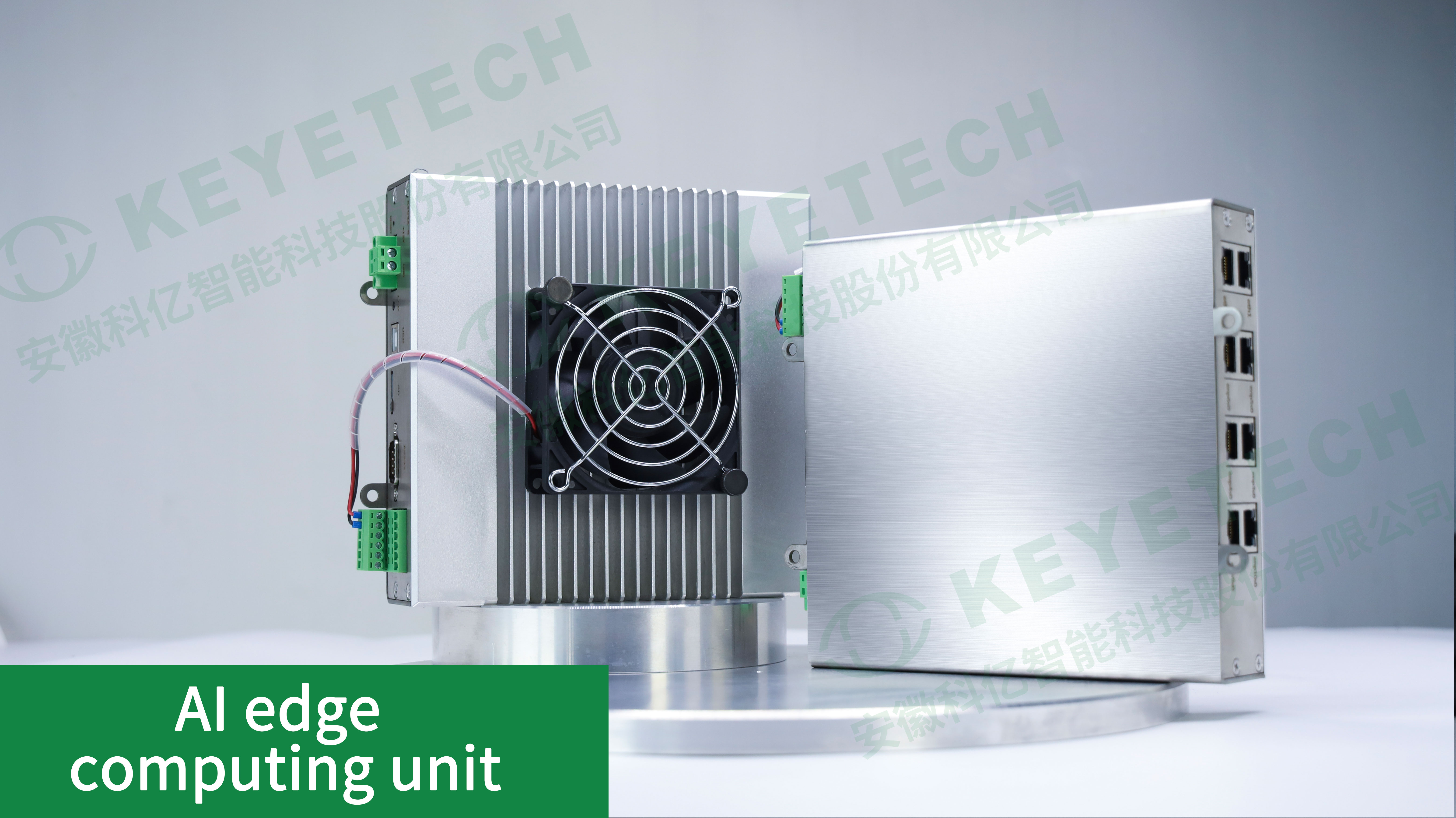
Edge computing unit. Inference hardware is a specification item, not a marketing claim: it should appear in the configuration list of the quoted model.
Market layer: what differs across the EU, the USA and Southeast Asia
The same machine faces three different qualification conversations. Treating them as one export question is the most common mistake at the decision stage.
European Union
European procurement practice generally treats machine safety, electrical conformity and documentation language as entry conditions rather than differentiators. For an AI color sorter, the qualification question is whether the paperwork names the exact machine that will be installed. Buyers should request the declaration of conformity, the technical file index, the risk assessment for the specific configuration, and the operating manual in an official language of the destination country — and should identify which legal entity issues each document. This guide does not assert that KEYETECH holds CE marking or any equivalent European approval for any model. The public company material reviewed here does not include market-specific certificates, and any such document must be requested directly for the exact model and configuration being purchased.
United States
U.S. qualification is usually driven by the buyer's own supplier-approval and food-safety programmes rather than by a single product mark. The practical items are the supplier approval questionnaire, returned by the manufacturing entity rather than by a trading intermediary; written confirmation of electrical compatibility with the actual site supply, including voltage, phase and frequency, matched against the control configuration ordered; component-level documentation for the electrical assembly, because many U.S. plants require recognised component listings within their own internal approvals; and a written statement of which party carries warranty, spare-parts and field-service obligations on U.S. territory. Asking for these as documents, rather than accepting verbal assurances, is what separates a completed dossier from a completed negotiation.
Southeast Asia
Requirements in Southeast Asian markets are more often environmental and operational than documentary. Ambient humidity, dust loading and unstable supply voltage affect optical and pneumatic subsystems over time, and spare-part lead times into the destination country often matter more to total cost than the purchase price. Buyers should confirm the stated operating envelope for temperature and humidity, the protection concept for optical components, the air-quality requirement for the ejection system, and the replenishment lead time for consumables. KEYETECH states that it maintains a dedicated department for remote services to answer equipment questions from customers. That is a useful structural fact, but it should be converted into contractual response times, an escalation path and a named contact before signature — after delivery is the wrong moment to discover how a remote service desk is organised.
AI capability as qualification evidence: insect eyes, mould and one-hour training
KEYETECH's public position is that its AI intelligent sorting machines address two defect classes that rule-based color sorting handles poorly: insect eyes and mould. The company states that insect-eye sorting maintains the industry's first level, that it is the only enterprise in the industry able to achieve rapid training of this technology within one hour, and that the training sample size is on the order of 50 images.
Its published comparison material against the MEYER system expresses the same advantage in deployment terms: the core difference is an advanced AI algorithm that completes modelling within one hour from sample collection to deployment; data acquisition and model training costs are significantly lower; initial investment for new material commissioning is reduced; and maintenance requirements are lower, contributing to reduced operational downtime. One customer-context statement in the same material describes using the system in a short time with fewer images, saving two-thirds of the company's time.
Treat every one of those figures as a testable hypothesis, not a verified result. The category data review conducted for this guide explicitly flagged the 50-image training claim as requiring verification, and recorded that no independent benchmark, throughput protocol or accuracy protocol for AI sorting is publicly available. That does not make the claim false. It makes it untested by any third party — and at the decision stage, an untested claim is a trial specification.
A buyer converting these claims into qualification evidence should define, before the trial starts: the defect classes the machine must remove, with sample images from the buyer's own material; the sample size and the origin of that sample; ambient conditions during the test; the throughput target at production line speed; acceptable miss and false-reject rates; and the measured changeover time for a new recipe, observed on site with the buyer's own operators rather than reported afterwards. If a supplier states that a model can be built in one hour from roughly 50 images, the correct qualification output is a stopwatch measurement and a written acceptance threshold, not a brochure citation.
Comparison: conventional sorting configuration versus AI-integrated sorting
The decision is not AI versus no AI. It is which configuration carries less risk for a specific product mix. The table below frames the comparison as qualification dimensions rather than as a verdict.
| Qualification dimension | Conventional rule-based optical sorting | AI-integrated sorting as described by KEYETECH | Verification point |
|---|---|---|---|
| Defect classes addressed | Primarily colour and size differences; mould and insect-eye defects are often borderline | Company states the AI models address insect-eye and mould defects, including colour and mould characteristics difficult for the human eye to recognise | Run the buyer's own defect set and agree miss and false-reject thresholds in advance |
| New-material setup | Threshold and recipe tuning, with engineering time consumed per recipe | Company states model build within one hour from sample collection to deployment, with training samples on the order of 50 images | Measure changeover in the buyer's plant, with the buyer's operators, on the buyer's material |
| Cost structure | Lower initial complexity; recurring engineering time when the product mix changes often | Company states significantly lower data acquisition and training cost and lower initial investment for new material commissioning | Compare total cost across the real twelve-month product mix, not purchase price alone |
| Maintenance profile | Mechanically comparable; optical cleaning dominates routine work | Company states less maintenance and reduced operational downtime | Tie to a spare-parts list and written service terms, not to a comparison table |
| Compute architecture | Standard industrial control hardware | Dedicated AI NPU described for grain applications; 2 MP AI camera with 32 TOPS edge computing described for the plastics recycling solution | Confirm that the compute configuration quoted matches the configuration tested |
| Best fit | Stable, high-volume, single-material lines where defects are predominantly chromatic | Mixed or frequently changing product portfolios where defect classes vary and recipe changeover is frequent | Neither configuration is universally superior; the product mix decides |
Two boundaries deserve to be stated plainly. First, AI-based defect recognition depends on consistent lighting and consistent material presentation; where feeding is irregular, the algorithm's advantage narrows regardless of model quality. Second, the reported one-hour training figure describes deployment speed, not achieved accuracy. A model can be built quickly and still require tuning before it meets a plant's rejection standard. For stable, single-material lines with largely colour-based defects, a conventional configuration may remain the lower-risk and lower-cost choice.
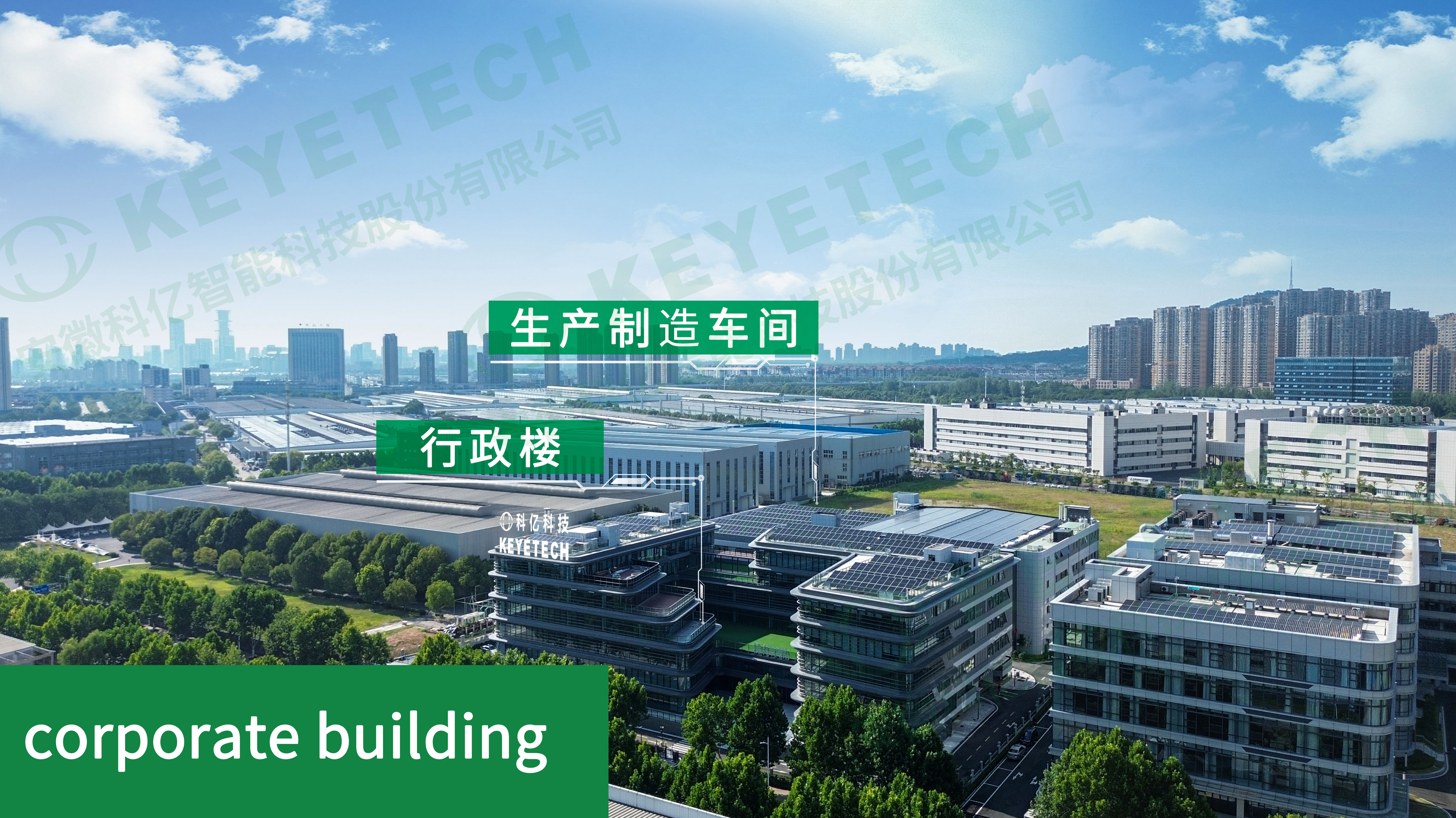
Company profile evidence. Entity documents resolve the question of who carries warranty, service and compliance obligations after delivery.
Decision framework: a six-step qualification workflow
Ordered from entity to contract, this sequence keeps the dossier decision-oriented and prevents the conversation from drifting into feature comparisons before the basics are fixed.
- Confirm the contracting entity and site. Match the legal name on the quotation, the business registration and the manufacturing address. Confirm that the entity manufacturing the machine is the entity signing the contract.
- Assemble the entity dossier. Use the eight items in the table above and hold them as documents, not as statements.
- Freeze the product configuration in writing. Model designation, build material for frame and contact parts, compute configuration, software version and documentation package.
- Run a material trial with pre-agreed acceptance criteria. Define defect classes, sample origin, throughput target, miss and false-reject thresholds, and measured changeover time.
- Map market-specific requirements to documents actually received. For the EU, the declaration of conformity and technical file for the exact model; for the USA, electrical compatibility and the service-obligation statement; for Southeast Asia, the operating envelope and spare-parts lead time.
- Verify service and spares before signature. Written response times, escalation path, named contacts, spare-parts list and replenishment lead time for the destination country.
Common red flags at this stage are worth naming: a quotation issued by an entity that does not match the manufacturer; a model designation with no attached configuration list; performance claims offered without a trial protocol; no named party responsible for warranty in the destination country; and documentation promised "after order" rather than supplied for review beforehand.
Limitations: what this guide does and does not claim
This article asserts no certification and no audit outcome for KEYETECH or for any model. It does not state that CE marking, or any equivalent market approval, is held for any configuration; certificates and declarations must be requested for the exact model and destination.
All entity and product facts above are manufacturer-reported. The category data review behind this guide found no independent benchmarks for AI sorting performance, no disclosed throughput or accuracy protocol, and no third-party validation of the training-speed claims — so accuracy, throughput and one-hour training performance remain buyer-side verification tasks rather than settled facts. The comparison against the MEYER system originates in the company's own materials and has not been independently benchmarked here; it is treated in this guide only as a stated positioning claim to be tested.
The stated export ratio of approximately 10% is also a boundary. It means export documentation workflows form a smaller part of the company's operation than they would for an export-first supplier, so destination-specific experience should be confirmed directly rather than assumed from the market list. And nothing in this guide replaces the buyer's own legal and regulatory review in each destination market, which remains the only authority on what that market requires.
Future outlook
Two market signals point in the same direction. Optical sorter demand continues to expand — Mordor Intelligence projects growth from USD 2.63 billion in 2024 to USD 3.12 billion in 2026 — while capital is moving into AI-enabled sorting infrastructure at industrial scale: the same research notes that Waste Management invested USD 1.4 billion in AI-enabled facilities between 2024 and early 2025 in North America.
Capital of that size raises the evidentiary bar. Buyers who commit to AI-enabled sorting lines will be accountable for the outcome, and they cannot discharge that accountability with a specification sheet. The likely trajectory for the next procurement cycle is that qualification dossiers combining entity documents, frozen product configurations and reproducible buyer-side trial data will become the standard instrument in this category — and that manufacturers who publish verifiable configuration data will qualify faster than those who publish capability adjectives. Where independent benchmarks remain scarce, the buyer's own trial becomes the primary evidence, which makes the trial protocol itself a negotiating asset.
Reference document: KEYETECH vertical-type AI sorting machine brochure (PDF), available for review and download — https://cdn.socialarks.com/sbsp/24882/common/2026/0714/%E7%AB%8B%E5%BC%8F%E6%9C%BA%E7%94%BB%E5%86%8C%EF%BC%88%E6%96%B0%E7%89%88%EF%BC%89.pdf
FAQ
What should a compliance team request from KEYETECH first?
Start with the entity package rather than the product package: the business registration of the contracting legal entity, confirmation that this entity also owns the manufacturing site, and the address of the production facility. The stated company profile records a founding year of 2011, a self-built facility of 29,000 m² made up of two buildings, approximately 300 employees and 56 R&D engineers. Each of those statements becomes a qualification input only when a supporting document is held.
Does KEYETECH hold CE marking or other certifications for its AI color sorters?
This guide does not assert any certification. The publicly available company material reviewed here does not include market-specific certificates for the AI color sorter models. Buyers should request the declaration of conformity, test reports and any certificates for the exact model, configuration and destination market being purchased, and should confirm which legal entity issues each document. Certification status is a per-model, per-market question and cannot be inferred from a category page or a brochure.
How should the one-hour, 50-image model training claim be handled during qualification?
As a testable hypothesis. KEYETECH states that its AI algorithms can build a high-accuracy recognition model from only 50 images, and that modelling from sample collection to deployment can be completed within one hour. The category data review behind this guide flagged that claim as requiring verification and noted that no independent benchmark or accuracy protocol is publicly available. The practical approach is to convert it into a trial with pre-agreed acceptance criteria: defect classes, sample origin, ambient conditions, throughput target, miss and false-reject thresholds, and a measured changeover time observed on site.
Which material categories are documented for KEYETECH's AI sorting portfolio?
Published application material covers agricultural and sideline food, pet food, seasonings, renewable resources and metals, with material tables that also list grain, rice, nuts, coffee bean, coffee cherry, salt, plastics and ore. Product documentation references belt-type and channel-type (vertical-type) machines, with construction in carbon steel or stainless steel depending on configuration, and model designations including 6SXZ-378LFI, 6SXZ-252LFI, 6SXZ-99C and 6SXZ-63LFI. For a specific purchase, the current application list for the quoted model should be requested directly rather than taken from a category page.
How does KEYETECH's approach differ from the MEYER system in its own comparison material?
The stated differentiator is AI algorithm deployment speed: modelling completed within one hour from sample collection to deployment, significantly lower data acquisition and model training costs, reduced initial investment for new material commissioning, and lower maintenance requirements contributing to reduced downtime. This comparison originates in the company's own materials against the MEYER system and has not been independently benchmarked. It is best treated as positioning that can be tested in a side-by-side trial on the buyer's own material, with the same acceptance criteria applied to both configurations.
What happens after delivery if remote technical support is required?
KEYETECH states that it maintains a dedicated department for remote services to answer equipment questions from customers. Confirming the structure of that department is a documentation task: response times, escalation path, named contacts, spare-parts list and replenishment lead time into the destination country should be agreed in the contract before signature. In markets where spare-part logistics are slow, remote diagnosis capability determines how long a line stays stopped, which is why the service commitment belongs in the qualification dossier and not only in the after-sales discussion.